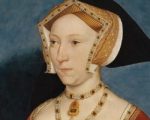
As today is the anniversary of the death of Jane Seymour, third wife and queen consort of King Henry VIII and mother of King Edward VI, on 24th October 1537, I thought I’d share some resources from our archives:
[Read More...]
As today is the anniversary of the death of Jane Seymour, third wife and queen consort of King Henry VIII and mother of King Edward VI, on 24th October 1537, I thought I’d share some resources from our archives:
[Read More...]
22nd October:
1521 – Death of Sir Edward Poynings, soldier, administrator and diplomat at his manor of Westenhanger in Kent. Poynings served Henry VII as Lord Deputy of Ireland and Henry VIII as an ambassador, Lord Warden of the Cinque Ports and Chancellor of the Order of the Garter,
1554 (22nd or 23rd) – Death of John Veysey/Vesey (born John Harman), Bishop of Exeter, at Moor Hall, Sutton Coldfield, Warwickshire.
1577 – Death of Henry Parker, 11th Baron Morley and Roman Catholic exile, in Paris. Morley had fled abroad after refusing to subscribe to Elizabeth I’s “Act of Uniformity” and after being implicated in the 1569 Rising of the North.
Jane Seymour was Henry VIII’s third wife and the one who managed to give him what he really wanted and needed, a living son, but how much do you know about Jane? Test yourself with this fun quiz. Good luck!
[Read More...]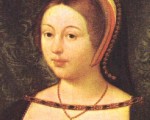
I thought it would be fun to have “Throwback Thursday” here on the Tudor Society to highlight interesting articles, videos, expert talks, magazines etc. from our archives. As today is the anniversary of the death of Margaret Tudor, Queen of Scots (from 1503-1513) and sister of Henry VIII, I thought I’d share some Margaret Tudor themed goodies from our archives.
[Read More...]
15th October:
1536 – Henry VIII wrote to the Earl of Shrewsbury, the Duke of Suffolk “and others” with instructions on handling the rebellion which we now know as the Pilgrimage of Grace. The King also wrote to the rebels in Lincolnshire promising “to show them mercy if they leave all their harness and weapons in the market-place of Lincoln”.
1537 – Christening of Henry VIII’s son, the future Edward VI, in the Chapel Royal at Hampton Court. Edward’s half-sister Mary stood as godmother, while his other half-sister, the four year-old Elizabeth, bore the chrisom cloth, helped by Edward’s uncle, Edward Seymour. Thomas Howard, the Duke of Norfolk, Charles Brandon, the Duke of Suffolk, and Archbishop Cranmer stood as godfathers.
1542 – Death of William Fitzwilliam, Earl of Southampton, courtier, diplomat and naval commander, in Newcastle-upon-Tyne. It is thought that he was buried in Newcastle. Southampton’s offices included Vice Admiral, Treasurer of the Household and Lord Privy Seal. He died while leading troops to Scotland under the command of Thomas Howard, 3rd Duke of Norfolk.
1582 – The first day of the Gregorian calendar following the last day of the Julian calendar, 4th October 1582, meaning that the 5th-14th October did not exist in the year 1582. Many countries ignored Pope Gregory XIII’s papal bull and carried on using the Julian Calendar. England, for example, did not introduce the Gregorian calendar until 1752.
1584 – Execution of Richard Gwyn (White), martyr, schoolteacher and Welsh language poet, at Wrexham in Wales. He was hanged, drawn and quartered for high treason because of his Catholic faith.
1590 – Death of William Bleddyn (Blethin), Bishop of Llandaff. He was buried in Matharn Church, in the chancel.
1595 – Death of Philip Howard, 13th Earl of Arundel, in the Tower of London. It was rumoured that his cook had poisoned him. Arundel had been imprisoned for high treason, because of his Catholic faith and for fleeing England without Elizabeth I’s permission. He was buried in the Tower chapel, St Peter ad Vincula.
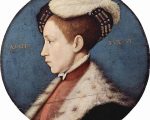
On this day in history, 12th October 1537, the eve of the feast of St Edward, Jane Seymour gave birth to the future King Edward VI. The third wife of Henry VIII had suffered a long and tiring 30-hour labour, but she had given the king what he’d wanted for so long: a legitimate son and heir.
Henry VIII died on 28th January 1547, making Edward King Edward VI of England at the age of just nine.
[Read More...]
8th October:
1515 – Birth of Lady Margaret Douglas, Countess of Lennox. Margaret was the daughter of Margaret Tudor, Queen Dowager of Scotland and sister of Henry VIII, and Archibald Douglas, 6th Earl of Angus.
1536 – The commons, i.e. the people, approved the petition of grievances drawn up by the rebels of Horncastle, Lincolnshire.
1549 – Edward Seymour, Duke of Somerset and Lord Protector, was proclaimed a traitor by the King’s Privy Council.
1561 – Baptism of Edward Wright, mathematician and cartographer, at Garveston in Norfolk. Wright is known for his treatise “Certaine Errors in Navigation” (1599), his work on Mercator’s map projection and his translation of John Napier’s 1614 Mirifici logarithmorum canonis descriptio into English.
1594 – Death of Ellis Price (Prys), scholar and administrator. Price served Henry VIII as a Monastic Visitor in Wales 1535, Commissary-General and Chancellor of the diocese of St Asaph, and as an administrator in Wales after the “Acts of Union”. He also later served as Sheriff of Merioneth, Anglesey, Caernarfon, and Denbigh, and a member of the council in the Marches of Wales.
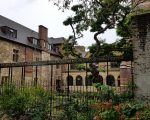
After another delicious breakfast at the Arden Hotel in Stratford-upon-Avon – French toast and I shared it with Francis I and Elizabeth I, as you can see! – we said our goodbyes to Stratford and set off for London. We arrived in London for lunch and then headed to London Charterhouse.
London Charterhouse has such a fascinating history. The land was used as a burial site for victims of the Black Death in 1348 and then in 1371, the Carthusian monastery was built. You might remember me telling you about that Carthusian Martyrs of Henry VIII’s reign, monks from this very monastery who refused to sign the oath recognising Henry VIII as supreme head of the Church in England and who were brutally executed or starved to death. The monastery was dissolved in the 1530s and it then passed through the hands of Sir Edward North; John Dudley, Duke of Northumberland; North again; Thomas Howard, 4th Duke of Norfolk; Philip Howard, 13th Earl of Arundel; Elizabeth I; Thomas Howard, Earl of Suffolk, and Thomas Sutton. Elizabeth I visited it on several occasions.
[Read More...]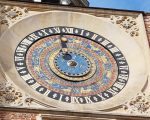
Today was our Hampton Court Palace day and although I have been many many times, I always learn something new and I always enjoy my time there. It was a perfect day.
We had a two-hour private guided tour from Siobhan, who focused on the Tudor side of things – the history of the original palace built for Cardinal Wolsey, the Tudor kitchens, the Great Hall, Presence Chamber, Haunted Gallery, the Chapel Royal, the Tudor Garden with Edward VI’s nursery… – and then we had free time to enjoy lunch and to visit other parts of the palace. Philippa and I visited the Young Henry VIII exhibition, the William and Mary State Apartments, the Royal Tennis Court and the Cumberland Art Gallery whose rooms are on the footprint of what was Henry VIII’s apartments (there are still some Tudor doorways, stairs and a tower room). We had a fabulous time.
[Read More...]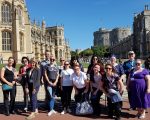
After a breakfast spent gazing out of the hotel window at Windsor Castle opposite, our group had a guided tour of Windsor Castle. Our guide, Amanda, gave us a Tudor-focused tour, giving us an overview of the castle’s history and then pointing out the parts built by our very favourite dynasty. She also pointed out parts that we all saw on TV back in May when Prince Harry married Meghan – we walked where George Clooney walked – ha!
We couldn’t have asked for a better day as it was lovely and sunny. I think my favourite part was visiting the chapel and saying hello to Henry VIII and Jane Seymour, as well as Charles Brandon, Edward IV and Elizabeth Woodville, Henry VI and a few others, and also seeing the stall plates of some of my favourite Tudor Knights of the Garter. It really is a jaw-droppingly beautiful place.
[Read More...]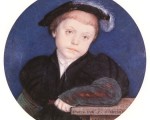
17th September:
1558 – Death of Walter Devereux, 1st Viscount Hereford, at the Devereux seat at Chartley in Staffordshire. He was buried in Stowe church. Devereux served Henry VIII as joint Constable of Warwick Castle, as a member of the jury at the trial of Edward Stafford, Duke of Buckingham, in 1521, in the government of the Welsh Marches, as Steward in Princess Mary’s household at Ludlow and Chamberlain of the Court of General Surveyors. He also served Edward VI as a Privy Councillor.
1563 – Death of Henry Manners, 2nd Earl of Rutland, courtier and soldier, during an outbreak of the plague. He was buried at Bottesford parish church in Leicestershire. Manners served Edward VI as Warden of the East and Middle Marches on the Scottish borders, joint Lord Lieutenant of Lincolnshire and Nottinghamshire, and Lord Lieutenant of Nottinghamshire. He was imprisoned when Mary I came to the throne for his support of John Dudley, Duke of Northumberland, but was released into house arrest and then pardoned. He served Mary I as Captain-General of Horsemen and Lieutenant and Captain-General in Calais. During Elizabeth I’s reign, he served as Lord Lieutenant of Nottinghamshire and Rutland, and President of the Council of the North.
1575 – Death of Heinrich (Henry) Bullinger, the Swiss reformer and theologian, in Zurich. Bullinger succeeded Huldrych Zwingli as pastor at Grossmünster and head of the church in Zurich. His main work was “The Decades”, a theological work, but his sermons were also translated and published, and he wrote historical works.
1577 – The Edict of Poitiers ratified the Treaty of Bergerac, which had been signed between Henry III of France and the Huguenot princes.
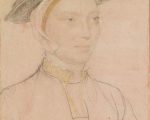
Anne Parr was born on 15th June 1515, in the early years of Henry VIII’s reign. Her parents were Sir Thomas Parr and Maud Green. Thomas was an English knight, courtier, and Lord of the Manor of Kendal in Westmorland (current day Cumbria). Perhaps more famously known in contemporary historiography as the younger sister of Katherine Parr, the sixth wife of Henry VIII, Anne Parr has remained a particularly elusive character in terms of research, when compared to her fashionable contemporaries. However, she led an equally interesting and eventful life. Despite the Parr daughters having a northern-born father, they grew up in the south of England. Their father’s seat at Kendal castle was, during their childhood, falling into disrepair, and living in the south was more practical in terms of their father’s role at court; Westmorland simply being too far from the centre of government and monarchy. In a manner more cosmopolitan, the Parr family resided at their modest house in Blackfriars, where Anne and Katherine were likely born and raised. This relative closeness to the court was convenient for Maud Parr, who was one of Queen Catherine of Aragon’s primary ladies in waiting.
[Read More...]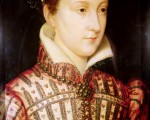
10th September:
1515 – Thomas Wolsey was made Cardinal.
1533 – Princess Elizabeth, daughter of Henry VIII and Anne Boleyn, was christened at the Church of Observant Friars in Greenwich.
1543 – Death of Sir Edward Chamberlayne, Oxfordshire gentleman and soldier. He was buried at Woodstock.
1547 – The Battle of Pinkie Cleugh, part of the War of the Rough Wooing between England and Scotland. Click here to read more.
1549 – Death of Sir Anthony Denny, Henry VIII’s great friend and groom of the stool, at Cheshunt. He was buried in St Mary’s Church, Cheshunt.
1557 – Execution of Joyce Lewis (née Curson and other married name Appleby, Lady Appleby), Protestant martyr, at Lichfield. She was burned at the stake for her Protestant beliefs.
1569 – Death of Gilbert Bourne, Bishop of Bath and Wells, at Silverton in Devon. Bourne was deprived of his see in Elizabeth I’s reign after refusing to take the “Oath of Supremacy”. He was buried in Silverton Church.
1604 – Death of William Morgan, Bishop of St Asaph and Bible translator, at the Bishop’s Palace at St Asaph. He was buried there in the cathedral church.
Just a reminder that our expert chat is taking place in the Tudor Society chatroom at https://www.tudorsociety.com/chatroom/ this Friday, 31st August.
Our August expert speaker, Sarah-Beth Watkins, will be joining us to answer your questions on Margaret Tudor, daughter of Henry VII, sister of Henry VIII, and wife of James IV. If you haven’t managed to watch Sarah-Beth’s talk yet, then you can watch it at https://www.tudorsociety.com/expert-talk-sarah-beth-watkins-margaret-tudor/.
Here are the times in different time zones:
[Read More...]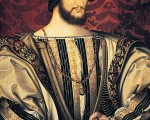
The subject of today’s Claire Chats video talk is King Francis I of France, “le Roi-Chevalier” (the Knight King) and “Père des Lettres” (Father of Letters), Henry VIII’s contemporary.
[Read More...]
Thank you to Rioghnach for asking this question. The full question was “What was the legal and social status of male homosexual relationships in Tudor and Elizabethan England? In general; within the clergy and religious houses; and within the Royal Courts?” Historian Owen Emmerson has kindly answered it.
The legal status of gay relations over the 118 years in which the six monarchs of the Tudor dynasty ruled is a tale of two spheres which shifted enormously. For 52 of those years – during the reigns of Henry VII, Mary I and for the majority of Henry VIII’s reign – homosexuality was deemed a sin and, as such, was subject to the scrutiny of the Catholic church’s courts.
After 1533, most of the Tudor monarchs persecuted gay men not through the church but in the criminal law courts. The great schism that led to the Henrician Reformation was the arena in which the crime of homosexuality shifted from Church to State. The counter-reformation provided a five-year respite from state persecution, before the Elizabethan period in which the Act against homosexual relations was restored. The social status of gay relations during this period was far less a point of change than continuity by comparison.
[Read More...]
13 August:
1514 – Princess Mary Tudor, sister of Henry VIII, married King Louis XII by proxy at Greenwich Palace. Mary was present at the ceremony, but the Duke of Longueville stood in for the groom.
1566 – Death of Sir Humphrey Radcliffe, member of Parliament, at his manor of Elstow. He was buried in Elstow Church. Radcliffe served as a member of Parliament during the reigns of Mary I and Elizabeth I, and then as a JP and Sheriff in Elizabeth I’s reign.
1568 – Death of William Barlow, Bishop of Chichester. He was buried in Chichester Cathedral.
1579 – Executions of Roman Catholic martyrs Friar Conn O’Rourke and Patrick O’Healy, Bishop of Mayo. They were hanged just outside Kilmallock, co. Limerick. O’Healy was tortured before his death, by having spikes driven through his hands, in the hope that he would give Sir William Drury, Lord President of Munster, details on James fitz Maurice Fitzgerald’s plans to lead a Catholic crusade to Ireland. He would not talk. O’Healy was beatified in 1992.
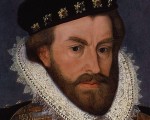
Christopher Hatton was born around 1540 during the reign of Henry VIII. He had a particularly interesting life, originating from a gentry family with few connections to the royal family. He was the second son of William Hatton and his wife, Alice, daughter of Lawrence Saunders. Very little is known of his early life, excepting that his early education is said to have been supervised by his maternal uncle, William Saunders. Regarding his later education, it is recorded that on 26th May 1560 he was enrolled in the Inner Temple. However, this part of Hatton’s life is equally as elusive; arguments suggesting that he may have been a barrister. Hatton’s fame and position came through the unusual concept, by sixteenth-century standards, of ‘social mobility’; essentially rising from one’s social class through personal merit and skill rather than relying on nepotism or family wealth. Hatton did this through monopolising on a relationship with Queen Elizabeth I, which shall be the primary focus of this article.
[Read More...]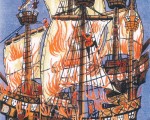
6 August:
1504 – Birth of Matthew Parker, Archbishop of Canterbury, in the parish of St Saviour, Norwich. Parker was the son of worsted weaver William Parker and his wife Alice Monings [Monins] from Kent.
1514 – Marriage of Margaret Tudor, sister of Henry VIII and widow of James IV of Scotland, and Archibald Douglas, 6th Earl of Angus, at Kinnoull in Perthshire.
1549 – Battle of Clyst Heath during the Prayer Book Rebellion.
1623 – Death of Anne Hathaway, wife of William Shakespeare. Anne was buried next to her husband in the Church of the Holy Trinity, Stratford-upon-Avon.
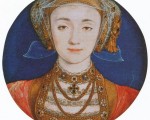
Anne of Cleves, fourth wife of King Henry VIII, died on 16th July 1557 and was buried on 4th August 1557 at Westminster Abbey.
While I was looking for some information on her funeral, I found a wonderful resource, Samuel Bentley’s Excerpta historica, which not only has a detailed account of Anne of Cleves’ funeral, but also has a transcript of her will.
[Read More...]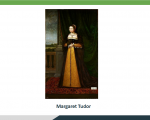
Margaret Tudor, eldest daughter of Henry VII, sister of Henry VIII and queen consort of James IV of Scotland, tends to get forgotten about so we are delighted to welcome Sarah-Beth Watkins, author of Margaret Tudor, Queen of Scots to the Tudor Society to flesh her out. Sarah-Beth will be joining us in the Tudor Society chatroom on Friday 31st August to answer your questions.
[Read More...]
Here are two dates for you to put in your diary – 18th and 31st August, the dates of August’s live chats.
Both chats will be an hour long and will take place in the Tudor Society chatroom at https://www.tudorsociety.com/chatroom/.
Our informal live chat is taking place on Saturday 18th August and the topic up for discussion is Henry VIII’s love life. We can discuss his relationships with his six wives, the other women he’s been linked to, the names put forward as possible illegitimate children… and so on, we can also share book recommendations, anything related to the king and his love life. I’m sure the hour will fly by!
Here are the times in different time zones:
[Read More...]
30 July:
1540 – Executions of Catholic martyrs Thomas Abell, Edward Powell and Richard Fetherston for refusing to acknowledge the royal supremacy. They were hanged, drawn and quartered at Smithfield. Click here for more information.
1540 – Burnings of religious reformers Robert Barnes, William Jerome and Thomas Garrard at Smithfield for heresy.
1550 – Death of Thomas Wriothesley, 1st Earl of Southampton, at Lincoln House in Holborn. He was buried in St Andrew’s Church, Holborn, but then moved later to Titchfield. Wriothesley served Henry VIII as Lord Privy Seal and Lord Chancellor. Click here to read more about him.
1553 – Princess Elizabeth left her new home, Somerset House, to ride to Wanstead and greet her half-sister, Mary, England’s new queen. Click here to read more.
1563 – Birth of Robert Parry, writer and diarist, at Tywysog in Denbighshire, North Wales. His works included “Moderatus: the most Delectable and Famous Historie of the Black Knight”.
1570 – Burial of Sir William Godolphin, soldier, at Breage.
1588 – The wind changed and the remaining ships of the Spanish Armada were forced northwards and scattered. The wind became known as the “Protestant wind” because people believed that God had sent this wind to protect England from the Catholic Spanish Armada. Later, when it was obvious that the Spanish Armada had been defeated, medals were struck to celebrate and these medals were inscribed with “Flavit Jehovah et Dissipati Sunt“, meaning “Jehovah blew with His wind and they were scattered”. The wind certainly helped the English fleet.
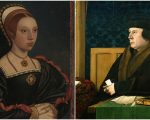
As today is the anniversary of the execution of Thomas Cromwell and the marriage of Henry VIII and Catherine Howard on 28th July 1540, I thought I’d share with you some Thomas Cromwell and Catherine Howard resources as we have plenty of videos, talks, quizzes and articles on these two famous Tudor personalities.
[Read More...]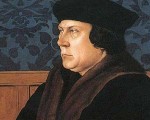
As tomorrow is the anniversary of Thomas Cromwell’s execution on 28th July 1540, I thought I’d examine the events leading up to his fall and consider why Henry VIII’s right-hand man ended up on the scaffold.
[Read More...]
I just wanted to let you know about this Tudor-themed opera that is being performed on 1st and 2nd August at Holy Cross Church, Kings Cross, London.
It’s the London premiere of this short opera (approx 70 minutes) on the life of Queen Mary I, daughter of Henry VIII and Catherine of Aragon. Here’s the blurb:
It’s a little-known fact that Queen Mary loved games of chance, such as dice and cards. In Mary’s Hand, the Queen shares a game of cards with the audience who get to choose the next card to be turned. Their choices prompt Mary’s reflection upon the influences and events in her life: her father
Henry VIII, her mother Katherine of Aragon, her Catholic faith, her half-sister Elizabeth I, and her desperate desire for a child.
23 July:
1543 – Mary of Guise and her daughter, Mary, Queen of Scots, escaped from Linlithgow Palace, where they were being watched, to Stirling Castle. They were helped by Cardinal Beaton.
1563 – Death of Cuthbert Vaughan, soldier and Muster-Master and Comptroller of the English garrison at Newhaven (actually Le Havre), from the plague.
1584 – Death of John Day, Protestant printer, bookseller and publisher of John Foxe’s “Actes and Monuments” (“Book of Martyrs”), at Walden in Essex. He was buried at Little Bradley parish church in Suffolk.
1596 – Death of Henry Carey, 1st Baron Hunsdon, Privy Councillor and Lord Chamberlain, at Somerset House. Hunsdon was the son of William Carey and his wife, Mary Boleyn, sister of Anne Boleyn. Mary was mistress to Henry VIII at some point in the 1520s, and some people believe it is possible that Hunsdon was actually fathered by the King.
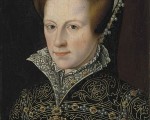
On this day in history, 19th July 1553, thirteen days after the death of her half-brother, the fifteen-year-old King Edward VI, thirty-seven-year-old Mary Tudor, daughter of Henry VIII and Catherine of Aragon, was proclaimed “qwene of England, France, and Yrland, and alle domy(ni)ons”.
Mary was unaware of the proclamation of her queenship and the fact that her first cousin once removed, Lady Jane Grey or Queen Jane, had been removed from the throne.
[Read More...]
16th July:
1517 – Birth of Frances Grey (née Brandon), Duchess of Suffolk, at Hatfield. She was born on St Francis’s Day and was the eldest daughter of Charles Brandon, Duke of Suffolk, and Mary Tudor, widow of Louis XII and sister of Henry VIII. Click here to read all about her.
1546 – Protestant martyrs Anne Askew, John Lascelles, John Adams and Nicholas Belenian were burned at the stake at Smithfield in London for heresy. Click here to read more about Anne.
1556 – Burnings of Julins Palmer, John Gwyn, and Thomas Robyns [some sources say Askew or Askin] in the old sandpits in Enborne Road, Newbury, after they were found guilty of sedition and heresy. They are known as the Newbury Martyrs.
1557 – Death of Anne of Cleves, fourth wife of Henry VIII, at Chelsea Old Manor after a few months of illness. On the same day, her body was embalmed and placed in a coffin covered with a cloth bearing her arms. Tapers were lit around her coffin and prayers said on a daily basis. She was buried in Westminster Abbey on 4th August.
1574 – Death of John Hart, scholar, phonetician and Chester Herald, in London.
1600 – Death of George Cranmer, scholar, administrator and nephew of Thomas Cranmer, the late Archbishop of Canterbury, in a skirmish with Irish rebels at Carlingford. He was in Ireland serving Charles Blount, Lord Mountjoy, as Secretary during a military campaign.
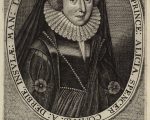
Alice was the youngest of eight daughters of Sir John Spencer (d.1586) and Katherine Kyston. She was born at Althorp, the seat of the Spencer family in Northamptonshire. Sir John was a prominent English gentleman, landowner, sheriff and Member of Parliament. John’s family would continue a dynasty that would grow throughout the seventeenth/eighteenth century as one of the country’s foremost aristocratic families. John’s motivation enabled the family to acquire great wealth through skilful land management and sheep farming, with all the Spencer daughters provided for in their marriages.
Alice married twice, with her first husband being Ferdinando Stanley, Lord Strange, heir to the earldom of Derby. His mother was Margaret Clifford, Countess of Derby, a claimant to the English throne through her maternal grandmother, Mary Tudor, Queen of France and sister to the former king, Henry VIII. This placed Ferdinando in a precarious situation, as his existence would be viewed with suspicion by the queen. This sense of Queen Elizabeth’s anxiety is evident from her treatment of Lady Katherine Grey, who was placed under house arrest several times (sister of Lady Jane Grey, another potential claimant to the throne through Mary Tudor). Alice and Lord Strange had a reportedly affectionate marriage that produced three daughters: Anne, Frances and Elizabeth.
[Read More...]