The Tudor Society
  • The Spanish Armada and the Protestant Wind

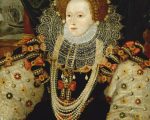
    Armada portrait

    On this day in Tudor history, 30th July 1588, the once-mighty Spanish Armada, already damaged by the Battle of Gravelines, was scattered and driven northwards by violent storms. Many in England saw it as divine intervention — a “Protestant Wind” sent by God to defend the realm.

    [Read More...]
  • The Tiny Tudor Ship that Crossed the Atlantic – John Cabot and The Matthew

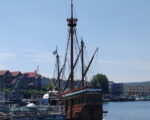
    The Matthew

    England’s very first official voyage of exploration to the New World didn’t begin in London—or even under an Englishman’s command. It began in Bristol in 1497 and was undertaken by Italian entrepreneur John Cabot (Giovanni Caboto).

    Backed by Henry VII, Cabot’s bold journey in search of Asia, but actually to the coast of North America, marked the quiet beginnings of England’s imperial story—decades before Henry VIII or Elizabeth I ever dreamed of global power…

    [Read More...]
  • Darkness and a sweltering London gripped by plague – Claire Interviews Author Toni Mount

    The Colour of Darkness book cover

    In my latest YouTube video, I’ve interviewed bestselling author and historian Toni Mount to celebrate the release of The Colour of Darkness — book 13 in the gripping Sebastian Foxley Medieval Mystery series.

    Toni takes us behind the scenes of her writing process, research into 15th-century London, and the creation of her beloved protagonist, artist and reluctant sleuth Seb Foxley.

    [Read More...]
  • The Deadly Oxford Black Assizes of 1577

    gaol fever video thumbnail

    In July 1577, a courtroom in the city of Oxford turned deadly.

    Within days of the trial of a Catholic recusant and bookseller, hundreds, including Nicholas Barham, Queen Elizabeth I’s top lawyer, were dead.

    No violence. No uprising. Just a hidden killer…gaol fever!

    [Read More...]
  • The Priest They Tried to Silence – Martyr John Boste

    Thumbnail for my John Boste video

    On this day in Tudor history, 24th July 1594, John Boste was hanged, drawn, and quartered for in Durham.

    His crime?

    Treason. Simply doing his job… as a priest.

    Let me tell you Boste’s story – from gifted Oxford scholar to hunted man of God, betrayed, tortured by Richard Topcliffe himself, and executed for his faith…

    [Read More...]
  • The Tudor Lord with 9 Lives – John Scrope, 5th Baron Scrope of Bolton

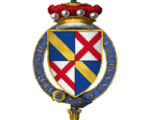
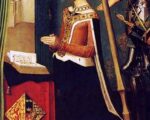
    The arms of John Scrope, 5th Baron Scrope of Bolton, by Rs-nourse.

    On this day in history, 22nd July 1437 (or 1438), John Scrope, 5th Baron Scrope of Bolton, was born at Bolton Castle in Yorkshire. He was a man who’d back the losing side multiple times, but with his head intact.

    He fought at Towton with Edward IV, rebelled against him, supported Richard III, then Henry VII, then backed a royal pretender… yet he survived! He reall was like a cat with nine lives.

    [Read More...]
  • Philip of Spain’s Magnificent Journey to England

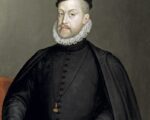
    Portrait of Philip II of Spain by Sofonisba Anguissola

    On this day in Tudor history, 20th July 1554, Prince Philip of Spain landed on English soil to marry Queen Mary I, having left Valladolid on 14th May.

    He did not travel light. 1000s of soldiers and men sailed with him, including a dancing master – yes, he had his priorities right – and his journey had been marked by processions, fireworks and artillery salutes.

    Let me take you behind the scenes of one of the most politically charged royal arrivals in English history.

    [Read More...]
  • Toni Mount Book Launch – Sandwich, Kent

    The Colour of Darkness book cover

    Set in medieval London, written by Toni Mount from Gravesend Kent, and featuring fascinating characters, including a cross-dressing male prostitute based on a real 14th century sex-worker; this new murder mystery will be launched at Sandwich Medieval Centre on 26th July.

    The Colour of Darkness is the thirteenth instalment in the atmospheric Sebastian Foxley series of medieval murder mysteries. These well-researched and well-loved books are based on thorough historic research of London in the 14th and 15th centuries, and readers comment on the detailed historic basis of the stories, many of which actually happened, (but maybe at different times or to different people).

    The book launch will be at 12 midday on Saturday 26th July and will be hosted by The Sandwich Medieval Centre, The Quay, Sandwich Kent CT13 9EN.

    [Read More...]
  • Tudor True Crime – The Shocking Murder of Thomas Arden

    Thumbnail for my Thomas Arden video

    I’ve decided to do a series of called “Tudor True Crime” on my YouTube channel, where I’m going to delve into 16th century crimes and look at what exactly happened, and the consequences.

    My very first Tudor trie crime is the murder of Thomas Arden of Faversham in 1551, a story which featured, poisoned milk, a pressing iron, a knife, and a group of people determined to finish him off. It really is darker than fiction!

    And one of the killers was his own wife, Alice Arden.

    [Read More...]
  • Frances Grey, Duchess of Suffolk, the Maligned Mother of Lady Jane Grey

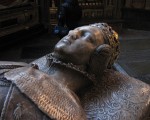
    Tomb effigy of Frances Grey (Brandon), Duchess of Suffolk

    On this day in Tudor history, 16th July 1517, Mary Tudor, Queen of France, and her husband, Charles Brandon, Duke of Suffolk, welcomed a daughter into the world, Frances.

    This little girl grew up to be Frances Grey, Duchess of Suffolk, and she is often reduced to a footnote in history — simply the mother of the tragic Lady Jane Grey. But who was she really?

    In my latest video, I dive into Frances’ life and look at how she’s been maligned by centuries of misrepresentation.

    [Read More...]
  • William Neville – The Tudor Courtier Who Tried to Make Himself Invisible

    Thumbnail for my video on William Neville

    On this day in Tudor history, 15th July 1497, William Neville was born.

    He was a respected courtier and poet, who later found himself accused of something that sounds like it’s straight out of a fantasy novel: trying to make himself invisible!

    In my latest “on this day” video, I’m uncovering the rather strange tale of William Neville — from his allegorical poetry and service in Cardinal Wolsey’s household to accusations of treason, sorcery, and near financial ruin…

    [Read More...]
  • Margaret of Denmark – The Queen Who Quietly Changed Scotland Forever

    Margaret of Denmark

    In my latest “On This Day” video on YouTube, I’ve headed slightly beyond the Tudor world — north to Scotland — to uncover the story of a young queen who deserves far more recognition than she gets.

    On this day in history, 14th July 1486, Queen Margaret of Denmark, consort of James III of Scotland, died at just 30 years old. But her brief life left a permanent mark on British history.

    Because of Margaret, Orkney and Shetland became — and remained — part of Scotland. A forgotten dowry, a pledged territory, and a queen who quietly changed the map of the British Isles.

    But there’s so much more to her than diplomacy…

    [Read More...]

  • Lego and History – The Perfect Combination

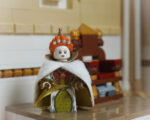
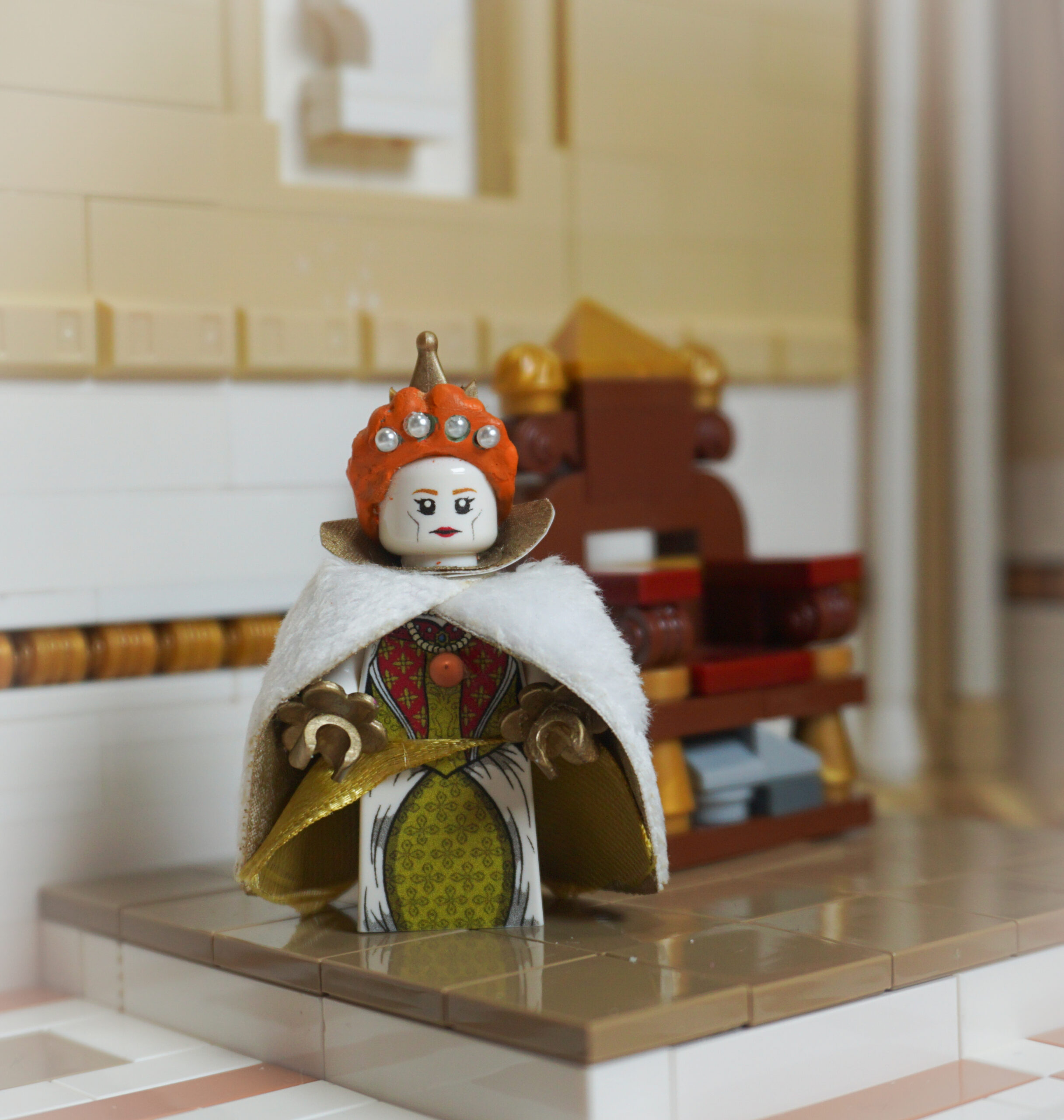
    Minifigure monarchs - Elizabeth I

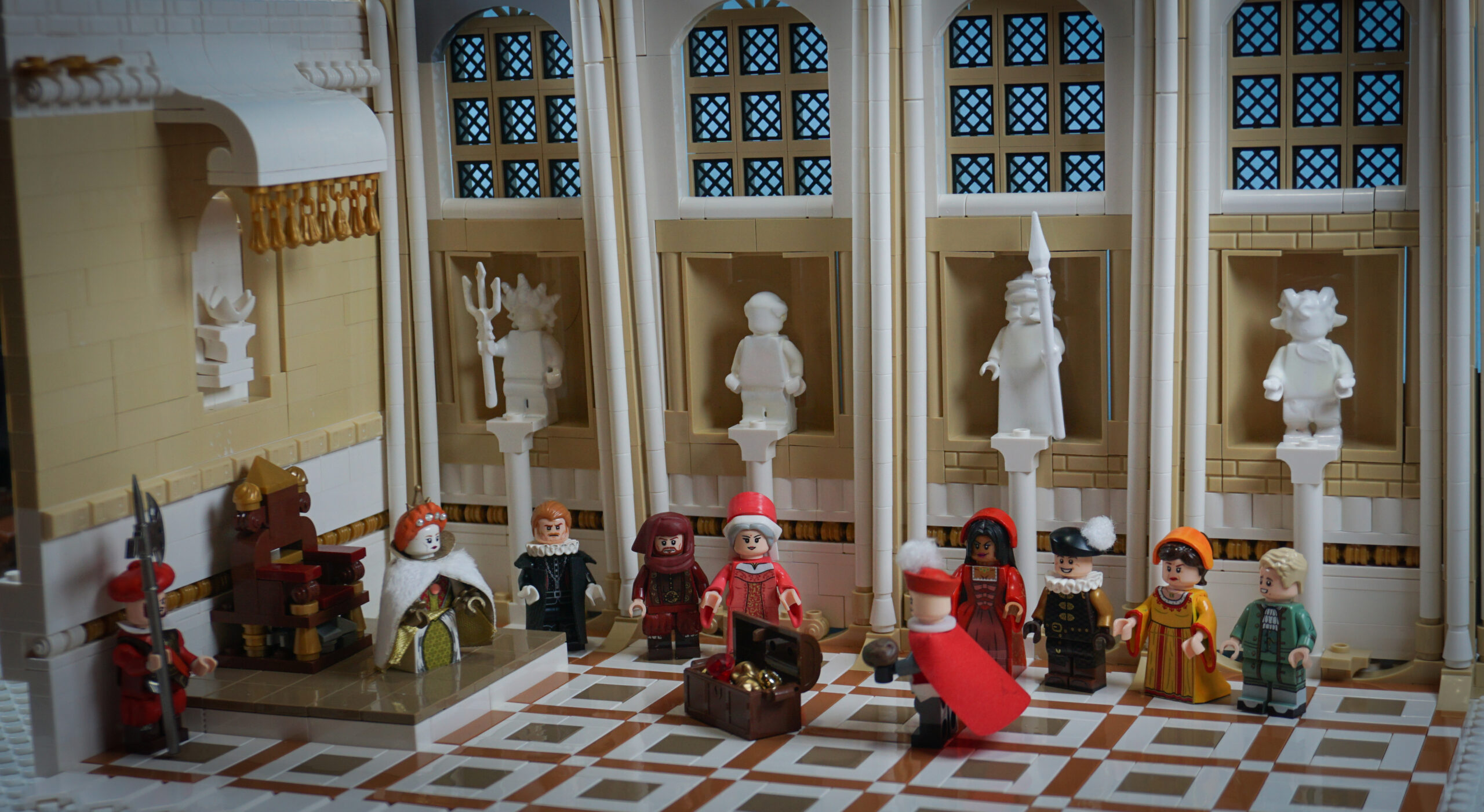
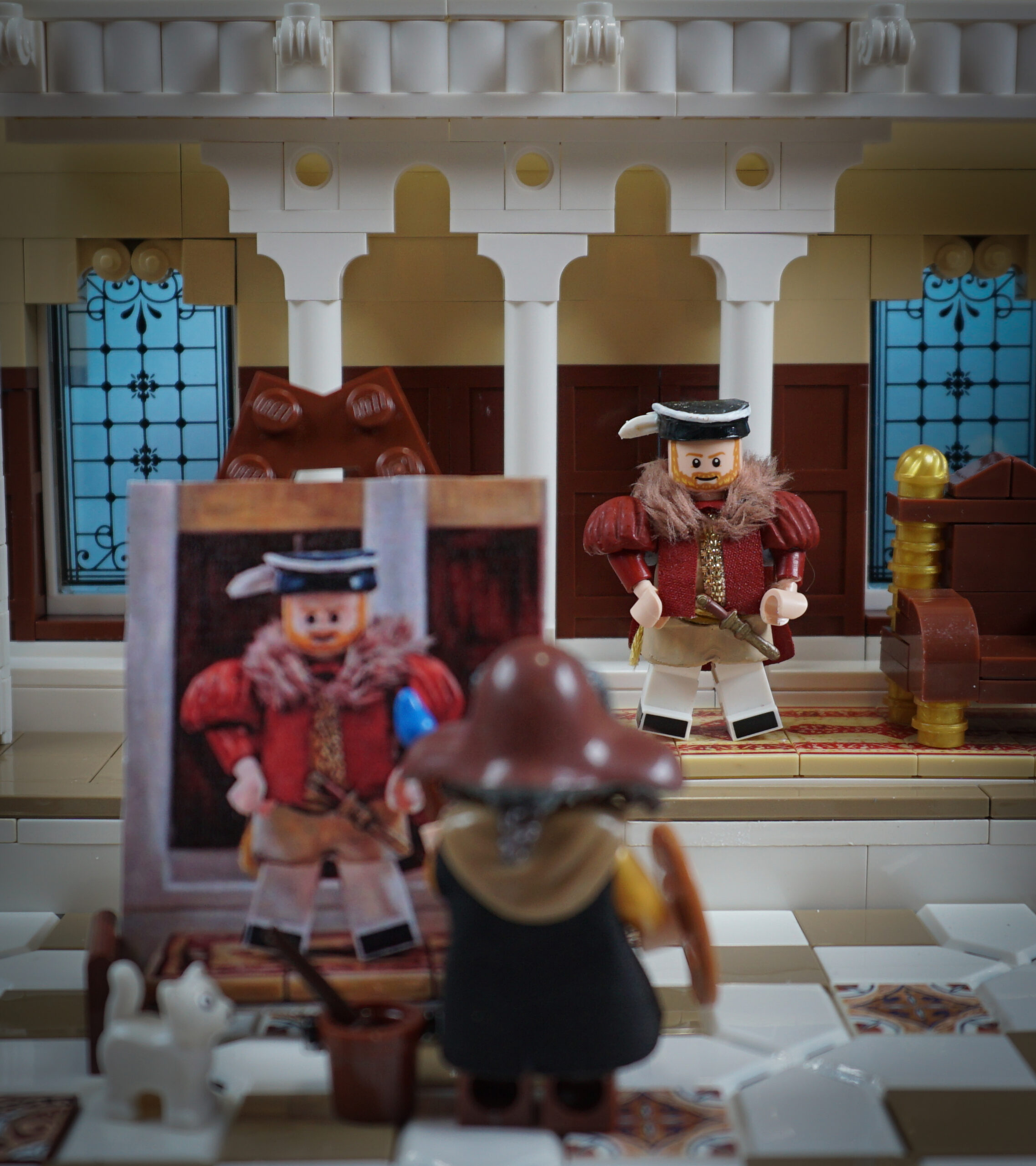
    I interviewed author Andrew Redfern about his forthcoming book, Minifigure Monarchs: A History of Great Brits in Little Bricks, which Andy describes as "the retelling of over 1200 years of history using thousands of Lego bricks".

    Andy answered the questions both by email and also on a zoom call with me - we go into more detail in the video call, so do watch that below.

    1. Where does your interest in history come from? What are some of the periods you're really fascinated by and why? - I have always loved History, but during lockdown I started reading into periods I am less familiar with and listening to history podcasts. Growing up I loved anything with knights and castles, so naturally the period I am most fascinated by is medieval history such as The Wars of the Roses. You’ll probably have guessed that my favourite Lego theme is Castle.
    2. How did the concept of the book come about? What was the starting idea, then how did the project evolve? -
      I’ve always found ways to involve Lego into my work. I’m a teacher and in the past I’ve used Lego to produce revision guides for my students. I wrote a series of books called ‘Business in Bricks’ a revision guide for Business Studies. I’ve also authored a few books in my field. I really enjoyed the publishing process so wanted to do something else that would allow me to play around with Lego whilst creating something unique.
      The project has evolved considerably, Some of my builds for the early kings are quite basic, but as time passed the I’ve tried more ambitious builds, spent more time customising the minifigures and added more content to the book. My hobby has allowed me to connect with some great people who share my passion for Lego and history. Some have even agreed to let me use their wonderful creations in the book, for which I am hugely grateful.
    3. What is it about marrying history together with LEGO models that is so appealing? How will the two things will complement each other? - The combination of History and Lego is very popular. That is evident through the MOCs people share on social media or exhibit at Lego conventions. History is a story and Lego is a fantastic medium for storytelling. In the book I’m trying to capture moments in time and modern minifigures with their expressions can really capture the emotions of a moment.
      I’ve not shied away from difficult concepts in the book such as slavery, the Holocaust and the British Empire. Lego can make these topics accessible without trivialising them. Lego draws in people of all ages. I’ve not written the book for children, but as a teacher I do hope it will help make history more accessible to a younger audience.
    4. When did you start working on the project? - I think I built the first few scenes for the project in January 2021. I launched the Instagram account in April 2021. To be honest, there was a year in there when I did very little, when our daughter was born!
    5. What was your research process like for the book? - I take a monarch at a time. The process really involves two things. Firstly, working out what the most important and interesting things are to include within a handful of pages. Secondly, deciding on the builds that will work for the situation and time periods, but more importantly, what will be fun to make and will capture peoples imagination. I’m normally reading books and listening to podcasts months in advance to research and plan each king or queen. This is so I have time to plan the builds, gather the pieces, and where necessary, customise the minifigures. Some monarchs obviously take longer than others. Henry VIII took a long time to complete with seven separate builds and George III alone covers 20 pages in the book. George III reign covers so much, including the American Revolutionary War and the Napoleonic Wars.
    6. What is your favourite build in the book? - That’s a tough question. There are some really talented builders who are contributing to different sections of the book, but If I had to go for one of my own then I would say The 1st Battle of St. Albans. I choose this because there are so many custom items within the shot. Each suit of armour, shield and flag is custom to the noble family that fought in the battle. I’m also pleased with the lighting of this shot. The scene represent the fighting in the narrow streets of St. Albans during this 15th Century battle.
    7. How can people support/order the book? - The book is being funded as a Kickstarter campaign and is live available throughout July 2025. People can make a pledge to order their copy of the book by going to https://www.kickstarter.com/projects/minifiguremonarchs/minifigure-monarchs
      I’m also on instagram and can be found at https://www.instagram.com/lego_minifigure_monarchs/.

    Minifigure Monarchs book