The Tudor Society

YOUR SEARCH UNCOVERED 2372 RESULTS

  • This week in history 25 September – 1 October

    On this day in history…

    25th September:

    1513 – Vasco Núñez de Balboa, the Spanish explorer, reached the Pacific Ocean. He was the first European to have discovered the Pacific Ocean from the New World.
    1525 – Explorer, navigator and naval administrator Stephen Borough (Burrough) was born at Borough House, Northam Burrows, Northam in Devon, to Walter Borough and his wife Mary Dough.
    1534 – Death of Pope Clement VII in Rome from eating a death cap mushroom. He was laid to rest in Santa Maria sopra Minerva.
    1554 – Death of Richard Sampson, Bishop of Coventry and Lichfield, and former President of the Council of the Welsh Marches, at Eccleshall in Staffordshire. He was buried in the parish church at Eccleshall. Sampson had acted as the King’s Proctor at the fall of Anne Boleyn in 1536.
    1555 – The Peace of Augsburg, or Augsburg Settlement, was signed by Charles V, Holy Roman Emperor, and the princes of the Schmalkaldic League at Augsburg.
    1558 – Gertrude Courtenay, Marchioness of Exeter, made her will. She died soon after and was buried in Wimborne Minster, Dorset. Gertrude was the mother of Edward Courtenay, 1st Earl of Devon, who was imprisoned for his part in Wyatt’s Rebellion in 1554. Gertrude, herself, was imprisoned in 1538, and her husband was executed for treason.
    1584 – Death of Thomas Copley, Roman Catholic, in exile near Antwerp. He had served Elizabeth I as Commissioner of the Peace for Surrey, and she was godmother to his son, Henry, but he lost royal favour when he converted to Catholicism in 1563. He left England in 1570, being unable to accept royal supremacy and Elizabeth I’s religious measures.
    1586 – Mary, Queen of Scots was moved to Fotheringhay Castle in Northamptonshire, and Elizabeth finally backed down and agreed to the appointing of 36 commissioners to act as judges in her trial.
    1594 – Death of Gregory Fiennes, 10th Baron Dacre, at Chelsea. He was buried in Chelsea Old Church.
    1602 – Death of William Redman, Bishop of Norwich, at the Episcopal Palace. He was buried in the cathedral choir.
    [Read More...]
  • Happy birthday to Anne of Cleves

    As today is the anniversary of the birth of Anne of Cleves on 22nd September 1515, I thought it was fitting to share some links to Anne of Cleves resources here on the Tudor Society site and to also share some recommendations for further reading.

    [Read More...]
  • September 2017 Live Chats – 22 and 30 September

  • This week in history 11 – 17 September

    A portrait of Heinrich Bullinger by Hans Asper

    On this day in history…

    11 September:

    1540 – Death of Thomas Kytson (Kitson) the Elder, merchant, Sheriff of London and builder of Hengrave Hall in Suffolk. He died at Hengrave and was buried in the church there.
    1561 – Mary, Queen of Scots began her first royal progress, visiting Holyrood Palace, Edinburgh Castle, Linlithgow Palace, Stirling Castle, Kincardine Castle, Leslie Castle, Perth, Dundee, St Andrews, Cupar, Falkland Palace and Edinburgh, between the 11th and 29th September.
    1572 – Pope Gregory XIII ordered a joint commemoration for the defeat of the Ottoman troops by the Holy League at the Battle of Lepanto on 7th October 1571, and for the St Bartholomew’s Day Massacre of the Huguenots in France, in August 1572.
    1581 – Death of Barnaby Fitzpatrick, 2nd Baron of Upper Ossory, at Dublin, in the home of a surgeon, William Kelly. In his youth, Fitzpatrick had been friends with Prince Edward (future Edward VI) and had been educated with him. He went on to serve his friend, when he became king, as a Gentleman of the Privy Chamber.
    1605 – Death of Sir Thomas Tresham the Younger, Catholic recusant politician, at his home, Rushton Hall, in Northamptonshire. He was buried at St Peter’s Church, Rushton.
    1613 – Death of Sir John Brograve, lawyer. He was buried at St Mary’s Church, Braughing, Hertfordshire in the Brograve Chapel. Brograve was one of the leading lawyers in the House of Commons in Elizabeth I’s reign.
    1614 – Death of Sir Edward Phelips, Elizabeth I’s Sergeant-at-Law and Speaker of the House of Commons in James I’s reign. He died at Rolls House, London, and was buried at St Catherine’s Church, Montacute, Somerset.

    [Read More...]
  • This week in history 14 – 20 August

    On this day in history…

    14th August:

    1473 – Birth of Margaret Pole, Countess of Salisbury, the daughter of George, Duke of Clarence, brother of Edward IV, and his wife Isabel Neville. Margaret was born at Farley Castle, near Bath.
    1479 – Date given as the birthdate of Katherine of York (Katherine, Countess of Devon), at Eltham Palace. Katherine was the daughter of Edward IV and Elizabeth Woodville, and she married Sir William Courtenay, the future Earl of Devon, in 1495.
    1513 – William Parr, Marquis of Northampton and brother of Queen Catherine Parr, was born.
    1539 – Death of Sir Peter Edgcumbe. Edgcumbe served as Sheriff of Devon and Cornwall at various times between 1494 and 1534, was at the 1513 Battle of the Spurs and was present at the Field of Cloth of Gold in 1520.
    1620 – Burial of Katherine Hastings (née Dudley), Countess of Huntingdon, in Chelsea Old Church. Katherine was the daughter of John Dudley, Duke of Northumberland, and his wife Jane, and was married to Henry Hastings, 3rd Earl of Huntingdon. Katherine was buried in her mother’s tomb.

    [Read More...]
  • 14 August – The births of Margaret Pole and William Parr

    On this day in history, 14th August, two prominent Tudor people were born: Margaret Pole, Countess of Salisbury, in 1473, and William Parr, Marquis of Northampton, in 1513.

    Margaret Pole, Countess of Salisbury, born on 14 August 1473, was the only surviving daughter of George, Duke of Clarence, and his wife, Isabel Neville. She was the niece of Edward IV and Richard III, and cousin of Elizabeth of York, Henry VII’s consort. Her brother, Edward, Earl of Warwick, was executed by Henry VII in 1499 in response to a request forwarded by the Spanish monarchs during the marital negotiations between Arthur, Prince of Wales, and Katherine of Aragon, since they feared that Warwick’s presence would encourage rebellion against the Tudor dynasty.

    [Read More...]
  • Online Tudor Summit – 3 and 4 September 2017

    Thank you to Roland Hui for letting me know about this online event.

    Join 16th-century historians and bloggers at The Tudor Summit 2017 happening online on September 3 and 4! Speakers familiar to Tudor Society members include Nathen Amin (author and founder of The Henry Tudor Society), Natalie Grueninger (creator of On the Tudor Trail), author Tony Riches, Rebecca Larson (creator of Tudors Dynasty and Roland Hui (author and blogger at Tudor Faces). The keynote address will be given by historian Sarah Gristwood, author of ‘Game of Queens’.

    [Read More...]
  • This week in history 31 July – 6 August

    On this day in history…

    31 July:

    1544 – The future Elizabeth I wrote her earliest surviving letter to her stepmother, Catherine Parr. It was written in Italian and in a beautiful italic hand. Click here to read more about it.
    1549 – Death of Edmund Sheffield, 1st Baron Sheffield, in Norwich. It is said that he was killed by a butcher called Fulke, while serving in the royal army against the rebels of Kett’s Rebellion. Apparently, he stumbled into a ditch and then was killed by a blow from Fulke. Sheffield was buried in St Martin’s at the Palace, Norwich.
    1553 – Henry Grey, Duke of Suffolk, “was discharged out of the Tower by the Earle of Arundell and had the Quenes pardon.”
    1574 – Death of John Douglas, Archbishop of St Andrews and educational reformer, in St Andrews. He was buried in the public cemetery. It is said that he died in the pulpit.

    [Read More...]
  • Thomas Cromwell’s Execution – His speech and prayer

    As it is the anniversary of the execution of Thomas Cromwell today, in this week’s Claire Chats video talk Claire talks about the primary sources accounts of Cromwell’s execution, his scaffold speech and the prayer he said. She talks about the controversy over his speech and what his prayer said about his faith.

    [Read More...]
  • Members’ book recommendations

    Thank you so much to those of you who completed our recent survey about Tudor books.

    We already have recommended reading lists for Tudor monarchs and various Tudor topics – see the Recommended Reading category, but I thought it would be good to make a list of books that Tudor Society members would recommend, and here it is. Please do leave a comment if you’d like to recommend some books and I can then add them to the list – thank you!

    [Read More...]
  • This week in history 24 – 30 July

    On this day in history…

    24th July:

    1534 – Jacques Cartier, the French explorer, landed in Canada, at Gaspé Bay in Quebec, and claimed it for France by placing a cross there.
    1553 – Birth of Richard Hesketh, merchant and conspirator, in Lancashire. In 1593, Hesketh urged Ferdinando Stanley, 5th Earl of Derby, to lead a rebellion to claim the throne of England, through his descent from Mary Tudor, Queen of France. Stanley turned Hesketh in, and the latter was executed on 29th November 1593.
    1567 – Mary, Queen of Scots was forced to abdicate. Her one-year-old son, James, became King James VI of Scotland with his uncle, Mary’s illegitimate half brother, James Stewart, Earl of Moray, acting as regent.
    1594 – John Boste, Roman Catholic priest and martyr, was hanged, drawn and quartered in Durham after being accused of leaving and re-entering England without permission. He was canonized in 1970 by Pope Paul VI.

    [Read More...]
  • 22 July – Feast of St Mary Magdalene

    The Feast of St Mary Magdalene (or Magdalen), “apostle to the apostles” and the woman said to have witnessed Christ’s crucifixion and resurrection, has been celebrated on 22 July since the 8th century.

    [Read More...]
  • 19 July 1553 – Mary I is triumphant

    On 19th July 1553, thirteen days after the death of her half-brother, fifteen-year-old King Edward VI, thirty-seven-year-old Mary Tudor was proclaimed queen in place of her first cousin once removed, Lady Jane Grey, or Queen Jane.

    The Chronicle of the Grey Friars of London records:

    “Item the xix. day of the same monyth, [which] was sent Margarettes evyne, at iiij. of clocke at after-none was proclamyd lady Ma[ry to] be qwene of Ynglond at the crose in Cheppe with the erle of Shrewsbery, the earle [of Arundel], the erle of Pembroke, with the mayer of London, and dyvers other lordes, and many of the ald[dermen] and the kynges schrffe master Garrand, with dyvers haroldes and trompettes. And from thens cam to Powlles alle, and there the qwere sange Te Deum with the organs goynge, with the belles ryngynge, the most parte alle [London], and that same nyght had the [most] parte of London Te Deum, with bone-fyers in every strete in London, with good chere at every bone [fyer], the belles ryngynge in every parych cherch, and for the most parte alle nyght tyll the nexte daye to none.”

    [Read More...]
  • This week in history 17 – 23 July

    On this day in history…
    17th July:

    1497 – Death of Sir James Ormond (Butler), administrator and illegitimate son of John Butler, 6th Earl of Ormond, in a duel with Sir Piers Butler, near Kilkenny. The Butlers of Ormond were related to Thomas Boleyn, Queen Anne Boleyn’s father.
    1537 – Burning of Janet Douglas, Lady Glamis, on the castle hill at Edinburgh after being found guilty of two counts of treason. She had been charged with plotting the King’s death (by poison) and assisting and corresponding with her brothers, Sir George Douglas and Archibald Douglas, 6th Earl of Angus.
    1555 – Protestant martyrs Christopher Wade (Waid) of Dartford, linen-weaver, and Margaret Polley of Tunbridge, were burned for heresy. Click here to read more.
    1555 – Birth of Richard Carew, antiquary, bee-keeper, translator and poet, at Antony House, Torpoint, Cornwall. Carew was the eldest son of Thomas Carew and his wife Elizabeth (née Edgcumbe). Carew was a member of the Elizabethan Society of Antiquaries, and his works included his “Survey of Cornwall”, a county history.
    1565 – Death of Sir Thomas Dacre of Lanercost, illegitimate son of Thomas Dacre, 2nd Baron Dacre. He died while holding the office of Sheriff of Cumberland.
    1601 – Death of Richard Latewar, poet, theologian, Vice-President of St John’s College, Oxford, and chaplain to Charles Blount, 8th Baron Mountjoy. He died from a gunshot wound sustained in a skirmish at Bennurb, in Ireland, while on a campaign there with Mountjoy. Latewar was buried at Armagh Cathedral, and a monument was erected to him in the chapel of St John’s in Oxford.

    [Read More...]
  • Mary Howard, Duchess of Richmond and Somerset

    Born in 1519, Mary Howard was the daughter of Thomas Howard, third Duke of Norfolk. Her mother, Elizabeth, was the daughter of the disgraced Edward Stafford, Duke of Buckingham. Mary was highly educated, and spent the majority of her childhood at the family residences in Norfolk. As she entered her teenage years, Mary participated in ceremonies at court, including that of her kinswoman Anne Boleyn’s elevation to the marquisate of Pembroke in September 1532. It is likely that Mary also attended Anne’s coronation the following summer, and she carried the chrism at Princess Elizabeth’s christening in September. She seems to have shared the queen’s reformist sympathies and was rebuked by her brother for her love of reading the scriptures.

    [Read More...]
  • The Northern Rebellion of 1569

    The Northern Rebellion of 1569, also known as the Revolt of the Northern Earls, was the only major armed rebellion during the reign of Elizabeth I. In the last months of 1569, the earls of Northumberland and Westmorland rebelled against the queen in an attempt to preserve Catholicism. The establishment of the Elizabethan settlement alienated those who favoured the old religion, and their disaffection increased as growing numbers were arrested and imprisoned for religious nonconformity. This disaffection was spurred by the arrival in England of Mary, Queen of Scots, in 1568, the year before the rebellion. Mary had been forced from her throne after the murder of her second husband Henry, Lord Darnley, and her swift remarriage to Darnley’s suspected murderer, James, Earl of Bothwell. Mary’s Catholic faith made her a sympathetic figure to traditionalists in England. Although the majority of English Catholics remained loyal to Elizabeth, some were determined to force her from the throne and replace her with her cousin Mary, who they hoped would restore Catholicism to the realm.

    [Read More...]
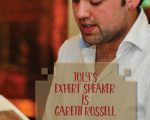
  • Expert Talk – The Rise of the Howard Dynasty – Gareth Russell

    For this month’s expert talk we have Gareth Russell, author of “Young and Damned and Fair”, talking about the rise of the Howard family.

    [Read More...]
  • This week in history 3 – 9 July

    On this day in history…

    3 July:

    1495 – The pretender Perkin Warbeck landed at Deal in Kent with men and ships. Around 150 of his men were killed and over 160 captured by Henry VII’s troops. Warbeck escaped, fleeing to Ireland. Warbeck claimed to be Richard, Duke of York, the younger of the Princes in the Tower.
    1533 – William Blount, 4th Baron Mountjoy, Catherine of Aragon’s Chamberlain, was ordered to inform Catherine again that she must recognise her new title of ‘Princess Dowager’ and not use the title of ‘Queen’. Catherine refused, and whenever she saw her new title written in letters, she crossed it out with a pen.
    1541 – Death of Girolamo Ghinucci, Italian papal administrator, Bishop of Worcester, papal nuncio and ambassador. He died in Rome and was buried in the church of San Clemente.
    1557 – Mary I bid farewell to her husband, Philip of Spain, at Dover as he set off for war with France.
    1579 – Death of Sir Edward Fitton, administrator and Vice-Treasurer for Elizabeth I in Ireland. His death was recorded as being ‘from the disease of the country’, which he had apparently caught on an expedition to Longford. He was buried in St Patrick’s Cathedral, Dublin, beside his wife, Anne.
    1594 (3rd or 4th July) – Executions of Catholic priest John Cornelius, Thomas Bosgrave (a relation of Sir John Arundell) and two servants of the Arundell family at Dorchester. They had been arrested when Cornelius was found hiding in a priest hole at Chideock Castle on 14th April 1594

    [Read More...]
  • Burial in Tudor times – Part 2: Embalming and heart and entrails burial

    A lovely subject, I know! Yes, in today’s Claire Chats talk I’m discussing how the remains of the wealthier classes and royals were prepared for burial. I discuss the different types of embalming before moving on to the practice of heart and entrails burial. I also look at what we know from primary sources documents about how various Tudor royals were prepared for burial. You’ll find all the links and further reading recommendations below the video.

    [Read More...]
  • This week in history 26 June – 2 July

    On this day in history…

    26th June:

    1513 – Burial of Sir Edmund Carew, landowner, administrator and soldier, in the church of St Nicholas, Calais, after he was shot dead during the siege of Thérouanne in Artois.
    1535 – A new commission of oyer and terminer was appointed for the county of Middlesex. The commission ordered the Sheriff of Middlesex to gather the Grand Jury on the 28th June at Westminster Hall. This was to try Sir Thomas More who, according to the indictment, had been “traitorously attempting to deprive the King of his title of Supreme Head of the Church”.
    1568 – Death of Thomas Young, Archbishop of York, at Sheffield. He was buried in York Minster.
    1576 – Death of Edward Dering, scholar, Church of England clergyman and controversial evangelical preacher, from tuberculosis at Thobie Priory in Essex. A collection of his works, which included sermons, lectures, prayers and letters, was first published in 1590.
    1596 – Burial of Sir John Wingfield in the cathedral at Cadiz, Spain. He was shot in the head in the attack on Cadiz on 21st June. At Wingfield’s funeral, “the generalls threw their handkerchiefs wet from their eyes into the grave” (Stow, 775) and the poet John Donne, who was a member of the expedition, composed an epigram as a tribute to Wingfield: “Farther then Wingefield, no man dares to go”.

    [Read More...]
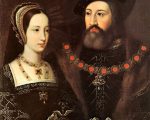
  • What is Mary Tudor holding in the portrait of her and Charles Brandon? Is it an artichoke?

    Charles Brandon and Mary Tudor

    Thank you to Simon for asking the question “What is Mary Tudor holding in the portrait of her and Charles Brandon? Is it an artichoke?”. I knew just the right person to send this question to! I sent it to art historian and author, Roland Hui, who has actually written a very detailed article on this painting (link at bottom). Thank you Roland!

    The object in Mary Tudor’s right hand is an artichoke, which interestingly enough is shaped like a royal orb. It is uncertain why Mary is pictured with one, but as artichokes were grown in the south of France, it may have been used to allude to her as France’s former Queen. As well, it might have been meant as a symbol of love and fecundity. Artichokes were said to be sacred to Venus/Aphrodite, the Classical goddess of love and beauty.

    The staff emerging from the artichoke is a winged caduceus. This was the magical wand associated with the god Mercury/Hermes. There was an old legend that Mercury had come upon two battling snakes. To make peace between them, the god separated the two with a stick. The serpents then wrapped themselves around it. This uniting of opposites was a fitting representation of Mary Tudor and Charles Brandon’s marriage – the merger of ‘cloth of gold’ and ‘cloth of frieze’ as the couple were described in an inscription on the Yarnborough version of the painting. However, to make the caduceus (and the artichoke) appear less ‘pagan’, the wand is also in the form of a Christian tau-shaped cross.

    [Read More...]
  • Lettice Knollys

    Lettice Knollys was born on 8 November 1543 at Rotherfield Greys in Oxfordshire. She was the eldest of sixteen children born to Sir Francis Knollys and his wife, Katherine Carey. Lettice’s mother was the daughter of Mary Boleyn, meaning that Lettice was the great niece of Anne Boleyn. She was also a kinswoman of Elizabeth I. Francis and Katherine Knollys departed for the Continent in the mid-1550s to escape the religious persecution during Mary I’s reign, but it is possible that Lettice remained with Elizabeth Tudor at Hatfield. When Elizabeth came to the throne in 1558, Francis was appointed vice-chamberlain and Katherine, who was close to the queen, was appointed a lady of the bedchamber. Lettice, now in her teens, served as a gentlewoman of the privy chamber.

    [Read More...]
  • Cardinal Thomas Wolsey

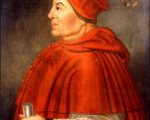
    Thomas Wolsey was born between 1470 and 1473 in Ipswich, Suffolk. He was the son of Robert and Joan Wolsey. Robert owned a tavern in the parish of St. Mary at the Elms in Ipswich. Traditionally, Wolsey’s father has been identified as a butcher and cattle dealer. Thomas Wolsey’s humble origins proved a source of mirth to his critics during his long career. During his childhood and adolescence, Wolsey attended school in Ipswich and later studied at Magdalen College, Oxford, graduating with BA in 1486 when he was about fifteen years old. A decade later, he was ordained as a priest in the parish church of St. Peter in Marlborough. The year before, he graduated with MA. For a short period, Wolsey served as master of Magdalen School and, later, as dean of divinity.

    [Read More...]
  • Katherine Howard

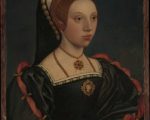
    Like her cousin Anne Boleyn, Katherine Howard was a granddaughter of Thomas Howard, 2nd Duke of Norfolk, and a niece of the third duke. She was born in about 1523, probably at Lambeth, to Edmund and Jocasta Howard. During her infancy, Katherine’s mother died and her father, who seems to have been both irresponsible and financially straitened, remarried twice. In 1531, when she was about eight years old, she departed for the household of her step-grandmother, Agnes, Dowager Duchess of Norfolk, at Cheshunt. The dowager duchess, who was one of the premier noblewomen in England, also kept a household at Norfolk House in London and regularly resided at court. Her periods of absence prevented her from supervising her household as closely as she might have liked.

    [Read More...]
  • William Paulet, Marquess of Winchester

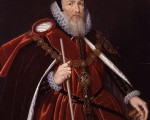
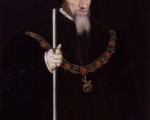
    Portrait of William Paulet, 1st Marquess of Winchester, holding the white staff of the office of Lord High Treasurer

    William Paulet was born in 1474/5 at Fisherton-Delamare in Wiltshire. He was the eldest son of Sir John Paulet and his wife, Alice. William’s date of birth is based on the testimony of William Camden and Sir Richard Baker confirming that he was ninety-seven at his death in 1572, an exceptionally advanced age even for modern times. He attended school at Thavies Inn and subsequently studied at the Inner Temple, becoming an utter barrister. By 1509, he had married Elizabeth Capel, daughter of the lord mayor of London, by whom he had several children including John, future second Marquess of Winchester, Chidiock and Giles.

    [Read More...]
  • This week in history 29 May – 4 June

    On this day in history…

    29th May:

    1500 – Death of Thomas Rotherham, Archbishop of York, at Cawood Castle, Yorkshire. He was buried in York Minster.
    1533 – Anne Boleyn’s coronation pageantry began with a river procession.
    1542 – Death of Sir Thomas Neville, lawyer and Speaker of the House of Commons, county commissioner in Kent, Surrey, Sussex, and Middlesex, and Knight of St John. He was the fifth son of George Neville, 2nd Baron Bergavenny. Neville was buried in Mereworth church in Kent.
    1546 – Murder of David Beaton, Cardinal and Archbishop of St Andrews, at the castle in St Andrews. He was killed by a small group of Fife lairds. One motive was their outrage at the recent trial and execution of Protestant preacher George Wishart at St Andrews.
    1555 – Birth of George Carew, Earl of Totnes, soldier, administrator and Lord President of Munster. He was a member of James I’s Privy Council and his council of war. He was also a friend of Sir Walter Ralegh, and pleaded unsuccessfully for his life.
    1593 – Hanging of religious controversialist John Penry at St Thomas-a-Watering in Surrey. Penry had been found guilty of “publishing scandalous writings against the church” after having been linked to the “Marprelate religious tracts.”
    1623 – Burial of Francis Anthony, alchemist and physician, in the church of St Bartholomew-the-Great.

    [Read More...]
  • Margaret Pole, Countess of Salisbury

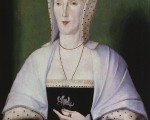
    Margaret Pole, Countess of Salisbury, born on 14 August 1473, was the only surviving daughter of George, Duke of Clarence, and his wife, Isabel Neville. She was the niece of Edward IV and Richard III, and cousin of Elizabeth of York, Henry VII’s consort. Her brother, Edward, Earl of Warwick, was executed by Henry VII in 1499 in response to a request forwarded by the Spanish monarchs during the marital negotiations between Arthur, Prince of Wales, and Katherine of Aragon, since they feared that Warwick’s presence would encourage rebellion against the Tudor dynasty.

    Perhaps in 1487, when she was fourteen, Margaret married Sir Richard Pole, a disparaging marital alliance from her perspective in view of her royal blood. Richard was later made an esquire of the body, chamberlain of North Wales, chamberlain of Chester and a member of the council in the Welsh Marches. In 1493, he was appointed chamberlain to the king’s son, Arthur, whose household was established at Ludlow that year. In 1499, he was elected to the Order of the Garter and participated at the proxy wedding of Arthur to Katherine. In 1504, Richard died, and Margaret was granted a generous loan to ensure that her husband’s funeral would be appropriately honourable. When not at court, she seems to have resided primarily at Warblington Castle and Bisham Manor. With Richard, she had five children: Henry, Arthur, Reginald, Geoffrey and Ursula.

    [Read More...]
  • The Sphere of Light: The Anne Boleyn saga as never told before – 1 July 2017, Cambridge, UK

    Ann Henning Jocelyn, writer and director of “The Sphere of Light: The Anne Boleyn saga as never told before” has asked me to share this information about the play. If you can get to Cambridge in the UK then do go and see it and then let us know what it was like.

    Here are the details:

    To be presented as a rehearsed reading at the Howard Theatre, Downing College, Cambridge, on July 1st, 2017, at 4 PM and 8 PM.
    Tickets at £12/10 from www.adcticketing.com Tel: 01223 300 085.

    [Read More...]
  • Katherine of Aragon

    Katherine of Aragon was born into the royal Spanish household on 16th December 1485, at the Archbishop’s Palace of Alcalá de Henares. She was the daughter of King Ferdinand II of Aragon and his illustrious wife, Isabella I of Castile. Katherine’s parents were the Catholic powerhouses of Western Europe during the late fifteenth century, therefore during her youth, the young Spanish princess would have envisioned the grand future that awaited her, with an ambitious marriage into an equally powerful European royal household.

    At aged just three, her parents were in negotiations with the English king, Henry VII, for a suitable marriage to his son, Arthur. The Tudors had recently taken the throne after defeating the Yorkist Richard III at Bosworth in 1485, although their Lancastrian claimant to the throne was still vulnerable to usurpation. England required international support to ensure the legitimacy and security of their house. An Anglo-Spanish alliance would be vitally important for the country’s prosperity and position in European politics.

    [Read More...]
  • This week in history 22 – 28 May

    On this day in history…

    22nd May:

    1490 – Death of Edmund Grey, 1st Earl of Kent.
    1537 – Edward Seymour, brother of Jane Seymour, was sworn in as a Privy Councillor.
    1538 – The burning of John Forest, Franciscan friar and martyr, at Smithfield for heresy, for his allegiance to Rome.
    1539 – Probable birthdate of Edward Seymour, 1st Earl of Hertford and son of Edward Seymour, Duke of Somerset (the Edward mentioned above). Hertford was also the husband of Katherine Grey, sister of Lady Jane Grey.
    1570 – Death of John Best, Bishop of Carlisle. He was buried in Carlisle Cathedral.

    [Read More...]