The Tudor Society

YOUR SEARCH UNCOVERED 1673 RESULTS

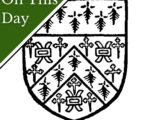
  • August 11 – Sir John Kingsmill

    Kingsmill shield. Argent crusilly fitchy sable a cheveron ermine between three mill-rinds sable and a chief ermine.

    On this day in Tudor history, 11th August 1556, politician Sir John Kingsmill, a man who had been close to Thomas Cromwell and Thomas Wriothesley, died.

    He served as a sheriff in the reign of Henry VIII and as a commissioner for the dissolution of chantries in 1548 to Edward VI.

    Here are some more facts about Sir John Kingsmill:

    [Read More...]
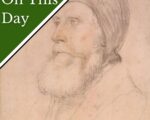
  • August 3 – Lord Russell prepares to fight the rebels of the Prayer Book Rebellion

    Drawing of John Russell, 1st Earl of Bedford, by Hans Holbein the Younger

    On this day in Tudor history, 3rd August 1549, in the reign of King Edward VI, Lord Russell marched his 1000 men from Honiton to Woodbury and set up camp for the night.

    Russell was heading towards Clyst St Mary and the rebels of the Prayer Book Rebellion.

    In 1549, the Book of Common Prayer was introduced. It was in English and it replaced the Catholic Mass. This change wasn’t embraced by all and there was trouble in Devon and Cornwall. The rebels called for the rebuilding of abbeys, the restoration of the Six Articles, the restoration of prayers for souls in purgatory, the policy of only the bread being given to the laity, and the use of Latin for the mass.
    The rebels were defeated by the crown in a series of battles.

    [Read More...]
  • July 31 – The brutal death of Edmund Sheffield, 1st Baron Sheffield

    On this day in Tudor history, 31st July 1549, in the reign of King Edward VI, Edmund Sheffield, 1st Baron Sheffield, was killed in Norwich.

    Twenty-eight-year-old was serving in the royal force led by William Par, Marquess of Northampton, during Kett’s Rebellion in East Anglia.

    They were trying to take Norwich back from the rebels, but suffered a brutal attack in the streets for the city. Apparently, Sheffield stumbled into a ditch and then was killed by a blow from a butcher named Fulke.

    [Read More...]
  • July 27 – A royal tutor and secretary of state is sent to the Tower

    On this day in Tudor history, 27th (or 28th) July 1553, King Edward VI’s former tutor and principal secretary, thirty-nine-year-old Sir John Cheke, was sent to the Tower of London.

    Edward VI had died on 6th July 1553 and his council followed his wishes, proclaiming Lady Jane Grey as Queen Jane…

    [Read More...]
  • July 8 – Kett’s Rebellion

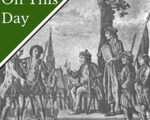
    An 18th-century depiction of Robert Kett and his followers under the Oak of Reformation on Mousehold Heath

    On this day in Tudor history, 8th July 1549, in the reign of King Edward VI, Kett’s Rebellion began.

    Robert Kett, a Norfolk farmer, agreed to lead a group of protesters who were angry with the enclosure of common land. The protesters marched on Norwich, and by the time they reached the city walls, it is said that they numbered around 16,000.

    [Read More...]
  • June 17 – Sir George Blage

    A silhouette of a man's side profile

    On this day in Tudor history, 17th June 1551, in the reign of King Edward VI, Sir George Blage (Blagge), courtier, diplomat, poet and good friend of Sir Thomas Wyatt the Elder, died at Stanmore in Middlesex. He is known for the Blage Manuscript, in which he collected the poetry of friends such as Wyatt.

    In Henry VIII’s reign, Blage carried out diplomatic missions, was a member of the king’s privy chamber and fought in the king’s 1543-45 French campaign. He also served as Chief Steward and Bailiff of Maidstone, and Comptroller of the Petty Custom of London, and as a member of Parliament.

    Blage was of the reformed faith and was arrested in July 1546 after he was heard denouncing the mass. Blage was condemned to death but, fortunately, was pardoned by Henry VIII.

    [Read More...]

  • June 12 – Richard Rich, 1st Baron Rich

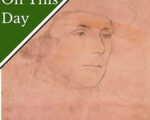
    A preparatory sketch of Richard Rich, 1st Baron Rich, by Hans Holbein the Younger

    On this day in Tudor history, 12th June 1567, Richard Rich, 1st Baron Rich, died at Rochford.

    Rich served Edward VI as Lord Chancellor and Mary I as a privy councillor, but he is mainly known for his involvement in the cases of Sir Thomas More and Protestant martyr Anne Askew.

    As solicitor general, in 1535, Rich was involved in prosecuting his former friend and colleague, Sir Thomas More. He interviewed More at the Tower and reported at his trial that More had denied the royal supremacy. This was enough to convict More.

    [Read More...]
  • June 4 – Robert Dudley marries Amy Robsart

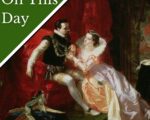
    Leicester and Amy Robsart at Cumnor Hall (1866) by Edward Matthew Ward

    On this day in Tudor history, 4th June 1550, in the reign of King Edward VI, Robert Dudley married Amy Robsart.

    [Read More...]
  • May 25 – Lady Jane Grey becomes Lady Jane Dudley

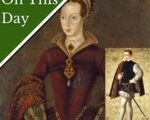
    The Streatham Portrait of Lady Jane Grey by an unknown artist, and a 19th century portrait of Lord Guildford Dudley

    On this day in Tudor history, 25th May 1553, in the reign of King Edward VI, Lady Jane Grey married Lord Guildford Dudley at Durham Place, the Dudley family’s London residence.

    Jane was the daughter of Henry Grey, Duke of Suffolk, and Frances Brandon, and granddaughter of Charles Brandon, Duke of Suffolk, and Mary Tudor, Queen of France, and Guildford was the son of John Dudley, Duke of Northumberland, and Jane Guildford, and the grandson of Edmund Dudley, one of Henry VII’s chief advisors.

    [Read More...]
  • May 23 – Henry Grey is installed as a Knight of the Garter

    On this day in Tudor history, 23rd May 1547, in the reign of King Edward VI, Henry Grey, 3rd Marquis of Dorset was installed as a Knight of the Garter.

    Grey had longed to be a garter knight for years, but even though his father-in-law, Charles Brandon, Duke of Suffolk, nominated him annually, he was not elected. Things changed in Grey’s favour when Edward VI became king.

    [Read More...]
  • May 7 – An English assault on Leith

    On this day in Tudor history, 7th May 1560, in the reign of Elizabeth I, English troops charged the wall of Leith at the siege of Leith.

    In 1548, during the War of the Rough Wooing, which had broken out over Scotland’s refusal to marry Mary Queen of Scots off to Edward VI, Scotland had invited French troops to protect the port of Leith. They set up a garrison and were still there 12 years later. Protestant reformers turned to England to help them remove these French Catholics.

    [Read More...]
  • April 1 – Author and soldier Thomas Churchyard

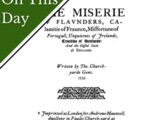
    Title page of Thomas Churchyard's work "The Miserie of Flaunders"

    On this day in Tudor history, 1st April 1604, author and soldier Thomas Churchyard died in Westminster, London.

    Churchyard started writing in the reign of Edward VI and some of his poems were published in “Tottel’s Miscellany”.

    Churchyard was also an active soldier, serving with the Duke of Somerset in Scotland and fighting as a mercenary for Protestants in Europe.

    Let me share with you a few facts about this man…

    [Read More...]
  • March 24 – Judge and Speaker of the House of Commons Sir James Dyer

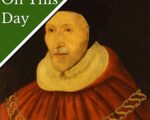
    A portrait of judge Sir James Dyer

    On this day in Tudor history, 24th March 1582, , Sir James Dyer, judge, law reporter, Member of Parliament and Speaker of the House of Commons, died at the age of 72. His other offices included King’s Sergeant-at-Law, Judge of the Common Pleas and Chief Justice of the Common Pleas. He was buried at Great Staughton Church in Huntingdonshire, next to his wife.

    Dyer was Speaker of the House of Commons during the reign of King Edward VI and served as Chief Justice of the Common Pleas from January 1559 until his death.

    [Read More...]
  • March 14 – Arthur Bulkeley, Bishop of Bangor, chaplain to Charles Brandon and Thomas Cromwell

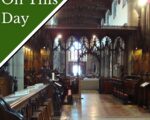
    Photo of the quire of Bangor Cathedral by John Armagh

    On this day in Tudor history, 14th March 1553, in the reign of King Edward VI, Arthur Bulkeley, Bishop of Bangor, died at his home in Bangor. He was buried in the cathedral quire.

    Bulkeley, who was originally from Beaumaris in Anglesey, had been bishop since 1541. He’d previously served as chaplain to Charles Brandon and Thomas Cromwell.

    [Read More...]
  • March 10 – William Paulet, 1st Marquess of Winchester

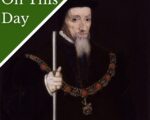
    Portrait of William Paulet, 1st Marquess of Winchester, holding the white staff of the office of Lord High Treasurer, NPG.

    On this day in Tudor history, 10th March 1572, in the reign of Queen Elizabeth I, nobleman and administrator William Paulet, 1st Marquess of Winchester, died at his home Basing House in Hampshire. He was said to be 97 years of age at his death. He was laid to rest in the parish church at Basing on 28th April.

    Paulet’s offices under Henry VIII included Lord Treasurer, Great Master of the Household and Lord Great Chamberlain, and he also served the king’s children, Edward VI, Mary I and Elizabeth I, in their reigns.

    [Read More...]
  • March 6 – Lord Chancellor Thomas Wriothesley is accused of abusing his authority

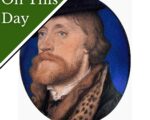
    Miniature of Thomas Wriothesley, Earl of Southampton, by Hans Holbein the Younger

    On this day in Tudor history, 6th March 1547, in the reign of King Edward VI, former Lord Chancellor to Henry VIII, Thomas Wriothesley, 1st Earl of Southampton, lost the Great Seal of his Lord Chancellorship and was confined to his home at Ely Place for abusing his authority.

    Wriothesley was found guilty of issuing a commission without the knowledge or permission of the other executors of Henry VIII’s will, but it was probably more to do with his opposition to Edward Seymour, Duke of Somerset, becoming Lord Protector.

    [Read More...]
  • February 26 – George Carey, 2nd Baron Hunsdon

    Miniature of George Carey, 2nd Baron Hunsdon, by Nicholas Hilliard

    On this day in Tudor history, 26th February 1548, in the reign of King Edward VI, George Carey, 2nd Baron Hunsdon, was born. He was the eldest son of Henry Carey, 1st Baron Hunsdon, and Anne Morgan, and the grandson of Mary Boleyn.

    [Read More...]
  • February 17 – Henry Radcliffe, 2nd Earl of Sussex

    Arms of Henry Radcliffe, 2nd Earl of Sussex

    On this day in Tudor history, 17th February 1557, Henry Radcliffe, 2nd Earl of Sussex, died at Cannon Row in Westminster. He was buried firstly at St Laurence Pountney and then moved to Boreham in Essex.

    Sussex, who was about 50 at his death, was the son of courtier and soldier Robert Radcliffe, 1st Earl of Sussex. He accompanied the king and Anne Boleyn on their 1532 Calais visit and was made a Knight of the Bath in the celebrations for Anne’s coronation in 1533. He commanded men under the Duke of Norfolk in Henry VIII’s French campaign in 1544 and was lord sewer at Edward VI’s coronation in 1547.

    [Read More...]
  • February 6 – Edmund Plowden

    A line engraving of Edmund Plowden by T. Stayner

    On this day in Tudor history, 6th February 1585, lawyer, legal scholar and law reporter, Edmund Plowden, died in London.

    Plowden was laid to rest in the Middle Temple Church.

    Cambridge University’s libraries and the British Library contain manuscripts of his commentaries and opinions, and he is known for his 1571 volume of law reports covering cases during the reigns of Edward VI, Mary I and Elizabeth I.

    [Read More...]
  • January 12 – William Howard, 1st Baron Howard of Effingham, Lord Admiral

    Painting of William Howard, 1st Baron Howard of Effingham, English School

    On 12th January 1573, in the reign of Queen Elizabeth I, William Howard, 1st Baron Howard of Effingham, died at Hampton Court Palace.

    The diplomat, soldier and naval commander was buried at Reigate Church.

    Howard had served four Tudor monarchs: Henry VIII, Edward VI, Mary I and Elizabeth I, and had been Lord Admiral and Lord Chamberlain of the Household. At one point, he was convicted of misprision of treason, but was fortunately pardoned.

    [Read More...]
  • December 7 – The execution or rebel Robert Kett

    On this day in Tudor history, 7th December 1549, in the reign of King Edward VI, Robert Kett, the former leader of Kett’s Rebellion, was executed.

    The rebel leader was hanged from the walls of Norwich Castle after being found guilty of treason. His brother William was hanged the same day, but from the steeple of Wymondham Church.

    You can find out all about Robert Kett and his rebellion in this video:

    [Read More...]
  • December 6 – Sir Hugh Paulet

    Portraits of Henry VIII, Edward VI, Mary I and Elizabeth I

    On this day in Tudor history, 6th December 1573, in the reign of Queen Elizabeth I, Sir Hugh Paulet died at his home in Hinton St George in Somerset.

    Paulet distinguished himself as a soldier in Henry VIII’s reign, and in Edward VI’s reign he served as Governor of Jersey. Although he was a Protestant, he served as Vice-President of the Welsh Marches in Mary I’s reign, and went on to have a successful career in Elizabeth I’s reign.

    Paulet was an important man and a royal servant, but still managed to die a natural death at his home.

    Find out more about Sir Hugh Paulet…

    [Read More...]
  • December 4 – Thomas Cranmer is no longer Archbishop of Canterbury

    Portrait of Thomas Cranmer, Archbishop of Canterbury.

    On this day in Tudor history, 4th December 1555, in the reign of Queen Mary I, papal sentence was passed in Rome on Thomas Cranmer, who had served as Archbishop of Canterbury in the reigns of King Henry VIII and King Edward VI.

    The papal sentence deprived Cranmer of his archbishopric and gave permission for his fate to be decided by the secular authorities.

    Let me explain what led Cranmer to this day and also what happened next…

    [Read More...]
  • November 29 – Anthony Browne, a man close to the monarchs and who kept his head!

    Portrait of Sir Anthony Browne, 1st Viscount Montagu, by Hans Eworth.

    On this day in Tudor history, 29th November 1528, in the reign of King Henry VIII, Anthony Browne, 1st Viscount Montagu, was born.

    Montagu began his court career with the help of his father in Henry VIII’s reign. He was made a Knight of the Bath when Edward VI became king, served as a privy councillor in Queen Mary I’s reign and died a natural death in Queen Elizabeth I’s reign. Montagu even survived being implicated in a rebellion!

    Who was Anthony Browne, 1st Viscount Montagu, and just how did he manage to not only have an excellent court career, but leave a fortune to his grandson, when he was a Catholic in Elizabeth I’s reign?

    [Read More...]
  • November 24 – The death of John Knox

    On this day in Tudor history, 24th November 1572, John Knox died at his home in Edinburgh.

    The Scottish clergyman, famous Reformer, royal chaplain, and founder of Presbyterianism had a peaceful end, dying as his second wife, Margaret, read aloud from Paul’s First Letter to the Corinthians.

    John Knox is known for bringing the Protestant reformation to the church in Scotland and for his controversial views about women rulers. Knox was also chaplain to King Edward VI and had a very eventful life, being taken prisoner by the French and being forced into service on the galleys of their fleet at one point.

    Find out more about John Knox, his life and career…

    [Read More...]
  • Talks about Jane Seymour

    A portrait of Jane Seymour by Hans Holbein the Younger

    As this week has been the anniversary of Jane Seymour giving birth to Edward VI. I thought I’d share with you these expert talks on Jane Seymour from the Tudor Society archives…

    [Read More...]
  • October 11 – Prayers for Queen Jane Seymour for her difficult labour

    On this day in Tudor history, 11th October 1537, in the reign of King Henry VIII, London was praying for the king’s third wife, Queen Jane Seymour.

    Jane was in labour with her first and only child, and the labour was long and difficult. On 11th October 1537, there was a solemn procession in the city of London to pray for her. After about thirty hours, Jane gave birth to a healthy baby boy, who would become King Edward VI.

    Let me share some contemporary sources about the procession and Jane’s labour…

    [Read More...]
  • September 23 – Bishop John Jewel dies

    On this day in Tudor history, 23rd September 1571, John Jewel, Bishop of Salisbury, died at Monkton Farleigh Manor. He was laid to rest in Salisbury Cathedral.

    Forty-nine-year-old Jewel had been taken ill while preaching a sermon in Lacock, Wiltshire.

    Jewel’s life and career spanned the reigns of King Henry VIII, Edward VI, Lady Jane Grey, Mary I and Elizabeth I – a time of huge religious change. He was a clergyman, a Protestant exile, a theologian and bishop, and someone who spoke up for what he believed.

    [Read More...]
  • September 17 – The Earl of Rutland dies of plague

    On this day in Tudor history, 17th September 1563, in the reign of Queen Elizabeth I, Henry Manners, 2nd Earl of Rutland, died.

    The courtier and soldier died during an outbreak of the plague, which was rife in London that year and killed about 24% of London’s citizens.

    Manners had served King Henry VIII, King Edward VI, Queen Mary I and Queen Elizabeth I, so had a long and interesting career, which also saw him imprisoned at one point.

    [Read More...]
  • September 13 – The birth of William Cecil, 1st Baron Burghley

    On this day in Tudor history, 13th September 1520, in the reign of King Henry VIII, William Cecil, 1st Baron Burghley, was born in Bourne in Lincolnshire.

    William Cecil was Queen Elizabeth I’s chief advisor and a man she called her “spirit”.

    Cecil is a fascinating man whose court career took him from serving King Edward VI to Queen Elizabeth I.

    [Read More...]