The Tudor Society

YOUR SEARCH UNCOVERED 1673 RESULTS

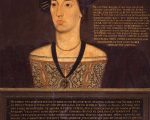
  • Sir Anthony Browne (c.1500-1548)

    Sir Anthony Browne was born in c.1500 and was the son of Sir Anthony Browne and his wife Lucy. Browne’s father was a member of the Browne family of Betchworth, in Surrey, and his mother was a widow of Sir Thomas Fitzwilliam of Aldwark, Yorkshire. She was also the daughter and coheir of John Neville, 1st Marquess of Montagu and son of Richard Neville, 5th Earl of Salisbury. Browne’s great uncle was Richard Neville, Earl of Warwick, the famous “Kingmaker”. From his mother’s first marriage, Browne had a half-brother, William Fitzwilliam, 1st Earl of Southampton, whose later career resembled his in many ways.

    [Read More...]
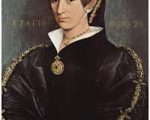
  • 19 March 1568 – Death of Elizabeth Seymour, Lady Cromwell by Teri Fitzgerald

    On this day in history, 19th March 1568, Elizabeth Seymour, the wife of John Paulet, Lord St John died. She was laid to rest on 5th April in the Paulet family church of St Mary at Basing, Hampshire.1 She was around fifty years of age.

    The undated inscription on the wall of the vault in the church (as transcribed by Lord Bolton, 16th Dec. 1903) reads:

    “Hic jacet D[omina] Cromwell, quondam conjux Johis, Marchionis Winton.”2

    Known by her superior title of Lady Cromwell, Elizabeth was never a Marchioness – her husband succeeded his father as 2nd Marquess of Winchester after her death.

    [Read More...]
  • Katherine of York, Countess of Devon

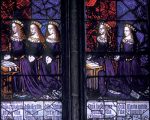
    The daughter of King Edward IV, Stained glass window of the northwest transept of Canterbury Cathedral,

    King Edward IV married the Lancastrian widow Elizabeth Wydeville [Woodville] in the spring or summer of 1464. In nineteen years of marriage, Elizabeth gave birth to ten children, seven of whom were daughters. The eldest daughter Elizabeth, born in 1466, remains the most well known in popular and scholarly circles and Edward IV’s other four daughters are significantly neglected both in factual and fictional accounts of their lives. The emphasis on Elizabeth and the neglect of her sisters are perhaps understandable, in that Elizabeth married Henry Tudor in 1485 and gave birth to Henry VIII in 1491. A queen of England undoubtedly attracts more attention than a countess or viscountess. Yet the lives of Elizabeth of York’s younger sisters are interesting in shedding light on the marriage policies of the houses of York and Tudor in an era of intermittent dynastic and political conflict. They also illuminate the contrasting fortunes of members of a side-lined royal dynasty.

    [Read More...]
  • Did Anne Seymour and Katherine Parr hate each other?

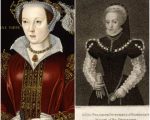
    Thank you to Tudor Society member RealTudorLady for asking this question: “I have been reading recently that Anne Seymour, wife of Edward Seymour was jealous of Queen Katherine Parr and that the two women hated each other. This was rumoured to stem from Anne Seymour (Stanhope) demanding precedence over the Dowager Queen as her husband was Lord Protector and although she was not entitled to this she demanded it anyway. She also told her husband to get rid of his brother. Is there any truth to these rumours?”

    Historian and author Conor Byrne answered the question…

    The suggestion that Anne Seymour, Duchess of Somerset, experienced conflict with the dowager queen, Katherine Parr, in 1547-8 can be dated to rumours circulating in the duchess’s lifetime. It has also long been claimed that Anne encouraged her husband, the Lord Protector, to assent to the execution of his younger brother Thomas Seymour, who was the husband of Katherine Parr.

    [Read More...]
  • Sir William Compton (c.1482-1528)

    Sir William Compton was an ambitious royal servant and a close friend of the king, yet he has been rather neglected and there is little information available on him.

    William Compton was born in around 1482 and was the only son of Edward Compton of Compton in Warwickshire and his wife, Joan, daughter of Walter Aylworth. He was around 11 years of age when he became the ward of Henry VII following his father’s death in 1493. Henry VII made him a page of Henry, Duke of York, the future Henry VIII. Compton was around nine years older than the king’s son, but they became close friends, and when Henry VIII came to the throne in 1509, the young king kept Compton close by appointing him a gentleman of the king’s privy chamber. Compton was made the new king’s groom of the stool. This position made Compton one of Henry VIII’s most intimate and trusted servants, and meant that he controlled access to the king.

    [Read More...]
  • Catherine of Aragon’s Pregnancies Part 2: 1513 – 1518

    Today, I am concluding my examination of Catherine of Aragon’s pregnancies and what evidence we have for them from the primary sources.

    [Read More...]
  • Tailboys Dymoke or Thomas Cutwode (1561 – c.1602/3)

    On 6th February 1561, poet Tailboys Dymoke (pseudonym Thomas Cutwode) was baptised at Kyme in Lincolnshire. He was the son of Sir Robert Dymoke, and his wife, Bridget (née Clinton).

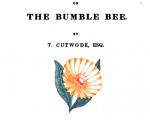
    Dymoke is known for his allegorical poem, Caltha poetarum, or, “The Bumble Bee”, which he published in 1599 under the name of Thomas Cutwode, “cut wood” being the English translation of Dymoke’s first name, the French “taille-bois”. The poem comprises 187 seven-line stanzas, so is rather long

    [Read More...]
  • Catherine of Aragon’s Pregnancies Part 1: 1509 – 1511

    As this week was the anniversary of Queen Catherine of Aragon giving birth to a still-born daughter in 1510, I thought I’d look at the primary source accounts we have of Catherine’s pregnancies.

    [Read More...]
  • 1 February – A busy day in Tudor history!

    1 February seems to have been a rather busy day in the Tudor period and here are three events, linked to further reading about them…

    1514 – Henry VIII granted the dukedom of Suffolk to Charles Brandon, his future brother-in-law, and also made Thomas Howard, 2nd Duke of Norfolk, and Howard’s son, also called Thomas, the Earl of Surrey. Charles Somerset was also made Earl of Worcester.

    [Read More...]
  • This week in history 22 – 28 January

    22 January:

    1528 – Henry VIII and Francis I declared war on Charles V, Holy Roman Emperor.
    1552 – Former Lord Protector of England, Edward Seymour, Duke of Somerset, was executed by beheading on Tower Hill in London. He was laid to rest in the Chapel of St Peter ad Vincula at the Tower of London, and records show that he was buried next to Anne Boleyn in the chancel area. Click here to read more.
    1554 – Thomas Wyatt the Younger met with fellow conspirators at his home of Allington Castle in Kent to make final plans for their uprising (Wyatt’s Rebellion) against Mary I and her decision to marry Philip of Spain – click here to read more.
    1561 – Birth of Francis Bacon, Viscount St Alban, the Elizabethan Lord Chancellor, politician, philosopher, author and scientist, at York House in the Strand, London. Bacon is known as “the Father of the Scientific method” and developed an investigative method, the Baconian method, which he put forward in his book Novum Organum in 1620. Some people (Baconians) believe that Francis Bacon was the true author of William Shakespeare’s plays.
    1575 – Death of James Hamilton, 2nd Earl of Arran and Duke of Châtelherault, at Kinneil. Arran was appointed Regent for the infant Mary, Queen of Scots after James V’s death in 1542, but surrendered the regency to Mary’s mother, Mary of Guise in 1554.
    1613 – Death of Sir David Williams, Serjeant-at-Law in Elizabeth I’s reign and Puisne Justice of the King’s Bench in James I’s reign, from a fever at Kingston House, Kingston Bagpuize, Berkshire. His body was buried at St John’s Chapel, Brecon, and his entrails were buried at Kingston.

    [Read More...]

  • Lady Jane Grey Resources

    Lady Jane Grey is a hot topic at the moment with Helen Castor’s programme having recently aired in the UK. I thought it would be useful for members if I created this list of useful resources to find out more about Queen Jane, who was a fascinating Tudor woman.

    [Read More...]
  • January’s live chats – 13, 24 and 26 January!

    Yes, you read it correctly! January is a busy month for live chats and I do hope you’ll be able to make at least one of them.

    Saturday 13 January – Henry VIII, tyrant?
    This is January’s informal live chat and it’s on Henry VIII. Was he a tyrant? Was he just misunderstood? Did he get worse as his reign went on? Did his health problems cause his behaviour? Have your say, share your views, share book recommendations, pose questions for other members… Let’s debate this iconic king!

    [Read More...]
  • Thomas Howard, 2nd Duke of Norfolk (1443-1524)

    Thomas Howard was a politician, English nobleman and lived to a ripe old age of 81! For someone who spent a lot of time in the English court, he also had very stable connections which kept him in his position, especially since he was the grandfather of two queens of England, Anne Boleyn and Catherine Howard, making him the great-grandfather to Queen Elizabeth I. Serving four monarchs as both statesmen and solider, who was Thomas Howard, 2nd Duke of Norfolk, Earl of Surrey?

    Thomas Howard was born in 1443; he was the only son of Sir John Howard and Catherine Howard, daughter of Lord William Moleyns. Having been educated in Thetford school as he got older Surrey started a career as a henchman in court. In the service of Edward IV, Thomas, who was still a young man, took the king’s side when war began in 1469 and having taken the Kings side took sanctuary in 1470 when the king fled to Holland. After he sustained an injury in 1471, he was appointed as a knight in 1478 at the marriage of the king’s son. In the same year, he was appointed as a Knight of the Garter and became appointed to the privy council.

    [Read More...]
  • Discover the Tudors tour – Last few Early Bird tickets

    I posted about this new luxury Tudor tour last month but Philippa has just let me know that there are still some Early Bird tickets available (saving of £300 per person) so I wanted to let you know.

    I’m really excited about this tour because it doesn’t just focus on the well-known London Tudor attractions, it also takes participants to Windsor, Hatfield, Stratford-upon-Avon, Kenilworth and Bosworth, all with private guided tours. One of my very favourite historians, Leanda de Lisle, has just confirmed that she’ll be speaking to our group too!

    [Read More...]

  • England’s Forgotten Queen: The Life and Death of Lady Jane Grey

    I am so looking forward to this 3-part TV programme from the BBC presented by historian Helen Castor. It’s on in the UK on BBC Four at 9pm on 9th, 10th and 11th January and as well as Helen Castor, it features historians like John Guy, Leanda de Lisle, J Stephan Edwards and Anna Whitelock.

    [Read More...]
  • Lady Katherine Gordon

    Born around 1474, Katherine Gordon was the daughter of George Gordon, second Earl of Huntly, and Elizabeth Hay. Her father acted as Chancellor of Scotland from 1498 to 1501. Little is known of Katherine’s early life, but she was reputed to be beautiful and charming. The future Henry VIII is said to have ‘marveled at her beauty and amiable countenance, and sent her to London to the Queen’. On 13 January 1496, when she was about twenty-one, Katherine married the Yorkist pretender Perkin Warbeck. Her husband had claimed to be Richard, Duke of York, son of Edward IV, since 1491. The prince had been incarcerated in the Tower of London by his uncle Richard III in 1483, and his fate was still unresolved eight years later. In 1495, Perkin arrived at the court of James IV of Scotland, having previously been supported by Charles VIII of France, Emperor Maximilian and Margaret, Dowager Duchess of Burgundy. Shortly after his marriage to Katherine, Perkin was granted Falkland Palace as a base for his adherents and as the headquarters at which his invasion of England was planned. Henry VII of England, in response to Warbeck’s activities, prepared an army with which to invade Scotland.

    [Read More...]
  • This week in history 27 November – 3 December

    27th November:

    1531 (some say 4th December) – Burning of Richard Bayfield, Benedictine monk and reformist, at Smithfield for heresy. Sir Thomas More caught Bayfield importing Lutheran books into England, and he was tried by John Stokesley, Bishop of London, at St Paul’s on 10th November 1531, and convicted.
    1544 – Death of Sir Edward Baynton, soldier, courtier and Vice-Chamberlain to five of Henry VIII’s wives, in France. His cause of death is unknown, but he may have been wounded while serving as a soldier in France. Baynton had arranged to be buried at Bromham, but it appears that he was buried in France.
    1556 – Death of Henry Parker, 10th Baron Morley, nobleman, diplomat, translator and father of Jane Boleyn (wife of George Boleyn), at his home, Hallingbury Place, Great Hallingbury, Essex. He was in his late seventies at the time of his death. He was buried at St Giles’s Church, Great Hallingbury. Click here to read more about this interesting Tudor man.

    [Read More...]
  • Bess of Hardwick

    Elizabeth Hardwick, more popularly known as Bess of Hardwick, was the daughter of John Hardwick and Elizabeth Leeke and was born in 1527. The Hardwicks were a prosperous Derbyshire gentry family. Her father died in 1528 and her mother remarried, marrying Ralph Leche of Chatsworth. Bess is today remembered as a builder of great houses, including Chatsworth, Hardwick Hall and Oldcotes. Her name continues to be associated with the rhyme “Hardwick Hall, more glass than wall”. She was, in the words of her biographer Mary S. Lovell, “the most powerful woman in the land next to Queen Elizabeth I’”. Bess was, according to Lovell, “a serious achiever” and it was through her four husbands that she gradually acquired notable wealth and status.

    [Read More...]
  • This week in history 30 October – 5 November

    On this day in history…

    30th October:

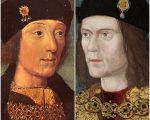
    1485 – The founder of the Tudor dynasty, Henry Tudor, was crowned King Henry VII at Westminster Abbey. Click here for more.
    The Tudor chronicler, Raphael Holinshed, recorded:
    “…with great pompe he rowed unto Westminster, & there the thirtith daie of October he was with all ceremonies accustomed, anointed, & crowned king, by the whole assent as well of the commons as of the nobilitie, & called Henrie the seaventh of that name…”
    His biographer, Thomas Penn, describes how this was the occasion that Henry was united with his mother, Lady Margaret Beaufort, whom he’d not seen for fourteen years. Margaret was said to have “wept marvellously”.
    Henry Tudor had claimed the crown of England after defeating Richard III at the Battle of Bosworth Field on the 22nd August 1485, and had actually been unofficially crowned with Richard’s crown on the battlefield that day.

    [Read More...]
  • What did Elizabeth I really look like?

    Thank you to Tudor Life regular contributor, Rioghnach, for asking this question:

    “Claire’s most recent chat on the subject of smallpox during the Tudor era has piqued my curiosity.
    Elizabeth’s portraits always make her skin look flawless. Obviously, this was not the case, but I can understand why her painters used tact and diplomacy in their works. Does anyone actually know for certain, what Elizabeth actually looked like under the layers of white lead etc?”

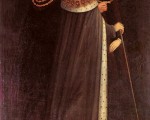
    Although there are many portraits of Elizabeth I painted in her lifetime, it is impossible to use them as evidence of what the queen really looked like, particularly towards the end of her reign, because portraits of a monarch at this time were not meant to be accurate representations, they were propaganda.

    Elizabeth was twenty-five when she came to the throne in November 1558 and she ruled until March 1603, when she was sixty-nine, but let’s have a look at some of the portraits painted late in her reign, when she covered her greying and thinning hair with wigs and used layers of ceruse to make her “mask of youth”.

    [Read More...]
  • Richard III

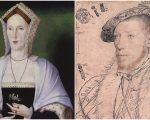
    A portrait of King Richard III

    As today is the anniversary of the birth of King Richard III, on 2nd October 1452, I thought I’d share an extract from my book Illustrated Kings and Queens of England and links to Tudor Society resources and further reading on Richard III.

    Richard III (1452-1485)
    Rule: 1483-1485
    Marriages: Anne Neville, daughter of Richard Neville, 16th Earl of Warwick
    Issue: Edward of Middleham. 2 illegitimate children: John of Gloucester; Katherine Plantagenet.

    Richard III was born on 2 October 1452 at Fotheringhay Castle and was the youngest son of Richard, Duke of York, and Cecily Neville, daughter of the Earl of Westmorland. He became king after deposing his nephew Edward V in June 1483 and was crowned on 6 July 1483 at Westminster Abbey.

    [Read More...]
  • October 2017 Tudor Life – Portraits, Artists & Actors

    Here is the full version of our 84-page October edition of Tudor Life Magazine. This month we focus on Portraits, Artists & Actors, along with some wonderful features about Tudor property and more…

    [Read More...]
  • Stephen Borough

    Explorer, navigator and naval administrator Stephen Borough (Burrough) was born at Borough House, Northam Burrows, Northam in Devon, to Walter Borough and his wife Mary Dough on 25th September 1525.

    In his childhood, Borough was influenced by his uncle, the seaman John Borough, and probably helped him with his first measured coastal surveys of south Devon and Cornwall in 1538. His uncle taught him navigational skills, sailing skills, Spanish and Portuguese.

    [Read More...]
  • Coventry Martyrs Robert Glover and Cornelius Bungey

    The Coventry Martyrs' Monument

    On 19th September 1555, the Protestant martyrs, Robert Glover and Cornelius Bungey (Bongey), who are two of the twelve Coventry Martyrs, were burned at the stake at a site in Little Park Street, Coventry.

    Martyrologist John Foxe gives the date of their burnings as “about the 20th day” in his 1563 Acts and Monuments, but fellow martyrologist the Reverend Thomas Brice gives the date as the 19th in his A Compendious Regester of 1559 and Foxe actually used Brice’s Regester as a source. Brice’s work, which can be found in Volume IV of Edward Arber’s An English Garner is a register of those martyred between 4th February 1555 and 17th November 1558. The names and locations of those martyred are recorded in six-line doggerel stanzas with the date in the margin. Of Glover and Bungey, Brice simply writes:

    “September 19 When GLOVER and CORNELIUS
    Were fiercely brent at Coventry;”

    [Read More...]
  • Sir William Kingston

    Sir William Kingston, Constable of the Tower of London, Knight of the Garter and comptroller of the King’s household, was born around 1476. His origins are unknown but historian Stanford Lehmberg believes that he was from a Gloucestershire family who were related to the barons Berkeley of Berkeley Castle, Gloucestershire, and also to Edward Stafford, 3rd Duke of Buckingham. Kingston had a brother named George.

    In 1497, Kingston was appointed as a yeoman of the chamber to Henry VII and served in this position until 1509. In 1506, he became a Justice of the Peace for Gloucestershire. At Henry VII’s funeral in 1509, he served as a gentleman usher. In 1511 and 1512, he served in the army of Henry VIII and in September 1513 he fought at the Battle of Flodden against the Scots. He was knighted in October 1513.

    In 1514, Kingston was made a king’s sewer and a sheriff of Gloucestershire, and in 1519, Cardinal Wolsey chose him to be a knight of the body in the privy chamber following Wolsey’s purge of the privy chamber in the Eltham Ordinances. He continued to serve the king as keeper of the king’s jewels and plate and then as a carver in 1521.

    [Read More...]
  • September 2017 Tudor Life – Katherine of Aragon

    Here is the full version of our 80-page September edition of Tudor Life Magazine. This month we focus on Katherine of Aragon, the first wife of Henry VIII.

    [Read More...]
  • Shane O’Neill

    Born in about 1530, Shane O’Neill (Seán Mac Cuinn Ó Néill) was the youngest son of Conn Bacach O’Neill, Earl of Tyrone. His father was forced to recognise Henry VIII as his overlord and monarch, acknowledging his laws and supremacy and agreeing to renounce the Pope. Conn petitioned the king for the earldom of Ulster, but was offered instead the earldom of Tyrone, which he accepted. He later travelled to England to formally submit to Henry in person. Conn’s eldest son Mathew was created Baron of Dungannon at this time and had the right to succeed his father as Earl of Tyrone. Shane, as an adolescent, was excluded from the negotiations leading to the settlement.

    [Read More...]
  • 22 August 1485 – The Battle of Bosworth

    Henry VII and Richard III

    On this day in history, the 22nd August 1485, in rural Leicestershire near Market Bosworth, the armies of King Richard III and Henry Tudor faced each other in a battle that would see the death of the King and the beginning of a new dynasty: the Tudor dynasty.

    When Henry Tudor challenged the King on that August day, Richard III had been King for just over two years. He had gone from being Lord Protector to the young King Edward V, the twelve-year-old son of Richard’s brother Edward IV, to being King after Edward IV’s sons were declared illegitimate. His challenger, Henry Tudor, was the son of Edmund Tudor, 1st Earl of Richmond, and Lady Margaret Beaufort, a woman descended from John of Gaunt, third son of Edward III. As a Lancastrian, Henry had fled to Brittany in France, after Edward IV successfully regained the throne from Henry VI in 1471. He returned to England after his mother had conspired with Elizabeth Woodville, Edward IV’s widow, to arrange a marriage between Elizabeth’s daughter, Elizabeth of York, and Henry, and to promote Henry as an alternative to Richard III.

    [Read More...]
  • 17 August 1510 – The end of Empson and Dudley

    On this day in history, 17th August 1510, the second year of King Henry VIII’s reign, Henry VII’s former chief administrators, Sir Edmund Dudley and Sir Richard Empson, were beheaded on Tower Hill after being found guilty of treason.

    Chronicler Edward Hall records:

    “The kynge beyng thus in hys progresse harde euery daye more and more complayntes of Empson and Dudley, wherfore he sent wryttes to the Shynfes of London, to put them in execucion, and so the xvii. day of August, they were both behedded at the Towre hyl, and their bodies buryed and their heades.”

    [Read More...]
  • 14 August – The births of Margaret Pole and William Parr

    On this day in history, 14th August, two prominent Tudor people were born: Margaret Pole, Countess of Salisbury, in 1473, and William Parr, Marquis of Northampton, in 1513.

    Margaret Pole, Countess of Salisbury, born on 14 August 1473, was the only surviving daughter of George, Duke of Clarence, and his wife, Isabel Neville. She was the niece of Edward IV and Richard III, and cousin of Elizabeth of York, Henry VII’s consort. Her brother, Edward, Earl of Warwick, was executed by Henry VII in 1499 in response to a request forwarded by the Spanish monarchs during the marital negotiations between Arthur, Prince of Wales, and Katherine of Aragon, since they feared that Warwick’s presence would encourage rebellion against the Tudor dynasty.

    [Read More...]