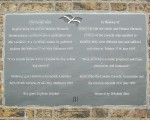
The Battle of Blackheath, also known as the Battle of Deptford Bridge, was the battle which brought the Cornish Rebellion to an end. It was fought on 17th June 1497 and Henry VII’s forces were triumphant against the rebels.
[Read More...]
The Battle of Blackheath, also known as the Battle of Deptford Bridge, was the battle which brought the Cornish Rebellion to an end. It was fought on 17th June 1497 and Henry VII’s forces were triumphant against the rebels.
[Read More...]
The Battle of Stoke field, which was fought on 16th June 1487, is known as the last battle between the Houses of York and Lancaster in the civil war we call the Wars of the Roses.
[Read More...]
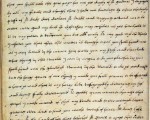
I just wanted to share with you some resources from the National Archives for those of you using primary sources for your research. Reading and interpreting old documents can be a challenge in many different ways, so here are some resources you should find useful.
[Read More...]
William Somer (Sommers) served as Henry VIII’s fool from June 1535 and just a month later got into trouble with the King. In July 1535, Eustace Chapuys, the Imperial ambassador, recorded that Henry VIII was so angry with Somer that he nearly killed him:
[Read More...]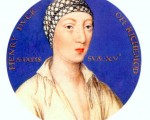
Henry Fitzroy was the illegitimate child of Henry VIII, the second Tudor monarch, with his mistress Elizabeth Blount. In 1512, when Henry VIII was approximately twenty-one years of age a beautiful young woman came to court. Her name was Elizabeth “Bessie” Blount and at that time she had no idea the future that lay ahead of her. While the Blounts were not members of nobility, they were members of the gentry who through opportunity, connections and talent had earned a place at court. It is believed that it was William Blount, Lord Mountjoy, Queen Katherine of Aragon’s chamberlain, who acquired a place at court for Elizabeth Blount. Sometime between 1513 – 1514, Bessie became a maid of honour to the Queen. As a maid of honour, Bessie would have had to have been beautiful and well-mannered, with all the accomplishments suitable for a young lady of the time. She’d need to be able to play a musical instrument, to sing and dance, to sew and embroider, to know her place and, most importantly, be devout to the Catholic faith. It is reported that Bessie was a very talented singer and dancer, and it may have been these talents which attracted the young Henry VIII.
[Read More...]
Test your knowledge of the weapons and armour used in the medieval and Tudor periods with this fun quiz – Good luck!
[Read More...]
On behalf of all the members of the Tudor Society, I would just like to offer our sincere and warm congratulations to historian John Ashdown-Hill who has been awarded an MBE for services to Historical Research and the Exhumation and Identification of Richard III.
[Read More...]
In today’s Claire Chats, I look at an event from Henry VII’s reign, the marriage of Catherine of Aragon and Arthur, Prince of Wales, and the pageantry involved in Catherine’s procession through London.
[Read More...]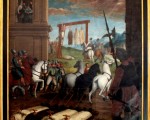
Between May 1535 and August 1540 eighteen monks from the Carthusian order were put to death for the same crime, for refusing to accept King Henry VIII as the Supreme Head of the Church.
[Read More...]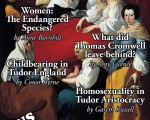
Here’s the cover for the forthcoming Tudor Life magazine. The theme for this magazine is loosely “Vulnerability” and covers an interesting range of topics as always. Thanks to all the contributors for this magazine.
[Read More...]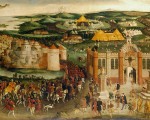
The Field of Cloth of Gold was an historic meeting between Henry VIII and Francis I of France to solidify the Treaty of London. It ran from 7th June 1520 until 24th June 1520 and was held on a field between the English stronghold of Guînes and the French town of Ardres, to solidify the Treaty of London.
[Read More...]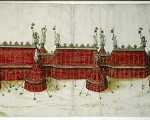
The Field of Cloth of Gold was a spectacular meeting between King Henry VIII of England and King Francis I of France. The meeting lasted from the 7th June to 24th June 1520 and was one of the most impressive, lavish meetings to ever be held between the two Kings. The meeting was held between the English stronghold of Guînes and the French town of Ardres, on a piece of land which was referred to as the Field of Cloth of Gold.
[Read More...]
How much do you know about the badges, arms and mottoes used in the Tudor and Plantagenet eras?
Test your knowledge with this fun quiz.
[Read More...]
Archaeologists are starting a five-year project to reveal the secrets of Bradgate Park, the estate which was home to Lady Jane Grey and her family.
[Read More...]
In today’s Claire Chat’s video I talk about the visit Charles V made to England in 1522, to make an alliance with Henry VIII against France, and all the pageantry and entertainment that he enjoyed.
[Read More...]
On 4th June 1550 (some sources say the 5th), Robert Dudley married Amy Robsart at the royal palace of Sheen at Richmond, near London. The marriage was attended by the then king, Edward VI.
Both Amy and Dudley were a few days short of their 18th birthdays when they got married, and the marriage was a love-match, or a “carnal marriage” as William Cecil described it, rather than an arranged union. The couple were sweethearts and very much in love, but it was not to be a happy marriage and events conspired against them.
[Read More...]
This month, historian Gareth Russell gives us a wonderful insight into the role of Importance of Christianity in the Medieval and Early Modern Period. As always, Gareth is charming and insightful with his examination of this important subject.
[Read More...]One of the curators behind 32 Londoners of the London Eye has contacted to let me know that Anne Boleyn has been chosen as one of their iconic 32 Londoners in 2015. Historian Tracy Borman, who is also Chief Curator of Historic Royal Palaces, will be talking about Anne Boleyn on 11th June and pointing out London landmarks associated with Anne.
[Read More...]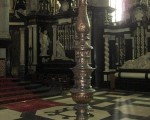
Cardinal Thomas Wolsey was patron to the Florentine scuptor Benedetto da Rovezzano (1474-1552) and commissioned him to make a lavish Renaissance style tomb for him. The project comprised a beautiful black marble sarcophagus and four bronze angels, each measuring around a metre in height, which are now known as Wolsey’s Angels.
[Read More...]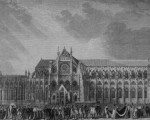
Here are some links for primary source accounts of Anne Boleyn’s coronation, and the pageants and processions that went with it, on 1st June 1533:
[Read More...]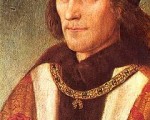
How much do you know about the Tudor and Plantagenet dynasties? Check your knowledge with this fun quiz on these kings and queens.
[Read More...]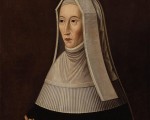
Margaret Beaufort, Countess of Richmond and Derby, and matriarch of the Tudor dynasty, was born at Bletsoe Castle in Bedfordshire on 31st May 1443. She was the daughter of Margaret Beauchamp of Bletsoe and John Beaufort, 1st Duke of Somerset, grandson of John of Gaunt, 1st Duke of Lancaster, and his mistress (and eventual wife) Katherine Swynford. Margaret was their only child. Although a 1397 act of Parliament legitimized the children of John of Gaunt and Katherine Swynford, Henry IV declared that they could never inherit the throne.
[Read More...]
Here is the transcript from last night’s live chat in the chatroom with Claire Ridgway. Thanks to all those who attended!
[Read More...]
Just a reminder that Claire Ridgway will be in the chatroom tonight (29th May) to answer questions on her recent talk on Thomas Cromwell, Henry VIII and the Fall of Anne Boleyn, or anything you want to ask her. The chat will be at midnight UK time on Friday, which works out as 1am Central European time on Saturday, 7pm in New York on Friday, 4pm in Los Angeles on Friday and 9am on Saturday in Sydney.
[Read More...]
I’m busy researching Tudor entertainment, revels and pageantry at the moment and so wanted to share with you some information on the 1511 celebrations for the birth of Prince Henry, Duke of Cornwall. I hope you enjoy these vivid descriptions which might just transport you back to early 1511.
[Read More...]