
 Why did Henry VIII execute Robert Aske and Sir Robert Constable after granting them pardons for their involvement in the Pilgrimage of Grace?
In December 1536, Henry VIII promised to pardon the rebels who had taken part in the Pilgrimage of Grace, the great northern rebellion that had caused him so much trouble that autumn. Robert Aske, one of the rebellion's principal leaders, was even invited to court, where he met the king and discussed the grievances of the people of the north. Yet, just seven months later, Aske was executed at York, and Sir Robert Constable, another prominent participant in the rebellion, was hanged in chains at Hull.
So what had happened to Henry VIII's promise of mercy?
I've always understood the executions of Aske and Constable as examples of Henry VIII breaking his word to the rebels, but while researching the aftermath of the Pilgrimage of Grace, I've been looking more closely at the contemporary records, and the situation wasn't quite as straightforward as I'd previously thought. Henry certainly granted pardons following the rebellion, but when Sir Francis Bigod attempted another rising in January 1537, the government accused some of those pardoned men of committing fresh acts of treason. The evidence used against Aske and Constable included correspondence in which they appear to be trying to prevent further rebellion. There is also a letter from the Privy Council, written before the December settlement was complete, suggesting that Constable should be excluded from the pardon.
I wanted to look more closely at what the men were actually accused of, whether the evidence supported those accusations, and what the surviving documents tell us about Henry VIII's treatment of the rebels after the December settlement.
The Pilgrimage of Grace and Henry VIII's pardon
The Pilgrimage of Grace began in Yorkshire in October 1536, following an earlier rising in Lincolnshire, and developed into the largest rebellion of Henry VIII's reign. The rebels had a number of grievances, including the dissolution of the smaller monasteries, religious changes, taxation, government policies and the influence of royal advisers such as Thomas Cromwell. Although they maintained that they were loyal subjects who wanted their king to address their concerns rather than remove him from the throne, the rebellion posed a serious challenge to Henry's authority, with thousands of men taking up arms.
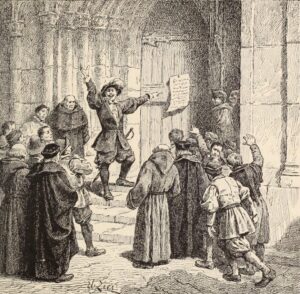
Aske affixing his proclamation on the door of York Cathedral
Robert Aske, a Yorkshire-born lawyer, emerged as one of the movement's principal organisers and spokesmen, while Thomas Howard, 3rd Duke of Norfolk, was sent north to negotiate on the king's behalf. By early December, an agreement had been reached under which the rebels would disperse and return home in exchange for royal pardons. There were also promises concerning the consideration of their grievances, although the settlement did not guarantee that all their demands would be met.
On 2 December 1536, Henry wrote to the Earl of Shrewsbury concerning personal pardons for Lord Darcy and Robert Aske, indicating that Aske's pardon was available if he could be persuaded to accept it. Although this doesn't establish whether the individual document was actually delivered, we have a letter written by Henry to Aske on 15 December which makes the king's position much clearer. Addressing Aske as his "true and faithfull subject", Henry invited him to court and assured him:
"We shall performe and accomplishe towardes you, and all others, our general and free pardon, already graunted unto you, according to the tenour of our proclamation made in that behalf."
Henry was therefore acknowledging that a general pardon had already been granted and promising to honour it. Aske subsequently travelled south and visited the king during the Christmas period, discussing the grievances of the north before returning home, apparently satisfied that the settlement would be upheld.
However, there's another letter from December 1536 that I think is particularly interesting, because it shows that even while the negotiations were taking place, Henry's advisers were considering whether some of the rebels should be excluded from the pardon.
Why did the Privy Council want Constable punished?
On 4 December 1536, Henry VIII's Privy Council wrote to the Duke of Norfolk about the progress of negotiations with the rebels. Although the Council was pleased that a settlement appeared to be within reach, it was concerned about the king's reputation if everyone involved in the rebellion escaped punishment. The letter stated:
"There remains one thing to be considered which the King has much to heart and we all no less desire - the preservation of his Grace's honor, which will be much touched if no man be reserved to punishment."
The Council went on to suggest that Norfolk should:
"by dexterity reserve a very few, and among a few vile persons Sir Rob. Constable, as he is most notable and most wilful."
In other words, the Council wanted Norfolk to use his negotiating skills to ensure that a small number of rebels were excluded from the pardon, and Sir Robert Constable was specifically named as someone who deserved punishment. The reasoning was that Henry's honour would suffer if nobody was punished for a rebellion that had challenged his authority so seriously.
Constable was a substantial Yorkshire landowner and experienced soldier who had served the Crown for many years. He had been knighted following the Battle of Blackheath in 1497 and had fought at Flodden in 1513, but his relationship with royal authority had not always been straightforward. Christine M. Newman, writing in the Oxford Dictionary of National Biography, records that Constable had a history of disputes and unruly conduct, including an incident involving the abduction of a royal ward for which he received a pardon in 1525. Perhaps his reputation influenced the Council's opinion of him, although the letter doesn't tell us why he was singled out.
We do need to be careful about what this document proves. It doesn't establish that Henry had already decided to execute Constable or that the government intended to disregard the pardon once it had been granted. It does, however, show that Constable had been identified as a suitable candidate for punishment before the December settlement was complete, and I think that's significant in light of what happened to him just a few months later.
Despite the Council's recommendation, Constable was included in the general pardon granted to the rebels in December 1536. However, his position changed dramatically following Sir Francis Bigod's attempted rebellion in January 1537, when Henry VIII's government began investigating whether some of the men who had received pardons had subsequently committed fresh acts of treason. This distinction was important because the December pardon covered their participation in the Pilgrimage of Grace, but it would not protect them from prosecution for offences committed afterwards.
Sir Francis Bigod's rebellion and the accusations against Aske and Constable
Sir Francis Bigod had participated in the Pilgrimage of Grace, although his religious views differed from those of many of its more traditionalist supporters. He distrusted the December settlement and believed that further action was necessary, and in January 1537 he attempted to launch another rising in Yorkshire. The rebellion failed, but it gave Henry VIII's government an opportunity to investigate whether the former rebel leaders had remained involved in treasonous activity after receiving their pardons.
The government eventually accused both Robert Aske and Sir Robert Constable of assisting Bigod's rebellion. However, when we examine their surviving correspondence, we find that both men had urged restraint. Aske warned the commons against further unrest and expressed concern that Bigod's actions would jeopardise the settlement, while Constable advised Bigod against assembling armed supporters. The prosecution nevertheless interpreted their correspondence and continued involvement in northern affairs as evidence that they had not abandoned their rebellious intentions.
One of the most interesting documents is a letter written by Constable in response to a request for support from Bigod, dated 18 January 1537. Bigod had written to Constable explaining that the commons, who had previously distrusted him, now had considerable confidence in him. He was determined to proceed with the rising and feared that Norfolk might be coming north to take the rebels prisoner rather than fulfil the promises made during the December negotiations. He also told Constable that there was nobody whom the commons trusted more. Constable replied that he was suffering from gout and was unable to travel. He expressed surprise that Bigod was assembling the commons when Henry VIII had already assured Aske of his intentions concerning a parliament, a convocation and a general pardon. Norfolk was expected to arrive shortly with the king's decisions, and Constable pointed out that the season was unsuitable for military action and that another assembly would be contrary to the agreement reached at Doncaster. His advice was that the people should remain quiet until Norfolk arrived.
Reading the letter as a whole, it certainly seems to me that Constable was trying to discourage Bigod from proceeding with his rebellion. However, the closing words of the letter became an important part of the prosecution's case, and there is an interesting discrepancy between the surviving versions.
The correspondence is found in Letters and Papers, Foreign and Domestic, Henry VIII, volume XII, part 1, no. 146. Two certified copies of Constable's letter conclude with the words:
"Thus in your worshipful affair, our Lord be your governor."
However, a third version, described in Letters and Papers as apparently the original draft, contains a different conclusion. Significantly, this draft is in Robert Aske's handwriting, suggesting that Aske helped compose Constable's reply to Bigod:
"I do take this to be the best way both for you and them and therein do the King good service. Thus in all your worshipful affairs our Lord be your governor."
The difference between "your worshipful affair" and "all your worshipful affairs" might seem insignificant, but it could affect how the letter was interpreted. The singular "affair" could be taken as a reference to Bigod's particular enterprise, his rebellion, whereas the plural "affairs" sounds more like a general expression of goodwill. The draft also includes Constable's statement that following his advice would be doing the king good service, which reinforces the impression that he was encouraging Bigod to remain peaceful.
Historians M. H. and R. Dodds drew attention to this discrepancy in their study of the Pilgrimage of Grace and considered whether the wording might have been deliberately altered to strengthen the prosecution's case. They also acknowledged, however, that an intermediate copy could have differed from the draft before reaching the government, and we cannot establish from the surviving calendar entries that anyone deliberately falsified the letter.
There's another detail worth mentioning here. Notes written in Thomas Cromwell's own hand, found in Letters and Papers, XII/1, no. 1088, refer to Constable and Aske dissuading Bigod from rising and wishing him luck in "all his worshipful affairs". This means that the plural wording was also known to those preparing the prosecution's case.
The government's interpretation of Constable's correspondence is also worth examining. A memorandum of evidence against Darcy, Constable and Aske, preserved in Letters and Papers, XII/1, no. 847, summarised Constable's reply to Bigod and its closing expression before adding:
"Whereby appears a consent in the same."
The prosecution was therefore treating Constable's words as evidence that he approved of Bigod's enterprise, despite the fact that the letter itself advised against another rising. It seems that the government was not relying solely on evidence of men openly encouraging rebellion, but was also interpreting their intentions from correspondence that could be read in quite a different way.
How the government interpreted the evidence
This approach can be seen elsewhere in the memoranda prepared against Aske and Constable. Both men had urged the commons to remain quiet until Norfolk arrived in the north, but the prosecution regarded this advice as suspicious because it suggested that their obedience might depend on the king fulfilling the promises made in December. If Norfolk arrived without the concessions they expected, would they encourage the commons to rise again?
The government also considered their continued interest in a parliament and convocation to be evidence that they remained committed to the demands of the Pilgrimage of Grace. One memorandum treated Constable's expectation that these matters would be addressed as evidence of continuing treasonous opinions, while another interpreted Aske's advice to keep the commons quiet until Norfolk's arrival as showing that his loyalty was conditional.
Aske's letter of 20 January 1537 provides another example. In it, he warned that Bigod's actions threatened to destroy the effect of the rebels' petitions and damage the commonwealth. Yet the prosecution's notes interpreted aspects of the same correspondence as evidence that Aske retained a traitorous heart. There were also accusations concerning men who had participated in Bigod's rising and subsequently approached Aske, some of whom claimed that they had acted under compulsion. Aske reportedly promised to seek pardons for them, but the government treated his failure to arrest or denounce them as evidence of disloyalty.
I can understand why Henry's government would have been suspicious of men who had so recently led a major rebellion. Aske and Constable still had influence in the north, and the Crown had good reason to fear renewed unrest. However, there is an important distinction between continuing to press for the fulfilment of an agreed settlement and actively conspiring to overthrow the king. In some of the prosecution's memoranda, that distinction seems to have become rather blurred.
That doesn't mean we should dismiss every allegation against Aske and Constable, and there is some evidence concerning Constable that complicates the picture. On 3 May 1537, Nicholas Rudston gave a deposition concerning a letter sent to him by Sir Robert Constable, Robert Aske and another Robert Constable. The deposition, found in Letters and Papers, XII/1, no. 1130, describes how Rudston and other gentlemen were preparing to resist Bigod when they received a letter concerning the release of certain messengers at Hull.
Rudston and Sir Ralph Ellerker believed that the men in question were connected with Bigod, although Constable subsequently claimed that he had meant other individuals who had gone to Hull to obtain provisions. According to Rudston, Constable asked to examine the letter again and eventually took possession of it while it was being shown to another man. Rudston clearly regarded this as suspicious, and he also reported that Constable had questioned what harm there would have been even if the letter had concerned Bigod's messengers.
This testimony raises questions about Constable's conduct. Was he trying to assist men connected with Bigod, or had there been a misunderstanding about which messengers were being discussed? We have Rudston's account of events, including his interpretation of Constable's behaviour, but it does not independently establish that Constable was participating in a conspiracy against Henry VIII. Seeking the release of prisoners or messengers is not necessarily the same thing as deliberately assisting an armed rebellion, although I can see why the incident might have aroused suspicion.
I think this evidence needs to be considered alongside Constable's letters urging restraint. It would be wrong to present him as unquestionably innocent simply because some of his correspondence appears to oppose Bigod, but we also need to consider whether the surviving evidence actually supports the charge of high treason brought against him.
The indictment and trials of May 1537
The formal indictment survives among the records of the Baga de Secretis and is found in Letters and Papers, XII/1, no. 1207, section 8. It is particularly useful because it sets out the government's legal case against the men and makes clear how the December pardon was treated.
The indictment began by describing the defendants' involvement in the Pilgrimage of Grace in October 1536. It alleged that Aske, Constable, Darcy and others had conspired to challenge Henry VIII's authority, including his title as Supreme Head of the Church, and to compel him to hold a parliament and convocation. However, it then acknowledged that the king had mercifully pardoned their offences committed before 10 December 1536. This is an important point. The Crown was not claiming that the December pardon had never existed or that it had simply been withdrawn. Instead, the indictment alleged that a renewed conspiracy had begun on 17 January 1537, after the pardon had been granted. The defendants were accused of seeking to challenge royal authority, overturn legislation and depose the king, and of exchanging letters and messengers in pursuit of these aims.
The indictment also distinguished between the actions attributed to the different defendants. Bigod and George Lumley were specifically accused of gathering armed supporters and levying war on 22 January, whereas Aske and Constable were accused of aiding and abetting their actions. In other words, the prosecution was not alleging that Aske and Constable had personally led Bigod's armed forces, but that they had assisted the renewed rebellion.
On 9 May 1537, a grand jury considered the indictments and endorsed the bills Billa vera, indicating that the jurors had found sufficient grounds for the cases to proceed. This was not a verdict of guilt, but it meant that the defendants would stand trial.
The trials took place at Westminster on 16 May 1537. Aske and Constable both pleaded not guilty, but they were convicted of high treason, along with Bigod and Lumley. The court pronounced the customary sentence for male traitors, and the original arrangements provided for their executions at Tyburn. Henry VIII, however, decided that Aske and Constable should be returned to the north and executed in the communities where they had exercised influence during the Pilgrimage of Grace. Constable was to die at Hull, while Aske would be executed at York.
Henry VIII's plans for the executions
A draft of Henry VIII's instructions, preserved in Thomas Wriothesley's handwriting and found in Letters and Papers, XII/2, no. 156, reveals the king's intentions. Constable was to be hanged in chains at Hull, while Aske was to be executed at York, "where he was in his greatest and most frantic glory."
I think those words tell us a great deal about Henry's attitude towards Aske and the rebellion. York had been an important centre of the Pilgrimage of Grace, and Aske had been celebrated there as one of its leaders. Henry now wanted him executed in that same city, where the people who had supported him would see the consequences of rebellion.
In another letter to Norfolk, found in State Papers, volume I, p. 551, Henry discussed making examples of the former rebel leaders and observing the reaction of the people of the north. Their executions were therefore intended not only as punishments for convicted traitors but also as warnings to anyone who might consider challenging royal authority again.
Before his death, Constable made a final attempt to obtain mercy, and his surviving letter to his son, Sir Marmaduke Constable, is particularly poignant.
Sir Robert Constable's final appeal and execution
Constable's letter to Marmaduke (Letters and Papers, XII/1, no. 1225), instructed his son to approach the Earl of Rutland and Lord Beauchamp in the hope that they could persuade Queen Jane Seymour to intercede with Henry VIII. Constable referred to family connections with the queen and hoped that influential supporters might be able to secure his release.
He also used the letter to defend his conduct during the rebellions, maintaining that he had acted to restrain the commons and had helped prevent Bigod's rising. He insisted:
"The King's letters to me were to stay the country till the duke of Norfolk's coming, and so I did."
Then he added:
"Death is a small reward of service."
Those words really struck me. Here was a man who believed that he had served his king by trying to prevent another rebellion, yet he had been convicted of helping the very rebellion he claimed to have opposed. Of course, we need to remember that Constable was a condemned man trying to save his life, and we cannot simply accept everything he wrote as proof of his innocence. Nevertheless, his letter provides an important counterpoint to the government's interpretation of his conduct, particularly when considered alongside his advice to Bigod and the commons to remain quiet until Norfolk arrived.
Constable was executed at Hull in July 1537, with 6 July being the date generally given. Norfolk subsequently reported that his body was hanging in chains above one of the town's gates, identified by Christine M. Newman as Beverley Gate.
There's also a small puzzle concerning the chronology of his execution that I came across while looking at Norfolk's correspondence. In a letter to Cromwell, printed in State Papers, volume V, p. 91, Norfolk reported that Constable had been executed on a Friday, Hull's market day, and referred to Aske's forthcoming execution on a Thursday, York's market day. However, the printed letter closes: "From Lekenfild, this Sonday, the 8th daie of July."
The difficulty is that the stated date and the days of the week do not agree when we use the Julian calendar followed in Tudor England. They also do not fit neatly with the execution dates generally accepted by modern historians. The discrepancy appears in the nineteenth-century printed transcription, so it is not simply an error introduced by a modern calendar summary. I haven't been able to clear it up. However, what the letter does establish is that Norfolk reported Constable's execution and expected to attend Aske's, and it reinforces the public nature of the punishments.
Constable had been singled out by the Privy Council as a possible exception to the pardon in December 1536, and seven months later, he was dead. That doesn't prove that his execution had been planned from the beginning, but it certainly makes the earlier letter worth remembering.
Robert Aske's final appeals and execution
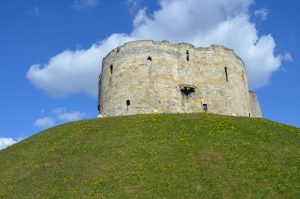
Clifford's Tower, York
Like Constable, Robert Aske tried to obtain mercy. His surviving petitions make rather sad reading. He asked for his debts to be settled, for documents belonging to other people that had been seized with his papers to be returned, and for his relatives to be spared any consequences of his actions. He insisted that they had not participated in the rebellion, explaining that they had fled into woods and houses rather than become involved.
Aske also begged forgiveness for anything he had done or said against Henry VIII and his councillors, before making one final plea for his life:
"And that his Grace would save my life, if it be his pleasure, to be his bedesman—or else—to let me be full dead or that I be dismembered, that I may piously give my spirit to God without more pain."
In other words, Aske was asking either to be spared or, if he must die, to be allowed to die before his body was cut apart. It is a particularly poignant request from a man who, only months earlier, had been assured of the king's pardon.
These requests remind us of what a conviction for high treason could mean, not only for the condemned man but also for his family and associates. However, another document provides a particularly interesting account of Aske's final hours.
On 20 July 1537, a cleric named Richard Coren wrote to Thomas Cromwell describing Aske's final conduct. His letter and accompanying account are found in Letters and Papers, XII/2, no. 292, and printed more fully in State Papers, volume I, pp. 557-558.
Coren explained that he had attended Aske throughout his execution, just as he had attended Constable's. He also made an interesting observation about the two men, stating that he believed they had kept certain matters secret between themselves and God despite his efforts to persuade them to reveal everything. We need to remember that Coren was reporting to Cromwell and was concerned with what the condemned men had confessed, so his account is not a neutral modern eyewitness report. Nevertheless, it preserves some fascinating details.
According to Coren, Aske made a public confession before being placed on the hurdle that would carry him through York. He acknowledged that he had offended God, the king and the world, and that his actions had contributed to the suffering of people who had lost their lives, lands and possessions. However, Aske also made a point of affirming that Henry VIII's earlier pardon remained valid. Coren recorded that Aske wanted people to understand that nobody should be troubled for offences covered by that pardon. So even as he faced execution, Aske was distinguishing between the original Pilgrimage of Grace, which had been pardoned, and the later accusations for which he had been condemned.
Aske was placed on the hurdle and drawn through the principal streets of York, asking people to pray for him as he passed. At the place of execution, he repeated his confession before going into the castle's dungeon to await the arrival of the Duke of Norfolk.
Coren also recorded two matters that had particularly troubled Aske. The first concerned Thomas Cromwell's attitude towards the people of the north. According to Coren, Aske complained that Cromwell had spoken of northern men as traitors, something which had clearly offended him. It's worth remembering that the Pilgrimage of Grace had presented itself as a movement of loyal subjects seeking to persuade their king to address their grievances, and Aske evidently objected to the suggestion that the people of the north should all be regarded as enemies of the Crown.
The second matter is even more relevant to Henry VIII's promises. According to Coren, Aske said that Cromwell had promised him a pardon of his life on several occasions. He also claimed that he had once received a token from Henry VIII indicating that he would be pardoned if he confessed the truth. Coren reported that Aske had not told anyone else in the north about these assurances.
We cannot independently verify these particular promises from Coren's account alone, but if he reported Aske's words accurately, it suggests that the December pardon was not the only promise of mercy Aske believed he had received. He apparently went to his death believing that further assurances concerning his life had been made during the proceedings against him.
When Norfolk arrived, Aske went up Clifford's Tower where the gallows had been prepared. According to Coren, he repeated his confession and asked forgiveness from Henry VIII, the Lord Chancellor, Norfolk, Cromwell, the Earl of Sussex and the world. He then prayed on the ladder before commending his soul to God.
And that's where Coren's account ends.
You may have come across the story that Robert Aske was left hanging alive in chains until he eventually died - it's what I thought happened - but Coren's account doesn't establish that. It describes Aske's procession through York, his confession, his prayers and the preparations for his hanging, but it doesn't give us a detailed description of the actual mechanics of his death.
Aske was executed at York on 12 July 1537, the date generally accepted by modern historians, and his body was subsequently displayed in chains. Henry VIII had made his example of the man who had led the Pilgrimage of Grace.
Did Henry VIII break his promise?

Thomas Howard, 3rd Duke of Norfolk
Henry VIII certainly promised to honour the pardon granted to the rebels in December 1536. His letter to Aske of 15 December confirms this, and the indictment brought against Aske and Constable in May 1537 acknowledged that their earlier offences had been forgiven. The government wasn't claiming that the pardon had never existed or that Henry had revoked it.
On 7 April 1537, the Privy Council instructed Norfolk to explain that the arrests of Aske, Constable and Darcy concerned alleged acts of treason committed after the pardon. The indictment followed the same argument, alleging that a new conspiracy had begun in January 1537. The Crown's position was therefore that the December pardon remained valid but did not protect the men from prosecution for subsequent offences. Legally, that explained how Henry could have Aske and Constable tried for treason despite having pardoned them just a few months earlier, but it leaves us with the question of whether they were actually guilty of the new offences.
Bigod and Lumley had taken up arms in January, whereas Aske and Constable were accused of assisting them. Their surviving correspondence, however, shows them repeatedly urging the commons to remain quiet and wait for Norfolk rather than become involved in another rising. The prosecution interpreted their continued interest in the December settlement, their dealings with former rebels and even expressions of goodwill as evidence of treasonous intentions. There are certainly questions about Constable's conduct, particularly concerning the messengers at Hull, but suspicious behaviour is not necessarily proof of involvement in a conspiracy to depose the king.
Historian R. W. Hoyle has described the accusations against Aske as contrived, and the evidence does seem to support that assessment. Much of the government's case depended on interpreting the intentions behind letters and actions that could equally be understood as attempts to prevent further rebellion. We also have the Privy Council's letter of 4 December 1536, which shows that Henry's advisers had already suggested excluding Constable from the pardon because they believed that the king's honour required someone to be punished. Although this doesn't prove that Constable's execution was planned from the beginning, it does show that he had been singled out for punishment before Bigod's rebellion.
Richard Coren's account of Aske's final hours raises another question about Henry's promises. According to Coren, Aske claimed that Cromwell had promised him a pardon of his life on several occasions and that he'd received a token from Henry indicating that he would be pardoned if he confessed the truth. We cannot verify these assurances independently, but if Coren's account is accurate, Aske believed that further promises of mercy had been made even after his arrest.
Aske and Constable had accepted the December settlement and received the king's pardon, but they still expected Henry to honour the promises made during the negotiations. Their correspondence in January 1537 suggests that they wanted to prevent another rebellion, although they clearly hadn't abandoned the grievances that had led to the Pilgrimage of Grace. The government appears to have regarded their continued involvement in northern affairs, and their dealings with former rebels, as evidence that they remained disloyal to the Crown. Whether that amounted to treason is another matter, and I don't think the surviving evidence makes a convincing case that either man was actively supporting Bigod's rebellion, particularly Aske.
Constable's final letter to his son included the words:
"Death is a small reward of service."
He maintained that he'd followed the king's instructions and tried to keep the peace, yet he was condemned for assisting the rebellion he claimed to have opposed.
So, did Henry VIII break his promise? Strictly speaking, he didn't revoke the December pardon. His government acknowledged it and prosecuted Aske and Constable for alleged offences committed afterwards. But the existence of a legal justification for prosecuting them doesn't necessarily mean that justice was done, particularly when we consider how the evidence against them was interpreted.
I think it's fair to say that Henry honoured the December pardon in a formal sense, but whether Aske and Constable deserved to lose their lives for their actions in January 1537 is far less certain. Having examined the surviving documents, I'm not convinced that the Crown made a strong case against either man, and the evidence against Aske seems particularly questionable.
What do you think? Were Aske and Constable guilty of fresh treason, or were they men who had accepted the king's pardon only to find themselves accused of betraying him again? I'd be interested to hear your thoughts.
Sources and further reading
Primary sources
- Letters and Papers, Foreign and Domestic, Henry VIII, vol. XI (1536), no. 1225: Henry VIII to the Earl of Shrewsbury, 2 December 1536, concerning the pardons of Darcy and Aske.
- Letters and Papers, XI, no. 1237: Privy Council to Norfolk, 4 December 1536, concerning the settlement and the proposed reservation of Sir Robert Constable for punishment. Calendared from British Library, Harley MS 6989.
- Letters and Papers, XI, no. 1276: General pardon and associated instruments, December 1536.
- Henry VIII to Robert Aske, 15 December 1536, printed in State Papers Published under the Authority of His Majesty's Commission: King Henry VIII, vol. I (1830), document LXXIV, pp. 523–524; also calendared in Letters and Papers, XI, no. 1306.
- Letters and Papers, XII, part 1 (1537), nos. 145–146: Correspondence between Sir Francis Bigod and Sir Robert Constable, 18 January 1537, including certified copies and the draft in Aske's handwriting.
- Letters and Papers, XII/1, no. 730: Norfolk to Cromwell, 25 March 1537, concerning William Levening.
- Letters and Papers, XII/1, no. 846: Privy Council to Norfolk, 7 April 1537, explaining that the arrests concerned alleged treasons committed since the pardon.
- Letters and Papers, XII/1, nos. 847–848: Memoranda and articles of evidence against Darcy, Constable and Aske, including interpretations of their correspondence after the pardon.
- Letters and Papers, XII/1, no. 1088: Memoranda for prosecutions, including notes in Cromwell's handwriting concerning the correspondence with Bigod.
- Letters and Papers, XII/1, no. 1130: Deposition of Nicholas Rudston, 3 May 1537, concerning Constable's letter and Bigod's messengers.
- Letters and Papers, XII/1, no. 1207, especially section 8: Indictment alleging renewed treason after the pardon, 9 May 1537.
- Letters and Papers, XII/1, nos. 1223–1226: Petitions and correspondence of Robert Aske and Sir Robert Constable.
- Letters and Papers, XII/1, no. 1227: Proceedings and verdicts at Westminster, 16 May 1537.
- Letters and Papers, XII/2, no. 156: Draft royal instructions concerning the executions of Constable at Hull and Aske at York.
- Letters and Papers, XII/2, no. 229: Norfolk to Cromwell, reporting Constable's execution and the arrangements for Aske.
- Norfolk to Cromwell, printed in State Papers, vol. V (1836), p. 91: Fuller transcription of the letter concerning Constable's execution, containing a discrepancy between the stated date and weekdays.
- Letters and Papers, XII/2, no. 292: Richard Coren to Cromwell, 20 July 1537, and his accompanying account of Aske's final conduct.
- Richard Coren to Cromwell and enclosure, printed in State Papers, vol. I (1830), pp. 557–558.
- State Papers Published under the Authority of His Majesty's Commission: King Henry VIII, vol. I (1830), particularly pp. 523–524 (Henry VIII's letter to Robert Aske, 15 December 1536) and pp. 557–558 (Richard Coren's account of Aske's final hours). Read on Google Books.
- State Papers Published under the Authority of His Majesty's Commission: King Henry VIII, vol. V (1836), particularly p. 91 (the Duke of Norfolk's letter to Thomas Cromwell concerning the executions of Sir Robert Constable and Robert Aske). Read the digitised volume (PDF) on Internet Archive.
Letters and Papers can be explored online at https://www.british-history.ac.uk/series/letters-and-papers-henry-viii
Secondary sources
- M. H. Dodds and R. Dodds, The Pilgrimage of Grace, 1536–1537, and the Exeter Conspiracy, 1538, 2 vols. (1915), particularly volume II, discussion of Constable's trial and the disputed Bigod letter. Read at https://www.gutenberg.org/files/78639/78639-h/78639-h.htm
- R. W. Hoyle, The Pilgrimage of Grace and the Politics of the 1530s (2001).
- R. W. Hoyle, "Aske, Robert (c.1500–1537)", Oxford Dictionary of National Biography, https://doi.org/10.1093/ref:odnb/797.
- Christine M. Newman, "Constable, Sir Robert (1478?–1537)", Oxford Dictionary of National Biography, https://doi.org/10.1093/ref:odnb/6110.
- M. Bush, The Pilgrimage of Grace: A Study of the Rebel Armies of October 1536 (1996).
- M. Bush and D. Bownes, The Defeat of the Pilgrimage of Grace (1999).
Leave a Reply