The Tudor Society
  • #OTD in Tudor history – 15 August

    Portrait of Mary Scudamore

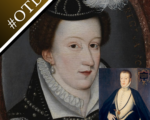
    On this day in Tudor history, 15th August, Catholics Robert Wilcox, Edward Campion, Christopher Buxton and Robert Widmerpool, who’d become the Oaten Hill martyrs, were examined, and Lady Mary Scudamore (née Shelton), one of Elizabeth I’s favourite sleeping companions, was buried…

    [Read More...]
  • #OTD in Tudor history – 14 August

    Portraits of Margaret Pole and William Parr

    On this day in Tudor history, 14th August, Margaret Pole, Countess of Salisbury and daughter of George, Duke of Clarence, was born, and William Parr, Marquis of Northampton and brother of Queen Catherine Parr, was born…

    [Read More...]
  • #OTD in Tudor history – 13 August

    Portraits of Mary Tudor and Louis XII

    On this day in Tudor history, 13th August, Princess Mary Tudor, sister of Henry VIII, married Louis XII of France by proxy, and Friar Conn O’Rourke and Patrick O’Healy, Bishop of Mayo, were executed just outside Kilmallock…

    [Read More...]
  • #OTD in Tudor history – 12 August

    Memorial to Thomas Phaer

    On this day in Tudor history, 12th August, translator, lawyer, physician and paediatrician Thomas Phaer made his will; Lady Ursula Stafford, daughter of Margaret Pole and wife of Henry Stafford, 10th Baron Stafford, died; and Henry Carey, 1st Baron Hunsdon and son of Mary Boleyn, was buried in Westminster Abbey…

    [Read More...]
  • #OTD in Tudor history – 11 August

    Portraits of Catherine of Aragon and Henry VIII

    On this day in Tudor history, 11th August, the friars observant were expelled from their houses due to their support of Catherine of Aragon, and Sir Maurice Berkeley, former gentleman usher of Henry VIII’s Privy Chamber, died…

    [Read More...]
  • #OTD in Tudor history – 10 August

    the Breton Marie-la-Cordelière and the English Regent flagships ablaze.

    On this day in Tudor history, 10th August, the English fleet’s flagship, the Mary Rose, saw battle for the first time in the Battle of Saint-Mathieu; the friars observant were expelled from their houses; Mary I held a requiem mass for Edward VI; and seven men died of drowning at London Bridge…

    [Read More...]
  • #OTD in Tudor history – 9 August

    Elizabeth I at Tilbury

    On this day in Tudor history, 9th August, composer Nicholas Ludford was buried; Elizabeth I issued a royal mandate that caused concern, and even horror, among some of her clergy; and Elizabeth I gave her famous Tilbury Speech to the troops at Tilbury Fort…

    [Read More...]
  • #OTD in Tudor history – 8 August

    Photo of Edward VI's grave marker and a portrait of Edward VI

    On this day in Tudor history, Margaret Tudor married James IV of Scotland at Holyroodhouse; Edward VI was buried at Westminster Abbey in a Protestant service; and Elizabeth I accepted the Earl of Leicester’s invitation to visit the troops at Tilbury Fort…

    [Read More...]
  • #OTD in Tudor history – 7 August

    Photo of Dale, Pembrokeshire, and a portrait of Henry VII

    On this day in Tudor history, Henry Tudor dropped anchor at Mill Bay in readiness to claim the throne of England; five-year-old Mary, Queen of Scots, set sail for France; and mariner and cartographer Sir Robert Dudley, illegitimate son of Robert Dudley, Earl of Leicester, was born…

    [Read More...]
  • #OTD in Tudor history – 6 August

    Portraits of Margaret Tudor and Archibald Douglas

    On this day in Tudor history, 6th August, Margaret Tudor, sister of Henry VIII, married Archibald Douglas in secret; the Battle of Clyst Heath took place; and Anne Hathaway, wife of playwright William Shakespeare, died…

    [Read More...]
  • Help Save Llancaiach Fawr Manor!

    Llancaiach Fawr Manor

    Thank you so much to Ceri Creffield for letting me know about Caerphilly Council’s plans to withdraw its subsidy of £485,000 per year to run Llancaiach Fawr Manor.

    This is devastating news for the manor as it means that it could close, which would be a huge loss.

    [Read More...]
  • Queen Jane, Where are you? – J. Stephan Edwards

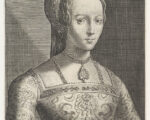
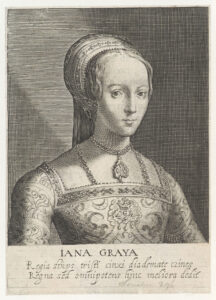
    The van de Passe Engraved Portrait. It was engraved by Willem and Magdalene van de Passe and first published in 1620. It was probably based on the Hastings Portrait. It actually depicts Katherine Parr.

    Among portraits of the many kings and queens of England and Great Britain, those of the Tudor monarchs are arguably some of the most readily recognized. Henry VIII’s portrait by Holbein, with its confident visage, assertive hands-on-hips pose, and bold stance, is essentially iconic for the Tudor period as a whole, for example. Yet one Tudor monarch remains entirely absent from the pictorial record: Jane Grey Dudley, the ‘Nine-Days Queen’ of 1553. No reliably authentic portrait of Queen Jane has yet been identified, despite dozens of portraits from the sixteenth and seventeenth centuries having been put forward over the past four and half centuries. Most recently, the acquisition in 2006 by the National Portrait Gallery of the so-called Streatham Portrait was heralded by significant international publicity. That portrait ultimately proved to date to at least four decades after Jane’s death, however, and the authenticity of the likeness remains dubious. Similarly, the Wrest Park Portrait exhibited in 2007 by Philip Mould Gallery as a posthumous historical portrait of Jane

    has since been shown to be an early life portrait of Mary Neville Fiennes, Lady Dacre.[1] And the presentation in the same Mould exhibition of the Yale Miniature as a life portrait of Queen Jane has failed to garner support from any other authority. Each new announcement has been greeted by a flurry of media attention, but each painting has subsequently slipped quietly into the background upon more careful investigation. Even my own early study of the Fitzwilliam Portrait in 2005 suffered the same ignominious fate, and rightly so.[2]

    The question therefore arises as to why no portrait of Queen Jane seems to have survived. She remains, after all, one of the most popular female figures from sixteenth-century Britain, after Elizabeth I, Anne Boleyn, and Mary Stuart. She was celebrated across Europe during her own lifetime as a superior intellect and popularized immediately following her execution in 1554 for the admirable way in which she met death. Her younger sisters gained widespread support as successors to the childless Elizabeth I, until Katherine Grey’s death in 1568 and Mary Grey’s death in 1578, keeping Jane indirectly in the public eye throughout that period. At least one modern historian has cited an “intense obsession” with Jane among the British early in the eighteenth century.[3] And Jane became something of a darling among writers in the nineteenth century owing to a perception that she personified Victorian feminine ideals. So if multiple authentic portraits of Jane’s sister Katherine have survived, and at least one probably-authentic portrait of her sister Mary, why have no authentic portraits of Jane herself survived? The answer lies in the complex intersection of the relative ages of the sisters at their respective deaths, the disposition of the Grey family estate, the politics of the era, and the vicissitudes of portrait collecting across more than four centuries.

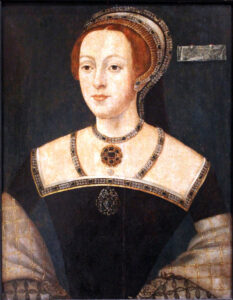
    The Northwick Portrait. By an unknown artist. In 1590, it was in the collection of John Lumley, Baron Lumley. It is now in a private collection in the UK. Only since 1965 has it been said to depict Jane Grey. It actually depicts Katherine Parr.
    It has never before been published in full color, and was virtually unseen since 1965. Took me over a year to track it down and then to convince the owner to let me see it.

    Most students of Tudor history are aware that Jane Grey Dudley died at barely seventeen years of age. As a result, there was little opportunity for production of a painted likeness. Portraiture of living persons was still a relatively new cultural phenomenon in England in the sixteenth century, though its popularity there was expanding very rapidly. But they were not often commissioned for sentimental reasons or in any effort to create a remembrance of a beloved relative. Paintings of quality usually cost significant sums of money and thus were largely limited instead to expressions of individual status within some larger social structure beyond the family. Portraits of men of the sixteenth century can often be shown to coincide with elevation to a new political office or title of nobility or to mark participation in some significant public event, such as a military battle. Women’s portraits can similarly often be associated with their marriage or their safe delivery of a male heir into the family. Women and children were seldom recognized as having individual status but were instead subsumed under that of their family. As an illustration of this, we might consider the scarcity of portraits of children from Tudor England. Very few portraits of individual children are known to have been produced, and few such portraits have survived. The exceptions are almost always minor children of the reigning monarch, such as Holbein’s portrait of the future Edward VI as an infant or William Scrot’s portrait of Princess Elizabeth from the 1540s. Since Jane was not the child of any reigning monarch, nor even the grandchild of one, we cannot today expect that any portrait of her would have been produced prior to her reaching the age of eligibility for marriage. For Jane, this did not occur until the winter or spring of 1552-1553, when she reached the age of sixteen.[4] And while Jane may have been viewed at that time by her family and its allies as a potential bride for Edward VI, the king was instead negotiating for a match with Elizabeth of France. Jane did not become a serious candidate for marriage until May of 1553, when John Dudley began promoting her as a successor to the dying Edward. Further, it took some time for an artist to be selected, one or more sittings to occur, and the actual paint-work to be completed. The span between Jane’s marriage in May and her imprisonment in mid July was a very brief one crowded with other concerns that may well have left insufficient time to plan and to create a portrait of her. And it is perhaps noteworthy that every authentic portrait of Jane’s sisters Katherine and Mary actually post-date their own respective marriages by two or more years.[5] There was precious little opportunity for any portrait of Jane to have been produced prior to July 1553, and probably no opportunity whatsoever thereafter.

    Yet we have reliable documentation that at least one portrait of Queen Jane was produced before 1559, and it is altogether probable that that portrait was an authentic likeness, even if it was not taken from a life sitting. The portrait was owned by Elizabeth Cavendish, known to history as Bess of Hardwick, a close friend of the Grey family. Bess had served as a lady in waiting to Jane’s mother Frances during the 1540s and had wed her second husband in the Grey family chapel at Bradgate in 1547. Jane herself even stood godmother to Bess’s daughter Temperance in 1549. An inventory of Bess’s possessions taken in relation to her third marriage to William St Loe in 1559 revealed that Bess displayed a portrait of Queen Jane in the very private space of her personal bedchamber. [6] It seems exceedingly unlikely that Bess would have held a portrait of Jane so closely were it not an authentic likeness. Sadly, that portrait largely disappeared from the historical record after 1560, and its current whereabouts are entirely unknown. Recent research suggests that it became severely damaged and may have been deliberately destroyed early in the nineteenth century.

    Any portrait of Jane owned by the Grey family itself may likewise have become severely damaged and been destroyed. Jane’s father Henry Grey was attainted of treason early in 1554 and his estates, including the family seat of Bradgate in Leicestershire and their London residence of Sheen Priory, were seized by the Crown. Sheen was restored as a Carthusian monastery under Mary I, and it is rather doubtful that the monks would have preserved any portrait of Protestant Jane. Bradgate was eventually returned to Jane’s uncle, John Grey, but he and his heirs preferred Pirgo Palace in Essex and Enville Hall in Staffordshire. Bradgate was little used and poorly maintained, eventually falling to ruin by the beginning of the eighteenth century. And while Jane’s mother Frances did recover some few minor estates after 1554, she left virtually all of her property to her second husband Adrian Stokes, who sold everything off to pay his own enormous debts.[7] Jane’s sisters Katherine and Mary Grey are not documented as having inherited or having possessed any portraits of Jane. Thus by the time of Mary Grey’s death in 1578, no close adult member of the immediate Grey family remained alive with an active interest in preserving a portrait of Jane Grey Dudley.[8]

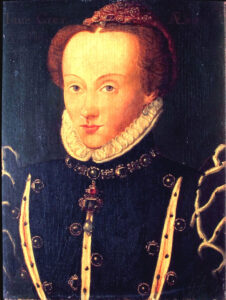
    The Klabin Portrait. Virtually unknown to any art historian prior to my uncovering it in 2014 in a small private museum in Rio de Janeiro, and it has never before been published. It is inscribed “Iane Grey/ An[n]o Dom[ini] 1553/ Aetatis 16”, but the inscription was added long after the painting was created. It is French, late 16th century, and depicts an unknown French woman.

    Succession politics of the sixteenth century also had an effect on interest in preserving any portrait of Jane. Elizabeth I is known to have expressed a distaste for Jane Grey, viewing her as a treasonous usurper of the Tudor crown. Anyone keeping a portrait of Jane was therefore at risk of being perceived by the Queen as supporting the claims of Katherine and Mary Grey to succeed the unmarried and childless Elizabeth and thereby at further risk of incurring the Queen’s displeasure. Certainly at least two portraits of Jane did nonetheless survive, the first being the one owned by Bess of Hardwick in 1559 and the second documented in the collection of John Lumley, Baron Lumley in 1590.[9] Neither of those two portraits can be located today, however. Most of the other surviving portraits said to depict Jane Grey can today be shown either to be portraits of other persons misidentified at or after the end of the sixteenth century or to have been originally created in or after that same period. These include the Glendon Hall, Hastings, Jersey, Northwick, and van de Passe Engraved Portraits, as well as the Streatham, Houghton, and Norris Portraits, among many others. In short, no portraits of Jane Grey are known to have been created or newly identified in the period between Elizabeth’s accession in 1558 and the last decade of her reign, by which time it had become certain that she would have no issue of her own to succeed her. After James VI of Scotland had been crowned James I of England in 1603, it then became less politically disadvantageous to own portraits of Jane. Numerous portraits of other persons were thereafter relabeled to stand proxy for Jane, some of which continue to bear her name today. But none are authentic likenesses of Queen Jane.

    As noted, the only two portraits of Jane documented in the sixteenth century, those owned by Bess of Hardwick and John Lumley, both disappeared at some point over the past four and half centuries. Each illustrates one of the two principal reasons why identifiable authentic portraits of Jane have failed to survive. In the instance of the Chatsworth Portrait owned by Bess of Hardwick in 1559, the evidence suggests that the portrait suffered significant decay over time, either through conscious neglect or natural processes. Most habitable rooms in pre-modern houses included a fireplace, and those fireplaces often discharged some measure of smoke into the room itself. As is the case with modern households in which the residents smoke tobacco products, smoke residue could and did accumulate over time, eventually obscuring the image. Inventories taken in the nineteenth century at the houses of Bess’s descendants, Chatsworth House and Hardwick Hall, revealed over two dozen portraits in which the image was entirely obscured by soot and dirt.[10] That soot and dirt also often caused chemical reactions in the protective varnish, the paintwork itself, or even the supporting wood panel, especially in those instances when the panel became wet for some reason, e.g.: ‘rising damp,’ flooding, leaking roofs. Panels became warped, split, or riddled with wood worm. Rather than attempt to repair the damage, owners too frequently simply disposed of the paintings in order to make way for new acquisitions that more nearly accorded with current aesthetics. In more extreme instances, paintings were lost through failure to maintain the houses in which they were held (e.g.: Bradgate) or through destruction of the entire house as a result of fire or war. Innumerable paintings from the sixteenth century are known to have been lost through these forms of neglect and accident.

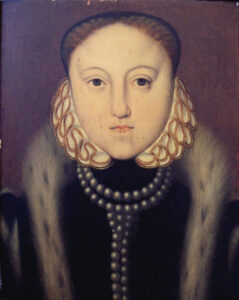
    The Soule Portrait. Another one that had not been examined by any art historian since the 1950s and that took me several months to track down. This painting is unusual in that the sitter was entirely unidentified until 1954, when she became known as Elizabeth I When Princess. It has recently been firmly dated to 1560-65. I believe it to depict Katherine Grey Seymour, younger sister of Jane Grey.

    Even among those sixteenth-century portraits that survive today, many of the sitters cannot be identified for a variety of reasons. It was relatively uncommon for portraits to be labeled with the sitter’s name, for example. Over time, as a portrait passed from one generation to the next, there were fewer and fewer people remaining alive to attest to the identity of the person depicted, as was the case with the Wrest Park Portrait. By 1675, that 125-year-old portrait had entirely lost its identity even though it was still in the possession of the sitter’s direct lineal descendants. The situation is directly comparable to finding today a box of 75- or 100-year-old unlabeled family photographs in an attic. Though those photographs depict your own ancestors, how do you go about identifying them if there is no one left alive to offer adequate clues? Since none of Jane’s immediate family members were left alive after 1578, it is perhaps understandable that any surviving authentic portrait of her might have lost its identity. Even when portraits were labeled, those labels were usually added many years or even decades after the fact and were not always correct. John Lumley famously added painted labels to the surfaces of many of the portraits in his collection, and while most of the surviving labels do seem to have been accurate, others became decayed and are thus no longer legible. Such is the case with the Northwick Portrait, which originated in the Lumley collection and was sometimes said to depict Jane Grey. The Lumley label or cartellino had become entirely illegible by the end of the eighteenth century, so that we cannot today rely on it for identifying the sitter depicted. The labels were ordinarily added atop the layers of protective varnish, and as the organic compounds in the varnish deteriorated, the uppermost layers sloughed off, taking the painted label with it. That process is best illustrated by the Soule Portrait. Photographs taken of it in 1937 and again in 1954 reveal the presence of an inscription added atop the varnish sometime after 1602. Today, just sixty years since the last photograph, the inscription is entirely gone, carried away by flaking varnish. Thus even when a portrait has survived the ravages of time and neglect, it was rare that later owners could still correctly identify non-labeled portraits, rarer still that portraits actually bore an accurate label, and even more rare that such labels themselves survived.

    Instead, we rely today on surviving written documentation combined with provenance, or ownership history, of the painting to aid in attempting to identify otherwise unidentified sitters in sixteenth-century portraits. Household inventories and wills are both valuable tools in this process. When widows re-married, or when a householder died, inventories of the household goods were very often taken to meet various legal requirements. Sometimes those inventories are exceedingly detailed and describe individual paintings by size, content, and even artist attribution, as is the case with the Lumley Inventories. At other times, they are frustratingly vague and focus only on collective financial values. Many of the sixteenth- and seventeenth-century inventories of Chatsworth House and Hardwick Hall, for example, reveal only the total number of paintings in a given room of the house and their total appraised value, with no mention whatsoever regarding subject content or physical size. Alternatively, owners sometimes named and described individual heirloom portraits in their wills when bequeathing them to specific heirs. Such was the case with the Syon Portrait, which can be traced through a series of wills from its original owner early in the seventeenth century down to 1748, and from there through household inventories to the present. But such convenient conjunctions of wills, inventories, and provenances that allow tracking a painting across four centuries are extremely rare. In the vast majority of cases, the best we have is a provenance for the past century only, or a single mention in an ancient will, or a vague description in s single inventory from the very distant past. Absent the complete documentary trail or any reliable name inscription applied to the painting by the original artist, portraits commonly became misidentified, leaving the sitter without a name today.

    Owing therefore to the apparent loss of the Chatsworth Portrait through damage and destruction, to the decay of the label on the Lumley Portrait, to the lack of any long-surviving immediate family members with an interest in preserving the Grey domestic estates and the objects they held, to the Elizabethan perception that Jane was an enemy of the Crown, and to the absence of an adequate written record to aid in locating lost or misidentified portraits, it seems unlikely that any portrait of Jane painted from the life has survived and can be identified today. The greatest prospect for ‘seeing’ Queen Jane may instead lie in identifying some posthumous portrait with sufficient direct connections to Jane and her family to allow judging it a reasonably authentic likeness.

    J. Stephan Edwards, PhD

    1. J. Stephan Edwards, “Framing a Life in Portraits: A ‘New’ Portrait of Mary Nevill Fiennes, Lady Dacre,” British Art Journal XIV:2 (Autumn 2013), 14–20. ↑
    2. J. Stephan Edwards, “A New Face for the Lady,” History Today 55:12 (December 2005): 44–45. ↑
    3. Jean I. Marsden, Fatal Desire: Women, Sexuality, and the English Stage, 1660-1720 (Ithaca: Cornell University Press, 2006), 171. ↑
    4. J. Stephan Edwards, “On the Birth Date of Lady Jane Grey,” Notes and Queries 54:3 (Sept. 2007), 240-242; “A Further Note on the Date of Birth of Lady Jane Grey,” Notes and Queries 55:2 (June 2008), 146-148. ↑
    5. The best known portrait of Katherine Grey, a miniature now at Belvoir Castle, dates to no earlier than the winter of 1562-1563, two years after her marriage to Edward Seymour and one year after the birth of her first son. A second miniature now in the Victoria and Albert Museum is inscribed ‘wife of the Earl of Hertford,’ indicating that it too probably post-dates her marriage. The single known portrait of Mary Grey is inscribed ‘1571,’ six years after her marriage to Thomas Keyes. ↑
    6. Chatsworth Devonshire MSS, Hardwick Hall Drawers H/143/6, f.3v; Gillian White, ‘That whyche ys nedefoulle and nesesary’: The Nature and Purpose of the Original Furnishings and Decoration of Hardwick Hall, Derbyshire (Ph.D. diss., University of Warwick, 2005), II: 389-415. ↑
    7. National Archives, PROB 11/42B, Will of Lady Frances, Duchess of Suffolk, dated 9 November 1559. ↑
    8. Jane Grey had no surviving issue. Her father died in 1554, her mother in 1558. Her sister Katherine Grey Seymour’s eldest son Edward was not yet seven years old when his mother died in 1568. Edward survived until 1612 but is not known to have possessed any portrait of his aunt. Jane’s youngest sister Mary Grey Keyes died without issue in 1578. ↑
    9. Lionel Cust, “The Lumley Inventories,” The Sixth Volume of the Walpole Society (Oxford: Oxford University Press, 1918), 25; Catharine MacLeod, Tarnya Cooper, and Margaret Zoller, “A List of Portraits in the Lumley Inventory,” in The Lumley Inventory: Art Collecting and Lineage in the Elizabethan Age, edited by Mark Evans (London: The Roxburghe Club, 2010), Appendix Three. ↑
    10. Devonshire MSS CH36/7/1A; CH36/7/2, 90-91 and 137-140. ↑
  • #OTD in Tudor history – 5 August

    Engraving of the Gowrie Conspiracy and portrait of James VI

    On this day in Tudor history, Sir Reginald Bray, chancellor of the Duchy of Lancaster, died; Crown troops defeated rebels at the Battle of Clyst St Mary; and John Ruthven, 3rd Earl of Gowrie, and his brother, Alexander, were killed as they tried to kidnap James VI in the Gowrie Conspiracy…

    [Read More...]
  • #OTD in Tudor history – 4 August

    A woodcut of the Tyburn gallows and a portrait of William Cecil

    On this day in Tudor history, 4th August, thirteen men were executed at Tyburn, including Brother William Horne of the London Charterhouse and Giles Heron, a former ward of Sir Thomas More; the Battle of Woodbury Common took place; and William Cecil, 1st Baron Burghley and chief advisor to Elizabeth I, died…

    [Read More...]
  • #OTD in Tudor history – 3 August

    A portrait of Mary I and sketch of John Russell

    On this day in Tudor history, 3rd August, Lord Russell marched his troops towards the Prayer Book rebels; the new queen, Mary I, processed with her half-sister Elizabeth through the streets of London; and notorious rake John de Vere, 16th Earl of Oxford, died…

    [Read More...]
  • #OTD in Tudor history – 2 August

    Photo of Thornbury Castle and a portrait of Edward Stafford, Duke of Buckingham

    On this day in Tudor history, Edward Stafford, Duke of Buckingham, was granted a licence to found a college at his manor of Thornbury; an English Protestant was burned in Rome; and Spanish forces landed on the Cornish coast…

    [Read More...]
  • #OTD in Tudor history – 1 August

    Engraving of Edward Kelley and portrait of John Astley

    On this day in Tudor history, 1st August, apothecary, alchemist and medium Sir Edward Kelley was born; Joan Waste, a blind woman, was burnt for heresy; and courtier John Astley (Ashley) died…

    [Read More...]
  • #OTD in Tudor history – 31 July

    Portraits of a young Elizabeth I and Catherine Parr

    On this day in Tudor history, the future Elizabeth I wrote her earliest surviving letter. It was to her stepmother, Queen Catherine Parr; Henry Grey, Duke of Suffolk and father of Lady Jane Grey, was released from the Tower of London; and Edmund Sheffield, 1st Baron Sheffield, was killed by a butcher during Kett’s Rebellion…

    [Read More...]
  • #OTD in Tudor history – 30 July

    Photo of Thomas Abell's stone carving and a portrait of a young Elizabeth I

    On this day in Tudor history, 30th July, both Catholics and Reformers were executed at Smithfield; Henry VIII’s youngest daughter, Elizabeth, left Somerset House to greet her half-sister, Mary I, the new queen; and writer and diarist Robert Parry was born…

    [Read More...]
  • Bosworth: The Day the Tudors Came – Mike Ingram

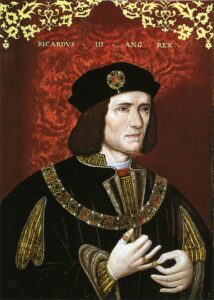
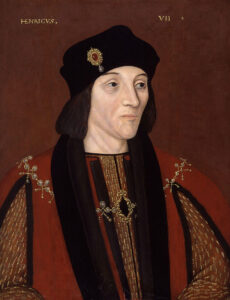
    In 2010, after a painstaking and detailed survey, the true site of the Battle of Bosworth was finally found. However, it has left more questions than it answered, not least how exactly did a rag tag army manage to beat a vastly superior royal force? The answers lie in a re-examination of the contemporary accounts of the battle in the context of the landscape of the newly found battlefield.

    Why Richard III sacrificed his superior position on Ambion Hill may never be known, but he seems to have walked into a carefully prepared trap. The archaeological investigation has shown that the ground on which the battle was fought was damp and boggy with high ground behind, giving Henry Tudor a distinct advantage not only in height, but also because it limited the effectiveness of Richard’s superior firepower. Medieval cannon balls did not explode, instead they skipped across the landscape like a pebble across water, shattering everything in their path. If the ground was wet however, they would simply bury themselves in the ground at the first or second bounce. In an age where everything was recycled or reused, this was probably why so many cannon balls were found on the site during the 2010 excavations.

    The Ballad of Bosworth Field tells us that the Stanley’s withdrew to a mountain where they looked across the plain and could not see the ground for men and horses. So, it seems likely that William Stanley was in the area around Crown Hill and Thomas further east near Stoke Golding, or behind his brother, It could be that it is this position to which Virgil refers when he says “…Thomas Stanley, who was now approchyd the place of fight, as in the mydde way betwixt the two battaylles, that he wold coom to with his forces, to sett the soldiers in array”, because it would have been close to half way between the two armies before they set out. From their position, they dominated the landscape. Once Richard saw them, he was forced to deploy his army parallel to the Roman road, as whichever way he turned, he could be attacked in the flank or rear. The archaeological survey has revealed a line of battlefield debris, with a broken sword hilt at one end and the boar badge at the other, almost parallel to the road, which suggests that, the battle, and therefore both armies were lined up was west to east. The length of this line of debris is around 914 metres (1000 yards), which also matches Vegetius’s recommendation for the frontage of an army. Molinet tells us that:
    “King Richard prepared his "battles", where there was a vanguard and a rearguard; he had around 60,000 combatants and a great number of cannons. The leader of the vanguard was Lord John Howard…Another lord, Brackenbury, captain of the Tower of London, was also in command of the van, which had 11,000 or 12,000 men altogether.”

    We therefore have Norfolk is in command of the first line, probably with his son Thomas, Earl of Surrey and Lord Brackenbury. Thomas had served a two year military apprenticeship in Burgundy under Charles the Bold from 1466 to 68 at the request of Edward IV, then fought beside him at Barnet, so like his father, was an experienced commander. It must have been an impressive sight as Virgil describes the vanguard as:

    “stretching yt furth of a woonderfull lenght, so full replenyshyd both with foote men and horsemen that to the beholders afar of yt gave a terror for the multitude, and in the front wer placyd his archers, lyke a most strong trenche and bulwark”.

    Like the Battle of Towton twenty-four years earlier, it appears that all the archers were brought to the front, including Richard’s yeoman archers. Only mentioned in passing, there was also a number of hand gunners. These were probably Burgundians under the command of Salaçar in the first line or on the flanks and may have been in blocks or dispersed throughout the archers.

    Behind the vanguard was Richard and “a choice force of soldiers”. This was no doubt his bodyguard, household troops, and personal retainers. Behind them was the Earl of Northumberland with what the Crowland chronicler describes as a large company of reasonably good men.
    A number of historians have suggested that Richard’s three battles were in a line, side by side, with Northumberland on the right. It has also been suggested that the reason that Northumberland does not get involved is because he is pinned in place by the Stanley’s. Neither is likely because firstly, to get to Henry, we are told that Richard has to move past both vanguards. We have already seen that the vanguard contained archers and foot. There is no mention of him passing Northumberland. Secondly we are told that Northumberland should have charged the French. This would have been impossible if he was on the opposite flank.

    We must now turn our attention to the artillery. The Ballad of Bosworth hints at Richard’s deployment of his guns when it says:

    “They had 7 score Serpentines without dout,
    that locked & Chained vppon a row,
    as many bombards that were stout;
    like blasts of thunder they did blow”.

    Why chain the guns together if they are in the centre of a line? The chains would certainly hamper any movement of the infantry. However, positioning guns on the flank, in enfilade, was a common European tactic as they could rake lines with cannon fire and cause maximum destruction to his ranks. They would also create an effective barrier, protecting that flank against attack. They would also potentially be in danger of being dragged off, so it would makes sense to chain them together. There is also some evidence to support this theory, as small groups of cannon balls were found close to the road, just where you would expect the guns to be positioned.

    The find of the gilt boar on the edge of the marsh and Virgil’s statement confirms the location of the Henry’s right flank. We hear from Polydore Virgil that:

    “There was a marsh betwixt both hosts, which Henry of purpose left on the right hand, that it might serve his men instead of a fortress, by the doing thereof also he left the sun upon his back”

    And then that Henry:-

    “made a sclender ward for the smaule number of his people ; before the same he placyd archers, of whom he made captane John erle of Oxfoord ; in the right wing of the vanward he placyd Gilbert Talbot to defend the same ; in the left verily he sat John Savage”.

    It is interesting to note that the earliest versions of Virgil only describe Oxford’s line as a division and not the vanwarde or main division. As Henry had fewer guns, it makes sense that he would have placed them as far as possible from the enemy gun line and if they were on the left flank, would have helped to protect it, without hampering movement. Having established the approximate positions of the battle lines, by examining the pattern of finds of cannon balls we can estimate the positions of artillery. The natural target for the guns would be the centre of line, so with this in mind, cones of fire emanating from Richard’s and Henry’s left flanks can be traced. In both cases, this would place them close to the roads. And, as guns were heavy and difficult to move across country, it would only be natural to place them as close to the road as possible.

    Key to how the battle unfolded is the location and subsequent actions of the French. There were between 1,000 and 4,000 of these professional troops (depending on the source) under the command of Philbert de Chandée. All were all trained in the Swiss way of war with pike and halberd and probably came from the defunct camp at Pont de l’Arche. With them was between 500 and 1,000 Scottish soldiers, all who had served in the French army and familiar with their fighting methods. Jean Molinet says that they were not part of the main army and that:

    “The French also made their preparations marching against the English, being in the field a quarter league away…knowing by the king's shot the lie of the land and the order of his battle, resolved, in order to avoid the fire, to mass their troops against the flank rather than the front of the king's battle.”.

    The second half of this statement also reinforces the idea that Richard had his guns on the flank, because if the French were on the opposite flank to the guns, they would have avoided their fire. Not so if the guns were to the front.

    A stanza in ‘The Ballad of Bosworth Field’ says:

    Then the blew bore the vanguard had;

    He was both warry and wise of witt;

    The right hand of them [the enemy] he took'

    The sunn and wind of them to gett.

    A separate attack on the flank, was a common tactic and recommended by Vegetius. So, if the Ballad’s ‘vanguard’ is the main body of the French, then it was these who had the sun behind them, then the east/west battle line makes perfect sense.

    The Ballad of Bosworth does confuse the issue when it says:

    “theyr armor glittered as any gleed;
    in 4 strong battells they cold fforth bring;
    they seemed noble men att need
    as euer came to maintaine [a] King”

    The most likely explanation for this is that the author is referring to Henry’s army and the four battles are Oxford’s, the French and the two Stanley’s. It was a common Swiss and French tactic to form up in four battles, in echelon (obliquely), and was successfully employed by the Swiss at the Battle of Morat nine years earlier.

    The Battle

    A number of historians have described the battle as a clash between the old style (Richard) and the new, continental style of warfare, also that Richard did not know how to respond to Henry’s tactics. Given that many of Richards’s men had been fighting on the continent and that Salaçar was newly arrived from Europe, this was almost certainly not the case.

    Henry must have advanced on Richard first, as the Crowland chronicler says that “the earl of Richmond with his men proceeded directly against King Richard”. No doubt Richard’s artillery opened fire as soon as they were in range and Norfolk’s archers would have followed suit. With the likely amount of firepower arrayed against them, Henry’s men had no alternative but to advance or else be destroyed where they stood. Then, when Richard saw Henry’s army passing the marsh:

    “… he commandyd his soldiers to geave charge uppon them. They making suddanely great showtes assaultyd the enemy first with arrowes, who wer nothing faynt unto the fyght but began also to shoote fearcely ; but whan they cam to hand strokes the matter than was delt with blades”.

    Norfolk’s archers shoot as they charge to meet Henry’s men. Henry’s archers shoot back. Then, as they near, grasping their bucklers, many of the archers draw their swords ready for the hand to hand fighting to come. Medieval warfare was bloody and brutal. With a resounding crash the two sides meet: swords slash, bills and halberds chop and stab. The archers still with their bows, taking pot-shots where they can. The fully armoured knights with their retinues following behind, carve their way through the lightly armoured men with sword or pollaxe, looking for equals. Small groups of lightly armoured men pin down heavily armoured opponents looking for chinks in their armour so they can deal the coup de grâce. The noise must have been deafening as metal clashing with metal mingled with shouts and cries, and the roar of cannon and handgun. The whole scene shrouded in a fog of gunpowder smoke.

    The two sides then disengage. Why is not clear. Perhaps it was, as modern research suggests, necessary for both sides to pause for breath as in all medieval battles. It may have been because Oxford’s division was being beaten and he was in fear of being enveloped as Virgil tells us :

    “fearing lest hys men in fyghting might be envyronyd of the multitude, commandyd in every rang that no soldiers should go above tenfoote from the standerds;… with the bandes of men closse one to an other, gave freshe charge uppon thenemy, and in array tryangle vehemently renewyd the conflict”.

    However, reforming them into triangle (wedge) formations sounds more like a pre-arranged plan (once again a tactic recommended by Vegetius). Oxford’s division then charged again. It was probably at this point that the French suddenly appeared on Norfolk’s right flank, with the sun behind them. Bristling with sixteen foot longspears and screened by hand gunners and crossbow men, they crashed into his line. The pikemen began to break Norfolk’s line apart. Further evidence of this can be found in a fragment of a letter written by a Frenchman soon after the battle. This long lost letter, which was quoted in an paper written by Alfred Spont in 1897 says that Richard had shouted “These French traitors are today the cause of our realm’s ruin”. The only way they could have been stopped was either with the artillery, which was on the opposite flank, or the archers and hand gunners; but these were engaged in hand to hand fighting to their front. A third option would have been to charge them with Richard’s cavalry, however, against the pikes, the chances of success were slim. The French were, in effect unstoppable and Richard had been out manoeuvred.

    And where was Northumberland whilst the battle was raging? The Crowland chronicler wrote that:

    “In the place where the earl of Northumberland was posted, with a large company of reasonably good men, no engagement could be discerned, and no battle blows given or received”.

    Molinet also adds:

    “The earl of Northumberland…ought to have charged the French, but did nothing except to flee, both he and his company, to abandon his King RIchard, for he had an undertaking with the earl of Richmond, as had some others who deserted him in his need”.

    Was it his men in the third battle, that the chroniclers refer to as traitors? Northumberland was arrested and spent a short period in captivity after the battle, so it is unlikely that he had struck a deal with Henry. It is much more probable that seeing the French flank attack and the collapse of Norfolk’s line or when Richard was killed, he panicked. Deciding that they did not want to suffer the same fate, they simply ran. Molinet reports, that the vanguard which was led by the grand chamberlain of England, seeing Richard dead, turned in flight. It was Northumberland, not Norfolk, who was the chamberlain, and one version of the text actually says rearguard. So it is probable that there was an error in translating or transcribing the document at some point.

    The situation must have been dire. Norfolk’s vanguard was collapsing and Northumberland’s men were fleeing. Virgil says that:

    “king Richard might have sowght to save himself by flight ; for they who xver abowt him, seing the soldiers even from the first stroke to lyfc up ther weapons febly and fayntlye,and soome of them to tiepart the feild pryvyly”

    By forming his men into wedges, Oxford had created gaps in his line. And it was through one of these gaps that Henry’s standard was spotted close to the marsh. Richard saw that it was Henry himself with a small body of mounted knights and infantry. If he could just reach Henry and kill him, then the battle would be over. So, Richard gathered his household cavalry and infantry around him and launched the last charge of the Plantagenet’s.

    We do not know which route the charge took, however, the ground to the east of the marsh was boggy. Also, at least one stream had to be negotiated which would slow the impetus of any charge to a trot. And then there was the Stanley’s, they had still not committed and could block the cavalry before it reached Henry if they went east of the marsh. Speed was of the essence, so they must have taken the shortest route - through the gaps in Oxford’s line, west of the marsh. Virgil supports this when he says: “he strick his horse with the spurres, and runneth owt of thone syde withowt the vanwardes agaynst him”.

    Gathering momentum, Richard and his supporters’ crash into Henry’s bodyguard. Richard kills William Brandon, Henry’s standard bearer and the standard falls to the ground only to be picked up by a Welshman, Rhys Fawr. Henry must have been close, because we are told by Virgil that next in Richard’s path is:

    “…John Cheney a man of muche fortytude, far exceeding the common sort, who encountered with him as he cam, but the king with great force drove him to the ground, making way with weapon on every side”.

    Richard’s personal standard bearer Sir Percival Thirwall, is also unhorsed and his legs cut from under him. As Henry’s men begin to buckle under the weight of the charge, up to three thousand fresh troops charge down from the hill into Richard’s cavalry and infantry who were still trying to fight their way through to Henry. William Stanley had finally decided to intervene and rescue Henry.

    One by one, Richard’s followers are cut down in the melee that follows. Then Richard was killed. According to Virgil, he was “killyd fyghting manfully in the thickkest presse of his enemyes”. Molinet, on the other hand writes that “His horse leapt into a marsh from which it could not retrieve itself. One of the Welshmen then came after him, and struck him dead with a halberd”. In one version of events, it was later claimed that Rhys ap Thomas was the Welshman who killed him, although he was not a halberdier. Another version is that it was Ralph of Rudyard, which is near Leek in Staffordshire that dealt the fatal blow. Leek was part of the Stanley’s territories, so it was more likely he who killed him.

    Richard’s courage during his last moments is unquestionable. Even his detractors are in agreement on this, as John Rous says, he “bore himself like a gallant knight and acted with distinction as his own champion until his last breath” . And the Crowland chronicler writes that “ King Richard fell in the field, struck by many mortal wounds, as a bold and most valiant prince”. Exactly where Richard died is not known although a proclamation by Henry soon after the battle, says it was at a place known as Sandeford. Where this was, has been lost in time, although it was most likely south of the marsh at a crossing point on one of the streams that fed the marsh.

    Another fragment of the letter quoted in the Spont paper says that “he [Henry] wanted to be on foot in the midst of us, and in part we were the reason why the battle was won”. Without the rest of the letter, we do not know in what context this was said, however it is generally accepted that it implies that Henry retired behind a wall of French pikes when Richard charged. This is most unlikely, as Henry’s Standard Bearer would have been right beside him, and if Henry was behind a wall of pikes then so too was Brandon and Richard would have been unable to kill him. As the French were fighting on the flank, it probably means that Henry simply wanted to be part of the main flanking attack and it was because of this attack that the battle was won.

    With Richard’s death, any remaining resistance quickly ended. There is archaeological evidence in the form of a tail of battlefield debris heading north east away from the battle site, and towards Ambion Hill. Some of the fugitives may have reached Daddlington Mill, well over a thousand yards away, as livery badge of an eagle with wings, probably once owned by a member of Norfolk’s or John Lord Zouche’s household was recently found close by. It may have been in this area that the remains of the Royal army made its last stand. Some, such as Lord Lovell and the Stafford brothers managed to escape completely and managed to reach sanctuary at St John’s in Colchester. Catesby was not so lucky, he was captured either at the battle or soon after, and executed three days later along with two yeomen named Bracher from the West Country.

    We do not know who else died that day. Virgil puts the numbers of dead as a thousand from Richard’s army and scarcely one hundred from Henry’s. Molinet says only three hundred on either side whilst the Castilian Report says ten thousand in total. The truth probably lies somewhere in between. With the battle over, the victors looted Richard’s baggage train, which was probably on the site of the modern day Whitemoors car park. Richard’s royal regalia was collected by Henry’s officers and loaded onto his baggage train. William Stanley was offered the pick of the rest, and took a set of Richard’s tapestries which he proudly displayed at one of his residencies and Henry’s mother was sent his personal prayer book.

    According to Virgil, with the battle over, Henry gave thanks to God for his victory and withdrew to the nearest hill. From here he thanked his commanders and nobles, knighted Gilbert Talbot, Rhys ap Thomas and Humphrey Stanley and gave orders that all the dead should be given an honourable burial. Thomas Stanley then crowned him Henry VI with Richard’s own crown, which according to tradition was found under a thorn bush close to where Richard was killed. We do not know how true this story is, although Henry did take the image of a crown and thorn bush as one of his badges soon after. As to the site of this momentous event, part of the high ground behind Henry’s battle line, originally known as Garbrody’s Hill and Garbrod Field in the fifteenth century was changed to Crown Hill and Crown Field before 1605, no doubt in reverence to the event.

    Mike Ingram

  • #OTD in Tudor history – 29 July

    Portraits of Mary, Queen of Scots, and Lord Darnley

    On this day in Tudor history, 29th July, Henry VII’s stepfather, Thomas Stanley, Earl of Derby, died; Mary, Queen of Scots, married Henry Stuart, Lord Darnley; and the English fleet defeated the Spanish Armada at the Battle of Gravelines…

    [Read More...]
  • #OTD in Tudor history – 28 July

    Portraits of Catherine Howard, Henry VIII and Thomas Cromwell

    On this day in Tudor history, 28th July, Thomas Cromwell suffered a rather botched execution; Walter Hungerford, Baron Hungerford, was executed for magic and “detestable vice and sin”; and Henry VIII married his fifth wife, Catherine Howard…

    [Read More...]
  • #OTD in Tudor history – 27 July

    An engraving of John Cheke and a miniature of Robert Dudley

    On this day in Tudor history, 27th July, former royal tutor and secretary John Cheke was imprisoned; Robert Dudley, Earl of Leicester, sent Elizabeth I an invitation to try and keep her from harm; and Catholic priest William Davies was executed on Anglesey…

    [Read More...]
  • #OTD in Tudor history – 26 July

    Portrait of Robert Dudley

    On this day in Tudor history, 26th July, courtier and solder George Talbot, 4th Earl of Shrewsbury, died; and 4,000 men gathered at Tilbury Fort to defend England against the Spanish Armada. It’s also the feast day of St Anne, mother of the Virgin Mary…

    [Read More...]
  • #OTD in Tudor history – 25 July

    Wedding portrait of Mary I and Philip of Spain

    On this day in Tudor history, 25th July, Henry VIII was furious with his court fool; Mary I married Philip of Spain, son of Emperor Charles V, at Winchester Cathedral; and child actor Salomon Pavy was buried…

    [Read More...]
  • #OTD in Tudor history – 24 July

    Portraits of Mary Queen of Scots and James VI

    On this day in Tudor history, 24th July, merchant and conspirator Richard Hesketh was born; Mary, Queen of Scots, was forced to abdicated and her one-year-old son became King James VI of Scotland; and Catholic priest John Boste was executed…

    [Read More...]
  • The Tudor Martyrs – Gareth Russell

    The Victorians were a lavishly sentimental bunch. They loved the extremity of emotion and they had none of our cultural hang-ups about projecting their standards onto the study of history. Indeed, quite the opposite: in Victoria's Britain, the nation's sense of their country's superiority was as lively as it was unshakeable. James Anthony Froude, in his sober histories of sixteenth-century England, saw Henry VIII as one of the founding fathers of the British Empire, exonerating men like Cromwell, Norfolk and Suffolk from complicity in Anne Boleyn's judicial murder, because they had been like the Nelson and Wellingtons of the sixteenth century and they therefore could not have been party to such a horrid plot. Meanwhile, writers like Jane Austen, Charles Dickens and Agnes Strickland did not hesitate to lambast Henry as 'a regal ruffian', a depraved and horrible creature who had been utterly devoid of the qualities that would have made him the thing which Victorian readers and writers alike held in highest regard - a gentleman.

    In their love of the grand moments of historical drama, the Victorians ransacked the pantheon of the past for heroes, villains, ladies and lotharios. Marie-Antoinette, vilified in left-wing histories which sought to lift the French Revolution's historical reputation from the gutter where it had lain ever since it ended in such bloody and ignominious failure in 1794, was placed in a sentimental spotlight by the right-wing and she soon took on a cultural reincarnation that saw magazine sketches of her stuck on the walls of little girls' bedrooms across Western Europe. Her quasi-secular and sentimental cult gathered momentum until the First World War, when the world was inundated with new sorrows and the Romanov princesses rose to replace her in the collective memory of butchered innocents. Before then, the Tsarina Alexandra had a large portrait of her above her desk in Saint Petersburg, two female Oxford professors claimed to have seen her ghost in the gardens at Versailles and anyone who has read Frances Hodgson Burnett's A Little Princess might recall how Sara fortifies herself from her cruel classroom bullies by imagining that they are the uncouth, murderous revolutionaries and she is the beautiful, maligned and dignified Marie-Antoinette.

    The Tudors offered up even more inspiration for the Victorians. Jane Austen thought Elizabeth I was awful and Queen Victoria was much keener on emphasising her descent from Mary, Queen of Scots, whom she idolised, than her role as Elizabeth I's eventual successor, since she saw Elizabeth as a cold and unfeeling tyrant for failing to embrace married life, a role which Victoria famously took to with near-unhinged vigour. In a similar vein to Marie-Antoinette, Anne Boleyn and Catherine Howard were bathed in the warm light of Victorian sentimentality. This fascination had important outcomes, too. In order to appease the Queen's obsession with her tragic forebears, the Tower of London yeomen fixed upon the Tower Green as the site of the scaffold where Anne Boleyn, Margaret Pole, Catherine Howard and Jane Grey had met their deaths, because the Queen wanted to see where it was and no-one was exactly sure. The modern yeomen repeat that the queens died where the memorial to them now stands. Victoria also paid for the markers on Anne and Catherine's graves during the renovation of the chapel of St. Peter-ad-Vincula. Prior to that, the two queens had no earthly tombstones.

    But by far and away, the lion's share of Victorian attention was poured onto Mary, Queen of Scots and Lady Jane Grey. Like Marie-Antoinette, they were often seen as too pure, too passionate, too lovely and too gentle for the ugly and pernicious world of dishonourable politics. Mary's multiple marriages and tragic end were re-written to suggest perfectly natural feminine frailty, with her only fault being that she fell victim to brutes unworthy of the name of men. Jane, whose posthumous fame has no greater memorial than Paul Delaroche's iconic painting of her execution in which she, the virgin-martyr, achieves an apotheosis of vulnerable loveliness, was depicted in literally thousands of popular sketches, magazine articles, novels, serial stories and plays. Her terrible death caught the imagination, while her youth meant that she could easily be divorced from the more contentious political topics raised by Mary I or Elizabeth I. She confirmed Victorian views of women; she did not challenge them.

    Jane's role as posthumous celebrity in popular culture had more negative consequences, too. Victorian Britain's obsession with her reached such a commercially profitable stage that a talented writer called Richard Patrick Boyle Davey penned an account of Jane's short reign, claiming he had uncovered documents in the archives of Genoa in Italy that had had been written by a merchant who lived in London throughout 1553, called Spinola. Desperate to make his biography stand out, Davey resorted to forging the evidence and "Spinola's" account of Jane's physical appearance and key moments in her life were repeated in every biography until the 21st century when Leanda de Lisle's research proved them to be utterly false.

    Those sketches that we have all seen of the Tudor royals and, in many cases, the stereotypes we and our culture continue to carry about them, in one form or another, were birthed not by sixteenth-century reality but by the nineteenth century's exploding publishing industry, cheaper books, growing literacy, muscular sense of cultural self-confidence in a seemingly unassailable empire, and a public fascinated by stories of virtue, venom and a family that we remain captivated by to this day.

    Gareth Russell

  • #OTD in Tudor history – 23 July

    Portraits of Henry Carey and Marie de Guise

    On this day in Tudor history, 23rd July, Marie de Guise and her infant daughter, Mary, Queen of Scots, escaped from Linlithgow Palace; Protestant printer John Day died; and Lord Chamberlain Henry Carey, 1st Baron Hunsdon, son of Mary Boleyn, died…

    [Read More...]
  • #OTD in Tudor history – 22 July

    A miniature of Henry Fitzroy

    On this day in Tudor history, soldier and royal councillor John Scrope, 5th Baron Scrope, was born; Henry Fitzroy, Duke of Richmond and Somerset, Henry VIII’s illegitimate son, died; and playwright Edward Sharpham was baptised…

    [Read More...]
  • #OTD in Tudor history – 21 July

    A portrait of John Dudley and an engraving of Thomas Cavendish

    On this day in Tudor history, 21st July, French forces landed on the Isle of Wight; John Dudley, Duke of Northumberland, was arrested following the fall of his daughter-in-law, Queen Jane; and explorer Thomas Cavendish set off on his South Sea voyage…

    [Read More...]