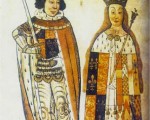
An article on Anne Neville, queen consort of Richard III and daughter of Richard Neville, 16th Earl of Warwick and a man known as “the Kingmaker”.
[Read More...]
An article on Anne Neville, queen consort of Richard III and daughter of Richard Neville, 16th Earl of Warwick and a man known as “the Kingmaker”.
[Read More...]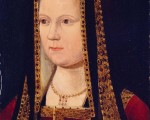
On this day in Tudor history, 11th February 1466, Elizabeth of York was born at Westminster Palace.
She was the daughter of a king, the sister of the Princes in the Tower, the wife of Henry VII, the mother of Henry VIII, and the grandmother of Edward VI, Mary I, Elizabeth I and James V. Her bloodline shaped the future of England, but she’s often overshadowed by the powerful men and women she was related to.
But Elizabeth was no passive figure. She was a key part of dynastic politics, and her marriage helped end the Wars of the Roses. Today, I’m exploring her remarkable life, her role in uniting the warring houses of Lancaster and York, and why she truly deserves to be remembered as the Queen of Hearts.
[Read More...]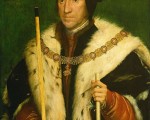
On 4th February 1495, Anne of York, daughter of Edward IV and sister of Queen Elizabeth of York, married Thomas Howard, the future 3rd Duke of Norfolk, at Westminster Abbey. But this was far more than just a romantic union—it was a strategic marriage with deep political significance.
It was an unlikely match. Anne was the sister-in-law of King Henry VII, and Thomas Howard’s father and grandfather had fought against Henry at the Battle of Bosworth Field just ten years earlier.
So why did Henry VII allow this marriage? And what did it mean for the future of the Howard family?
[Read More...]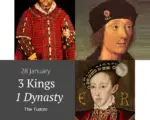
Today is a date packed with significance in Tudor history – it’s Henry VII’s birthday, the anniversary of the death of Henry VIII, and the anniversary of the accession of Edward VI.
Let’s take a closer look at how these three monumental events shaped the Tudor dynasty.
First, let’s go back to 28th January 1457, when Henry Tudor was born at Pembroke Castle in Wales.
[Read More...]
On this day in Tudor history, 20th November, Elizabeth I’s Lord Chancellor and favourite, Sir Christopher Hatton, a man she called her “mouton”, died (1591); and her godson, author, courtier and a man who invented a flush toilet, Sir John Harington, died (1612)…
[Read More...]
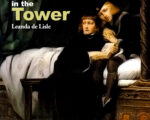
In the late summer of 1483, two princes, aged twelve and nine, vanished from the Tower of London where they had been imprisoned by their uncle, Richard III. Murder was suspected, but without bodies no one could be certain even that they were dead. Their fate remains one of history’s enduring mysteries, but the solution lies hidden in plain sight in stories we have chosen to forget, of English anti-Semitism, the cult of saints, and in two small, broken and incomplete skeletons.
[Read More...]
On this day in Tudor history, we have the birth of King Henry VII, the death of King Henry VIII, and the death of John Dynham, 1st Baron Dynham, Lord High Treasurer of England and Lord Chancellor of Ireland…
[Read More...]
On this day in Tudor history, 10th October 1530, Thomas Grey, 2nd Marquess of Dorset, magnate, soldier and courtier, died. He was buried at Astley Collegiate Church in Warwickshire.
Grey’s offices included Constable of Warwick Castle and of Kenilworth Castle, and, as a skilled jouster, he also acted as Chief Answerer at the marriage of Prince Arthur and Catherine of Aragon. Grey was also the grandfather of Lady Jane Grey.
[Read More...]
14th August 1479 is the traditional birthdate of Katherine of York, Countess of Devon.
Katherine was the second youngest daughter of King Edward IV and his wife, Elizabeth Woodville, and so was the sister of the Princes in the Tower and Elizabeth of York, wife of King Henry VII. Katherine was also the wife of Sir William Courtenay, Earl of Devon.
Here are some facts about Katherine of York…
[Read More...]
On this day in Tudor history, 29th July 1504, in the reign of his stepson King Henry VII, Thomas Stanley, 1st Earl of Derby, died at his manor of Lathom in Lancashire.
Here are a few facts about Stanley…
[Read More...]
This week’s #MondayMartyr is Margaret Pole, Countess of Salisbury, who was beatified in 1886 by Pope Leo XIII as a Catholic martyr.
She was executed in 1541 in what was a truly awful botched execution, and for a crime she did not commit…
[Read More...]
On this day in history, 3rd May 1415, Cecily Neville, Duchess of York, was born on 3rd May 1415 at Raby Castle. Cecily is known as the matriarch of the House of York because her children included King Edward IV and King Richard III.
Here are some facts about Cecily Neville, also known as the Rose of Raby and Proud Cis.
[Read More...]
On this day in Tudor history, 8th February 1545, in the reign of King Henry VIII, Sir John Arundell of Lanherne, died at the home of his nephew, Richard Roscarrock of Roscarrock, in St Endellion, Cornwall.
Let me give you a few facts about this Tudor man, who was actually the third John Arundell out of 9 prominent John Arundells in the same family…
[Read More...]
On 3rd February 1478, in the reign of King Edward IV, Edward Stafford, 3rd Duke of Buckingham, was born at Brecon Castle.
His father, the 2nd Duke of Buckingham, was executed as a traitor in Richard III’s reign and Edward came to the same end in 1521, in King Henry VIII’s reign.
Let me tell you a bit more about this Duke of Buckingham…
[Read More...]
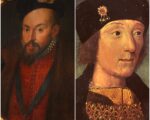
On this day in Tudor history, 28th January 1501, in the reign of King Henry VII, politician and administrator John Dynham, 1st Baron Dynham, died at his home at Lambeth. He was buried at the London Greyfriars on 30th January.
Here are a few facts about this Tudor baron…
[Read More...]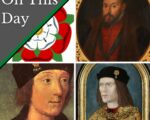
On this day in Tudor history, 22nd August 1553, in the reign of Queen Mary I, John Dudley, Duke of Northumberland, was beheaded on Tower Hill along with his friends and supporters, Sir John Gates and Sir Thomas Palmer.
Northumberland was executed for his part in putting his daughter-in-law, Lady Jane Grey, on the throne.
His execution was actually scheduled for the previous day. The executioner was ready and a crowd had turned up to see him die, but the duke was taken to church instead.
Wny?
Find out, and also hear a contemporary account of the duke’s execution…
[Read More...]
A warm Tudor Society welcome to historian and author Toni Mount and huge congratulations to her on the forthcoming release of her tenth Seb Foxley medieval murder mystery, a series I adore.
Toni is sharing a guest article with us to celebrate the publication of The Colour of Rubies…
In my tenth and latest Seb Foxley medieval murder mystery, The Colour of Rubies, the story requires our hero to go to Westminster Palace in order to discover a dead body – what else! Those familiar with my scribe/artist/sleuth will know that colour means everything to Seb so what better reason could he have for going to the royal palace with his brother, Jude, than to admire the beautiful stained glass in the Chapel of St Stephen?
[Read More...]
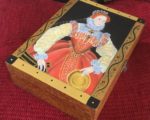

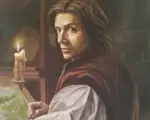
A big thank you to historian and historical novelist Toni Mount for joining us here on the Tudor Society today on her blog/book tour for her latest novel, The Colour of Evil.
An interview with Seb Foxley, artist, scrivener and amateur sleuth of Paternoster Row in the City of London; hero of The Colour of … series of medieval murder mysteries.
[Read More...]
On this day in Tudor history, 15th December, 1560, Comptroller of the Household to Elizabeth I and Lord Lieutenant of Berkshire, Thomas Parry died. The Spanish ambassador claimed that Parry had died of “sheer grief”. He was buried at Westminster Abbey.
Parry had served Elizabeth since 1547 and was a loyal servant and friend. So why did he die of grief?
Find out more about Thomas Parry, his background, life, and why he was upset in 1560, in today’s talk.
[Read More...]
On this day in Tudor history, 12th November 1555, Mary I’s Lord Chancellor, Stephen Gardiner, Bishop of Winchester, died. He was laid to rest at Winchester Cathedral in what is now known as the Bishop Gardiner Chantry Chapel.
In today’s talk, I tell you about the life and career of “Wily Winchester”, a man who went from being a valued advisor to being imprisoned, and then got back into favour, crowned a queen and became Lord Chancellor! He led quite a life!
[Read More...]
On this day in history, 27th September 1442, in the reign of King Henry VI, John de la Pole, 2nd Duke of Suffolk, was born.
He may have been born in the Plantagenet period, but Suffolk’s first wife was Lady Margaret Beaufort, the future mother of Henry VII. Suffolk went on to serve Henry VII loyally, although his son was involved in the Lambert Simnel Rebellion
Find out more about John de la Pole, 2nd Duke of Suffolk, his life and career, and what happened with his marriage to Lady Margaret Beaufort, in today’s talk.
[Read More...]
On this day in Tudor history, 24th August 1507, Cecily of York, Viscountess Welles, died at Hatfield in Hertfordshire. She was buried at “the friars”.
Cecil was, of course, the daughter of King Edward IV and his queen consort, Elizabeth Woodville, and the sister of Elizabeth of York and the Princes in the Tower, but there’s far more to her than that.
Did you know that she married without permission and had to be sheltered by Lady Margaret Beaufort?
Find out all about Cecil of York’s life in today’s talk.
[Read More...]