On this day in history, 16th March 1619, actor Richard Burbage was buried at St Leonard’s Church, Shoreditch.
Burbage was a famous actor in the reigns of Queen Elizabeth I and King James I, peforming for royalty and even being in King James’ company of players. Burbage was also a good friend of William Shakespeare, and the two men were involved in the building of the famous Globe Theatre.
Find out more about Richard Burbage, his life and career, in today’s talk.
On this day in Tudor history, 8th March 1516, Sir John Wiltshire wrote to King Henry VIII from the English territory of Calais warning him that a couple of gifts were on their way to the king from the Duke of Ferrara. The gifts were a courser (a horse) and a "lebard" (a leopard or lion).
Exotic animal gifts were all the rage in the medieval and Tudor period and were the reason why there was a royal menagerie at the Tower of London.
Find out more about some of these animal gifts in today's talk.
In my Questions about Anne Boleyn series, I’ve done a video on Did Anne Boleyn have any pets. Here it is:
Also on this day in Tudor history, 8th March 1539, former royal favourite Sir Nicholas Carew was beheaded for treason at Tower Hill. Find out more about why he fell from grace in last year’s video:
Also on this day in history:
1495 – Birth of John of God (João Cidade) in Montemor-o-Novo, Portugal. He was one of Spain's leading religious figures and the order he created, the Brothers Hospitallers of St. John of God, still has bases around the world today.
1542 – Burial of Geoffrey Blythe, clergyman, Treasurer of Lichfield, former Warden of King's Hall, Cambridge and former Archdeacon of Stafford. Blythe was one of the divines recorded by martyrologist John Foxe as preaching against Hugh Latimer at Cambridge. Blythe was buried at All Saints' Church in Cambridge.
1569 – Death of Richard Tracy, evangelical reformer and cousin of Protestant martyr James Bainham, at his manor in Stanway, Gloucestershire. Tracy's works included “Profe and Declaration of thys Proposition: Fayth only iustifieth”, which was dedicated to Henry VIII, “‘A Supplycation to our most Soueraigne Lorde, Kynge Henry the Eyght” and “A Bryef and short Declaracyon made wherebye euery Chrysten Man may knowe what is a Sacrament”. In Elizabeth I's reign, he served as a Commissioner of the Peace and Sheriff in Gloucestershire.
Transcript:
On this day in Tudor history, 8th March 1516, Sir John Wiltshire wrote to King Henry VIII from the English territory of Calais.
Now, it’s not an important letter, it’s just one I came across during my research and that I found interesting. In the letter, Wiltshire is giving the king advance warning of some gifts that are on their way to England and it’s the gifts that interest me. Wiltshire writes:
“A gentleman of the Duke of Ferrara is coming with presents to Henry, a dark grey courser of Naples, and a ‘lebard,’ a marvellous dangerous beast to keep. "The keeper saith a will kill a buck or doe or roe and an hare, which is a marvellous thing if it be so.”
I assume that the lebard is actually a leopard. A courser was a type of horse that was fast and strong, and had good endurance. They were often used by knights in battle.
Although the letter appears in the archives for Henry VIII’s reign 1516. This gift is mentioned in the Venetian Archives for the year 1515. There are two mentions:
“announced the arrival in London on the 18th March of an ambassador from the Marquis of Ferrara, by name Hironimo de Strozi; and in the said Duke's name he presented the King with a horse, said to be very handsome, and a live leopard. According to report, the King was much pleased with this present.”
Then, the second mention:
“Exhibited letters from his Duke Don Alfonso, announcing the return of the envoy sent by him to England with a horse and a live [leopard]. The envoy was much favoured by the King, who reciprocated the presents.”
King Henry VIII seemed to like his horse and leopard!
Antonio Frizzi, in his History of Ferrara, gave more details on these gifts, describing the horse as having gold trappings and stating that as well as the horse and the leopard, the duke sent three trained falcons.
Why send a leopard? You might ask. Well, animals gifts, particularly exotic ones, were all the rage, and the duke obviously wanted to impress. The Tower of London’s website states that there was a royal menagerie at the Tower to house these animals gifts from the 1200s to 1835. It was started when Henry III was sent what was described as three leopards, but which might actually have been lions, in 1235 by Frederick II, Holy Roman Emperor. In 1252, the King of Norway sent a polar bear and in 1255 the King of France sent an elephant. Lions at the Tower gave their name to the Lion Tower, which is no longer standing. By the way, the polar bear was able to fish and swim in the River Thames, with a chain securing it, of course.
Fast-forward to the Tudors, and as well as marmosets and monkeys being kept as pets by wealthy Tudors, including Catherine of Aragon, Henry VIII and Edward VI, visitors to the menagerie at the Tower in the 1540s recorded seeing lions, leopards, an eagle and a lynx, all belonging to the royal family. In 1592, a visitor saw six lions and lionesses, and “a lean, ugly wolf” kept by the queen. In 1598, there were three lionesses, a lion, a tiger, a lynx, a wolf, a porcupine and an eagle. Henry VII gave his wife, Elizabeth of York, a lion as a gift. I wonder what she thought of it.
In 1826, 150 of the menagerie’s animals were rehomed at Regent’s Park, founding London Zoo, and the rest were rehomed when the menagerie closed in 1835.
On this day in Tudor history, 5th January 1546, in the reign of King Henry VIII, geographer and poet, Richard Willes, was born in Pulham, Dorset.
Richard Willes has been described as “One of the quirkier figures in the literary history not only of the college but of the Elizabethan period as a whole”, and he certainly was an interesting Tudor man. Find out about his literary accomplishments, and what exactly made him so “quirky”, in today’s talk.
On this day in Tudor history, 8th November 1528, at Bridewell Palace, King Henry VIII made a rather strange public oration to “the nobility, judges and councillors and divers other persons” to explain his troubled conscience regarding the lawfulness of his marriage to his first wife, Catherine of Aragon.
In today’s talk, I share an extract from the king’s speech, in which he praises Catherine of Aragon to the hilt even though he’d proposed to another woman, Anne Boleyn. Find out all about this strange situation!
On this day in Tudor history, 24th October 1537, Queen Jane Seymour, third wife of Henry VIII, died at Hampton Court Palace twelve days after giving birth to a son who would grow up to be King Edward VI.
In today’s talk, I share contemporary accounts of Jane Seymour’s illness and death, as well as details of how her remains were prepared for burial and where they were buried.
On this day in Tudor history, 21st October 1532, King Henry VIII left his sweetheart, Anne Boleyn, behind in Calais while he travelled to Boulogne to spend a few days at the French court with Francis I.
The kings were beautifully attired for their meeting and there was a bit of a bromance, with Henry calling Francis his “beloved brother” and Francis instructing his sons to be “loving always” to Henry. However, Anne Boleyn was disappointed with the situation and you can find out more in today’s talk.
On this day in Tudor history, 18th September 1544, Henry VIII rode triumphantly through the streets of Boulogne after the French surrendered it to him.
This English victory came after the first siege of Boulogne of 1544 which saw the town “sore assaulted and so besieged with such abundance of great ordinance that never was there a more valianter assault made”.
The French surrendered Boulogne on 13th September 1544 and King Henry VIII entered it and was given its keys by his good friend, Charles Brandon, Duke of Suffolk, on 18th September. England was victorious but his ally, the Holy Roman Emperor, wasn’t behaving himself.
On this day in Tudor history, 16th September 1541, King Henry VIII entered the city of York as part of his Northern Progress with his fifth wife, Catherine Howard.
This was a chance for the people of the North to show their loyalty to their king and his consort, and to make up for rebelling against him. How could they do that? Well, by getting on their knees in submission and paying him lots of money.
Find out more about this progress and how the king ended up being humiliated too, in today’s talk.
1536 was an eventful year for Henry VIII! Just over two months after the fall of his second wife, Queen Anne Boleyn, Henry VIII’s only son, his illegitimate son by Elizabeth Blount, died on 22nd July 1536 at St James’s Palace. It was a huge blow for the king.
In today’s “on this day” talk, I give details of Fitzroy’s illness, death and burial, and also just how much of a favourite he was with his father.
Yes, on this day in Tudor history, 28th June 1491, King Henry VIII, second monarch of the Tudor dynasty, was born at Greenwich Palace.
This second son, the spare, of King Henry VII and Queen Elizabeth of York ended up becoming King Henry VIII in April 1509 and although in many ways he could be seen as a monstrous tyrant, he did achieve much during his reign.
In today’s video, I give an overview of this man, his life and his reign.
On this day in Tudor history, 23rd June 1509, the new King and Queen of England processed through the streets of London dressed in their finery.
This procession was their coronation procession and it was a lavish spectacles. In today’s video, I share contemporary descriptions of Henry VIII and Catherine of Aragon’s appearance and outfits, the procession and the streets of London. It must have been wonderful to see!
On this day in Tudor history, 12th June 1530, Queen Catherine of Aragon got rather cross with her husband, King Henry VIII, who, according to her, was leading an evil life and being a bad example.
What led to Catherine’s strong words on this day in 1530? What exactly was Henry VIII doing to upset his wife?
Happy wedding anniversary to King Henry VIII and his first wife, Catherine of Aragon! Well, Catherine would be celebrating, as she viewed herself as the king’s true wife right until the end.
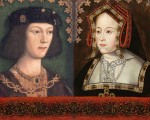
On this day in Tudor history, seventeen-year-old King Henry VIII married twenty-three-year-old Spanish princess, Catalina de Aragón, or Catherine of Aragon, his brother’s widow, at a private ceremony at Greenwich.
Find out more about what led to this marriage in today’s video:
On this day in Tudor history, Tuesday 30th May 1536, just eleven days after the execution of his second wife, Queen Anne Boleyn, King Henry VIII married his third wife, the woman he thought of as his true love and true wife, Jane Seymour.
Find out more about this event and the bride and groom in today’s video.
On this day in Tudor history, 31st March 1532, Henry VIII was left fuming after Friar William Peto likened him to King Ahab and preached against his quest for an annulment of his marriage to Catherine of Aragon. Friar Peto also made a prophecy that some believe was fulfilled after the king’s death in 1547.
I explain exactly what happened on this day 1532 to make Henry VIII so furious, what Peto said and what happened next.
On this day in Tudor history, 16th February 1547, King Henry VIII was laid to rest in St George’s Chapel at Windsor Castle. He was buried with his third wife, Queen Jane Seymour.
In this video, I talk about his burial and what happened to the sarcophagus that he had planned to use. You can see that beautiful sarcophagus today, but it is the resting place of another famous historical person and is not at Windsor.
Happy birthday to the man who has the honour of being both my favourite and least favourite king! I find him fascinating but also love to hate him.
I thought I’d celebrate the anniversary of his birth on 28th June 1491 by sharing some of the Henry VIII resources we have here for members at the Tudor Society:
Richard Rich, 1st Baron Rich, we’re led to believe, was born in 1496. The dating of his birth comes from the fact that in 1551 he was said to have been around 54 years of age. He was born in Basingstoke, Hampshire. His father was John Rich, and his mother was Agnes, and it is believed that he may have had ties to the Rich family that was prominent in the Mercers’ Company during the 15th century. The connection came from his father John, for he owned a house in Islington, Middlesex, which he left to his son on his death in 1509.
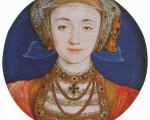
In today’s Claire Chat’s video talk, I look at Anne of Cleves’ marriage to Henry VIII and what happened between 6th January 1540, her wedding day, and 28th July 1540 when Henry VIII married Catherine Howard, his fifth wife.
On this day in history, Margaret Tudor, the former Queen of Scotland, wrote a letter to her brother, Henry VIII.
The following letter is one of a collection of letters written by Margaret to Henry in the 1530s. Margaret was desperately unhappy. She had married her third husband, Henry Stewart, 1st Lord Methven, in 1528, and was intent on divorcing him because not only did he have a mistress, he was also spending and wasting Margaret’s money. Margaret’s own son, James V of Scotland, was siding with Methven and Methven had control of Margaret’s lands and money, so Margaret wanted her brother’s support and help:
On this day in history, 12th July 1543, the fifty-two-year-old King Henry VIII married thirty-one-year-old Catherine Parr, Lady Latimer, in the Queen’s Closet of the Chapel Royal at Hampton Court Palace.
Here is a primary source account of Henry VIII’s sixth, and Catherine’s third, marriage. It is the notarial attestation by Richard Watkins, the King’s prothonotary, and can be found in Letters & Papers:
To celebrate the anniversary of Henry VIII’s birth on this day in history, 28th June 1491, I thought I’d give you some links to some talks, articles and resources on this iconic king. Happy 526th birthday to King Henry VIII.
On either 22nd or 23rd June 1509, before his joint coronation with Queen Catherine of Aragon on 24th June, King Henry VIII created twenty-four Knights of the Bath at the Tower of London.
Letters and Papers names the knights as “Richard (sic) Radclyff lord Fitzwater, the lord Scroop of Bolton, the lord Fitzhugh, the lord Mountjoye, the lord Dawbeney, the lord Brooke, Sir Henry Clyfford, Sir Maurice Berkeley, Sir Thomas Knyvet, Sir Andrew Wyndesore, Sir Thomas Parr, Sir Thomas Boleyne, Sir Richard Wentworth, Sir Henry Owtrede, Sir Francis Cheyny, Sir Henry Wyotte, Sir George Hastynges, Sir Thomas Metham, Sir Thomas Bedyngfeld, Sir John Shelton, Sir Giles Alyngton, Sir John Trevanyon, Sir William Crowmer, Sir John Heydon, Sir Godarde Oxenbrige and Sir Henry Sacheverell.”
This day in history involves Henry VII, Henry VIII and Edward VI; grandfather, father and son. For it was on this day in 1457 that Henry VII was born, this day in 1547 that Henry VIII died, and this day in 1547 that Edward VI became king. What a day in history.
On 17th August 1510, the second year of King Henry VIII’s reign, Henry VII’s former chief administrators, Sir Edmund Dudley and Sir Richard Empson, were beheaded on Tower Hill after being found guilty of treason.
Chronicler Edward Hall records:
“The kynge beyng thus in hys progresse harde euery daye more and more complayntes of Empson and Dudley, wherfore he sent wryttes to the Shynfes of London, to put them in execucion, and so the xvii. day of August, they were both behedded at the Towre hyl, and their bodies buryed and their heades.”
On 30th December 1546, Henry VIII signed his last will and testament, authorising changes he’d instructed William Paget to make on his behalf on 26th December 1546.
You can find a transcript of Henry VIII’s will from Letters and Papers below, but I’d highly recommend Suzannah Lipscomb’s book The King is Dead as it guides the reader through the last few months of Henry VIII’s death and argues that Henry was in control right to the end and that his will reflected his wishes and not those of the Reformists surrounding him. It is a wonderful read and also contains a transcript of the will.
Between May 1535 and August 1540 eighteen monks from the Carthusian order were put to death for the same crime, for refusing to accept King Henry VIII as the Supreme Head of the Church.