The Tudor Society

YOUR SEARCH UNCOVERED 1673 RESULTS

  • September 5 – Judge Sir Robert Broke

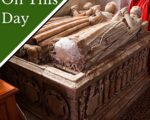
    Tomb of Sir Robert Broke at All Saints Church, Claverley, photo by Mike Searle

    On this day in Tudor history, 5th (or 6th) September 1558, in the reign of Queen Mary I, judge, legal writer and Speaker of the House of Commons Sir Robert Broke died at a friend’s house in Patshull, Staffordshire.

    Broke was buried in Claverley Church, Shropshire.

    Broke’s other offices included Deputy Chief Steward for the Duchy of Lancaster, Serjeant-at-Law and Chief Justice of the Common Pleas.

    [Read More...]
  • August 23 – Stephen Gardiner becomes Lord Chancellor

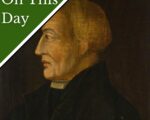
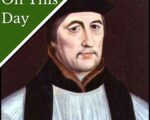
    A portrait of Stephen Gardiner, Bishop of Winchester

    On this day in Tudor history, 23rd August 1553, just over a month after Mary I had been proclaimed queen, Stephen Gardiner, Bishop of Winchester, was made Lord Chancellor.

    Here are some facts about Stephen Gardiner, a man known as “Wily Winchester”…

    [Read More...]
  • Monday Martyr – Agnes Prest

    This week’s #MondayMartyr is Protestant Agnes Prest, who was burnt at the stake at Southernhay, just outside of Exeter’s city walls on 15th August 1557, in the reign of Queen Mary I. Agnes was outspoken in her views of the Catholic Church, viewing the Eucharist as “that foul idol” and the Church as the “Whore of Babylon”.

    [Read More...]
  • August 13 – Sir Humphrey Radcliffe

    On this day in Tudor history, 13th August 1566, in the reign of Queen Elizabeth I, Sir Humphrey Radcliffe died at his manor of Elstow. He was buried at Elstow Abbey.

    Radcliffe served as a Member of Parliament during the reigns of Mary I and Elizabeth I, and then as a Justice of the Peace and Sheriff in Elizabeth I’s reign.

    Here are some more facts about Sir Humphrey Radcliffe…

    [Read More...]
  • August 12 – Sir Thomas Smith

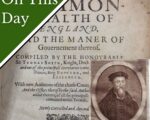
    The title page of the 1609 edition of The Commonwealth of England by Sir Thomas Smith with a 19th century engraving of Smith

    On this day in Tudor history, 12th August 1577, humanist scholar and diplomat Sir Thomas Smith died at Hill Hall in Essex. He was buried in St Michael’s Church, Theydon Mount.

    Smith served Elizabeth I as Chancellor of the Order of the Garter and as Secretary of State, but is known for his political books “The Discourse of the Commonweal” and “De Republica Anglorum; the Manner of Government or Policie of the Realme of England”.

    [Read More...]
  • August 4 – William Cecil, 1st Baron Burghley

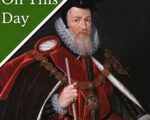
    On this day in Tudor history, 4th August 1598, in the reign of Queen Elizabeth I, William Cecil, 1st Baron Burghley, died in London aged seventy-six. He had been Elizabeth I’s chief advisor.

    Here are a few facts about Burghley:

    [Read More...]
  • August 1 – John Ashley (Astley)

    Photo of the portrait of John Ashley, NPG

    On this day in Tudor history, 1st August 1596, in the reign of Queen Elizabeth I, courtier John Ashley (Astley) died, probably at Maidstone in Kent. He was buried there at All Saints’ Church.

    Here are some facts about Ashley

    [Read More...]
  • ADVANCE NOTICE: Wolf Hall Tudor Weekend Conference to celebrate Hilary Mantel’s Trilogy

    The Wolf Hall Weekend

    Fans of all things Tudor will be thrilled to know that a weekend conference dedicated to the late Dame Hilary Mantel’s Wolf Hall Trilogy will be held next summer

    [Read More...]
  • July 13 – John Dee

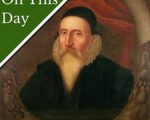
    A portrait of John Dee by an unknown artist

    On this day in Tudor history, 13th July 1527, John Dee, the astrologer, mathematician, alchemist, antiquary, spy, philosopher, geographer and adviser to Elizabeth I and influential statesmen, was born in London.

    He had an incredible career

    [Read More...]
  • May 5 – Sir Henry Sidney

    On this day in Tudor history, 5th May 1586, in the reign of Queen Elizabeth I, fifty-six-year-old Sir Henry Sidney died. His body was buried in the Sidney Chapel at Penshurst and his heart in Ludlow, where he lived as President of the Council in the Marches of Wales.

    [Read More...]
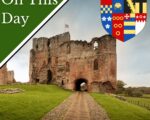
  • 29 April – William Dacre, 3rd Baron Gilsland, a lucky man

    On this day in Tudor history, 29th April 1500, William Dacre, 3rd Baron Dacre of Gilsland and 7th Baron Greystoke was born.

    Here are some facts about this Tudor baron:

    [Read More...]
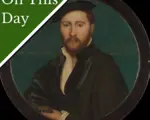
  • March 30 – Sir Ralph Sadler

    Portrait of an unknown man some believe to be Ralph Sadler by Hans Holbein the Younger
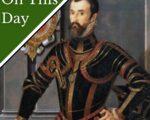
  • March 17 – William Herbert, 1st Earl of Pembroke, Black Will Herbert

    On this day in Tudor history, 17th March 1570, in the reign of Queen Elizabeth I, William Herbert, 1st Earl of Pembroke, soldier, courtier and landowner, died at Hampton Court, aged sixty-three.

    Here are some facts about this Tudor earl, who was known as Black Will Herbert and had a queen as a sister-in-law…

    [Read More...]
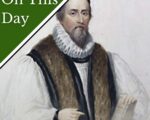
  • March 15 – Bishop John Hooper is deprived of his bishopric

    On 15th March 1554, in the reign of Queen Mary I, John Hooper, Bishop of Gloucester and Worcester, was deprived of his bishopric while imprisoned in Fleet Prison. He had been charged with owing over five hundred pounds in unpaid first fruits, a charge he denied.

    Let me tell you a bit more about this man, who ended up being a Marian martyr…

    [Read More...]
  • March 8 – Richard Tracy, an outspoken reformer

    On this day in Tudor history, 8 March 1569, evangelical reformer and Member of Parliament Richard Tracy died at his manor in Stanway, Gloucestershire.

    Tracy was the cousin of Protestant martyr James Bainham and his works included the 1543 pamphlet on justification by faith: “Profe and Declaration of thys Proposition: Fayth only iustifieth”, which was dedicated to Henry VIII; the 1544 “‘A Supplycation to our most Soueraigne Lorde, Kynge Henry the Eyght” and “A Bryef and short Declaracyon made wherebye euery Chrysten Man may knowe what is a Sacrament”. In Elizabeth I’s reign, he served as a Commissioner of the Peace and Sheriff in Gloucestershire.

    [Read More...]
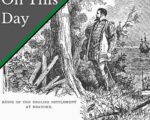
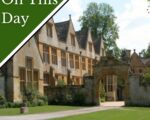
  • March 1 – Sir Thomas Tresham, Grand Prior

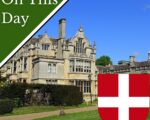
    Photo of Rushton Hall and the coat of arms of the Knights Hospitaller - a white cross on a red background

    On this day in Tudor history, 1st March 1559, in the reign of Queen Elizabeth I, Catholic politician and landowner, Sir Thomas Tresham, died at Rushton in Northamptonshire. He was buried at St Peter’s Church, Rushton.

    Tresham was a leading politician in the reigns of Henry VIII and Mary I, and he’s an interesting Tudor chap.

    Let me tell you a bit more about him…

    [Read More...]
  • February 28 – The death of theologian and Protestant reformer Martin Bucer

    During the night of 28th February/1st March 1551, theologian and Protestant reformer Martin Bucer died in Cambridge. He was fifty-nine years old.

    Let me tell tell you a bit more about this reformer, who ended up being posthumously burned as a heretic in Mary I’s reign!

    [Read More...]
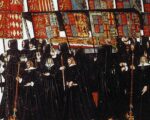
  • February 14 – William Berkeley, 1st Marquess of Berkeley

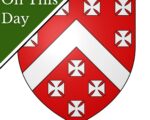
    Arms of Berkeley, Gules, a chevron between 10 crosses pattée 6 in chief and 4 in base argent

    On this day in Tudor history, 14th February 1492, in the reign of King Henry VII, magnate William Berkeley, Marquis of Berkeley, died. He was buried in the Augustinian friary in London with his second wife, Joan.

    Berkeley is known for his involvement in the 1470 Battle of Nibley Green, the last English battle fought between private armies of feudal magnates.

    [Read More...]
  • February 9 – A reprieve for Lady Jane Grey

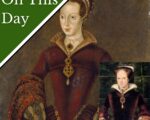
    This day in Tudor history, 9th February 1554, in the reign of Queen Mary I, was one of the dates set for the execution of Lady Jane Grey, the former Queen Jane, but she was granted a three-day reprieve.

    Why and what had happened between her trial in November 1553, when she had been condemned to death, and this day?

    Let me tell you…

    [Read More...]
  • February 1 – Alchemist Roger Cooke

    Image from a 15th century alchemical treatise, Aurora consurgens
  • January 27 – The burning of Bartlet Green and six other Protestants

    On this day in Tudor history, 27th January 1556, in the reign of Queen Mary I, Protestant Bartlet or Bartholomew Green was burnt at the stake at Smithfield, with six other Protestants.

    Green, who martyrologist John Foxe describes as a gentleman and lawyer, “saw the true light of God’s gospel” when listening to lectures given by Peter the Martyr while studying at Oxford. Foxe writes that “Whereof when he had once tasted, it became unto him as the fountain of lively water, that our Saviour Christ spake of to the woman of Samaria, so as he never thirsted any more, but had a well springing unto everlasting life”. Green studied law at the Inner Temple at London.

    [Read More...]
  • January 16 – Sir Anthony Denny

    On this day in Tudor history, 16th January 1501, in the reign of King Henry VII, Sir Anthony Denny was born at Cheshunt in Hertfordshire. He was the second son of Sir Edmund Denny, Baron of the Exchequer to Henry VIII, and his wife, Mary Troutbeck.

    The courtier and good friend of Henry VIII was educated at St Paul’s School, London, before moving on to St John’s College, Cambridge.

    Following employment in the service of Sir Francis Bryan, a man known as the Vicar of Hell, Denny joined King Henry VIII’s privy chamber in 1533 and was made a yeoman of the wardrobe in 1536.

    [Read More...]
  • January 15 – Jane Dudley, Duchess of Northumberland

    On this day in Tudor history, 15th January 1555, in the reign of Queen Mary I, Jane Dudley, Duchess of Northumberland and wife of John Dudley, Duke of Northumberland, died in Chelsea, London.

    Forty-six-year-old Jane had outlived her husband, who was executed in 1553 after Mary I had successfully seized the throne from the couple’s daughter-in-law, Lady Jane Grey.

    Here are some facts about this Duchess of Northumberland…

    [Read More...]
  • January 9 – Clement Adams

    Sebastian Cabot's map

    On this day in Tudor history, 9th January 1587, in the reign of Queen Elizabeth I, Clement Adams died. He was laid to rest at St. Alphege Church, Greenwich

    The Warwickshire schoolmaster and map engraver was about sixty-eight at his death, having been born in around 1519.

    [Read More...]
  • January 8 – Henry Clifford, 2nd Earl of Cumberland, and an interesting family story

    Photo of the ruins of Brougham Castle, Henry Clifford's home, and a picture of the earl's arms.

    On 8th January 1570, in the reign of Queen Elizabeth I, Henry Clifford, 2nd Earl of Cumberland, died at his home, Brougham Castle. He was buried at Holy Trinity Church, Skipton.

    According to a family story, Clifford was so devastated at the death of his first wife, Lady Eleanor Brandon, that he could only be brought back from a certain death by suckling from a woman’s breasts!

    [Read More...]
  • October 24 – The Roanoke Colony: A Tudor mystery

    On this day in Tudor history, 24th October 1590, in the reign of Queen Elizabeth I, the governor of the Roanoke Colony, John White, returned to England after failing to find the lost Roanoke colonists.

    The lost colonists included his daughter Ellinor (Elenora), his son-in-law Ananias Dare, and his granddaughter Virginia Dare.

    What happened to the Roanoke colonists and what did the word CROATOAN carved onto a post mean?

    Find out all about the lost Roanoke Colony and the theories regarding the disappearance of all 115 people, including the very latest research…

    [Read More...]
  • October 12 – An MP is assassinated

    On this day in Tudor history, 12th October 1555, in the reign of Mary I, Lewis Owen, member of Parliament and administrator in Wales, was assassinated.

    Owen was murdered on Dugoed Mawddwy, a mountain pass, by a group of bandits as revenge for his campaign against them, which had led to around 80 hangings.

    Find out more about Lewis Owen, his life and what happened…

    [Read More...]
  • Tudor royal funerals

    People all over the world have tuned in to watch the funeral of Queen Elizabeth II today, a queen who reigned for over 70 years and who was descended from Margaret Tudor, Queen of Scotland, and, therefore, King Henry VII, as well as having Boleyn blood.

    The funeral procession and ceremony were full of tradition and ritual, and our Tudor ancestors would recognise much of it, so I thought I’d share with you some information on Tudor royal funerals.

    [Read More...]
  • August 4 – William Cecil dies, and rebels fight valiantly

    On this day in Tudor history, 4th August 1598, in the reign of Queen Elizabeth I, William Cecil, 1st Baron Burghley, died. He’d been Elizabeth’s chief advisor and a man she called her spirit.

    Hear a few more William Cecil facts in this edition of #TudorHistoryShorts…

    [Read More...]
  • July 19 – The Mary Rose sinks, and Mary I is proclaimed queen

    On this day in Tudor history, 19th July 1545, in the reign of King Henry VIII, the king’s flagship, the Mary Rose, sank right in front of his eyes.

    She sank in the Battle of the Solent between the English and French fleets.

    But why did the Mary Rose sink?

    [Read More...]