The Tudor Society

YOUR SEARCH UNCOVERED 619 RESULTS

  • This week in history 1 – 7 October

    1st October:

    1500 – Death of John Alcock, Bishop of Ely, scholar and Royal Tutor, at Wisbech Castle. He was buried at Ely Cathedral, in the chantry chapel he had designed. Alcock had acted as tutor to Prince Edward, son of Edward IV, and had also been president of the Prince’s Council at Ludlow. He was also Henry VII’s first Chancellor and opened his first Parliament.
    1505 – Death of Sir Henry Colet, merchant and Lord Mayor of London, at Stepney. He was buried there.
    1526 – Birth of Dorothy Stafford, Lady Stafford, daughter of Henry Stafford, 10th Baron Stafford, and his wife, Ursula (née Pole). Dorothy married Sir William Stafford, widower of Mary Boleyn, in 1545. She served Elizabeth I as a gentlewoman of the Privy Chamber.
    1553 – Mary I was crowned Queen at Westminster Abbey by Stephen Gardiner, the Bishop of Winchester.

    [Read More...]
  • This week in history 24 – 30 September

    24th September:

    1486 – Arthur, Prince of Wales and son of Henry VII, was christened at a lavish ceremony at Winchester Cathedral.
    1516 – Birth of Richard Pate, lawyer, member of Parliament and refounder of Cheltenham Grammar School, now known as Pate’s Grammar School.
    1526 – Sometime before 24th September 1526, Marmaduke Huby, Abbot of Fountains since 1495, died at around the age of 87. It is thought that he was buried under the floor of the chapter house.
    1561 – Birth of Edward Seymour, Viscount Beauchamp, son of Katherine Grey (sister of Lady Jane Grey) and Edward Seymour, 1st Earl of Hertford, in the Tower of London. He was born in the Tower because his parents had been imprisoned for marrying without the Queen’s permission.
    1589 – Executions of William Spenser, Roman Catholic priest and martyr, and layman Robert Hardesty at York. Spenser was executed for being a priest, and Hardesty for sheltering Spenser.

    [Read More...]
  • This week in history 17 – 23 September

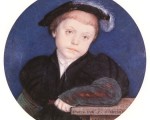
    A miniature of Henry Brandon, 2nd Duke of Suffolk, by Hans Holbein the Younger.

    17th September:

    1558 – Death of Walter Devereux, 1st Viscount Hereford, at the Devereux seat at Chartley in Staffordshire. He was buried in Stowe church. Devereux served Henry VIII as joint Constable of Warwick Castle, as a member of the jury at the trial of Edward Stafford, Duke of Buckingham, in 1521, in the government of the Welsh Marches, as Steward in Princess Mary’s household at Ludlow and Chamberlain of the Court of General Surveyors. He also served Edward VI as a Privy Councillor.
    1563 – Death of Henry Manners, 2nd Earl of Rutland, courtier and soldier, during an outbreak of the plague. He was buried at Bottesford parish church in Leicestershire. Manners served Edward VI as Warden of the East and Middle Marches on the Scottish borders, joint Lord Lieutenant of Lincolnshire and Nottinghamshire, and Lord Lieutenant of Nottinghamshire. He was imprisoned when Mary I came to the throne for his support of John Dudley, Duke of Northumberland, but was released into house arrest and then pardoned. He served Mary I as Captain-General of Horsemen and Lieutenant and Captain-General in Calais. During Elizabeth I’s reign, he served as Lord Lieutenant of Nottinghamshire and Rutland, and President of the Council of the North.
    1575 – Death of Heinrich (Henry) Bullinger, the Swiss reformer and theologian, in Zurich. Bullinger succeeded Huldrych Zwingli as pastor at Grossmünster and head of the church in Zurich. His main work was “The Decades”, a theological work, but his sermons were also translated and published, and he wrote historical works.
    1577 – The Edict of Poitiers ratified the Treaty of Bergerac, which had been signed between Henry III of France and the Huguenot princes.

    [Read More...]
  • This week in history 3 – 9 September

    3rd September:

    1553 – Edward Courtenay was created Earl of Devon. He had been imprisoned in 1538, at the age of twelve, due to his family’s links with the Poles and Nevilles, but was released shortly after the accession of Mary I.
    1557 – News reached London that the English and Imperial troops had been successful in storming St Quentin, and there were widespread celebrations; bonfires were lit, bells were rung and there was singing. The good news was marred, however, by news of the death of Henry Dudley.
    1588 (3rd or 5th September) – Death of Richard Tarlton, actor and famous clown, in Shoreditch. He was buried in St Leonard’s Church, Shoreditch. Tarlton was a member of the Queen’s Men, but is famed for his post-play jigs as a clown.
    1592 – Death of writer and playwright Robert Greene in Dowgate. He died from a fever and was buried in a churchyard near Bedlam. Greene was a prolific writer, writing autobiographical works, plays and romances, but is best known for his pamphlet “Greene’s Groats-worth of Wit bought with a Million of Repentance”, which is the first contemporary reference to William Shakespeare. It was actually an attack on Shakespeare, whom Greene accused of plagiarism, and of being uneducated.
    1597 – Death of Sir John Norreys (Norris), military commander, at his brother Thomas’s home, Norris Castle in Mallow, co. Cork. He died in his brother’s arms, and it is thought that his death was due to trouble from old wounds, perhaps gangrene. Norris served as a soldier in France, the Low Countries and Ireland.

    [Read More...]
  • This week in history 6 – 12 August

    6 August:

    1504 – Birth of Matthew Parker, Archbishop of Canterbury, in the parish of St Saviour, Norwich. Parker was the son of worsted weaver William Parker and his wife Alice Monings [Monins] from Kent.
    1514 – Marriage of Margaret Tudor, sister of Henry VIII and widow of James IV of Scotland, and Archibald Douglas, 6th Earl of Angus, at Kinnoull in Perthshire.
    1549 – Battle of Clyst Heath during the Prayer Book Rebellion.
    1623 – Death of Anne Hathaway, wife of William Shakespeare. Anne was buried next to her husband in the Church of the Holy Trinity, Stratford-upon-Avon.

    [Read More...]
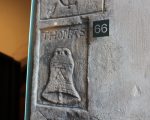
  • Blessed Thomas Abel’s bell carving in the Beauchamp Tower

    As it is the anniversary of the execution of Catholic priest Thomas Abel (Abell) on 30th July 1540, I thought I’d share this photo that Tim took of a carving done by Thomas into the stone wall of the Beauchamp Tower during his imprisonment there. You can click on the picture to make it bigger. As you can see, it’s a rebus, i.e. a puzzle in which words are represented by pictures and letters – so we have “Thomas” then a picture of a bell with the letter “A” on it: Thomas Abell. It’s one of my favourite carvings in the Beauchamp Tower.

    [Read More...]
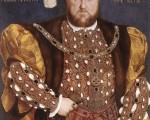
  • King Henry VIII

    The iconic portrait of Henry VIII after Holbein

    Happy birthday to the man who has the honour of being both my favourite and least favourite king! I find him fascinating but also love to hate him.

    I thought I’d celebrate the anniversary of his birth on 28th June 1491 by sharing some of the Henry VIII resources we have here for members at the Tudor Society:

    [Read More...]
  • This week in history 4 – 10 June

    4th June…

    1534 – Death of Sir Edward Guildford at Leeds Castle. Guildford acted as guardian to John Dudley (future Duke of Northumberland) and held the posts of Marshal of Calais, Constable of Dover Castle and Lord Warden of the Cinque Ports.
    1536 – Jane Seymour was proclaimed Queen at Greenwich Palace. Charles Wriothesley, the Tudor chronicler, recorded: “Also the 4th daie of June, being Whitsoundaie, the said Jane Seymor was proclaymed Queene at Greenewych, and went in procession, after the King, with a great traine of ladies followinge after her, and also ofred at masse as Queen, and began her howsehold that daie, dyning in her chamber of presence under the cloath of estate.”
    1550 (some sources say 5th June) – Robert Dudley married Amy Robsart at the royal palace of Sheen at Richmond, near London. The marriage was attended by the then king, Edward VI.
    1561 – The spire of St Paul’s Cathedral caught fire after being struck by lightning. The fire melted the Cathedral’s bells and lead from the spire “poured down like lava upon the roof”……

    [Read More...]
  • This week in history 28 May – 3 June

    28th May:

    1509 – Death of Edward Courtenay, 1st Earl of Devon. He was buried at Tiverton.
    1533 – Archbishop Thomas Cranmer proclaimed the validity of Henry’s marriage to Anne Boleyn.
    1535 – Birth of Sir Thomas North, translator, in London.
    1582 – Executions of Roman Catholic priests Thomas Forde, John Shert and Robert Johnson at Tyburn. They were hanged, drawn and quartered.
    1611 – Funeral of Thomas Sutton, founder of the London Charterhouse.

    [Read More...]
  • This week in history 7 – 13 May

    A sketch of Bishop John Fisher by Hans Holbein the Younger

    7th May:

    1535 – John Fisher, former Bishop of Rochester, was visited by Thomas Cromwell, Master Secretary, and member of the King’s Council. Cromwell read out the “Act of Supremacy” and Fisher refused to acknowledge the King as the supreme head of the Church, saying “The King owre Soveraign Lord is not supreme hedd yn erthe of the Cherche of Englande.” It is alleged that Richard Rich tricked him into saying those words, telling him that the King wished to know his real opinion in secret, but whatever the truth of the matter, Fisher was found guilty of treason and executed on 22nd July 1535.
    1536 – Queen Anne Boleyn’s chaplain, William Latymer, was searched by the mayor and jurates of Sandwich on his arrival back in England. He was returning from a business visit to Flanders, a visit he had undertaken on behalf of the Queen. Latymer had often brought Anne religious books back from the Continent, so it was lucky for him that he did not have anything which could have been deemed as heretical in his luggage. Records were made of the books that he was carrying and of those which he was having sent directly to London, but he was allowed to carry on with his journey.
    1540 – Death of Sir William Weston, Prior of the Hospital of St John of Jerusalem in England. He died at the priory on the day that the order to dissolve it was passed through the Commons. He was the uncle of Sir Francis Weston, a man executed in 1536 in the coup against Anne Boleyn.

    [Read More...]
  • Sir John Gage (1479-1556)

    Sir John Gage was born on 28th October 1479 and was the only son of William Gage of Burstow and his wife, Agnes, daughter of Bartholomew Bolney of Bolney in Sussex. Gage was baptised in Burstow, where he was born, but the family later moved to Firle, near Lewes.

    In 1499, Gage became a ward of Robert Tate, alderman of London, and in 1502 Gage married Philippa, daughter of Sir Richard Guildford of Cranbrook who was comptroller of the royal household. This marriage match was good for Gage in that it helped him to join the royal household, which he did by becoming an esquire of the body to King Henry VII. He continued in this role after the accession of 17-year-old Henry VIII in 1509.

    Gage served as a Justice of the Peace for the counties of Sussex (1514) and Surrey (1528) and by 1522 he had been appointed as deputy to Sir Nicholas Vaux, who was serving as captain of Guînes. This was due to the patronage of Sir William Sandys who was serving as treasurer of Calais. In August 1522, Gage was granted survivorship of the office of comptroller of Calais, because the comptroller, Sir Robert Wotton was ill, and he became comptroller in 1524 on Wotton’s death. He served in the campaigns in France in the 1510s and 1520s and was rewarded with a knighthood in 1525.

    [Read More...]
  • This week in history 30 April – 6 May

    1532 – James Bainham, lawyer and Protestant martyr, was burned at Smithfield.
    1536 – Scottish theologian Alexander Alesius witnessed an argument between Queen Anne Boleyn and Henry VIII, and at 11 o’clock that night, the King and Queen’s upcoming visit to Calais was cancelled and arrangements made for the King to journey alone a week later. Also 30th April, court musician and member of the Boleyn circle, Mark Smeaton, was taken to Thomas Cromwell’s house in Stepney and interrogated. Within twenty-four hours, he had confessed to making love three times to the Queen.
    1544 – Death of Thomas Audley, Baron Audley of Walden and Lord Chancellor, at his home in Aldgate, London. Audley was Cromwell’s right-hand man in 1536, during the fall of Anne Boleyn, and became even more important after Cromwell’s fall.
    1547 – Sir Anthony Denny was made Henry VIII’s Groom of the Stool.
    1563 – Death of Henry Stafford, 10th Baron Stafford, at Caus Castle, Shropshire. Stafford was the only legitimate son of Edward Stafford, 3rd Duke of Buckingham, and his wife, Eleanor, daughter of Henry Percy, 4th Earl of Northumberland.
    1595 – Death of Thomas Bedwell, mathematician, engineer and keeper of the ordnance store at the Tower of London. He was buried at the Tower, in the Chapel of St Peter ad Vincula. Bedwell’s engineering projects included him supervising the building of Dover harbour, giving advice on the fortification of Portsmouth and working on the River Thames’ defences at Tilbury and Gravesend in 1588, at the time of the Spanish Armada.
    1596 – Death of Sir John Puckering, administrator and Speaker of the House of Commons, from apoplexy. Puckering’s other offices included Serjeant-at-Law, Recorder of Warwick, Privy Councillor and Lord Keeper of the Great Seal. In 1587, he was involved in the trial of Elizabeth I’s secretary William Davison, appearing for the Crown. He was buried at Westminster Abbey, in St Paul’s Chapel.
    1596 – Death of Thomas Bickley, Bishop of Chichester, at the bishop’s palace in Aldingbourne. He was buried in his cathedral.

    [Read More...]

  • This week in history 23 – 29 April

    1500 – Birth of Alexander Ales (Alesius, Aless), Scottish theologian and reformer, at Edinburgh. His mother was Christina Bigholm, and his actual surname seems to have been Alan or Allane. He changed his name when he went into exile, choosing “Alesius”, meaning “bird”, or in this case, “exile”.
    1512 – Birth of Henry Fitzalan, 12th Earl of Arundel, son of William Fitzalan, 11th Earl of Arundel, and Anne (née Percy), daughter of Henry Percy, 4th Earl of Northumberland. At his baptism, Henry VIII stood as his godfather. He served Henry VIII as Deputy of Calais, Privy Councillor and Lord Chamberlain.
    1536 – Sir Nicholas Carew was elected to the Order of the Garter at the annual chapter meeting at Greenwich, rather than George Boleyn, brother of Queen Anne Boleyn.
    1564 – Traditional birthdate of William Shakespeare, the Bard. It is not known on what date Shakespeare was actually born but he was baptised at Stratford-upon-Avon on 26th April 1564, and baptism usually took place around three days after birth.
    William Shakespeare also died on this day in 1616. He was buried at the Holy Trinity Church, Stratford-upon-Avon, in the chancel.
    23 April, St George’s Day, was the traditional day for announcing new appointments to the Order of the Garter, the highest order of chivalry in England.

    [Read More...]
  • Sir Anthony Browne (c.1500-1548)

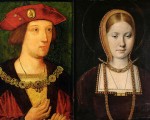
    Sir Anthony Browne was born in c.1500 and was the son of Sir Anthony Browne and his wife Lucy. Browne’s father was a member of the Browne family of Betchworth, in Surrey, and his mother was a widow of Sir Thomas Fitzwilliam of Aldwark, Yorkshire. She was also the daughter and coheir of John Neville, 1st Marquess of Montagu and son of Richard Neville, 5th Earl of Salisbury. Browne’s great uncle was Richard Neville, Earl of Warwick, the famous “Kingmaker”. From his mother’s first marriage, Browne had a half-brother, William Fitzwilliam, 1st Earl of Southampton, whose later career resembled his in many ways.

    [Read More...]
  • This week in history 19 – 25 March

    19th March:

    1563 – Deaths of Arthur Brooke, translator and poet, and Sir Thomas Finch, knight-marshal, in the shipwreck of the Greyhound, off the coast of Rye in East Sussex.
    1563 – Peace (Edict) of Amboise signed at the Château of Amboise by Catherine de’ Medici, as regent for her son, Charles IX. Catherine initiated this truce after the assassination of Francis, Duke of Guise, at the Siege of Orléans. The Edict ended the first phase of the French Wars of Religion and guaranteed the Huguenots religious privileges and freedoms. Peace did not last long, however.
    1568 – Death of Elizabeth Seymour, Lady Cromwell. Click here to read more.
    1577 – Death of Edmund Harman, former barber of Henry VIII, at Burford in Oxfordshire. He had retired there after Henry VIII’s death. Harman was buried at Taynton Church.
    1590 – Baptism of William Bradford, separatist and founder of the Plymouth Colony, Massachusetts, at Austerfield in Yorkshire. Bradford was Governor of the colony for over thirty years.

    [Read More...]
  • This week in history 19 – 25 February

    19th February:

    1473 – Birth of Nicholas Copernicus, the Renaissance mathematician and astronomer, in Thorn, in the province of Royal Prussia, Poland. Copernicus is known for his theory of heliocentric cosmology, or the idea that the sun was stationary in the centre of the universe and that the earth revolved around it.
    1547 – King Edward VI rode from the Tower of London to Westminster in preparation for his coronation the next day. Click here to read more.
    1546 – William Cavendish was appointed Treasurer of the Privy Chamber. He later claimed that he had paid £1000 for the position.
    1567 – The imprisoned Margaret Douglas, Countess of Lennox, was informed of the murder of her son, Henry Stewart, Lord Darnley, by William Cecil’s wife, Mildred, and Lady William Howard. The Spanish ambassador recorded that Margaret’s grief was such “that it was necessary for the Queen to send her doctors to her”.
    1592 – The Rose Theatre, an Elizabethan playhouse, was opened in London on Bankside.
    1598 – Death of Jasper Heywood, Jesuit and poet, in Naples. Heywood had been deported to France in January 1585, after being imprisoned in the Tower of London for treason, and was then summoned to Rome. He never returned to England.
    1601 – Death of Thomas Fanshawe, at Warwick Lane. He was buried in the south aisle of Ware church in Hertfordshire. Fanshawe was an Exchequer official during Elizabeth I’s reign.

    [Read More...]
  • This week in history 12 – 18 February

    12th February:

    1554 – Executions of Lady Jane Grey and her husband Lord Guildford Dudley for treason. They were buried in the Chapel of St Peter ad Vincula at the Tower of London.
    1567 – Death of Sir Thomas White, founder of St John’s College, Oxford, and former Lord Mayor of London, at his property in Size Lane, London. He was buried in St John’s College Chapel.
    1584 – Executions of five Catholic priests, including James Fenn. They were hanged, drawn and quartered at Tyburn. Fenn was beatified by Pope Pius XI in 1929.
    1590 – Death of Blanche Parry, chief Gentlewoman of the Privy Chamber, at the age of eighty-two. She was buried in St Margaret’s, Westminster, with funeral rites which were usually reserved for a baroness. She has a monument in St Margaret’s and also one in Bacton Church, her home village in Herefordshire, which bears an inscription of twenty-eight lines of verse recording Blanche’s service to her beloved Queen.
    1611 – Probable date of death of Sir Henry Lee, Queen’s Champion from c.1580 to November 1590. He was buried at Quarrendon in Buckinghamshire.

    [Read More...]
  • Edward Stafford, 3rd Duke of Buckingham (1478-1521)

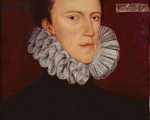
    Portrait of Edward Stafford, 3rd Duke of Buckingham, aged 42

    Edward Stafford, 3rd Duke of Buckingham, was one of Henry VII’s and Henry VIII’s main associates in court. He attended the coronation of both kings and played an important part in each of their reigns. But how he ended up in that position of favour is a fascinating story, as is his eventual demise.

    Edward Stafford was born on 3 February 1478 and his parents were Henry Stafford, 2nd Duke of Buckingham, and Catherine Woodville. Catherine was the sister of Elizabeth Woodville, wife of King Edward IV. Following his father’s execution in Richard III’s reign, Edward’s mother went on to marry Jasper Tudor, Duke of Bedford and the uncle of King Henry VII.

    Due to his father’s rebellion against Richard III in 1483, young Edward was hidden and moved around to different properties in and around Hertfordshire to keep him safe and out of harm’s way. His father’s rebellion against the king led to him losing his honours and being executed in November 1483. In 1485, Edward was honoured by the new king, Henry VII, by being made a Knight of the Order of the Bath, and he was made a ward of Margaret Beaufort, Countess of Richmond and the king’s mother. Unfortunately, this meant that Margaret was also granted all of his lands.

    [Read More...]
  • This week in history 22 – 28 January

    22 January:

    1528 – Henry VIII and Francis I declared war on Charles V, Holy Roman Emperor.
    1552 – Former Lord Protector of England, Edward Seymour, Duke of Somerset, was executed by beheading on Tower Hill in London. He was laid to rest in the Chapel of St Peter ad Vincula at the Tower of London, and records show that he was buried next to Anne Boleyn in the chancel area. Click here to read more.
    1554 – Thomas Wyatt the Younger met with fellow conspirators at his home of Allington Castle in Kent to make final plans for their uprising (Wyatt’s Rebellion) against Mary I and her decision to marry Philip of Spain – click here to read more.
    1561 – Birth of Francis Bacon, Viscount St Alban, the Elizabethan Lord Chancellor, politician, philosopher, author and scientist, at York House in the Strand, London. Bacon is known as “the Father of the Scientific method” and developed an investigative method, the Baconian method, which he put forward in his book Novum Organum in 1620. Some people (Baconians) believe that Francis Bacon was the true author of William Shakespeare’s plays.
    1575 – Death of James Hamilton, 2nd Earl of Arran and Duke of Châtelherault, at Kinneil. Arran was appointed Regent for the infant Mary, Queen of Scots after James V’s death in 1542, but surrendered the regency to Mary’s mother, Mary of Guise in 1554.
    1613 – Death of Sir David Williams, Serjeant-at-Law in Elizabeth I’s reign and Puisne Justice of the King’s Bench in James I’s reign, from a fever at Kingston House, Kingston Bagpuize, Berkshire. His body was buried at St John’s Chapel, Brecon, and his entrails were buried at Kingston.

    [Read More...]
  • 14 December – A death, an accession and a burial

    On this day in 1542, James V died at Falkland Palace in Falkland, Fife, Scotland, after being taken ill following the Scots’ defeat at the Battle of Solway Moss on 24th November. It is not known what killed him – some argue that it was a nervous collapse, and others that it was a virus.

    While James was on his deathbed, his consort, Mary of Guise, gave birth to a daughter, and it was the six-day-old baby who became Mary, Queen of Scots on her father’s death. John Knox and the chronicler Robert Lindsay of Pitscottie both recorded that James uttered the words “it came wi a lass, it’ll gang wi a lass” (“it came with a lass, it will end with a lass”) as he lay dying, referring to how the Stuart dynasty began with a girl, through Marjorie Bruce, Robert the Bruce’s daughter, and how he feared it would now end with his daughter, Mary. However, the Stuart dynasty actually ended with another girl, Queen Anne, in 1714, and it is not known that James actually ever said these words.

    [Read More...]
  • This week in history 11 – 17 December

    11th December:

    1577 – Burial of Benjamin Gonson, Treasurer of the Navy and son of William Gonson, Vice-Admiral of Norfolk and Suffolk from 1536 until 1543. Gonson was buried at St Dunstan’s Church.
    1589 – Death of Patrick Lindsay, 6th Lord Lindsay of the Byres, at Struthers Castle in Fife, Scotland. Lindsay was a supporter of the Protestant Reformation, and one of the lords of the congregation. He was one of Mary, Queen of Scots’ guardians when she was imprisoned at Lochleven and was a Privy Councillor after she was deposed as queen.
    1607 – Death of Roger Manners, member of Parliament and Constable of Nottingham Castle. He was buried at Uffington Church in Rutland.
    1608 – Burial of Douglas Sheffield (née Howard), Lady Sheffield, at St Margaret’s Church, Westminster. Douglas was the eldest daughter of William Howard, 1st Baron Howard of Effingham, and the wife of John Sheffield, 2nd Baron Sheffield. Before her marriage, she served as a Maid of Honour to Elizabeth I. After her husband’s death, she had an affair with Robert Dudley, 1st Earl of Leicester, which resulted in the birth of a son, Sir Robert Dudley, the explorer and cartographer, born in 1574. Douglas claimed that she and Dudley had married in secret when she was pregnant in late 1573, but she could not provide any evidence to support this when her son sought to claim his father’s and uncle’s titles after Elizabeth I’s death. Douglas went on to marry Sir Edward Stafford in 1579.

    [Read More...]
  • Henry VII’s Court Entertainment

    In today’s Claire Chats video I look at two examples of court revels that took place in Henry VIII’s reign.

    [Read More...]
  • This week in history 27 November – 3 December

    27th November:

    1531 (some say 4th December) – Burning of Richard Bayfield, Benedictine monk and reformist, at Smithfield for heresy. Sir Thomas More caught Bayfield importing Lutheran books into England, and he was tried by John Stokesley, Bishop of London, at St Paul’s on 10th November 1531, and convicted.
    1544 – Death of Sir Edward Baynton, soldier, courtier and Vice-Chamberlain to five of Henry VIII’s wives, in France. His cause of death is unknown, but he may have been wounded while serving as a soldier in France. Baynton had arranged to be buried at Bromham, but it appears that he was buried in France.
    1556 – Death of Henry Parker, 10th Baron Morley, nobleman, diplomat, translator and father of Jane Boleyn (wife of George Boleyn), at his home, Hallingbury Place, Great Hallingbury, Essex. He was in his late seventies at the time of his death. He was buried at St Giles’s Church, Great Hallingbury. Click here to read more about this interesting Tudor man.

    [Read More...]
  • This week in history 13 – 19 November

    On this day in history…

    13th November:

    1536 – Murder of Robert Pakington, mercer and member of Parliament, at Cheapside, while making his way to mass at St Thomas of Acre Chapel.
    1537 – Burial of Jane Seymour, Henry VIII’s third wife, at St George’s Chapel, Windsor Castle. Henry VIII’s daughter, Mary, acted as chief mourner.
    1553 – Lady Jane Grey, her husband Guildford Dudley, his brothers Ambrose and Henry, and Archbishop Thomas Cranmer were tried for treason at a public trial at London’s Guildhall. They were all found guilty as charged, with the men being sentenced to being hanged, drawn and quartered, and Jane to be burned alive, or beheaded.
    1601 – Burial of Lady Mary Ramsey (née Dale), famous philanthropist, at Christ Church in London.
    1612 – Death of Sir George Carew, administrator, member of Parliament and diplomat, from typhus at his home in Tothill Street, Westminster, London. He was buried at St Margaret’s Church, Westminster. Carew’s served as secretary to Lord Chancellor Hatton and served Elizabeth I and James I as an ambassador.

    [Read More...]
  • This week in history 30 October – 5 November

    On this day in history…

    30th October:

    1485 – The founder of the Tudor dynasty, Henry Tudor, was crowned King Henry VII at Westminster Abbey. Click here for more.
    The Tudor chronicler, Raphael Holinshed, recorded:
    “…with great pompe he rowed unto Westminster, & there the thirtith daie of October he was with all ceremonies accustomed, anointed, & crowned king, by the whole assent as well of the commons as of the nobilitie, & called Henrie the seaventh of that name…”
    His biographer, Thomas Penn, describes how this was the occasion that Henry was united with his mother, Lady Margaret Beaufort, whom he’d not seen for fourteen years. Margaret was said to have “wept marvellously”.
    Henry Tudor had claimed the crown of England after defeating Richard III at the Battle of Bosworth Field on the 22nd August 1485, and had actually been unofficially crowned with Richard’s crown on the battlefield that day.

    [Read More...]
  • This week in history 16 – 22 October

    On this day in history…

    16th October:

    1532 – While Anne Boleyn and Henry VIII were lodged in Calais, the Duke of Norfolk, Earl of Derby and a group of gentleman met with “the great mayster of Fraunce” Anne, duc de Montmorency, and his men at the English Pale, six miles outside of Calais. This meeting was to plan where Henry VIII would meet Francis I.
    1555 – The burnings of two of the Oxford martyrs: Hugh Latimer, Bishop of Worcester, and Nicholas Ridley, Bishop of London. Click here to read more.
    1573 – Death of Thomas Davies, Bishop of St Asaph, at Abergele in Denbighshire.
    1594 – Death of Cardinal William Allen at his home in the via Monserrato, Rome, while in exile. He was buried in Rome, in the English College’s Church.

    [Read More...]
  • Sir Thomas Wyatt the Elder

    As today is the anniversary of the death of Sir Thomas Wyatt the Elder, poet and diplomat, on 11th October 1542, I thought it would be good to share a mini-biography of him. This article is adapted from an article I wrote for the Anne Boleyn Files a few years ago and an extract from my book On This Day in Tudor History.

    Sir Thomas Wyatt was born in c.1503 at Allington Castle, Kent. He was the eldest son of Yorkshireman Sir Henry Wyatt and Anne Skinner, daughter of John Skinner of Reigate, a woman famed for her hospitality. Henry Wyatt was a skilled soldier and financier. During the Wars of the Roses, he had been a Lancastrian and it is possible that he was involved in the Duke of Buckingham’s rebellion against King Richard III. He was certainly imprisoned in Richard III’s reign and a family story tells of how he was saved from starvation during his imprisonment by a cat who brought him pigeons to eat. He was released on the accession of Henry VII, who rewarded him with many grants and titles. Henry Wyatt became a privy councillor under Henry VII and acted as an executor of the king’s will on his death in 1509. He went on to serve the new king, Henry VIII, and was made a Knight of the Bath at his coronation in June 1509.

    [Read More...]
  • This week in history 9 – 15 October

    On this day in history…

    9th October:

    1514 – The eighteen-year-old Mary Tudor, sister of Henry VIII, married the fifty-two-year-old King Louis XII of France at Abbeville.
    1529 – A writ of praemunire was filed against Cardinal Thomas Wolsey in the court of King’s Bench.
    1536 – Pilgrimage of Grace: The rebels of Horncastle, Lincoln, dispatched their petition of grievances to the King and also north into Yorkshire.
    1547 – Baptism of Miguel de Cervantes, author of Don Quixote, in Alcalá de Henares, Spain. His actual birthdate is unknown.
    1573 – Death of Sir Thomas Wroth, courtier, politician and landowner. Wroth served Edward VI as a Gentleman of the Privy Chamber and was with him when he died.
    1604 – Death of Sir William Peryam, Judge, at Little Fulford, near Credington in Devon. He was laid to rest at Holy Cross Church. Peryam was on the commissions at the trials of Mary, Queen of Scots, the Earl of Arundel, the Earl of Essex and Sir John Perrot, and served as Chief Baron of the Exchequer from 1593 until his death.

    [Read More...]
  • This week in history 25 September – 1 October

    On this day in history…

    25th September:

    1513 – Vasco Núñez de Balboa, the Spanish explorer, reached the Pacific Ocean. He was the first European to have discovered the Pacific Ocean from the New World.
    1525 – Explorer, navigator and naval administrator Stephen Borough (Burrough) was born at Borough House, Northam Burrows, Northam in Devon, to Walter Borough and his wife Mary Dough.
    1534 – Death of Pope Clement VII in Rome from eating a death cap mushroom. He was laid to rest in Santa Maria sopra Minerva.
    1554 – Death of Richard Sampson, Bishop of Coventry and Lichfield, and former President of the Council of the Welsh Marches, at Eccleshall in Staffordshire. He was buried in the parish church at Eccleshall. Sampson had acted as the King’s Proctor at the fall of Anne Boleyn in 1536.
    1555 – The Peace of Augsburg, or Augsburg Settlement, was signed by Charles V, Holy Roman Emperor, and the princes of the Schmalkaldic League at Augsburg.
    1558 – Gertrude Courtenay, Marchioness of Exeter, made her will. She died soon after and was buried in Wimborne Minster, Dorset. Gertrude was the mother of Edward Courtenay, 1st Earl of Devon, who was imprisoned for his part in Wyatt’s Rebellion in 1554. Gertrude, herself, was imprisoned in 1538, and her husband was executed for treason.
    1584 – Death of Thomas Copley, Roman Catholic, in exile near Antwerp. He had served Elizabeth I as Commissioner of the Peace for Surrey, and she was godmother to his son, Henry, but he lost royal favour when he converted to Catholicism in 1563. He left England in 1570, being unable to accept royal supremacy and Elizabeth I’s religious measures.
    1586 – Mary, Queen of Scots was moved to Fotheringhay Castle in Northamptonshire, and Elizabeth finally backed down and agreed to the appointing of 36 commissioners to act as judges in her trial.
    1594 – Death of Gregory Fiennes, 10th Baron Dacre, at Chelsea. He was buried in Chelsea Old Church.
    1602 – Death of William Redman, Bishop of Norwich, at the Episcopal Palace. He was buried in the cathedral choir.

    [Read More...]
  • 20 September 1486 – Birth of Arthur Tudor, Prince of Wales

    On this day in history, 20th September 1486, Arthur Tudor, Prince of Wales, was born at St Swithun’s Priory in Winchester. Arthur was the first child of Henry VII and Elizabeth of York and he was born just eight months after his parents’ marriage.

    Elizabeth had travelled to Winchester to give birth because the city was believed to have been the capital of King Arthur’s Camelot and the site of his castle. Her husband the king believed that his firstborn son would be a hero like his namesake, legendary King Arthur, and that his reign would bring about a golden age in England.

    [Read More...]