The Tudor Society

YOUR SEARCH UNCOVERED 619 RESULTS

  • 28 April – A man involved in the falls of two queens

    On this day in Tudor history, 28th April 1548 (some sources say 6 May), courtier, diplomat, soldier and Keeper of Oatlands Palace, Sir Anthony Browne, died at Byfleet in Surrey. He had been one of Henry VIII’s most important and richest courtiers and was also involved in the falls of two queens: Anne Boleyn and Anne of Cleves.

    Find out more about this man and how he was involved in the falls of the two Annes in today’s talk.

    [Read More...]

  • 18 April – Eustace Chapuys bumps into Anne Boleyn

    Ok, so they didn’t physically bump into each other, but on this day in Tudor history, 18th April 1536, just a month and a day before Anne Boleyn’s execution, imperial ambassador Eustace Chapuys was manoeuvred unto a position where he was forced to pay reverence to Queen Anne Boleyn, the woman he referred to as “the concubine”. By paying her reverence, he was acknowledging her as queen, something that he had managed to avoid doing until now.

    What happened and how did Chapuys get into this awkward position?

    Find out in today’s talk.

    [Read More...]
  • 11 April – Victory for Anne Boleyn, finally!

    On this day in Tudor history, 11th April 1533, Good Friday, King Henry VIII informed his council that Anne Boleyn, the woman he’d married in January 1533, was his rightful wife and queen, and should be accorded royal honours.

    Finally, things were going right for the couple, who had been waiting for this moment since 1527.

    Find out more about what had led Henry VIII and Anne Boleyn to this point, and why they thought that the Great Matter would be sorted out much quicker, in today’s talk.

    [Read More...]
  • 1 April – William Harvey, his experiments and blood circulation

    On this day in Tudor history, 1st April 1578, English physician William Harvey, was born in Folkestone, Kent. Harvey has gone down in history as being the man who discovered the circulation of blood, and he was also physician extraordinary to King James I and King Charles I.

    How did Harvey work out that the heart pumped the blood around the body and how was his challenge of Galen’s work received?

    Find out more about William Harvey’s work, and also his role in the pardoning of women accused of witchcraft, in today’s talk.

    [Read More...]

  • 31 March – John Donne, the bell tolls for thee

    On this day in history, 31st March 1631, the Tudor and Stuart metaphysical poet, satirist, lawyer and clergyman John Donne died.

    Donne had an amazing career, going on voyages, serving as a royal chaplain and diplomat, and writing sermons, songs, satires and poetry, including an erotic poem, “The Flea”.

    Find out more about John Donne and hear some of his work in today’s talk.

    [Read More...]
  • 26 March – Robert Carey and his eventful ride to King James

    On this day in history, late on 26th March 1603, two days after the death of Queen Elizabeth I, Sir Robert Carey arrived at Holyrood in Edinburgh, Scotland, to inform King James VI that Queen Elizabeth I was dead and that James was now king.

    It took Carey just two days to get from London to Scotland, and he had an accident on the way, but it was all worth it. Find out about his journey and what happened in today’s “on this day in Tudor history” talk.

    [Read More...]
  • 23 March – The last abbey is dissolved

    On this day in Tudor history, 23rd March 1540, Waltham Abbey, an Augustinian house in Essex, was surrendered to the Crown. It was the last abbey to be dissolved in Henry VIII and Thomas Cromwell’s dissolution of the monasteries.

    Find out more about this historic abbey, its origins and what’s left today, and also who profited from its lands, in today’s talk.

    [Read More...]

  • 15 March – Henry VIII uses foul language!

    On this day in Tudor history, 15th March 1532, King Henry VIII used what was described as “foul language” to William Warham, Archbishop of Canterburyt. Henry VIII also threatened the poor man, and it is amazing that Warham kept his head as the king was furious.

    What happened? Find out what Warham did to upset the king in today’s talk.

    [Read More...]

  • 8 March – Henry VIII receives a leopard

  • 6 March – The Dissolution of the Monasteries

    On this day in Tudor history, 6th March 1536, King Henry VIII’s Dissolution of the Monasteries began when the “Act for the Suppression (or Dissolution) of the Lesser Monasteries” was introduced into the Reformation Parliament.

    The Dissolution of the Monasteries had a major impact on England and her people, but was of great benefit to the king, his nobles and the gentry. Find out what happened, why and its impact in this talk.

    [Read More...]
  • 22 February – Marie de Guise, who avoided marrying Henry VIII!

    On this day in Tudor history, 22nd February 1540, twenty-four-year-old Marie de Guise, or Mary of Guise, queen consort of King James V of Scotland, was crowned queen at Holyrood Abbey.

    Did you know that Henry VIII was keen on making Marie de Guise his fourth wife? She declined, saying that her neck was small! Instead, she married James V.

    Marie was, of course, the mother of Mary, Queen of Scots, and you can find out more about her in today’s talk.

    [Read More...]
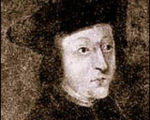
  • 11 February – Success for George Boleyn

    On this day in Tudor history, 11 February 1531, the ecclesiastical assembly known as convocation granted King Henry VIII the title of “singular protector, supreme lord, and even, so far as the law of Christ allows, supreme head of the English church and clergy”.

    The person responsible for persuading convocation to grant the king this title was Anne Boleyn’s brother, George Boleyn, Lord Rochford. It was a big responsibility for the young diplomat and courtier.

    Find out more about what happened in today’s talk.

    [Read More...]
  • 4 February – Mary Boleyn gets married

    On this day in Tudor history, Saturday 4th February 1520, Mary Boleyn, sister of Anne Boleyn, got married to William Carey in the Chapel Royal at Greenwich Palace, in a service attended by King Henry VIII.

    Find out more about Mary Boleyn and William Carey in today’s talk.

    [Read More...]
  • 2 February – Sir Francis Bryan, the Vicar of Hell

    On this day in Tudor history, 2nd February 1550, Sir Francis Bryan, died suddenly in Ireland. He was a rather colourful Tudor character, known as much for his drinking, gambling and all-round bad behaviour, as his diplomacy, royal favour and gift for poetry.

    Find out more about this one-eyed courtier and his nickname, “the vicar of hell”, in today’s talk.

    [Read More...]

  • 31 January – The great devil of all

    On this day in history, 31st January 1606, Gunpowder Plot conspirators Thomas Winter, Ambrose Rookwood, Robert Keyes, and Guy Fawkes were executed for treason at the Old Palace Yard, Westminster.

    Two of them cheated the executioner and crowd by leaping at the gallows, but they still had awful ends. Hear a contemporary account of their executions, including what they did and said, in today’s talk.

    [Read More...]
  • Eustace Chapuys (d.1556)

    Eustace Chapuys

    Eustace Chapuys was born in Annecy; his exact birth date is unknown but is believed to be between 1490 and 1492. He was the second son of Louis Chapuys, notary of Annecy in the Duchy of Savoy.

    Eustace Chapuys was a very well-educated man, attending the University of Turin in 1507, where it is believed he stayed for five years, leaving in around 1512. Chapuys became a doctor of civil and canon laws and had an interest in humanist scholarship. His degree paved the way for his appointment in 1517 when he was employed as an official to the Bishop of Geneva and represented the bishop in the government of the city. In the years following this appointment, Chapuys delicately handled strained political alliances, representing his bishop and the Duke of Savoy. In 1525, Chapuys entered the services of the Duke of Bourbon, acting as his ambassador to Charles V’s court in Granada. Following the death of the Duke of Bourbon, Eustace entered into the service of Charles V the Holy Roman Emperor, and by the 25th June 1529, he was appointed as Charles V’s ambassador to England. It is this appointment which guarantees Chapuys’ place in history as an important historical figure.

    [Read More...]
  • 8 January – Mary Shelton, Anne Boleyn’s cousin and lady

    On this day in Tudor history, 8th January 1571, Mary Shelton (married names: Heveningham and Appleyard) was buried at Heveningham Church, Suffolk.

    Mary Shelton was Queen Anne Boleyn’s cousin and lady-in-waiting, and may also have been King Henry VIII’s mistress. She also contributed to the Devonshire Manuscript with the likes of Mary Howard, Lady Margaret Douglas and Lord Thomas Howard.

    Find out more about Mary Shelton in today’s talk.

    [Read More...]
  • 7 January – “You shall find Calais lying in my heart”

    On this day in Tudor history, 7th January 1558, in the reign of Queen Mary I, England lost Calais to the French.

    It was a devastating blow as Calais had been held by England for over 200 years and was an important port for English wool exports. Mary I was said to have exclaimed ““When I am dead and opened, you shall find ‘Philip’ and ‘Calais’ lying in my heart”.

    Find out exactly what happened in today’s talk.

    [Read More...]
  • 6 January – Epiphany fun and feasting

    Happy Epiphany! Happy Kings’ Day! Yes, today is the Feast of the Epiphany, the day that commemorated the visit of the Magi to the Christ Child.

    Following on from yesterday’s Teasel’s Tudor Trivia about Epiphany Eve and Twelfth Night Cake, I thought I’d share with you some examples of how Epiphany was celebrated at the royal court. Find out what those Tudor people got up to on Twelfth Night in today’s talk.

    [Read More...]

  • 5 January – Richard Willes – A quirky Tudor man

    On this day in Tudor history, 5th January 1546, in the reign of King Henry VIII, geographer and poet, Richard Willes, was born in Pulham, Dorset.

    Richard Willes has been described as “One of the quirkier figures in the literary history not only of the college but of the Elizabethan period as a whole”, and he certainly was an interesting Tudor man. Find out about his literary accomplishments, and what exactly made him so “quirky”, in today’s talk.

    [Read More...]
  • 1 January – Henry VIII’s disastrous meeting with Anne of Cleves

    In today’s “on this day in Tudor history talk”, Claire Ridgway, author of several Tudor history books, puts you out of your misery from the cliffhanger she left you with on 27th December, by telling you all about Henry VIII’s first meeting with his bride-to-be, Anne of Cleves, on 1st January 1540.

    This meeting between King Henry VIII and the woman who would soon become his fourth wife, was a bit of a disaster, but exactly how much of a disaster was it? The accounts differ and in the video I share two slightly different contemporary accounts, one given in a chronicle and one shared in the annulment proceedings a few months later in 1540.

    What happened on New Year’s Day 1540 at Rochester? Find out all about Henry VIII and Anne of Cleves’ first meeting in today’s talk.

    [Read More...]
  • 22 December – Bishop Fisher begs for a shirt

    On this day in Tudor history, 22nd December 1534, John Fisher, Bishop of Rochester, who was a prisoner in the Tower of London, wrote to Thomas Cromwell.

    In his letter to Cromwell, the poor bishop begged him for a shirt, sheet, food and books, as well as asking him to intercede with King Henry VIII on his behalf.

    It is so sad that a man who had served the king so loyally in the past had come to this, and, of course, the king’s mercy would only stretch to commuting his method of execution to beheading.

    [Read More...]
  • 17 December – Henry VIII is excommunicated

    On this day in Tudor history, 17th December 1538, Pope Paul III announced the excommunication of King Henry VIII.

    Henry VIII had been threatened with excommunication several times, but his desecration of one of the holiest shrines in Europe was the final straw for the pope.

    Find out how Henry VIII, who had once been “Defender of the Faith”, had upset the Pope and what had been the final straw for the papacy in today’s talk.

    [Read More...]
  • 15 December – Cardinal Pole is laid to rest

    On this day in Tudor history, 15th December 1558, Cardinal Reginald Pole, Mary I’s Archbishop of Canterbury and her chief advisor, was buried at Canterbury Cathedral. Coincidentally, Cardinal Pole had died the same day as his queen, on 17th November 1558.

    Find out a bit more about Cardinal Pole, his background, death and burial, in today’s talk.

    [Read More...]
  • 4 December – The beginning of the end for Thomas Cranmer

    On this day in Tudor history, 4th December 1555, in Rome, papal sentence was passed on Thomas Cranmer, resulting in Cranmer being deprived of his archbishopric. Permission was also granted for his fate to be decided by the secular authorities.

    In today’s “on this day in history”, I explain what led Cranmer to this day and also what happened next. Thomas Cranmer went on to recant his Protestant faith on several occasions, but was still executed by being burned at the stake. Why?

    Find out more in today’s talk.

    [Read More...]
  • 22 November – Sir William Butts, royal physician and confidant

    On this day in Tudor history, 22nd November 1545, Henry VIII’s trusted physician and confidant, Sir William Butts, died after suffering from a “dooble febre quartanz”, a form of malaria.

    Sir William Butts was the doctor who was sent to treat Anne Boleyn, when she was ill with sweating sickness, and also advised on Princess Mary’s sickness, and was the man King Henry VIII confided in about his problems consummating his marriage to Anne of Cleves. He was obviously a man the king could trust.

    Find out more about this Tudor physician in today’s talk, with help from Teasel the dog.

    [Read More...]
  • November 21 – Frances Grey, mother of Lady Jane Grey

    On this day in Tudor history, 21st November 1559, Frances Grey (maiden name Brandon, other married name Stokes), Duchess of Suffolk and the mother of Queen Jane, or Lady Jane Grey, died at Richmond. She was laid to rest in St Edmund’s Chapel, Westminster Abbey, on the orders of her cousin, Queen Elizabeth I, and her second husband, Adrian Stokes, erected a tomb in her memory.

    Frances, daughter of Charles Brandon, Duke of Suffolk, and Mary Tudor, Queen of France, has gone down in history as rather a harsh and abusive mother, but let me tell you a bit more about the woman who was once named in Edward VI’s “devise for the succession”.

    [Read More...]
  • 18 November – Cuthbert Tunstall, an imprisoned bishop

    On this day in Tudor history, 18th November 1559, eighty-five-year-old Cuthbert Tunstall, Bishop of Durham, died while in the custody of Matthew Parker, Archbishop of Canterbury, at Lambeth Palace.

    Cuthbert Tunstall had an amazing career which spanned the reigns of Henry VIII, Edward VI and Mary I, and he was imprisoned in two of those monarchs’ reigns. In today’s talk, I give an overview of this bishop’s interesting life and career.

    [Read More...]
  • 5 November – Mary Tudor is crowned Queen of France

    On this day in Tudor history, Sunday 5th November 1514, eighteen-year-old Mary Tudor, sister of King Henry VIII and daughter of the late King Henry VII, was crowned Queen of France at Saint-Denis.

    Mary had become Queen of France on her marriage to King Louis XII on 9th October 1514.

    In today’s talk, I share what we know of Mary Tudor’s coronation from the contemporary sources.

    [Read More...]
  • 19 October – Henry VIII gets tough on rebels

    By this day in Tudor history, the Pilgrimage of Grace Rebellion in the north of England was well underway, and King Henry VIII had come to the decision that tough action was needed to put it down.

    The king had refused to give in to the rebels’ demands and they had refused to go back to their homes, so on 19th October 1536, the king wrote to Charles Brandon, Duke of Suffolk, and Edward Stanley, Earl of Derby, with instructions on what to do. The letters do not make for easy reading. This was the king at his most brutal. Examples were to be made of people, after all, these people were traitors to the Crown.

    Awful.

    I give a recap of what the rebellion was about and then share Henry VIII’s letters.

    [Read More...]