
In today’s Claire Chats video, I look at the primary sources for the great drought of 1540, the same summer that Henry VIII married Catherine Howard and executed Thomas Cromwell.
[Read More...]
In today’s Claire Chats video, I look at the primary sources for the great drought of 1540, the same summer that Henry VIII married Catherine Howard and executed Thomas Cromwell.
[Read More...]
On this day in history…
10th July:
1553 – Lady Jane Grey, her husband, Guildford Dudley, her parents and Guildford’s mother arrived by barge at the Tower of London, having travelled from Syon. Two heralds then proclaimed that Lady Jane Grey was now Queen of England before they moved on to proclaim their message in Cheapside and Fleet Street.
1553 – A letter arrived from Mary, daughter of Henry VIII, informing the council that she was the rightful heir to the throne, not Lady Jane Grey, and demanding their support.
1559 – Death of Henry II of France. He had been injured in a joust on 30th June when he was hit in the face by a lance. It is thought that a splinter entered his eye and went into his brain. He was buried in the Saint Denis Basilica.
1559 – Accession of Francis II and Mary, Queen of Scots as King and Queen of France.
1584 – Assassination of William of Orange, also known as William the Silent or William I, Prince of Orange. He was shot in the chest at his home in Delft by Balthasar Gérard, a Catholic Frenchman. A reward of 25,000 crowns had been offered by Philip II of Spain for the assassination of William, who was the main leader of the Dutch Protestant revolt against Spanish forces in the Netherlands. William was buried in the New Church in Delft. Gérard was captured and was tortured for days before being executed on 14th July 1584.
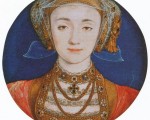
As today is the anniversary of the annulment of the marriage of Henry VIII and Anne of Cleves on 9th July 1540, I thought we would mark the occasion with an Anne of Cleves wordsearch as our Sunday fun.
Print it out, grab a drink and snack, and have a few minutes fun. It’s not too hard, I promise!
[Read More...]
On this day in history, Saturday 8th July 1553, the day after she’d been informed of her half-brother Edward VI’s death, Mary Tudor, eldest daughter of King Henry VIII declared herself queen.
Mary gathered together her loyal household at Kenninghall and informed them of Edward VI’s death, stating that “the right to the crown of England had therefore descended to her by divine and by human law”.
[Read More...]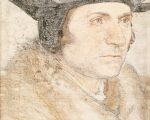
Yesterday was the anniversary of the execution of Sir Thomas More, former Lord Chancellor to Henry VIII, on 6th July 1535. To commemorate that anniversary, I thought I would share with you a brief bio of More, based on an extract from my book On This Day in Tudor History, and then some videos about him.
Sir Thomas More is thought to have been born on 7th February 1477 or 1478 n Milk Street, London, and he was the son of Sir John More, lawyer and judge on the King’s Bench, and Agnes Graunger, daughter of Thomas Graunger, a Merchant of the Staple of Calais and an Alderman of London.
More joined the household of John Morton, Archbishop of Canterbury, before studying Latin and logic at the University of Oxford. He then studied law in London. It was while he was a student that he met and became friends with men like William Lilye, John Colet and Erasmus.
[Read More...]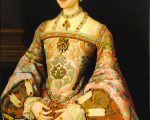
Born around 1512 to a family of gentry status, Katherine was the oldest daughter of Sir Thomas Parr, a late fifteenth-century courtier and knight. Her mother was Maud Green, a close friend and lady in waiting to Henry VIII’s first wife, Katherine of Aragon. The Parrs were a substantial northern family, with Thomas Parr tracing his ancestry to Edward III. Parr was a well-respected man and enjoyed the patronage of the young Henry VIII, who in 1515 sent him to Newcastle to escort his sister, the Princess Margaret, on her month-long progress south to London. Reports suggest he was charming and gallant, with the princess finding him particularly desirable; he soon became a favourite at Henry’s court. Upon his death in 1517 he left portions of £400 (£140,000 in modern value) to his two daughters, with a considerable amount more remaining for his son William.
Without the presence of a male figure in what was a patriarchal period, Maud was dealt the challenging duty of raising her children while maintaining a presence at court. Throughout these challenges, Maud was successful; she managed her estates and finances accordingly, oversaw her children’s education and arranged suitable unions for them befitting their status and marriageability.
[Read More...]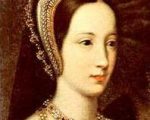
On this day in history, 25th June 1533, Mary Tudor, Queen of France, sister of King Henry VIII and wife of Charles Brandon, Duke of Suffolk, died at her home of Westhorpe Hall in Suffolk.
Mary had been born on 18th March 1496 at Richmond Palace and was the youngest surviving child of King Henry VII and Elizabeth of York. She was renowned for her beauty, being described by the Venetian ambassador as “a Paradise – tall, slender, grey-eyed, possessing an extreme pallor”, and her motto was La volenté de Dieu me suffit (The will of God is sufficient for me). In 1507, Mary was betrothed to Charles of Castile (the future Charles V Holy Roman Emperor), and their wedding was planned for 1514. However, the betrothal was cancelled due to Henry VIII’s diplomatic dealings and, much to Mary’s horror, she was betrothed instead to the fifty-two-year-old King Louis XII of France, a man thirty-four years her senior, as part of Cardinal Wolsey’s peace treaty with France.
[Read More...]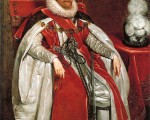
On this day in history…
19th June:
1502 – The Treaty of Antwerp was signed between Henry VII and Emperor Maximilian I at Antwerp. Henry VII promised a payment of £10,000 for aid against the Turks in exchange for Maximilian’s promise to banish Yorkist rebels from his territories.
1535 – Sebastian Newdigate, William Exmew and Humphrey Middlemore, monks of the Carthusian Order of London Charterhouse, were hanged, drawn and quartered at Tyburn. Their crime: refusing to accept King Henry VIII as the Supreme Head of the Church. Click here for more information on the Carthusian Martyrs.
1566 – Birth of James VI and I, King of Scotland, England and Ireland, at Edinburgh Castle in Scotland. James was the only son of Mary, Queen of Scots, and Henry Stuart (Stewart), Lord Darnley. James became James VI of Scotland when his mother was forced to abdicate 24th July 1567, and he became James I of England on the death of Elizabeth I, 24th March 1603.
1573 – Execution of Thomas Woodhouse, Jesuit priest and martyr, at Tyburn. He was the first priest to be executed in Elizabeth I’s reign. Woodhouse was beatified in December 1886 by Pope Leo XIII.
1616 – Death of Henry Robinson, Bishop of Carlisle, at his home, Rose Castle in Carlisle. He died of the plague. Robinson was buried in Carlisle Cathedral.
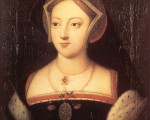
Mary Boleyn was probably the eldest daughter of Sir Thomas Boleyn and Elizabeth Howard. She was most likely born at Blicking Hall, Norfolk. The date of her parents’ union is open to question, but fragmentary evidence indicates that they had married by 1501 at the latest. Mary was probably born at the turn of the 16th century. It is possible that she accompanied Henry VIII’s sister Mary to France in 1514 in readiness for her marriage to Louis XII, but whether she resided at the French court has never been resolved. Hostile rumours in circulation during the 1530s claimed that Louis’ successor, Francois I, knew Mary to have been promiscuous, but it is uncertain whether this meant she had gained her supposedly dubious reputation in France. Possibly Mary indeed resided at the French court during her teenage years, but if so she had certainly returned to England by early 1520, for her marriage to Henry VIII’s attendant, William Carey, occurred on 4 February that year. It is possible that she served Katherine of Aragon, but there is no evidence that she did so.
[Read More...]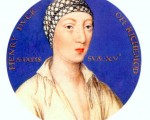
On this day in history…
12th June:
1492 – Burial of Elizabeth Woodville, former consort of Edward IV, next to her husband in St George’s Chapel, Windsor Castle.
1511 – Burial of William Courtenay, 1st Earl of Devon, at Blackfriars.
1530 – Catherine of Aragon told Henry VIII to abandon his “wicked” life.
1535 – Richard Rich interviewed Sir Thomas More in the Tower of London. He later reported, at More’s trial, that More had denied the royal supremacy during this interview.
1540 – The newly imprisoned Thomas Cromwell wrote to King Henry VIII from the Tower of London, asking for mercy and pleading his innocence.
1553 – Edward VI’s council commanded the judges of the King’s Bench to turn Edward’s “Devise for the succession” into a legal will.
1567 – Death of Richard Rich, 1st Baron Rich and Lord Chancellor, at Rochford. He was buried at Felstead. Richard Rich was Lord Chancellor in Edward VI’s reign and went on to serve in Mary I’s Privy Council.
1573 – Birth of Robert Radcliffe, 5th Earl of Sussex, courtier and soldier. He was the son of Henry Radcliffe, 4th Earl of Sussex, and his wife, Honor. Radcliffe served Elizabeth I as an ambassador and as Earl Marshal and Colonel General of her army. He was appointed Lord Lieutenant of Essex by James I in 1603.
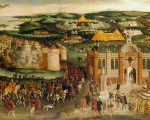
On this day in history, 7th June 1520, the famous Field of Cloth of Gold meeting began.
The meeting was between King Henry VIII of England and King Francis I of France and its aim was to solidify the Treaty of London. It took place between the English stronghold of Guînes and the French town of Ardres, on a piece of land referred to as the Field of Cloth of Gold, and ran from 7th June 1520 until 24th June 1520
[Read More...]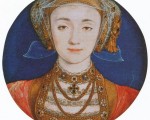
Anne of Cleves was born on 22nd September 1515 in Dusseldorf to John III, Duke of Cleves, and his wife, Maria. Like Henry VIII’s first wife, Katherine of Aragon, Anne was born into a highly influential and politically active family. Her sister Sybille was married to the Elector of Saxony, and her brother, Wilhelm, became the future Duke of Cleves-Burg, and would be instrumental in negotiations regarding her future marriage.
Anne was born during the volatile reformation period, resulting in reforms against traditionalist Catholicism, which was spreading through western and northern Europe. Her mother has been described as a conservative Catholic, however, her sister Sybille’s husband was a renowned Lutheran, often given the epithet ‘champion of the reformation’, and a good friend of its founder, Martin Luther. Anne was originally intended to be married into the House of Lorraine when she was eleven in 1527. There were numerous negotiations regarding the union, but nothing was cemented, and by 1535 all official wedding discussions had essentially been rejected, leaving the desirable duke’s daughter available on the European marriage market. Henry VIII and his council were searching for a new wife after the death of Queen Jane Seymour in 1536, with rumours of a possible union with the Duchess of Milan. The French had aligned themselves to the Habsburgs and signed a ten-year truce in 1538 (although this never lasted), cementing a union between Europe’s two major Catholic powerhouses. Cromwell, Henry’s leading minister at the time, suggested a counter alliance with a Lutheran house in Germany, even though Anne’s family were relatively mild in their reformist views. Cromwell was aware that England was potentially vulnerable to a Franco-Habsburg invasion, and influenced the king that negotiating with the newly appointed Duke Wilhelm (Anne’s father had died in 1539) would be a successful diplomatic adventure, that would ensure the prosperity of England against foreign invasion.
[Read More...]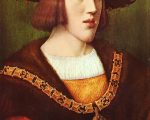
On this day in history, 6th June 1522, Charles V, the Holy Roman Emperor, made a grand entry into London accompanied by King Henry VIII.
You can read two primary source accounts of Charles’s entry, and the pageantry involved, in the chronicles of Edward Hall and Charles Wriothesley at the following links
[Read More...]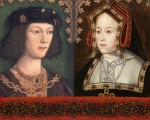
On this day in history…
5th June:
1516 – Maria de Salinas married William, 10th Lord Willoughby of Eresby. Maria was a good friend of Catherine of Aragon, and she and William were the parents of Katherine Willoughby, who went on to marry Charles Brandon, Duke of Suffolk.
1536 – Edward Seymour was created Viscount Beauchamp of Hache, Somerset, following the wedding of his sister, Jane Seymour, and Henry VIII.
1539 – Death of Brian Hygdon, Dean of York. Hygdon was close to Wolsey and Cromwell, and served on the King’s Council in the North. He was buried in York Minster.
1577 – Death of John Rastell, author, Jesuit and Vice-Rector at Ingolstadt. He died in Ingolstadt.
1588 – Death of Anne de Vere (née Cecil), Countess of Oxford, at Greenwich. She was buried at Westminster Abbey. Anne was the daughter of William Cecil, 1st Baron Burghley, and his second wife, Mildred. She had been contracted to marry Philip Sidney, but married Edward de Vere, 17th Earl of Oxford in 1571. It was not a successful marriage, and the couple separated after Oxford refused to recognise their daughter, Elizabeth, as his.
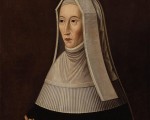
Lady Margaret Beaufort, Countess of Richmond and Derby, mother of King Henry VII and grandmother of King Henry VIII, was born at Bletsoe Castle in Bedfordshire on 31st May 1443. She was the daughter of Margaret Beauchamp of Bletsoe and John Beaufort, 1st Duke of Somerset, grandson of John of Gaunt, 1st Duke of Lancaster, and his mistress (and eventual wife) Katherine Swynford.
[Read More...]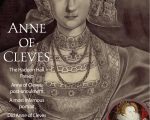
The full edition of our giant 62-page June edition of Tudor Life Magazine. It’s a fantastic look into Henry VIII’s fourth wife, Anne of Cleves.
[Read More...]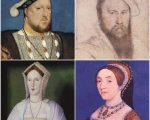
As it has been the anniversary of the execution of Margaret Pole, this week, I thought it would be interesting to pick the year 1541 and to write a quiz about the events of that year. How much do you know about this year in Henry VIII’s reign? Grab a coffee and/or your breakfast and let’s get started. Good luck!
[Read More...]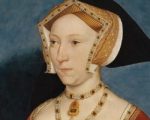
Jane Seymour was the eldest daughter of Sir John Seymour and his wife, Margery. She was probably born in around 1509 at Wulfhall in Wiltshire. By virtue of her mother, Jane could claim descent from Edward III, and her father’s family were descended from Guy de St Maur, who allegedly accompanied William the Conqueror to England in the eleventh century. Unlike Anne Boleyn, nothing is known of Jane’s childhood and adolescence. An unsubstantiated nineteenth-century tradition claimed that she resided at the French court as a maid of honour, but no contemporary evidence supports the notion. It is likely that Jane was educated in line with the expectations of the sixteenth-century gentry. Her needlework and embroidery were praised during her tenure as queen, and it is also plausible that she received music and dancing lessons, although there is nothing to suggest that she was praised at court for any particular skill in those pursuits. Her family were entirely traditional in their religious sympathies: it was only during the last years of Henry VIII’s reign that her brother Edward espoused the cause of radical reform.
[Read More...]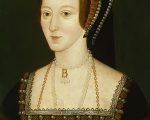
Anne Boleyn was the daughter of Thomas Boleyn, later Earl of Wiltshire, and Elizabeth Howard. She was the granddaughter of Thomas Howard, second Duke of Norfolk, and like all of Henry VIII’s wives, was descended from Edward I. Where Anne was born remains uncertain; traditionally Blickling Hall and Hever Castle, both of which were Boleyn properties, have been suggested, but a family tradition claimed that she was born in London, perhaps at Norfolk House, one of the seats of her mother’s family. Modern historians have usually assigned 1501 as the year of Anne’s birth, but two seventeenth-century texts nominated 1507. William Camden, the Elizabethan historian and herald, researched and wrote a life of Anne’s daughter, Elizabeth, in which, as Wyatt H. Herendeen notes, his ‘interpenetrating personal and professional lives were ‘authored’ by Elizabeth, while Burghley was his symbolic father.’ Entreating Camden to commence the project in the late 1590s, Burghley provided the historian with private papers as well as documents from the queen’s archives. This access, which included documents in Cotton’s library, ensured that Camden enjoyed ‘a privileged perspective’ on Elizabeth’s reign, as Herendeen contends. With the impressive resources available to him, it is questionable whether Elizabeth’s biographer would have erred in documenting her mother’s year of birth. Moreover, according to the memoirs of Jane Dormer, a favourite attendant of Mary I, Anne had not yet reached her twenty-ninth birthday when she was beheaded in 1536: an admission that supports a birth date of 1507.
[Read More...]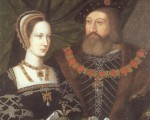
On this day in history, Sunday 13th May 1515, Mary Tudor, dowager queen of France and sister of King Henry VIII, married Charles Brandon, Duke of Suffolk, at Greenwich Palace, following their secret marriage in France. They were married in the presence of the king, Queen Catherine and the court.
[Read More...]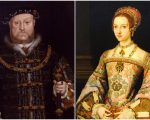
On this day in history, 11th May 1560, Dr Thomas Wendy, physician to Henry VIII and Queen Catherine Parr, died at Haslingfield in Cambridgeshire. He was sixty-one years old at his death.
Henry Machyn records in his diary that Dr Wendy was buried on 27th May at Cambridge:
“The xxvij day of May was the obseque and fen[eral] of master docthur Wende, fessyssyon [physician] at Cambryge, a penon of armes and a cott armur, and vj dosen and d’ [half] of skochyons of armes, and a harold of armes master Somersett, and . . morners in blake, and he gayff mony gownes to pore men, and ther was a grett dolle, and thether resortyd xx m[iles] off vC. pepull and had grett plente of mett and drynke, boyth hosses [houses] and barnes and feldes, grett store as has bene [seen] for a men [mean] gentyllman, and gret mone mad [moan made].”
[Read More...]On this day in history…
8th May:
1508 – Birth of Charles Wriothesley, herald and chronicler, in London. His chronicle is one of the major primary sources for Henry VIII’s reign. Charles came from a family of heralds; he was the younger son of Sir Thomas Wriothesley, Garter King of Arms, grandson of John Writhe, Garther King of Arms, and nephew of William Wriothesley, York Herald. Charles’ offices included Rouge Croix Pursuivant and Windsor Herald of Arms in Ordinary, but he did not go as far as his father and grandfather.
1538 – Death of Edward Fox, Bishop of Hereford and diplomat. He was active in trying to secure the annulment of Henry VIII’s marriage to Catherine of Aragon, and produced several books and polemics on Henry’s Great Matter, including Henricus octavus.
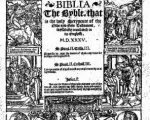
On this day in history, 6th May 1541, Henry VIII issued an injunction ordering “the Byble of the largest and greatest volume, to be had in every churche”. The Bible referred to was “The Great Bible” or “Coverdale Bible”, the first authorised Bible in English. It had been prepared by Miles Coverdale and was based on William Tyndale’s New Testament and Pentateuch, and then Coverdale’s own translations of the other books of the Bible.
[Read More...]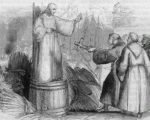
On this day in history, 30th April 1532, in the reign of King Henry VIII, lawyer James Bainham was burned at Smithfield.
Bainham was married to the widow of reformer Simon Fish, a man who had also been charged with heresy…
[Read More...]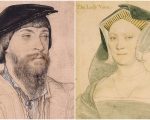
On this day in history, 25th April 1509, the poet Thomas Vaux, 2nd Baron Vaux, was born. He was a son of courtier and soldier Nicholas Vaux, 1st Baron Vaux of Harrowden, and his wife Anne Green.
Thomas Vaux was just fourteen when he married Elizabeth Cheyne, daughter of Sir Thomas Cheyne and Anne Parr, in 1523. The couple went on to have four children, two sons and two daughters.
Nothing is known of his early life and education, but in 1527 he went to France as part of Cardinal Wolsey’s retinue, in 1529 he sat in Parliament and in 1532 he was part of Henry VIII and Anne Boleyn’s party when they travelled to Calais to meet Francis I. He was created a Knight of the Bath as part of the celebrations for Anne Boleyn’s coronation in 1533 and he held the office of Governor of Jersey from January to August 1536. His Oxford Dictionary of National Biography biographer, H. R. Woudhuysen, notes that he appears to have retired to his estates in Northamptonshire after this, probably because of his Catholic views.
[Read More...]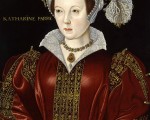
On this day in history, 25th April 1544, Queen Catherine Parr, sixth wife of King Henry VIII, had her English translation of Bishop John Fisher’s Latin Psalmi seu Precationes (Psalms or Prayers) published anonymously by Thomas Berthelet, the King’s printer.
[Read More...]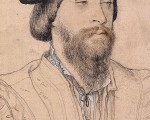
On this day in history…
24th April:
1536 – Commissions of oyer and terminer set up by Thomas Audley, Lord Chancellor. These particular commissions were for offences committed in the counties of Middlesex and Kent, and covered the crimes of misprision, treason, rebellion, felonies, murder, homicide, rioting, plotting, insurrection, extortion, oppression, contempt, concealment, ignorance, negligence, falsities, deception, conspiracy and being an accessory to these crimes. It is not known whether they were set up specifically to try the men who would later be charged with committing adultery with Queen Anne Boleyn.
1545 – Baptism of Henry Wriothesley, 2nd Earl of Southampton, at St Andrews, Holborn. He was the son of Thomas Wriothesley, 1st Earl of Southampton and 1st Baron Wriothesley, Henry VIII’s Lord Chancellor.
1549 – Death of Ralph Neville, 4th Earl of Westmorland, English peer, soldier and Privy Councillor. He was buried at Staindrop in County Durham. Neville was one of the peers who sat in judgement on Anne Boleyn in May 1536 and served Henry VIII as a soldier in the North of England and borders, and Edward VI in Scotland.
1551 – Execution of Dutchman George van Parris, surgeon and religious radical at Smithfield. He was burned at the stake for Arianism (denying the divinity of Christ).
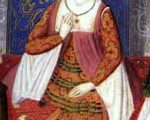
Thank you to regular contributor Heather R. Darsie for writing this introduction to the women of the House of Trastámara.
When thinking about the important players of the Renaissance, particularly during the reign of Henry VIII of England, one recalls the powerful families of the English Tudors, French Valois, and Burgundian Habsburgs. The family that is even more influential, even if quietly, is the overlooked Trastámaras of Spain. This family married into the Tudor, Valois, and Habsburg families, among others, and its reach was far. Who were they?
[Read More...]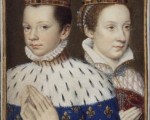
17th April:
1534 – Sir Thomas More, Henry VIII’s Lord Chancellor, was sent to the Tower of London after refusing to swear the “Oath of Succession”.
1554 – Sir Nicholas Throckmorton was acquitted of treason for being involved in Wyatt’s Rebellion. The jurors were arrested straight after the trial and Throckmorton remained in prison until January 1555.
1554 – Thomas Wyatt the Younger’s head was stolen in the rejoicing after Throckmorton’s acquittal.
On this day, 10th April…
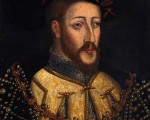
1512 – James V, King of Scotland, was born at Linlithgow Palace. He was the fourth child of James IV and Margaret Tudor, sister of Henry VIII. He was the only one of James and Margaret’s children to survive childhood, and so inherited the crown of Scotland when his father was killed at the Battle of Flodden, 9th September 1513.
1550 – Edward Seymour, Duke of Somerset, was re-admitted into Edward VI’s council.
1559 – Death of Sir Rice Mansel, soldier and administrator, at his home in Clerkenwell. He served Henry VIII as Vice-Admiral in 1542, in France and Scotland, and in 1544 as Knight-Marshal. He was also Chamberlain of Chester.
1585 – Death of Pope Gregory XIII, the Pope known for his introduction of the Gregorian Calendar, in Rome. He was succeeded by Pope Sixtus V.