On this day in Tudor history, 22nd January, war was declared, a Lord Protector was beheaded, Wyatt’s Rebellion was planned, and Francis Bacon, a lord chancellor and famous philosopher, author and scientist, was born…
[Read More...]
On this day in Tudor history, 22nd January, war was declared, a Lord Protector was beheaded, Wyatt’s Rebellion was planned, and Francis Bacon, a lord chancellor and famous philosopher, author and scientist, was born…
[Read More...]
On this day in Tudor history, 19th January, Henry Howard, Earl of Surrey, was executed as Henry VIII became more paranoid in his dying days, an important diplomat died in Rome, and the Earl of Pembroke, a patron of the theatre, died…
[Read More...]
Today’s on this day in Tudor history events include Henry Howard, Earl of Surrey, being sentenced to death, the death of famous Elizabethan poet Edmund Spenser, and the death of a groom of Sir Henry Neville…
[Read More...]
Today was a very busy day in Tudor times!
On this day in Tudor history, we have Henry VIII jousting as king for the first time, Elizabeth I travelling to the Tower of London, and the death of an important nobleman, soldier and naval commander…
[Read More...]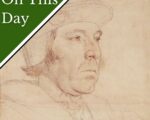
On this day in Tudor history, 15th October 1542, in the reign of King Henry VIII, courtier, diplomat and naval commander William Fitzwilliam, Earl of Southampton, died in Newcastle-upon-Tyne. It is thought that he was buried in Newcastle.
Fitzwilliam’s offices included Vice Admiral, Treasurer of the Household and Lord Privy Seal. He died while leading troops to Scotland under the command of Thomas Howard, 3rd Duke of Norfolk.
[Read More...]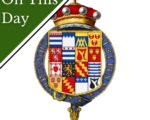
On this day in Tudor history, 14th October 1593, in the reign of Queen Elizabeth I, soldier and Lord Deputy of Ireland, Arthur Grey, 14th Baron Grey of Wilton, died at his home of Whaddon in Buckinghamshire. He was buried there.
Grey had a reputation for radical Protestantism.
[Read More...]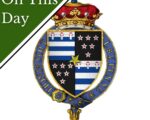
On this day in Tudor history, 10th October 1530, Thomas Grey, 2nd Marquess of Dorset, magnate, soldier and courtier, died. He was buried at Astley Collegiate Church in Warwickshire.
Grey’s offices included Constable of Warwick Castle and of Kenilworth Castle, and, as a skilled jouster, he also acted as Chief Answerer at the marriage of Prince Arthur and Catherine of Aragon. Grey was also the grandfather of Lady Jane Grey.
[Read More...]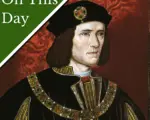
On this day in history, 2nd October 1452, King Richard III, the last Plantagenet king, was born at Fotheringhay Castle in Northamptonshire.
Richard was the youngest surviving child of Richard, 3rd Duke of York, and Cecily Neville.
Richard claimed the English throne in June 1483, claiming that his brother Edward IV’s sons were illegitimate because Edward had been pre-contracted to another woman, Eleanor Butler, when he married Elizabeth Woodville.
[Read More...]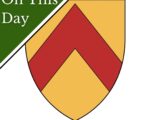
On this day in Tudor history, 1st October 1526, in the reign of King Henry VIII, Dorothy Stafford, Lady Stafford, was born.
Dorothy was the daughter of Henry Stafford, 10th Baron Stafford, and his wife, Ursula (née Pole, and she was married to Sir William Stafford, widower of Mary Boleyn. Dorothy served Queen Elizabeth I as a gentlewoman of the privy chamber and was one of her favourite sleeping companions.
[Read More...]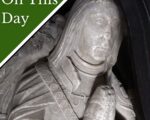
On this day in Tudor history, 28th September 1502, in the reign of King Henry VII, Robert Willoughby, 1st Baron Willoughby de Broke, died at Callington, Cornwall. He was buried at Callington Church.
Willoughby had been in exile in Brittany with Henry Tudor and fought with him at the Battle of Bosworth. He served Henry VII as Lord Steward and was made a Knight of the Garter in 1489.
[Read More...]
On this day in Tudor history, 27th September 1488, in the reign of King Henry VII, physician and surgeon William Hobbes died. He was buried in Holy Trinity Priory, Aldgate, London.
Hobbes served Richard, Duke of York, and Edward IV, and was royal physician to King Richard III. He became Master of St Mary of Bethlehem Hospital (Bedlam) in 1479.
[Read More...]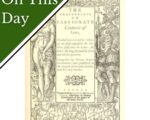
On this day in Tudor history, 26th September 1592, poet and translator Thomas Watson was buried at St Bartholomew-the-Less, in London.
Watson is known for his unusual eighteen-line sonnets and his Latin works.
[Read More...]
This week’s #MondayMartyrs are Protestants, Robert Glover and Cornelius Bungey (Bongey). They were two of twelve martyrs burnt at the stake in Coventry between 1511 and 1555.
Glover and Bungey were burnt at the stake for heresy in September 1555 in the reign of Queen Mary I. They were executed at a site in Little Park Street, Coventry.
[Read More...]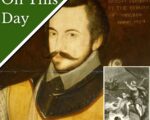
On this day in Tudor history, 9th September 1583, in the reign of Queen Elizabeth I, explorer, soldier and Member of Parliament Sir Humphrey Gilbert died on board the Squirrel after a storm off the Azores.
As the Squirrel sank, the crew of the Golden Hind heard Gilbert shout, “We are as near to heaven, by sea as by land”.
[Read More...]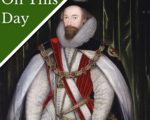
On this day in Tudor history, 24th August 1561, naval officer and administrator Thomas Howard, 1st Earl of Suffolk, was born.
Howard served Elizabeth I as vice-admiral in the 1596 Cadiz expedition and the 1597 voyage to the Azores, and as Constable of the Tower of London. He went on to have a distinguished career under James I until his fall in 1619.
[Read More...]
On this day in Tudor history, 19th August 1531, in the reign of King Henry VIII, Reformer Thomas Bilney was burnt at the stake at Lollard’s Pit, just outside Bishopsgate, Norwich.
Although Bilney was burnt as a heretic, he actually denied his reformist views and affirmed his Catholic faith at his execution.
[Read More...]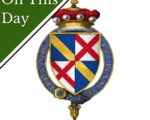
On this day in Tudor history, 17th August 1498, soldier and royal councillor John Scrope, 5th Baron Scrope of Bolton, died.
the Yorkist Scrope was lucky to die a natural death. It is likely that he fought on King Richard III’s side at the Battle of Bosworth against Henry Tudor in 1485, but escaped punishment by Henry, who won the battle and was crowned King Henry VII. Scrope was imprisoned two years later after supporting the pretender Lambert Simnel. However, he was released and went on to prove his loyalty to Henry VII.
[Read More...]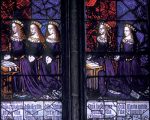
14th August 1479 is the traditional birthdate of Katherine of York, Countess of Devon.
Katherine was the second youngest daughter of King Edward IV and his wife, Elizabeth Woodville, and so was the sister of the Princes in the Tower and Elizabeth of York, wife of King Henry VII. Katherine was also the wife of Sir William Courtenay, Earl of Devon.
Here are some facts about Katherine of York…
[Read More...]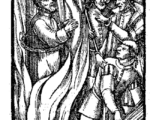
This week’s #MondayMartyr is John Denley, who was burnt at the stake in Uxbridge for his Protestant faith on 8th August 1555, in the reign of Queen Mary I.
Protestant poet Thomas Brice recorded Denley’s execution in his 1559 work “A Compendious Regester”*, writing:
“When Denly died at Uxbridge towne,
With constant care to Christe’s cause;”
Martyrologist John Foxe states that Denley was from Maidstone in Kent and that when he was travelling in Essex with his friend, John Newman, in June 1555 to visit “their godly friends” in the county, both men were apprehended by Edmund Tyrrel, a justice of the peace, who searched them and found “the confessions of their faith in writing about them”.
[Read More...]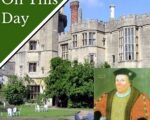
On this day in Tudor history, 2nd August 1514, Edward Stafford, Duke of Buckingham, was granted a licence to found a college at Thornbury in Gloucestershire.
There had been a manor there since the 10th century, but it was Buckingham who built Thornbury Castle. He obtained a licence to crenelate his manor in 1510 and building work began in 1511. Thornbury was built to the medieval quadrangular layout, with a large outer courtyard. The entrance front with its central gatehouse and octagonal corner towers is still standing, as are two of the side ranges. The surrounding curtain wall is intact on three sides.
Buckingham never saw it completed. He was executed in 1521. The manor was seized by Henry VIII, who stayed there with Anne Boleyn in 1535.
[Read More...]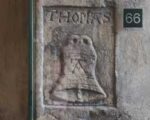
As yesterday was the anniversary of the martyrdom of Catholic Thomas Abell, on 30th July 1540, I thought he could be this week’s #MondayMartyr.
Here are some facts about this Henrician martyr:
– Thomas Abell’s birthdate is unknown but he’d been ordained as a Catholic priest by 1513.
– He studied at the University of Oxford, attaining a BA in 1514 and an MA in 1518.
– In 1522, Abell became rector at Great Berkhamsted in Hertfordshire…
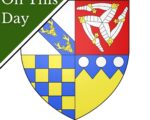
On this day in Tudor history, 29th July 1504, in the reign of his stepson King Henry VII, Thomas Stanley, 1st Earl of Derby, died at his manor of Lathom in Lancashire.
Here are a few facts about Stanley…
[Read More...]On this day in history, 22nd July 1437 (or 1438), soldier and royal councillor John Scrope, 5th Baron Scrope of Bolton, was born.
During the Wars of the Roses, Scrope was seriously injured at the Battle of Towton fighting on Edward IV’s side and in 1469 he sided with the Earl of Warwick against Edward, but was fortunately forgiven, even though he did that twice.
[Read More...]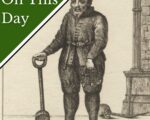
On this day in Tudor history, 2nd July 1594, in the reign of Elizabeth I, Robert Scarlett (Old Scarlett), sexton at Peterborough Cathedral, was buried at the cathedral, apparently aged 98, although another source states that he was a bit younger.
A verse accompanying his portrait in the cathedral states that Scarlett buried two queens, Catherine of Aragon and Mary, Queen of Scots , but it is not known whether this is true. He is also said to have buried a court fool known as Edward the Fool.
[Read More...]On this day in Tudor history, 26th June 1513, in the reign of King Henry VIII, landowner, administrator and soldier Sir Edmund Carew was buried in the church of St Nicholas in Calais.
Carew, who was about 49, was killed while serving as master of the ordnance in Henry VIII’s 1513 French campaign. The English force had pitched their tents a mile outside the town of Therouanne and chronicler Edward Hall records what happened next…
[Read More...]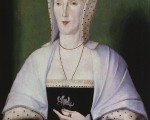
This week’s #MondayMartyr is Margaret Pole, Countess of Salisbury, who was beatified in 1886 by Pope Leo XIII as a Catholic martyr.
She was executed in 1541 in what was a truly awful botched execution, and for a crime she did not commit…
[Read More...]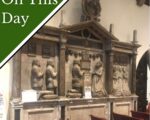
On this day in Tudor history, 11th June 1576, seventy-year-old humanist and educator Sir Anthony Cooke of Gidea Hall in Essex died.
Cooke, who served in Henry VIII’s bodyguard and privy chamber, is more known for his role in education. He educated his daughters, who included Mildred Cecil, Anne Bacon, Catherine Killigrew and Elizabeth Hoby, to a high standard, teaching them Latin and Greek, and probably also modern languages and Hebrew. They were all noted for their scholarship.
Although Anthony Cooke doesn’t appear in the records as a formal royal tutor, it does appear that he was involved in the young king’s education, possibly in an advisory or guiding role.
[Read More...]
On this day in Tudor history, 9th June 1511, in the reign of Henry VIII, William Courtenay, 1st Earl of Devon, died of pleurisy at Greenwich. He was buried at Blackfriars, London, with the honours due an earl, even though he hadn’t been officially invested yet.
Courtenay was Henry VIII’s uncle, having married Katherine of York, daughter of Edward IV and Elizabeth Woodville, and sister of Henry’s mother, Elizabeth of York.
[Read More...]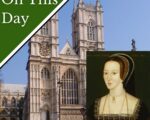
On this day in Tudor history, 1st June 1533, Whitsunday, Henry VIII’s second wife, Anne Boleyn, was crowned queen at Westminster Abbey.
You can find out more about Anne Boleyn’s coronation in the video below, but here are a few facts:
Anne was 6 months pregnant.
She wore ermine-trimmed purple velvet coronation robes.
Her train was carried by her step-grandmother, the Dowager Duchess of Norfolk.
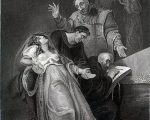
This week’s Monday Martyr is Elizabeth Barton, who was hanged for treason at Tyburn on 20th April 1534, along with Father Edward Bocking (a monk and Barton’s spiritual adviser), Richard Masters (her parish priest), Richard Risby (warden of the Observant Friary at Canterbury) and Hugh Rich (warden of the Observant Friary at Richmond).
Elizabeth had visions and prophecies, and one particular prophecy got her into trouble with King Henry VIII.
[Read More...]