This week we have Brigitte talking about a little known subject – the history of cookery books in Tudor England.
[Read More...]
This week we have Brigitte talking about a little known subject – the history of cookery books in Tudor England.
[Read More...]
Well, ok, perhaps love at second or third sight!
On this day in Tudor history, Saturday 17th February 1565, Mary, Queen of Scots, met and fell in love with Henry Stuart, Lord Darnley, at Wemyss Castle in Scotland. Just over 7 months later, the couple got married.
Find out more about the background of this meeting between Mary, Queen of Scots and Lord Darnley, Mary’s thoughts on Darnley, and what happened next, in this talk…
[Read More...]
On this day in Tudor history, 16th February 1495, Sir William Stanley, administrator and landowner, was executed for treason on Tower Hill.
Stanley is, of course, remembered for his key role at the Battle of Bosworth Field in August 1485, when he and his brother chose to support Henry Tudor and brought their troops onto the battlefield at a critical stage.
So how did Sir William Stanley go from being a loyal supporter of Henry VII to being executed for treason?
Find out in this talk…
[Read More...]
On this day in Tudor history, 15th February 1564, the Italian physicist, mathematician, astronomer, and philosopher, Galileo Galilei, was born in Pisa, Italy.
Galileo was one of the central figures of the Scientific Revolution and has been referred to as “the Father of Modern Science”, “the Father of Modern Physics” and “the father of modern observational astronomy”, but what exactly did he do and how did he end up getting into trouble with the Inquisition?
Find out in this talk…
[Read More...]
On this day in Tudor history, 14th February 1539, Sir Nicholas Carew, a royal favourite for over 20 years, was tried for treason after being implicated in the Exeter Conspiracy. Spoilers – his trial didn’t go well.
But how did a man who’d been in royal favour for so long come to such a sticky end? Find out in this talk…
[Read More...]
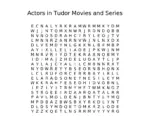
There have been so many series and movies about the Tudors over the years, but can you remember which actors and actress played parts in them?
Test your knowledge of actors in Tudor-themed movies and series with this fun word search puzzle.
Warning: the words can go in any direction!
[Read More...]
On this day in history, 13th February 1608, prominent Tudor noblewoman and one of the richest people in England, Elizabeth Talbot, Countess of Shrewsbury, more commonly known as Bess of Hardwick, died at her home at Hardwick.
Bess of Hardwick is known for her building projects, which included Chatsworth and Hardwick Hall, her beautiful needlework and the fact that she and Shrewsbury were guardians of the captive Mary, Queen of Scots.
Find out more about this fascinating Tudor lady in this talk…
[Read More...]
On this day in Tudor history, 12th February 1590, Blanche Parry, died at the age of 82.
She had served Queen Elizabeth I loyally from Elizabeth’s birth in 1533,and had been a constant in the queen’s life.
Find out more about this interesting lady and how she served her queen in this talk…
[Read More...]
On this day in Tudor history, 11 February 1531, the ecclesiastical assembly known as convocation granted King Henry VIII the title of “singular protector, supreme lord, and even, so far as the law of Christ allows, supreme head of the English church and clergy”.
The person responsible for persuading convocation to grant the king this title was Anne Boleyn’s brother, George Boleyn, Lord Rochford. It was a big responsibility for the young diplomat and courtier.
Find out more about what happened in this talk…
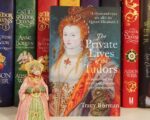
[Read More...]This week we have Lil talking about “The Private Lives of the Tudors” by Tracy Borman, which she calls a “biography of sorts”. Does she like the book?
[Read More...]
On this day in Tudor history, 10th February 1542, Catherine Howard, King Henry VIII’s fifth wife, was escorted by barge from Syon House, where she’d been kept since November 1541, to the Tower of London in preparation for her execution.
Sadly, the queen would have seen the heads of her former lover, Francis Dereham, and her sweetheart, Thomas Culpeper, as she made her way to the Tower – a reminder of her own fate.
Find out more in this talk…
[Read More...]
On this day in history, 9th February 1555, Protestant John Hooper, Bishop of Gloucester and Worcester, and former Cistercian monk, was burned at the stake for heresy in Gloucester.
It was an awful execution due to green wood being used, and John Foxe writes of there being three attempts over a period of 45 minutes. Awful, just awful.
Find our more in this talk…
[Read More...]
On this day in Tudor history, 8th February 1601, Robert Devereux, 2nd Earl of Essex and Queen Elizabeth I’s former favourite, did a rather foolish thing and raised a rebellion against the queen and her council.
Spoilers: It didn’t go well and he ended up being executed as a traitor.
Find out exactly what happened in this talk…
[Read More...]
On this day in history, 7th February 1477 or 1478, Sir Thomas More, Henry VIII’s Lord Chancellor, was born in London.
More had once wanted to be a monk but ended up being one of the most well-known statesmen of the Tudor period. Unfortunately, Sir Thomas More came to a sticky end after refusing to sign the oath recognising Henry VIII as the supreme head of the church in England, and was executed in 1535 as a traitor.
Find out all about More’s rise to power, how he fell, and what he told his son-in-law about the king, in this talk…
[Read More...]
On this day in Tudor history, 6th February 1561, poet Tailboys Dymoke (pseudonym Thomas Cutwode) was baptised at Kyme in Lincolnshire.
Dymoke, or Cutwode, is known for his allegorical poem, The Bumble Bee, a political satire which was apparently rather dodgy! He also got into trouble for writing a slanderous play and poem. An interesting man who liked to play with fire!
Find out more in this talk…
[Read More...]
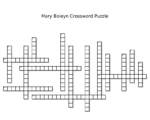
As this week was the anniversary of the first marriage of Mary Boleyn, mistress of King Henry VIII and sister of Queen Anne Boleyn, on 4th February 1520, I thought I’d test your knowledge of this quite shadowy Tudor lady.
How much do you know about Mary Boleyn?
Get the little grey cells working with this fun crossword puzzle.
[Read More...]
On this day in Tudor history, 5th February 1549, in the reign of King Edward VI, fifteen-year-old Elizabeth, the future Queen Elizabeth I, was summoned to appear before Sir Robert Tyrwhitt, who was keeping her under house arrest at Hatfield while the Crown investigated Thomas Seymour.
Edward VI’s privy council were investigating whether Elizabeth was secretly plotting to marry Thomas Seymour, Edward VI’s uncle, helped by her servants, Katherine Ashley and Thomas Parry.
Parry and Ashley had made confessions, but what had they said? And what would happen to them all?
[Read More...]
On this day in Tudor history, Saturday 4th February 1520, Mary Boleyn, sister of Anne Boleyn, got married to William Carey in the Chapel Royal at Greenwich Palace, in a service attended by King Henry VIII.
Find out more about Mary Boleyn and William Carey in this talk…
[Read More...]
On this day in Tudor history, 3rd February 1537, in the reign of King Henry VIII, Thomas Fitzgerald, 10th Earl of Kildare (known as Silken Thomas), his five uncles and Sir John Burnell, were executed as traitors at Tyburn in London.
What led these men to these awful ends and why was Thomas known as “Silken Thomas”.
Find out more in this talk…
[Read More...]
On this day in Tudor history, 2nd February 1550, Sir Francis Bryan, died suddenly in Ireland. He was a rather colourful Tudor character, known as much for his drinking, gambling and all-round bad behaviour, as his diplomacy, royal favour and gift for poetry.
Find out more about this one-eyed courtier and his nickname, “the vicar of hell” in this talk…
[Read More...]
On this day in Tudor history, 1st February 1587, Queen Elizabeth I called her secretary, William Davison, to her and asked him to bring her the death warrant of Mary, Queen of Scots. She then signed it. However, she didn’t want it to be sent to Fotheringhay, where Mary was held, until she said so. But it was sent.
Elizabeth wanted someone else to take responsibility for Mary’s death, she even wanted her gaoler to assassinate her!
Find out all about this, and how Mary DID end up being executed in February 1587, in this talk…
[Read More...]
This month our guest expert is Sarah Gristwood and she’s chatting with Claire Ridgway all about the mysteries of the Courtly Love tradition.
[Read More...]
On this day in history, 31st January 1606, Gunpowder Plot conspirators Thomas Winter, Ambrose Rookwood, Robert Keyes, and Guy Fawkes were executed for treason at the Old Palace Yard, Westminster.
Two of them cheated the executioner and crowd by leaping at the gallows, but they still had awful ends.
Hear a contemporary account of their executions, including what they did and said, in this talk…
[Read More...]
On this day in history, 30th January 1606, Gunpowder plotters Everard Digby, Robert Wintour, John Grant and Thomas Bates were executed for treason at St Paul’s Churchyard.
Find out how they came to this end and hear a contemporary account of their executions in this talk…
[Read More...]
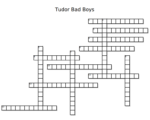
There are many Tudor men who had rather colourful reputations, but how much do you know about them?
Get those little grey cells working with this week’s quiz, a crossword puzzle on Tudor Bad Boys.
Simply click on the link or image below.
[Read More...]
On this day in Tudor history, 29th January 1536, the same day that Catherine of Aragon was buried at Peterborough Abbey, Queen Anne Boleyn, second wife of King Henry VIII suffered a miscarriage.
Contemporary accounts state that she was around 3 1/2 months pregnant and that it was a boy.
In this talk, I share information given by the imperial ambassador on Anne Boleyn’s miscarriage, including the gossip concerning the king and a certain Jane Seymour.
[Read More...]

On this day in Tudor history, 28th January 1598, diplomat Edward Barton died of dysentery on the island of Heybeli Ada, in the Sea of Marmara, off the coast of Istanbul.
Barton and his predecessor, William Harborne, had played key roles in Elizabeth I’s alliance with the Ottoman Empire.
Elizabeth I had a good relationship with the Islamic World and it was something that was very important to her. Find out why Elizabeth reached out to the Ottomans in the 1580s, and just how the relationship worked, in this talk…
[Read More...]
Today we are taking you through the food items and spices that the Tudors used to survive the cold winter months.
[Read More...]