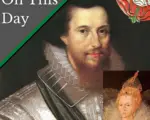
On this day in Tudor history, 22 April 1598, Justice Francis Beaumont died after contracting gaol fever at the Black Assizes of the Northern Circuit.
But what exactly was gaol fever?
[Read More...]
On this day in Tudor history, 22 April 1598, Justice Francis Beaumont died after contracting gaol fever at the Black Assizes of the Northern Circuit.
But what exactly was gaol fever?
[Read More...]
The king is dead! Long live the king!
On this day in Tudor history, 21st April 1509, the founder of the Tudor dynasty, King Henry VII, died at Richmond Palace. He had ruled since 1485, when his forces defeated those of King Richard III at the Battle of Bosworth.
Henry VII was succeeded by his seventeen-year-old son, Henry, who, it was said, did “not desire gold or gems or precious metals, but virtue, glory, immortality”!
[Read More...]
On this day in Tudor history, 20th April 1578, Lady Mary Keys (née Grey), sister of Lady Jane Grey and wife of Thomas Keys, died at her home in the parish of St Botolph without Aldgate, London.
Like her sisters, Mary had a sad life. Her secret marriage led to Elizabeth I imprisoning her and her husband, and they never saw each other again.
Find out more about the tiny Mary who was described as “crook-backed”, her marriage to a man who was said to be 6’8, and what happened to Mary and Thomas, in this video…
[Read More...]
On this day in Tudor history, 19th April 1601, in Elizabeth I’s reign, bookseller James Duckett was hanged at Tyburn. Being a bookseller in Tudor times could be a risky business, particularly if you had the wrong kind of books on your premises!
[Read More...]
On this day in Tudor history, 18th April 1540, just three months before his execution, Thomas Cromwell was given two rewards by King Henry VIII.
Find out more about these rewards…
[Read More...]
What happens when a jury doesn’t find an alleged traitor guilty and, instead, acquits him? Well, the jurors get arrested and thrown into prison, of course!
I explain exactly what happened on this day in Tudor history, 17th April 1554, in the case of Sir Nicholas Throckmorton. I also give details on how the jurors finally got released and what happened to Throckmorton.
[Read More...]
The Tudor monarchs were multifaced people and their reigns were very mixed too.
How much do you know about the achievements of the Tudor kings and queens, and the downsides of their reigns?
Test yourself with this fun crossword puzzle.
[Read More...]
On this day in Tudor history, 16th April 1570, Gunpowder Plot conspirator Guy Fawkes was baptised in York.
In this video, I talk about how the Gunpowder Plot has its origins in the reign of Queen Elizabeth I and why these men were driven to try and blow up Westminster…
[Read More...]

On this day in 1545, Sir Robert Dymoke, champion at the coronations of Henry VII and Henry VIII, and a man who served in the households of Queens Catherine of Aragon and Anne Boleyn, died.
He had an interesting career and survived being suspected of involvement in the 1536 Pilgrimage of Grace rebellion.
Find out more about Sir Robert Dymoke…
[Read More...]
This week we have an exclusive look around the beautiful replica Tudor knot garden that Brigitte Webster has created at her Tudor property.
[Read More...]
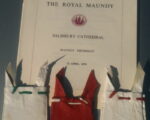
Today, at St George’s Chapel, the Prince of Wales and the Duchess of Cornwall will be distributing Maundy money, on behalf of the Queen, in a special service at St George’s Chapel.
The giving of Maundy money by the monarch is a centuries-old tradition…
[Read More...]
It’s a busy date in Tudor history today!
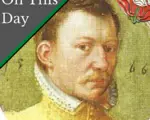
On this day in Tudor history, 14th April 1578, Mary, Queen of Scots’ third husband, James Hepburn, Duke of Orkney and 4th Earl of Bothwell, died at Dragsholm Castle in Denmark. He’d been held at the castle in appalling conditions and it was said that he’d gone insane.
Find out more about the life of this earl who’d risen to be the husband of Mary, Queen of Scots, but who’d died in prison, far away from home…
[Read More...]

On this day in Tudor history, 12th April 1550, in King Edward VI’s reign, courtier and poet, Edward de Vere, 17th Earl of Oxford, was born.
In this video, I talk about Oxford, his not-so-nice personality, the idea that he was Elizabeth I’s son by Thomas Seymour. and the Oxfordian theory regarding the works of William Shakespeare…
[Read More...]
On this day in Tudor history, 11th April 1554, in the reign of the Catholic Queen Mary I, Sir Thomas Wyatt the Younger, son of poet and diplomat Sir Thomas Wyatt the Elder, was beheaded on Tower Hill after being found guilty of high treason.
Wyatt had led a rebellion which sought to depose the queen and to replace her with her half-sister Elizabeth, but he refused to implicate Elizabeth in the plot. He went to his death asserting her innocence.
Find out more about what happened and hear his final speech…
[Read More...]
On this day in Tudor history, 10th April 1585, Pope Gregory XIII died from a fever. He was succeeded by Pope Sixtus V.
Pope Gregory is known for his reform of the calendar. He introduced what is now called the Gregorian Calendar, or Western or Christian Calendar, replacing the Julian Calendar, which had been used since 45 BC.
But why was this reform needed and how was it done?
[Read More...]
As yesterday was the anniversary of Catherine’s demotion from queen to dowager princess in 1533, I thought I’d test your knowledge of Henry VIII’s Great Matter, his quest for an annulment of his marriage to Catherine of Aragon.
How much do you know about the Great Matter?
Find out with this fun crossword puzzle.
[Read More...]
On this day in Tudor history, 9th April, Catherine of Aragon, who’d been banished from the royal court, received a visit from a delegation of the king’s councillors. They were there to inform her that she was no longer queen.
Catherine was a tough cookie, though. Even when she was threatened by the king, she did not submit…
[Read More...]
On this day in Tudor history, 8th April 1554, in the reign of Queen Mary I, there was an act of rebellion and religious defiance in London.
Someone who didn’t like Mary’s religious changes hanged a cat on the gallows at Cheapside. The cat was dressed as a Catholic priest and was holding a piece of paper to represent that communion wafer.
Find out more about what happened, the meaning behind it, and Mary’s reaction to it…
[Read More...]
Further north even than Edinburgh lies the town of St Andrews, famous today for its golf range and its university. But did you know that St Andrews has an ancient history?
[Read More...]
On this day in Tudor history, 7th April 1537, Robert Aske and Thomas Darcy, 1st Baron Darcy, were sent to the Tower of London.
Both Aske and Darcy had been involved in the Pilgrimage of Grace rebellion of 1536, with Aske being “chief captain” of the rebels.
Even though Henry VIII pardoned the rebels after negotiations in 1536, Darcy and Aske were arrested, imprisoned and executed as traitors.
Find out more about what happened and more about Robert Aske, the rebel leader…
[Read More...]
On this day in history, 6th April 1621, in the Stuart period, Edward Seymour, 1st Earl of Hertford, died at around the age of 81.
Now, Hertford is known for his secret marriage to Lady Katherine Grey, sister of Lady Jane Grey, and their conjugal visits in the Tower of London, but Hertford had a thing for secret marriages, and his son and grandson followed in his footsteps!
[Read More...]
On this day in 1533, Convocation, ruled that the pope was wrong and that Henry VIII was right, i.e. it ruled that the Pope had no power to dispense in the case of a man marrying his brother’s widow, and that it was contrary to God’s law – Catherine of Aragon should not have been able to marry Henry VIII.
This was just as well seeing as the king had got married to Anne Boleyn and she was pregnant with his child!
[Read More...]
On this day in Tudor history, 4th April 1572, writer and historian William Strachey was born in Saffron Walden in Essex, England.
Strachey’s account of the 1609 shipwreck of the Sea Venture in a hurricane was used as a source for William Shakespeare’s “The Tempest”.
Find out more about Strachey, how he was marooned for a year, and why he died in poverty
[Read More...]
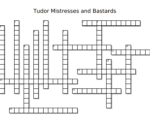
Henry VIII has been linked romantically to a number of women, but how much do you know about these women and his alleged illegitimate children.
And what about the other Tudor kings and queens and Tudor personalities who were said to be royal bastards?
Test your knowledge of Tudor mistresses and Tudor bastards in this week’s puzzle – a fun crossword puzzle.
[Read More...]
On this day in Tudor history, 1st April 1578, English physician William Harvey, was born in Folkestone, Kent. Harvey has gone down in history as being the man who discovered the circulation of blood, and he was also physician extraordinary to King James I and King Charles I.
How did Harvey work out that the heart pumped the blood around the body and how was his challenge of Galen’s work received?
Find out more about William Harvey’s work, and also his role in the pardoning of women accused of witchcraft, in this…
[Read More...]