The Tudor Society

YOUR SEARCH UNCOVERED 848 RESULTS

  • This week in history 27 March – 2 April

    On this day in history…

    27th March:

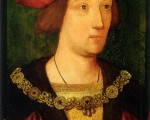
    1489 – The Treaty of Medina del Campo was signed between England and Spain. One part of it was the arrangement of the marriage between Arthur, Prince of Wales, and Catherine (or Catalina) of Aragon. It was signed by Spain on this day and ratified in 1490 by Henry VII.
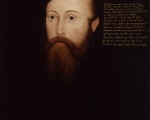
    1539 – Burial of George Talbot, 4th Earl of Shrewsbury, at St Peter’s Church, Sheffield. He is known for his loyalty to the King during the Pilgrimage of Grace uprisings, which was seen as crucial to the failure of the rebellion. His offices under Henry VIII included Chamberlain of the Exchequer, Lieutenant of the Vanguard in the 1513 French campaign and Lieutenant-General in 1522 in the Scottish borders.
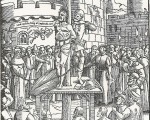
    1555 – Burning of William Hunter, Protestant martyr. Nineteen-year-old Hunter got into trouble when he was found reading the Bible in Brentwood Chapel.

    [Read More...]
  • This week in history 20 – 26 March

    On this day in history…

    20th March

    1469 – Birth of Cecily, Viscountess Welles and princess, also known as Cecily of York, third daughter of Edward IV and Elizabeth Woodville. She was born at Westminster Palace. A marriage alliance with Scotland was made in 1473 promising Cecily to James, the infant son of James III, but Cecily was still unmarried at her father’s death in 1483. Her uncle, Richard III, arranged Cecily’s marriage to Ralph Scrope of Upsall, but Henry VII dissolved the marriage in 1486 and she married John Welles, Viscount Welles, the King’s half-uncle. After Welles’ death in 1499, Cecily went on to marry Thomas Kyme of Friskney. Cecily died in 1507.
    1544 – Baptism of Cuthbert Mayne, Roman Catholic priest and martyr. He was hanged, drawn and quartered at Launceston on 30th November 1577 after being charged with traitorously getting hold of a papal bull and publishing it at Golden Manor, defending the authority of the Pope, purchasing a number of Agnus Dei and giving them to people, and celebrating the Catholic mass.
    1549 – Thomas Seymour, 1st Baron of Sudeley and Lord High Admiral, husband of the late Dowager Queen Catherine Parr and brother of Queen Jane Seymour and Protector Somerset, was executed after being charged with thirty-three counts of treason.
    1555 – Burial of John Russell, Earl of Bedford, courtier and magnate, at Chenies, following his death 14th March. It was a lavish funeral with three hundred horses, all in black trappings.

    [Read More...]
  • Edward Seymour, Duke of Somerset

    Edward Seymour

    The fifth article in Sarah Bryson’s series on prominent Tudor courtiers…

    Edward Seymour, Duke of Somerset is one of the most well-known of Henry VIII’s courtiers. Although the duke was most influential under the reign of his nephew, King Edward VI, it was during the reign of Henry VIII that Seymour started his ascent at the Tudor court.

    The exact date of Edward’s birth has not been recorded, but it is believed that he was born around 1500 at the family’s home of Wolf Hall, Wiltshire, to Sir John Seymour and Margery Wentworth. John and Margery had ten children: six sons (John, Edward, Henry, Thomas, John and Anthony) and four daughters (Jane, Elizabeth, Margery and Dorothy). Edward Seymour was descended from the ancient family lines of the Percys and Cliffords, and his father served both King Henry VII and King Henry VIII as Sheriff of Wiltshire and Sheriff of Somerset and Dorset, cementing the family’s loyalty to the Tudors.

    [Read More...]
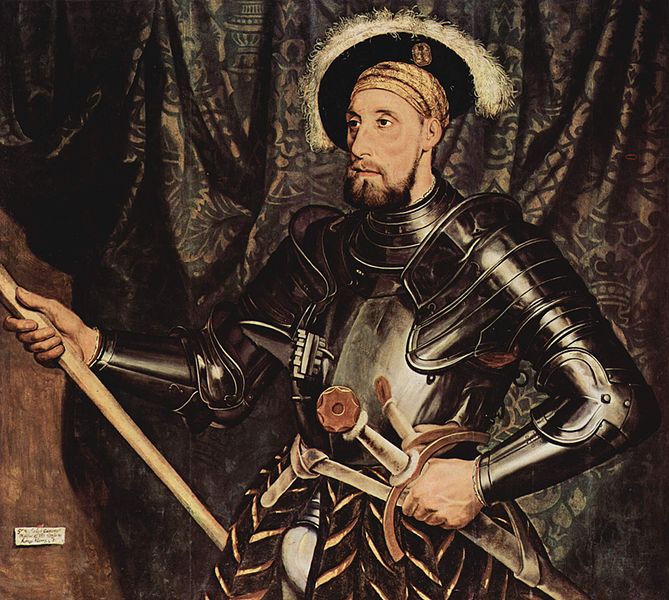
  • Nicholas Carew

    Nicholas Carew

    The fourth article in Sarah Bryson's series on prominent Tudor courtiers...

    In today's article, I will be exploring the life of Nicholas Carew, Master of the Horse and close friend of King Henry VIII. Carew's life was one of prosperity moving from one advantageous position to another until suddenly and unexpectedly his king turned upon him. Carew would prove that not even being a close friend to the king could save you from the executioner's block.

    While the exact date of Nicholas Carew’s birth is unknown, it is believed that he was born by 1496 to Sir Richard Carew of Beddington. There is no information regarding Carew’s childhood, however, during his teenage years, he made his first appearance at court, and in May 1511 he was made a groom of the privy chamber. In 1513 he was associated with his father in a grant from the crown for the office of Lieutenant of Calais Castle. After the death of his father, Carew surrendered the association with Lieutenant of Calais yet continued to receive an annuity from Calais of around £100. Despite protests from other courtiers, this annuity continued until 1524 when Carew was granted lands of equal value.

    In the autumn of 1513, Henry VIII decided to invade France with an army of 30, 000 men, which included Carew. The English army took the city of Therouanne in Artois without a great deal of difficulty and then went on to besiege Tournai. Nicholas’s father led the artillery at Tournai and for his efforts at Therouanne Nicholas received “a coat of rivet” from the king.

    The following year, Carew married Elizabeth, daughter of Sir Thomas Bryan of Ashridge, vice-chamberlain to Queen Katherine of Aragon. The couple were granted the lands of Wallington, Carshalton, Beddington, Woodmansterne, Woodcote, and Mitcham, in Surrey upon their marriage. Nicholas and Elizabeth had one son, Francis, and four daughters, Elizabeth, Mary, Anne, and Isabel.

    By 1515, Nicholas was recorded as being a squire to Henry VIII and one of the king’s cupbearers, being granted 30 marks per year. Sometime between 1515 and 7th July 1517, Nicholas was knighted. On the 7th of July 1517, Nicholas was recorded as a knight who attended the ambassadors of the future Charles V, at a banquet. On 18th December, Carew was also recorded as a knight when he was appointed keeper of the manor of Pleasaunce in East Greenwich, and of the accompanying park. In addition to being knighted, in 1518 Carew had the distinction of being appointed a gentleman of the privy chamber.

    Nicholas Carew appears to have been a close friend of Henry VIII, both men similar in age, strong and athletic. They also shared common interests including a love of hunting and jousting. Carew was frequently mentioned in the lists of men participating in jousting events during Henry VIII’s early reign. One such example was on 17th July 1517 when Carew distinguished himself in the jousts in which Henry VIII also participated. After the jousts, Carew entered the lists, and three men carried out a lance nine inches in diameter and twelve feet long! Carew carried the huge lance three-quarters of the way down the lists to the amazement of the crowd!

    Sometime between 1514 and 1518, Carew was banished from court. The reason and exact length of the banishment are unknown. By 1519, he had returned. However, in that same year, Carew and a number of men were banished from court partially due to their familiarity and influence upon the king and also in an attempt to save funds. Carew’s punishment was to be appointed as Lieutenant of Rysbank Tower, the tower that guarded the entrance to Calais harbour. Carew’s banishment was short; within six months he was back at court attending festivities. On 19th October 1520, Carew relinquished his post at Calais and in return was granted a pension of £100. A month later he gave up the annuity of 30 marks as the king’s cupbearer.

    By 1518-1519, Carew had been appointed as sheriff of Surrey and Sussex. He also attended the Field of Cloth of Gold in June 1520, where Henry VIII met with the French king, Francis I, and participated in the jousting events for the English. Following the Field of the Cloth of Gold, Carew travelled with Henry VIII to Gravelines to meet Charles V.

    Carew’s prospects continued to rise when in 1521 he was granted the offices of Constable of Wallingford Castle and Steward of the honour of Wallingford and St. Walric, and land at Chiltern. In Christmas 1521 Carew had the high honour of being appointed as the king’s carver. On 18th July 1522, Carew was appointed as Master of the Horse, one of the three highest positions at court. He was also granted the manor of Brasted in Kent, which had formally belonged to the Duke of Buckingham, and the manor of Bletchingley in Surrey.

    Carew also proved to be a capable ambassador to Henry VIII. In late 1520, Carew was sent to Francis I to deliver papers and to persuade the French king not to invade Italy. Although the mission was not completely successful, Carew was granted £100 for his services. In 1527, Carew, Lord Lisle, Dr Taylor, Anthony Browne and Thomas Wriothesley were ordered to bestow the Order of the Garter on Francis I. In the same year, Carew's lands were assessed at around £400, a sizeable sum for the time.

    In 1529, Carew continued his ambassadorial duties when he, Dr Sampson and Dr Bennet were sent to Bologna to ratify the Treaty of Cambrai with Charles V. Carew was also tasked with seeking Charles V’s thoughts on Henry VIII’s “Great Matter”, that is the annulment of Henry VIII’s marriage to Katherine of Aragon in order to marry Anne Boleyn. When Carew left Bologna on 8th February 1530, he was given a gold chain worth 2000 ducats by Charles V.

    In 1532, Carew returned to France to meet with Francis I and to organise a meeting between Henry VIII and Francis. Carew was reported as wishing he did not have to go. However, he was a dutiful servant and followed his king’s wishes. It is highly likely that Carew spoke with Francis I regarding his thoughts on Henry VIII’s “Great Matter” and the king’s possible marriage to Anne Boleyn.

    Francis I appeared to have highly favoured Carew as in 1533 and in 1534 he wrote to Henry VIII to ask him to bestow the Order of the Garter, the highest order of chivalry in England, on Carew. As no current positions were available in the order, Henry VIII promised to do so at the next available opening. In April 1536, it was commonly believed that George Boleyn, brother of Anne Boleyn, now second wife to Henry VIII, would receive the appointment to the Order of the Garter. However, on St. George’s day (23rd April) Sir Nicholas Carew was appointed. While a huge honour to Carew, such an appointment was a major blow to the Boleyns.

    Carew was no friend of the Boleyns. When Henry VIII’s fool spoke favourably of Queen Katherine of Aragon, Henry VIII was outraged and banished his fool from court for a time. The fool sought refuge with Carew. Carew also aligned himself with Thomas Cromwell and spoke unfavourably of Anne Boleyn to the King. It is believed that Carew was one of the men coaching Jane Seymour on how to behave with the king, even providing Jane lodgings at his house at Beddington so that the king could visit her regularly.

    Carew was installed into the Order of the Garter on 21st May 1537, at the order’s feast. He also attended the christening of Henry VIII’s longed-for son and heir, Edward, in October 1537. However, in November 1538, the strings would start to unravel that would lead to Carew’s arrest and his execution.
    In November, Henry Pole, Baron Montague, and Henry Courtney, Marquis of Exeter, were arrested and taken to the Tower of London. They were charged with treason for corresponding with Cardinal Reginal Pole, Montague’s brother and an enemy of Henry VIII, and for wishing to see a change in the kingdom. Early the following year, Carew was arrested and then tried on 14th February 1539. At his trial, Carew was accused of corresponding with Montague and hiding Montague’s traitorous plans, as well as wishing for a change in the realm. The letters that passed between Carew and Montague were allegedly burned, and the evidence against Carew was flimsy at best. He was still sentenced to death.

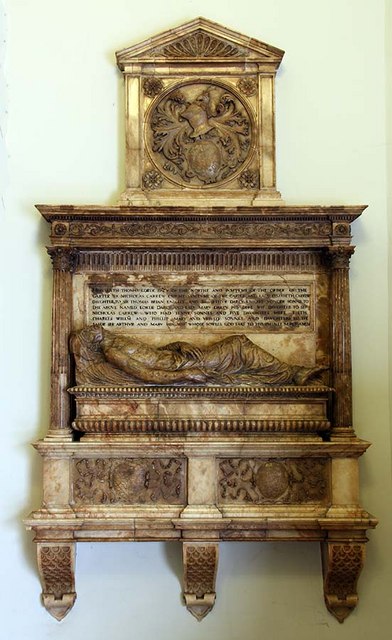
    Memorial to Nicholas Carew at St Botolph's.

    Sir Nicholas Carew was beheaded on Tower Hill on 8th March 1539. Upon the scaffold it is reported that Carew “made a goodly confession, both of his folly and superstitious faith, giving God most hearty thanks that ever he came in the prison of the Tower, where he first savoured the life and sweetness of God’s most holy word, meaning the Bible in English.” (Bayley p. 377).

    Carew was buried in St Botolph without Aldgate. When his wife, Elizabeth, died in 1546, her remains were buried with Nicholas. On their deaths, the remains of their daughter Mary and Mary’s husband Sir Arthur Darcy were added to the tomb. As a traitor, Carew’s property and lands reverted to the crown, but an act of Parliament in 1554 granted Carew’s son, Francis, his father’s former property and lands.
    Sir Nicholas Carew was a loyal servant and friend of King Henry VIII. He served his king both at court and as an ambassador overseas, as well as participating in court festivities. He shared a love of jousting and hunting with the king and manoeuvred the ever-changing social order of the king’s court. Despite his close friendship with Henry VIII, Carew’s end came swiftly and suddenly, showing that even being a friend of Henry VIII could not save you from the executioner's block.

    Sarah's other "The King's Men" articles:

    Sources

    • Bayley, J.W. (1825) The history and antiquities of the Tower of London: with memoirs of royal and distinguished persons, deduced from records, state-papers, and manuscripts, and from other original and authentic sources, T. Cadell, London.
    • Doran, Susan (2008) The Tudor Chronicles, Quercus Publishing, London.
    • Jokinen, Anniina 2010, Sir Nicholas Carew, Luminarium Encyclopaedia Project, viewed 10 February 2017, http://www.luminarium.org/encyclopedia/carew.htm.
    • Lehmberg, S (2007) Carew, Sir Nicholas (b. in or before 1496, d. 1539), Oxford Dictionary of National Biography, Oxford University Press, viewed 18 February, http://www.oxforddnb.com/view/article/4633.
    • Richardson, Douglas (2011) Plantagenet Ancestry: A Study In Colonial And Medieval Families, 2nd Edition, CreateSpace, USA.
    • Ridgway, Claire (2014) "23 April 1536 – Nicholas Carew, George Boleyn and the Order of the Garter", The Anne Boleyn Files, viewed 10 February 2017, http://www.theanneboleynfiles.com/23-april-1536-nicholas-carew-george-boleyn-order-garter/.
  • Juan Luis Vives

    On this day in history, 6th March 1492, Juan Luis Vives was born in Valencia, Spain.

    Juan Luis Vives was a scholar and humanist, and is known for being the friend and adviser of Catherine of Aragon, first wife of King Henry VIII, and the tutor of the couple’s daughter, the future Mary I. Catherine of Aragon commissioned him to write the treatise Education of a Christian Woman (Instruction of a christen woman) and he created the Satellitium animi, or Escort of the Soul, a study plan for the Princess Mary, which also included “spiritual mottoes and devices”. It was the forerunner of the 16th- and 17th-century emblem books, books which contained a number of emblematic images with an accompanying explanatory text.

    [Read More...]
  • This week in history 6 – 12 March

    On this day in history, 6th March…

    1492 – Birth of Juan Luis Vives, scholar, humanist and tutor of Mary I, in Valencia, Spain.
    1536 – Introduction into Parliament of the “Act for the Suppression (or Dissolution) of the Lesser Monasteries”. The act affected the “lesser monasteries”; those with fewer than twelve members and those worth less than £200 per year. They were to be dissolved, their heads pensioned off and their members to become secularized or moved to larger monasteries “where they may be compelled to live religiously for reformation of their lives”.
    1547 – Thomas Wriothesley lost the Great Seal of his Lord Chancellorship and was confined to his home at Ely Place for abusing his authority. He was found guilty of issuing a commission without the knowledge or permission of the other executors of Henry VIII’s will, but it was probably more to do with his opposition to Edward Seymour, Duke of Somerset, becoming Lord Protector. He was later re-admitted to the Privy Council, a position he’d also lost at his fall.

    [Read More...]
  • Anne Askew by Roland Hui

    Today we have a guest post from Roland Hui as part of his book tour for his debut book “The Turbulent Crown: The Story of the Tudor Queens”.

    MadeGlobal Publishing is giving away a copy of Roland’s book at each stop and all you need to do at this stop is to leave a comment below saying which queen or queen consort you feel had the most turbulent life. Leave your comment before midnight on 8th March 2017. One comment will be picked at random and the person contacted for their details.

    Over to Roland…

    When Henry VIII married Katharine Parr in 1543, the general opinion was that the King had chosen most wisely. Unlike his previous wife, Katheryn Howard, this Katharine was no young lady with a sordid past, but a mature, sensible widow. The new Queen was also known for her piety.

    [Read More...]
  • This week in history 27 February – 5 March

    On this day in history…
    27th February:

    1531 – Birth of Roger North, 2nd Baron North, politician, diplomat and administrator at the court of Elizabeth I. North served as a Member of Parliament, Privy Councillor and Treasurer of the Household.
    1545 – The English forces were defeated by the Scots at the Battle of Ancrum Moor, near Jedburgh in Scotland.
    1555 – Death of Sir William Babthorpe, Member of Parliament and a man who was created Knight of the Bath at the coronation of Edward VI in 1547. Babthorpe had originally been on the rebel side in the Pilgrimage of Grace in 1536, but fortunately swapped sides.

    [Read More...]
  • Tudor Nobility

    Thomas Howard 3rd Duke of Norfolk

    This list includes the English royal family and nobility of the Tudor period, along with how they would be addressed. Do let me know if I have missed any by commenting below.

    Rank

    Here they are are order of importance:

    Monarch and royal family
    Duke
    Marquis
    Earl
    Viscount
    Baron
    Knight

    [Read More...]
  • This week in history 20 – 26 February

    On this day in history…

    20th February

    1516 – Baptism of Princess Mary, the future Mary I, in the Church of the Observant Friars at Greenwich. The princess was carried to the font by the Countess of Surrey, and her godparents were Catherine Courtenay, Countess of Devon and daughter of Edward IV; Margaret Pole, Countess of Salisbury and daughter of George, Duke of Clarence; the Duchess of Norfolk and Cardinal Thomas Wolsey. Click here to read more.
    1523 – Hanging of Agnes Hungerford, Lady Hungerford, at Tyburn. Agnes was hanged, with her servant William Mathewe, after they were found guilty of murdering Agnes’s first husband, John Cotell. It was said that Agnes arranged for her servants, William Mathewe and William Ignes, to strangle Cotell in 1518. Mathewe and Ignes were found guilty of murder ‘by the procurement and abetting of Agnes Hungerford’, and Agnes was found guilty of inciting and abetting the murder. Ignes was hanged at a later date. Agnes was buried at Grey Friars, London.
    1547 – Edward VI was crowned King at Westminster Abbey by Archbishop Thomas Cranmer. Edward VI was the first monarch to be anointed as Supreme Head of the English Church. Click here to read more about his coronation.

    [Read More...]
  • Katherine of Valois: Lancastrian Queen, Tudor Wife

    Today we are hosting Conor Byrne, “Tudor Life” magazine regular contributor, historian and author, as part of his book tour for his latest book Queenship in England 1308-1485: Gender and Power in the Late Middle Ages. MadeGlobal Publishing is offering a paperback copy of Conor’s book to one lucky commenter. All you have to do is leave a comment below saying which 14th or 15th-century queen you’d like to know more about and why. Leave your comment before midnight Tuesday 21st February 2017. One commenter will be picked at random and contacted for his/her address.

    On 3 January 1437, Katherine of Valois, widow of Henry V, died at the age of thirty-five. The former queen was buried at Westminster Abbey. Five months later, the life of another former queen of England ended. Joan of Navarre, Katherine’s immediate predecessor, died at the age of sixty-six or sixty-seven and was buried at Canterbury Cathedral. The queenships of Joan and Katherine reveal the opportunities for triumph and tribulation that the office brought, as well as showcasing the variety of roles that were associated with it, including mother, intercessor, patron and lord. Their queenships also reveal the strikingly different political and diplomatic contexts, depending on circumstances, in which the occupant could attempt to fulfil her roles, and how these contexts affected her ability to succeed in the role of queen.

    [Read More...]
  • This week in history 13 – 19 February

    On this day in history…

    13th February:

    1542 – Catherine Howard, fifth wife of Henry VIII, and Lady Jane Rochford were executed at the Tower of London. They had been found guilty of treason by Act of Attainder. They were both buried in the Chapel of St Peter ad Vincula at the Tower of London. Click here to read more.
    1564 – Baptism of John Harvey, astrologer and physician, at Saffron Walden in Essex. Harvey was the third son of John Harvey, farmer and rope-maker, and his wife, Alice. His published works included “An Astrologicall Addition” (1583), a series of almanacs and “A Discoursive Probleme Concerning Prophesies” (1588).
    1579 – Death of John Fowler, the English Catholic printer and publisher, in Namur, during his exile in the reign of Elizabeth I. He was buried there in the church of St John the Evangelist. He is known as one of the most important English Catholic publishers of the 1560s and 70s.

    [Read More...]
  • William Carey

    In this month’s look at the men of Henry VIII’s court, I want to explore the life of William Carey, courtier, a member of the king’s privy chamber, and an esquire of the body. William Carey is most famously known for being the husband of Mary Boleyn, older sister of Anne Boleyn. However, he was more than just a husband; he was a man on the rise and distant cousin to the King.

    There is little known about William Carey’s early life. He appears to be the second son of Thomas Carey from Chilton Foliat, Wiltshire, and his wife Margaret, daughter of Sir Robert Spencer of Ashbury, Devon. The family had strong Lancastrian ties as William’s grandfather, Sir William Carey of Cockington, Devon, on his father’s side, was a Lancastrian supporter and soldier who was beheaded at Tewkesbury in 1471. William’s grandmother on his mother’s side was Eleanor Beaufort, daughter and coheir of Edmund Beaufort, Duke of Somerset. The Duke of Somerset was a staunch Lancastrian supporter and right-hand man of King Henry VI. It was rumoured that Somerset even had an affair with the King’s mother, Catherine Valois, who was also the grandmother of King Henry VII! Through his mother’s side, William Carey was a distant cousin of King Henry VIII.

    [Read More...]
  • This week in history 6 – 12 February

    On this day in history, 6th February…
    1557 – The remains of reformers Martin Bucer and Paul Fagius were exhumed and publicly burned, after being posthumously found guilty of heresy. They were burned, along with their books, on Market Hill in Cambridge.
    1561 – Baptism of Tailboys Dymoke (pseudonym Thomas Cutwode) at Kyme in Lincolnshire. He was the son of Sir Robert Dymoke, and his wife, Bridget (née Clinton). Dymoke is known for his allegorical poem, Caltha poetarum, or, “The Bumble Bee”, which he published under the name of Thomas Cutwode.
    1585 – Death of Edmund Plowden, lawyer, legal scholar and law reporter, in London. He was laid to rest in the Middle Temple Church. Cambridge University libraries and the British Library contain manuscripts of his commentaries and opinions, and he is known for his 1571 “ Les comentaries ou les reportes de Edmunde Plowden” volume of law reports covering cases during the reigns of Edward VI, Mary I and Elizabeth I.

    [Read More...]
  • This week in history 30 January – 5 February

    On this day in history, 30th January:

    1520 – Birth of Sir William More, member of Parliament, Protestant and son of Sir Christopher More, a powerful administrator in Henry VII’s reign. More served Elizabeth I as Constable of Farnham Castle, Treasurer of the Lottery, Commissioner for Ecclesiastical Causes, Collector of the Loan, Chamberlain of the Exchequer, Master of Swans and Deputy Custos Rotulorum. He was also a commissioner on various commissions of oyer and terminer during her reign.
    1531 – Death of Sir Robert Brudenell, Judge. He served Henry VII as King’s Serjeant and Henry VIII as Chief Justice of the Common Pleas. He was buried at Deene church, Northamptonshire.
    1554 – Rebel Thomas Wyatt the Younger and his men besieged Cooling Castle, owned by George Brooke, 9th Baron Cobham. Cobham claimed that he had fought valiantly against the rebels for seven hours before surrendering to them, but his biographer points out that his resistance was most probably a “pretence”.
    1593 – Ippolito Aldobrandini was elected as Pope Clement VIII.
    1606 – Execution of Robert Winter and three of his fellow conspirators, at St Paul’s. He was hanged, drawn and quartered for his part in the Gunpowder Plot. His brother, Thomas, was executed the next day.

    [Read More...]
  • This week in history 16 – 22 January

    On this day in history, 16th January…

    1486 – The Bishop of Imola, the papal legate, authorised the marriage of Henry VII and Elizabeth of York, which was due to take place on 18th January.
    1501 – Birth of Sir Anthony Denny, courtier and close friend of Henry VIII, at Cheshunt. He was the second son of Sir Edmund Denny and his wife, Mary.
    1549 – Thomas Seymour was alleged to have broken into Edward VI’s apartments at Hampton Court Palace to kidnap the young King. Click here to read more about this incident.
    1558 – Death of Thomas Alsop, Chief Apothecary to Henry VIII and Serjeant of the Royal ‘Confectionary’ to Edward VI. He was buried in St Mary Woolchurch.

    [Read More...]
  • This week in history 9 – 15 January

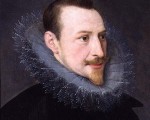
    Edmund Spenser

    On this day in history, 9th January…

    1514 – Anne of Brittany, wife of Louis XII of France, died at the Chateau of Blois. She was buried in the Cathedral Basilica of Saint Denis.
    1522 – Adriaan Florenszoon Boeyens was elected as Pope, becoming Pope Adrian VI.
    1554 – Birth of Pope Gregory XV, born as Alessandro Ludovisi, in Bologna, Italy.
    1539 – Executions of Henry Pole, 1st Baron Montagu, and Henry Courtenay, Marquis of Exeter, on Tower Hill. They were found guilty of high treason in December 1538 for denying the King’s supremacy, desiring the King’s death and favouring and promoting Cardinal Reginald Pole, Montagu’s brother, “in his traitorous proceedings”.

    [Read More...]
  • This week in history 2 – 8 January

    On this day in history…

    2 January:

    1492 – King Boabdil surrendered Granada to the forces of King Ferdinand II of Aragon and Queen Isabella I of Castile – click here to read more.
    1525 – Death of Sir William Uvedale. Uvedale had been created a Knight of the Bath and Knight of the Royal Body by Henry VII, and served Arthur, Prince of Wales, as his counsellor.
    1536 – Eustace Chapuys, the Imperial Ambassador, arrived at the dying Catherine of Aragon’s bedside in Kimbolton Castle.
    1539 – Geoffrey Pole, son of Sir Richard Pole and Margaret Pole, Countess of Salisbury, was pardoned after attempting suicide for the third time.

    [Read More...]
  • This week in history 26 December – 1 January

    26th December:

    526 – Birth of Rose Throckmorton (née Lok, other married name: Hickman), Protestant and businesswoman, in London. She was the third child of Sir William Lok, a mercer who had also served Henry VIII as a gentleman usher. Rose was married twice: to merchant Anthony Hickman and to Simon Throckmorton of Brampton.
    1545 – Death of Sir George Bowes, soldier, rebel and Captain of Norham Castle. He was buried at Alnwick. Bowes was a member of the rebel army during the 1536 Pilgrimage of Grace, but the patronage of his uncle, Sir Robert Bowes, protected him. He fought in the 1542 Anglo-Scottish War and in the 1544 expedition. He was granted the Barony of Coldingham as a reward for seizing Coldingham Priory on November 1544, but was then taken prisoner in January 1545 and lost the barony.
    1546 – Henry VIII made some changes to his will, a document which had been prepared two years earlier. These changes were made to ensure successful transfer of royal authority to his son, the future Edward VI, and to prepare for Edward reigning during his minority.

    [Read More...]
  • This week in history 19 – 25 December

    19 December

    Anne de Montmorency

    1562 – The Battle of Dreux between Catholics, led by Anne de Montmorency, and Huguenots, led by Louis I, Prince of Condé, during the first war of the French Wars of Religion. The Catholics were victorious, but both commanders were taken prisoner.
    1576 - Katherine Palmer, Abbess of Syon, died in Mechelen during exile in Elizabeth I's reign. Just over a month earlier, on 8th November, her convent had been broken into by a mob of Calvinists, and it is thought that confronting the mob had been too traumatic for her. She was laid to rest at Mechelen in the Church of the Augustinians.
    1578 (19th or 26th December) – Executions of Egremont Radcliffe and a man called Gray at Namur in Belgium. They were beheaded in the marketplace after being suspected of poisoning Don John of Austria.
    1583 – John Somerville, convicted conspirator, was found dead in his cell at Newgate Prison. Death was by strangulation, and it was said that his death was suicide. His body was buried in Moorfields, and his head was put on display on London Bridge. Somerville had been convicted of high treason for intending to shoot and kill Elizabeth I.
    1587 – Death of Thomas Seckford, lawyer and administrator, at Clerkenwell in Middlesex. He was buried at Clerkenwell, but then moved to the family vault at Woodbridge in Suffolk. Seckford served Mary I as Deputy Chief Steward of the Duchy of Lancaster and Elizabeth I as Master of Requests and Steward of the Marshalsea court.

    20 December

    1541 – A “very sickly” Agnes Tilney, Dowager Duchess of Norfolk, who was imprisoned in the Tower of London after the fall of her granddaughter, Catherine Howard, begged Henry VIII for forgiveness. She also confessed to having another £800 hidden at Norfolk House.
    1558 – Death of John Holyman, Bishop of Bristol and Rector of Hanborough in Oxfordshire. He was buried at Hanborough Church, in the chancel.
    1559 – Burial of John Bekinsau (Beckinsau), scholar and theologian, at Sherborne St John in Hampshire. Bekinsau was the author of the 1546 tract De supremo et absoluto regis imperio in support of Henry VIII's supremacy.
    1562 – Death of Margaret Kitson (other married name Bourchier and née Donnington), Countess of Bath. She was buried at the church in Hengrave, near Bury St Edmunds in Suffolk, which was near Hengrave Hall, the Kitson family seat. Margaret was the second wife of merchant adventurer Sir Thomas Kitson.
    1571 – Death of Richard Butler, 1st Viscount Mountgarret and son of Piers Butler, 1st Earl of Ossory and 8th Earl of Ormond. He was buried in St Canice's Cathedral, Kilkenny city.
    1583 – Execution of Edward Arden, conspirator, at Smithfield. He was hanged, drawn and quartered after being convicted of high treason for plotting with John Somerville to kill Elizabeth I. Like Somerville, his body was buried at Moorfields and his head displayed on London Bridge.
    1606 – Death of Richard Reynolds (Rainolde), clergyman and author, in Essex. His work included the 1563 “ A booke called the foundacion of rhetorike, because all other partes of rhetorike are grounded thereupon” and “ A chronicle of all the noble emperours of the Romaines … setting forth the great power, and devine providence of almighty God, in preserving the godly princes and common wealthes” (1571).

    21 December
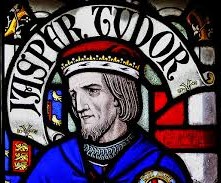
    Jasper Tudor

    Jasper Tudor

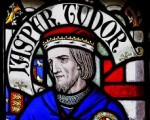
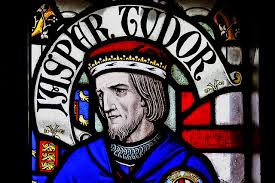
    1495 – Death of Jasper Tudor, 1st Duke of Bedford and 1st Earl of Pembroke, at Thornbury. He was laid to rest at Keynsham Abbey, near Bristol. Jasper was the second son of Owen Tudor and Catherine of Valois, half-brother of Henry VI and uncle of Henry VII. It was alleged that he had an illegitimate daughter, Helen or Ellen, who was the mother of Stephen Gardiner, Bishop of Winchester. Click here to read more.
    1505 – Birth of Thomas Wriothesley, 1st Earl of Southampton, Lord Privy Seal and Lord Chancellor to Henry VIII. He was the eldest son of William Wriothesley, York herald, and his wife, Agnes, and cousin of Charles Wriothesley, the Tudor chronicler.
    1539 – Death of Sir John Shelton, uncle (by marriage) of Queen Anne Boleyn and Controller of the Joint Household of Mary and Elizabeth, Henry VIII's daughters from July 1536. He was buried at Shelton Church in Norfolk, in the chancel.
    1540 (or 1542) – Birth of Thomas Allen, mathematician, astrologer and antiquary, at Uttoxeter in Staffordshire. Allen is known for his knowledge of mathematics, history and antiquity, astronomy and astrology, and philosophy. He served as Robert Dudley, Earl of Leicester's astrologer and the horoscope he cast for poet Philip Sidney can be found in the Bodleian Library's Ashmole manuscripts. His links with John Dee, Thomas Harriot and other mathematicians, combined with his knowledge of astrology, led to him being labelled a necromancer or magician.
    1545 - William Cecil, the future Baron Burghley, married his second wife, Mildred Cooke (1526-1589), eldest daughter of Sir Anthony Cooke, Edward VI's tutor. Click here to read more.
    1549 - Marguerite of Navarre (also known as Margaret of Navarre, Marguerite of Angoulême and Marguerite de France) died in Odos in France at the age of fifty-seven. Marguerite was the daughter of Louise of Savoy and Charles of Orléans, Count of Angoulême.
    1584 – Probable date for the death of John Herd, physician, author and Rector of Waddington. He was buried at Waddington. Herd had acted as Physician to Archbishop Thomas Cranmer from c.1551 until August 1555. Herd wrote a verse history of England, covering the period 1461-1509, and was also said to have written a catechism of Christian doctrine for the young.
    1598 – Death of Thomas Owen, judge and member of Parliament. He was buried at Westminster Abbey. Owen served Elizabeth I as Serjeant-at-Law, Queen's Serjeant and Judge of the Court of Common Pleas.
    1608 – Death of William Davison, diplomat and administrator, at Stepney. He was buried there, in St Dunstan's Church. Davison served Elizabeth I as a diplomat, carrying out embassies to the Netherlands and Scotland, and as secretary. He is mainly known for his role in the execution of Mary, Queen of Scots. Davison claimed that Elizabeth I signed Mary's death warrant and told him that she wished the execution to take place in the Great Hall of Fotheringhay Castle without delay. As instructed, Davison asked Sir Christopher Hatton, the acting Lord Chancellor, to seal the warrant with the Great Seal of England to validate it. Elizabeth, on the other hand, claimed that she had signed the warrant and then asked Davison not to disclose this fact to anyone. When she learned that it had been sealed with the Great Seal, she then asked Davison to swear on his life that he would not let the warrant out of his hands unless he had permission from her. After Mary's execution, the poor Davison was arrested, tried and sentenced to imprisonment in the Tower, and heavily fined.

    22 December
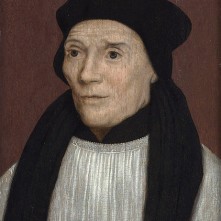
    Bishop Fisher

    Bishop Fisher

    1480 – Baptism of Sir Edward Chamberlayne, soldier, a leading member of Oxfordshire gentry and Commissioner of the Peace for Oxfordshire (1506-1539) at Weston in Northamptonshire.
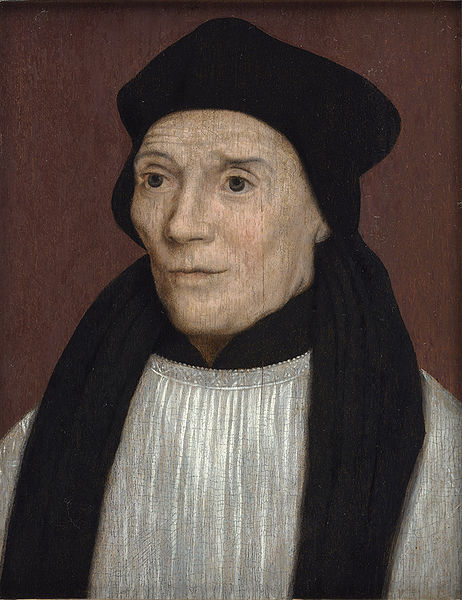
    1534 – An imprisoned John Fisher, Bishop of Rochester, wrote to Thomas Cromwell beseeching him to provide him with a shirt and sheet, neither of which he had, some food, some books “to stir his devotion more effectually” and a priest to hear his confession. He also asked Cromwell to intercede with the King and to “move” him to release Fisher from “this cold and painful imprisonment”. Fisher had been imprisoned for denying the King's supremacy.
    1541 - Several members of the Howard and Tilney family, plus their staff, were indicted for misprision of treason for covering up the “unlawful, carnal, voluptuous, and licentious life” of Queen Catherine Howard while she lived with the Dowager Duchess of Norfolk at Lambeth.
    1545 – Birth of George Bannatyne, compiler of the “Bannatyne Manuscript”, at Edinburgh. The “Bannatyne Manuscript” is an anthology of Scots literature and included poems by Bannatyne, Alexander Montgomerie, Alexander Scott, David Lyndsay, William Dunbar, Robert Henryson and King James I.
    1557 – Burnings of John Rough and Margaret Mearing, Protestant martyrs, at Smithfield for heresy.
    1558 (22nd or 28th) – Death of John Christopherson, Bishop of Chichester. He was buried at Christchurch, Newgate Street. He had been put under house arrest following his definition of Protestantism as “a new invention of new men and heresies” on 27th November 1558, preached in response to a sermon at Paul's Cross.

    23 December
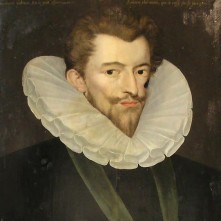
    Henri de Lorraine

    Henri de Lorraine

    1513 – Birth of Sir Thomas Smith, scholar, humanist, colonialist diplomat (in Ireland) and political theorist, at Saffron Walden, Essex. He was the second son of sheep farmer, John Smith, and studied at Cambridge University and also in France and Italy. He served Edward VI as a Secretary of State, and was one of Elizabeth I's most trusted counsellors. He served her as a diplomat, Secretary of State and Chancellor of the Order of the Garter. Smith was the author of “De Republica Anglorum; the Manner of Government or Policie of the Realme of England” and “The Discourse of the Commonweal”.
    1556 – Burial of Nicholas Udall (Yevedale), schoolmaster, cleric, humanist and playwright, at St Margaret's, Westminster. His play “Ralph Roister Doister”, which combined Latin comedy and English tradition, is regarded as the first English language comedy. He played a part in Anne Boleyn's coronation in 1533, composing verses for the pageant, and in 1534 he published his Latin text book, “Floures for Latine Spekynge”. In 1541, Udall was imprisoned for a few months at Marshalsea after committing buggery with his pupil Thomas Cheney, but he was back in favour enough the next year to be leading a group of scholars in translating “The Paraphrase of Erasmus upon the New Testament” for Queen Catherine Parr.
    Udall's other works included translations of Erasmus's “Apophthegms”, Pietro Martire's “Discourse on the Eucharist” and Thomas Gemini's “Anatomia”, and the play “Respublica”.
    1558 – Queen Elizabeth I moved from Somerset House to Whitehall Palace, which became her principal residence.
    1558 – Death of Sir John Baker, administrator, Speaker of the House of Commons, Chancellor of the Exchequer and Under-Treasurer of England, in London. He was buried in Cranbrook Church in Kent.
    1559 – Death of Henry Morgan, Bishop of St David's, at Wolvercote in Oxfordshire. He had been deprived of his bishopric after Elizabeth I's accession because of his refusal to accept the religious changes of her reign. He was buried at Wolvercote.
    1568 – Roger Ascham, scholar and royal tutor, was taken ill, probably with malaria. He died on 30th December.
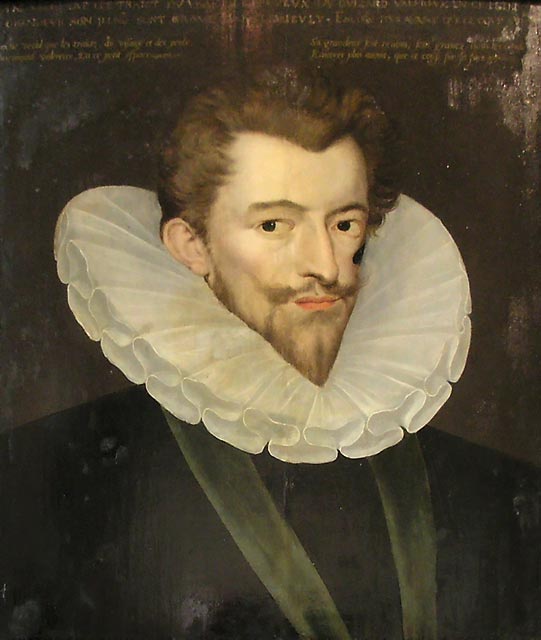
    1588 – The assassination of Henri de Lorraine, 3rd Duke of Guise and founder of the Catholic League, at the Château de Blois. He was killed by King Henry III's bodyguards, “the Forty-five”, in front of the King. His brother, Louis II, Cardinal of Guise, was assassinated the following day. The League had been controlling France, and the King was forced to act against it.
    1599 – Burial of Thomas Byng, civil lawyer, Regius Professor of the Civil Law at Cambridge and Master of Clare College, Cambridge. He was buried in Hackney Church, Middlesex.
    1607 – Death of Sir John Fortescue, Chancellor of the Exchequer and Chancellor of the Duchy of Lancaster in Elizabeth I's reign.

    24 December

    1545 - King Henry VIII made his final speech to Parliament. Historian Robert Hutchinson describes it as “both measured and compelling”, and writes of how Henry wanted “to impart a stern message” to all of his subjects.
    1604 – Death of Sir Thomas Cornwallis, Comptroller of the household of Mary I and member of Parliament, at the age of eighty-six. He was buried at Brome in Suffolk. Cornwallis was active in putting down Kett's Rebellion in 1549 and in 1553, after originally proclaiming Lady Jane Grey as Queen in Ipswich, he swapped sides and swore allegiance to Mary I.

    25 December
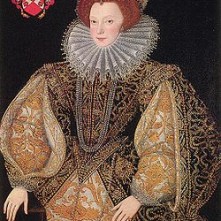
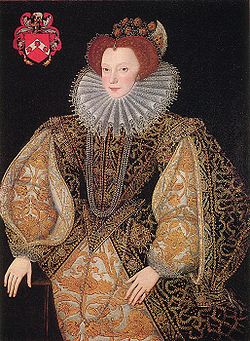
    Lettice Blount

    Lettice Blount

    Christmas Day - Happy Christmas!
    1549 – Death of Stephen Vaughan, merchant, merchant adventurer, diplomat and administrator, in London. He was buried at London's St Mary-le-Bow. Vaughan served Sir Thomas Cromwell as a diplomat between 1524 and 1539, and moved into Henry VIII's service on Cromwell's fall. He acted as the King's Chief Financial Agent in the Netherlands from 1544 to 1546, and became Under-Treasurer of the Tower of London Mint in 1544.
    1553 – Birth of Thomas Thomas, Puritan printer and lexicographer, in London. He became the printer of Cambridge University in 1583, and concentrated on printing Protestant theology and education works. He is known for his Latin dictionary.
    1569 (25th or 26th) – Killing of Sir John Borthwick, soldier, diplomat and Protestant, near Bewcastle in Cumberland. He was killed by the Forster family as he was fighting on the side of James Stewart, 1st Earl of Moray and the Regent, against Mary, Queen of Scots's forces. Borthwick had served Edward VI as a diplomat, Elizabeth I as a military commander and Mary, Queen of Scots as a diplomat.
    1587 – Death of Brian Darcy, magistrate, Sheriff of Essex, witch-hunter and contributor to the 1582 “A true and just recorde of the information, examination and confession of all the witches, taken at S. Oses”. “A True and Just Recorde” argued for harsher punishments for those found guilty of witchcraft.
    1634 – Death of Lettice Blount (née Knollys, other married names: Devereux and Dudley) at the age of ninety-one. Lettice died at her home at Drayton Bassett and was buried beside her second husband, Sir Robert Dudley, Earl of Leicester, in the Beauchamp Chapel of St Mary's Church, Warwick.
    1596 – Death of Sir Henry Curwen, member of Parliament, Justice of the Peace and Sheriff. He served Edward VI, Mary I and Elizabeth I loyally.

  • This week in history 12-18 December

    12 December:

    1546 – Henry Howard, Earl of Surrey was led through the streets of London from Ely Place, where he had been held since the 2nd December, to the Tower of London. There, he was joined by his father, Thomas Howard, 3rd Duke of Norfolk, who was taken to the Tower by barge along the Thames.
    1574 – Birth of Anne of Denmark, Queen of England, Scotland, and Ireland as consort of James I, at Skanderborg Castle, Jutland, Denmark. Anne was the second daughter of Frederick II, King of Denmark and Norway, and his wife, Sophia. She married James I, when he was James VI of Scotland, by proxy on 20th August 1589, and in a proper church ceremony on 23rd November 1589. The couple’s children included the future Charles I and Elizabeth Stuart, Queen of Bohemia. Anne died on 2nd March 1619 of consumption and dropsy, and was buried in Henry VII’s Chapel, Westminster Abbey.
    1595 – Death of Sir Roger Williams, Protestant Welsh soldier and author, from a fever with his patron, Robert Devereux, Earl of Essex, at his side. He was buried at St Paul’s Cathedral. William served as a soldier in the Low Countries and France, and was second in command to Essex of the cavalry gathered at Tilbury in 1588. He wrote the 1590 “A Briefe Discourse of Warre”.

    [Read More...]
  • This week in history 28 November – 4 December

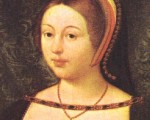
    Detail of Margaret Tudor's face from a portrait of her by Daniel Mystens

    28 November:

    1489 – Birth of Margaret Tudor, Queen of Scotland and consort of James IV, at Westminster Palace. Margaret was the eldest daughter of Henry VII and his wife, Elizabeth of York, and the sister of Henry VII. She spent her childhood at Sheen and at Eltham Palace, but was sent to Scotland at the age of thirteen to marry James IV.
    1499 – Execution of Edward Plantagenet, styled Earl of Warwick, on Tower Hill. Edward was the son of George, Duke of Clarence, brother of Edward IV and Richard III, and so was a potential claimant to the throne. He was imprisoned in the Tower of London after Henry VII’s accession, and was executed for treason after the pretender Perkin Warbeck had allegedly plotted to free himself and Edward. He was buried at Bisham Abbey.
    1557 – Death of Sir Robert Rochester, administrator. He was buried at the Charterhouse at Sheen. Rochester served Mary I as Comptroller of the Royal Household, Privy Councillor, Chancellor of the Duchy of Lancaster, Keeper of the Privy Seal and a member of Parliament.

    [Read More...]
  • This week in history 21 – 27 November

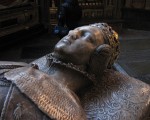
    Tomb effigy of Frances Grey (Brandon), Duchess of Suffolk

    On this day in history events for 21-27th November.

    21 November:

    1495 – Birth of John Bale, churchman, Protestant playwright, historian and Bishop of Ossory, at Cove, near Dunwich, in Suffolk. Bale wrote twenty-four plays, including “Three Laws of Nature, Moses and Christ, corrupted by the Sodomytes, Pharisees and Papystes most wicked”, “A Tragedye; or enterlude manifesting the chief promyses of God unto Man”, “The Temptacyon of our Lorde”, “A brefe Comedy or Enterlude of Johan Baptystes preachynge in the Wyldernesse, etc” and “ Kynge Johan”. His most famous work is his Illustrium majoris Britanniae scriptorum, hoc est, Angliae, Cambriae, ac Scotiae Summarium… (“A Summary of the Famous Writers of Great Britain, that is, of England, Wales and Scotland”), which was his effort to record every work by a British author.
    1558 – Death of James Bassett, courtier and stepson of Arthur Plantagenet, Viscount Lisle. Bassett was a member of Philip of Spain’s Privy Chamber and private Secretary to Mary I. He was buried at Blackfriars, London.

    [Read More...]
  • The Princes in the Tower video

    As we are having a live-chat session later today on the Princes in the Tower, I thought I’d share with you this 2015 Channel 4 documentary looking at the fates of the Princes in the Tower, Edward V and his brother Richard of Shrewsbury, Duke of York.

    We do not know what happened to these boys, the sons of King Edward IV who disappeared following the accession of their uncle, Richard III, but there are various theories. We can have fun debating them later!

    [Read More...]
  • This week in history 31 October – 6 November

    31 October:

    1494 – Henry VII’s son, Henry (the future Henry VIII), was created Duke of York.
    1517 – Martin Luther wrote to Albert, Archbishop of Mainz, and the Bishop of Brandenburg protesting against the sale of indulgences and sending them a copy of The Ninety-Five Theses (proper title: Disputation of Martin Luther on the Power and Efficacy of Indulgences).
    According to Philipp Melancthon, “Luther, burning with passion and just devoutness, posted the Ninety-Five Theses at the Castle Church in Wittenberg, Germany at All Saints Eve, October 31”, rather than sending them in a letter, but no other contemporary source supports this.

    [Read More...]
  • This week in history 17-23 October

    On this day in history events for week 17th to 23rd October.

    17th October:
    1560 – Baptism of Walter Marsh, spy and Protestant martyr, at St Stephen’s Church, Coleman Street, London. Marsh was burned to death in Rome’s Campo dei Fiori after having his tongue and hands cut off. He had been accused of being paid by Elizabeth I to spy on Catholics and showing contempt for the Eucharist.
    1586 – The poet, courtier and soldier Sir Philip Sidney died as a result of an injury inflicted by the Spanish forces at the Battle of Zutphen in the Netherlands. His body was returned to England and laid to rest on the 16th February 1587 in St Paul’s Cathedral.

    [Read More...]
  • This week in history 10 – 16 October

    On this day in history events for week beginning 10th October…

    10th October:
    1505 (10th or 11th) – Death of William Barons (Barnes), Bishop of London and former Master of the Rolls. He was buried at St Paul’s Cathedral.
    1530 – Death of Thomas Grey, 2nd Marquis of Dorset, magnate, soldier and courtier. He was buried at Astley Collegiate Church in Warwickshire. Grey’s offices included Constable of Warwick Castle and of Kenilworth Castle, and he also acted as Chief Answerer at the marriage of Prince Arthur and Catherine of Aragon. Grey was also the grandfather of Lady Jane Grey.
    1549 – Edward Seymour, Duke of Somerset and Lord Protector, was ordered to leave Windsor Castle and to give himself up. He had moved there with the young Edward VI on the 6th October, from Hampton Court Palace, after learning that his protectorship was in danger.

    [Read More...]
  • This week in history 3 – 9 October

    On this day in Tudor history events for week 3 – 9th October.

    [Read More...]
  • This week in history 19 – 25 September

    On this day in Tudor history events for week 19th to 25th September.

    [Read More...]
  • William Cecil and John Cheke

    On this day in history, 13th September 1520, William Cecil, 1st Baron Burghley and Elizabeth I’s chief advisor, was born Bourne in Lincolnshire. He was the son of Richard Cecil, former Groom of the Robes, Constable of Warwick Castle and High Sheriff of Rutland, and his wife Jane Heckington. His grandfather, David Cecil, had been one of Henry VIII’s favourites, and was High Sheriff of Nottingham.

    [Read More...]