The Tudor Society

YOUR SEARCH UNCOVERED 2372 RESULTS

  • 10 January – There never was so obstinate a heretic

    On this day in Tudor history, 10th January 1532, Protestant martyr Thomas Dusgate, also known as Thomas Benet, was burned at the stake at Livery Dole in Heavitree, near Exeter.

    Benet was a zealous Reformer and got into trouble when he posted anti-Catholic bills on Exeter Cathedral’s door. He refused to recant, and it was said that “there never was so obstinate a heretic”.

    Find out about this Protestant reformer, who sought advice from Martin Luther regarding his trouble with lust, in today’s talk.

    [Read More...]
  • 9 January – A queen twice over!

    On this day in Tudor history, 9th January 1514, Anne of Brittany, Queen Consort of King Louis XII of France, died at Château Blois in France. Her corpse was buried in the Cathedral Basilica of Saint-Denis and her heart was buried at Nantes.

    Anne of Brittany was the mother of Queen Claude of France, the wife of a Holy Roman Emperor AND two Kings of France, and had been betrothed to one of the Princes in the Tower. A very interesting lady!

    And then there’s the story of her stolen heart!

    Find out more in today’s talk.

    [Read More...]
  • 7 January – “You shall find Calais lying in my heart”

    On this day in Tudor history, 7th January 1558, in the reign of Queen Mary I, England lost Calais to the French.

    It was a devastating blow as Calais had been held by England for over 200 years and was an important port for English wool exports. Mary I was said to have exclaimed ““When I am dead and opened, you shall find ‘Philip’ and ‘Calais’ lying in my heart”.

    Find out exactly what happened in today’s talk.

    [Read More...]
  • 6 January – Epiphany fun and feasting

    Happy Epiphany! Happy Kings’ Day! Yes, today is the Feast of the Epiphany, the day that commemorated the visit of the Magi to the Christ Child.

    Following on from yesterday’s Teasel’s Tudor Trivia about Epiphany Eve and Twelfth Night Cake, I thought I’d share with you some examples of how Epiphany was celebrated at the royal court. Find out what those Tudor people got up to on Twelfth Night in today’s talk.

    [Read More...]
  • 4 January – A rebel keeps his head

    On this day in Tudor history, 4th January 1575, in the reign of Queen Elizabeth I, courtier, diplomat and former rebel, Sir William Pickering, died at his home, Pickering House, in London.

    He died a wealthy man and died a natural death, a miraculous feat seeing as he was a friend of the Earl of Surrey and the Duke or Northumberland, both of whom ended up on the scaffold, AND he was one of the men involved in planning Wyatt’s Rebellion in 1554. Wyatt lost his head, but Pickering kept his.

    How? What happened? Find out more about Sir William Pickering in today’s talk.

    [Read More...]
  • 3 January – Martin Luther is excommunicated

    On this day in Tudor history, 3rd January 1521, Pope Leo X excommunicated Reformer, German priest and professor of theology Martin Luther from the Catholic Church.

    In today’s talk, I explain what led to Luther’s excommunication, what happened when Luther was called to the Diet of Worms, and what happened next to this famous Reformer.

    [Read More...]
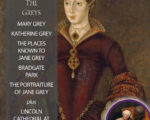
  • January 2020 – Tudor Life – The Greys

    Here’s the full version of your monthly magazine: January’s Tudor Life magazine is 76 pages long and is themed with information about the Grey family.

    [Read More...]
  • 31 December – The bishop who angered Elizabeth I

    On this day in Tudor history, 31st December 1559, Owen Oglethorpe, Bishop of Carlisle, died while under house arrest in London. He was buried at St Dunstan-in-the-West on 6th January 1560.

    Oglethorpe is known for officiating at Queen Elizabeth I’s coronation in 1559, but also for infuriating the queen at Christmas 1558 by disobeying her instructions at Mass.

    What did Oglethorpe do?

    Find out about Owen Oglethorpe’s life and career, and how he upset the queen and ended his days under house arrest, in today’s talk.

    [Read More...]
  • 30 December – Roger Ascham, Elizabeth I’s tutor

    On this day in Tudor history, 30th December 1568, in the reign of Queen Elizabeth I, Roger Ascham, scholar and royal tutor, died. He was laid to rest in the St Stephen’s chapel of St Sepulchre without Newgate, London.

    Ascham served as tutor to Princess Elizabeth, the future Elizabeth I, and is also responsible for the idea that Lady Jane Grey had abusive parents.

    Find out more about Roger Ascham, his life and career, in today’s talk.

    [Read More...]
  • 25 December – Christmas Day and Lettice Knollys

    Merry Christmas! A very Happy Christmas to you and yours!

    In today’s talk, I explain how Tudor people would have celebrated Christmas, before moving on to today’s “on this day” event, the death of Lettice Blount (also known as Lettice Devereux, Lettice Dudley and Lettice Knollys). Not only did she serve Queen Elizabeth I as a gentlewoman of the privy chamber, she was also the queen’s first cousin once removed, and was nicknamed the “she-wolf” by her royal mistress. Find out more about Lettice Knollys in today’s talk.

    [Read More...]
  • 21 December – Jasper Tudor

    On this day in Tudor history, 21st December 1495, Jasper Tudor, 1st Duke of Bedford and 1st Earl of Pembroke, died at his manor at Thornbury at the age of around sixty-four.

    Jasper Tudor was the uncle of Henry Tudor, a man who would become King Henry VII, and served as a mentor and advisor to him.

    Find out more about this interesting Tudor man in today’s talk.

    [Read More...]
  • December 19 – A clash with a mob causes the death of an abbess

    On this day in Tudor history, 19th December 1576, Katherine Palmer, Abbess of Syon, died in Mechelen in Belgium. Her death came just over a month after she had confronted a mob that had broken into her monastery.

    Find out more about Abbess Katherine Palmer, how her order had ended up settling in Mechelen, and how her order is the only surviving pre-Reformation religious community in England today, in this talk.

    [Read More...]
  • 15 December – Cardinal Pole is laid to rest

    On this day in Tudor history, 15th December 1558, Cardinal Reginald Pole, Mary I’s Archbishop of Canterbury and her chief advisor, was buried at Canterbury Cathedral. Coincidentally, Cardinal Pole had died the same day as his queen, on 17th November 1558.

    Find out a bit more about Cardinal Pole, his background, death and burial, in today’s talk.

    [Read More...]
  • 14 December – Mary I is buried

    On this day in Tudor history, 14th December 1558, Queen Mary I was buried at Westminster Abbey.

    Mary had died on 17th November 1558 and had left instructions for Catherine of Aragon’s remains to be moved from Peterborough and for them to be reinterred with Mary’s remains so that mother and daughter could be together.

    Did this happen?

    Find out all about Mary I’s burial, and who did join her in death, in today’s talk.

    [Read More...]
  • 13 December – Sir Francis Drake sets off

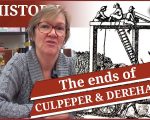
  • 10 December – The ends of Thomas Culpeper and Francis Dereham

    On this day in Tudor history, 10th December 1541, Thomas Culpeper, a gentleman of the privy chamber, and Francis Dereham, a member of the queen’s household, were executed at Tyburn.

    They had been found guilty of high treason for intending to do ill with Queen Catherine Howard, i..e intending to commit adultery with her, and had been sentenced to be hanged, drawn and quartered. Dereham suffered the full traitors’ death, while Culpeper was beheaded.

    Find out more about what happened from a primary source account in today’s talk.

    [Read More...]
  • 9 December -The King is a beast and worse than a beast!

    On this day in Tudor history, 9th December 1538, Sir Edward Neville, courtier, Gentleman of the Privy Chamber and son of George Neville, 2nd Baron Bergavenny, was beheaded on Tower Hill.

    He had been condemned to death for treason, accused of conspiring against the king in the Exeter Conspiracy of 1538, along with members of the Pole family. He was also accused of saying “The King is a beast and worse than a beast”, which is not a wise thing to be overheard saying in Tudor England.

    Find out more about Neville’s life and downfall in today’s talk.

    [Read More...]
  • Tudor History Challenge 6

    Tim here and I’ve taken over this challenge to ask Claire some Tudor history questions for a change. The questions were provided by the following historians: Sarah-Beth Watkins, Rioghnach O’Geraghty, Toni Mount & Catherine Brooks. Claire did well – but how well will you do???

    Note that the answers are below the questions, so no cheating! Let us know how you do in the comments below. Good luck!

    [Read More...]
  • 5 December – Anne Cecil and her unhappy marriage

    On this day in Tudor history, 5th December 1556, Anne de Vere (née Cecil) was born, She was the daughter of William Cecil, 1st Baron Burghley, and his second wife, Mildred Cooke.

    Anne only lived until she was 31 years old, but in her short life she managed to impress scholars, have five children, and have a rather eventful and unhappy marriage with Edward de Vere, Earl of Oxford, who didn’t treat her at all well and even refused to recognise their first daughter as his own, at one point. If only she had married Philip Sidney instead!

    Find out more about the life of William Cecil’s daughter, Anne de Vere, Countess of Oxford, in today’s talk.

    [Read More...]
  • 4 December – The beginning of the end for Thomas Cranmer

    On this day in Tudor history, 4th December 1555, in Rome, papal sentence was passed on Thomas Cranmer, resulting in Cranmer being deprived of his archbishopric. Permission was also granted for his fate to be decided by the secular authorities.

    In today’s “on this day in history”, I explain what led Cranmer to this day and also what happened next. Thomas Cranmer went on to recant his Protestant faith on several occasions, but was still executed by being burned at the stake. Why?

    Find out more in today’s talk.

    [Read More...]
  • 28 November – The sad end of claimant Edward Plantagenet, Earl of Warwick

    On this day in Tudor history, 28th November 1499, Edward Plantagenet, styled Earl of Warwick, was executed by beheading on Tower Hill.

    Warwick was a potential claimant to the throne being the son of George, Duke of Clarence, brother of Kings Edward IV and Richard III, but it was his involvement in a plot by pretender Perkin Warbeck that was his final undoing.

    Find out more about his short and sad life, much of it spent in prison, in today’s talk:

    [Read More...]
  • 27 November – William Shakespeare gets married

    On this day in Tudor history, 27th November 1582, eighteen year-old William Shakespeare, the famous playwright and a man known as the Bard, married twenty-six year-old Anne (also known as Agnes) Hathaway, at Temple Grafton, near Stratford-upon-Avon, in Warwickshire.

    Anne Hathaway was pregnant at the time of their marriage and went on to give birth to a daughter, Susannah, the following May. The couple went on to have twins, Hamnet and Judith, in 1585.

    Find out more about William Shakespeare and Anne Hathaway, and their marriage, and also what happened to them, in today’s talk:

    [Read More...]
  • 25 November – The coronation of Elizabeth of York

    On this day in Tudor history, 25th November 1487, the Feast of St Catherine, Elizabeth of York, queen consort of Henry VII and mother of one-year-old Arthur Tudor, was crowned queen at Westminster Abbey.

    In today’s talk, I share details of Elizabeth of York’s coronation, including Elizabeth’s apparel, and who attended, plus a list of some of the interesting dishes served at Elizabeth of York’s coronation banquet which included swan and seal!

    [Read More...]
  • November 21 – Frances Grey, mother of Lady Jane Grey

    On this day in Tudor history, 21st November 1559, Frances Grey (maiden name Brandon, other married name Stokes), Duchess of Suffolk and the mother of Queen Jane, or Lady Jane Grey, died at Richmond. She was laid to rest in St Edmund’s Chapel, Westminster Abbey, on the orders of her cousin, Queen Elizabeth I, and her second husband, Adrian Stokes, erected a tomb in her memory.

    Frances, daughter of Charles Brandon, Duke of Suffolk, and Mary Tudor, Queen of France, has gone down in history as rather a harsh and abusive mother, but let me tell you a bit more about the woman who was once named in Edward VI’s “devise for the succession”.

    [Read More...]
  • 20 November – Sir Christopher Hatton Elizabeth I’s mouton and lids

    On this day in Tudor history, 20th November 1591, Sir Christopher Hatton, Elizabeth I’s Lord Chancellor and favourite, died aged fifty-one. He was such a favourite of Queen Elizabeth I that he had a dazzling career and was constantly at her side.

    Find out more about Sir Christopher Hatton, his career and accomplishments, his patronage of learned men and explorers, and his special relationship with Elizabeth I, in today’s talk.

    [Read More...]
  • 13 November – Lady Jane Grey is tried for treason

    On this day in Tudor history, 13th November 1553, in the reign of Queen Mary I, the former queen Jane, or Lady Jane Grey, was tried for treason at Guildhall in London. She wasn’t the only one tried, her husband Lord Guildford Dudley, his brothers Ambrose and Henry Dudley, and Thomas Cranmer, Archbishop of Canterbury, were also tried for treason for their parts in putting Jane on the throne.

    In today’s talk, I explain what happened at their trial and also what happened to these Tudor people after they were found guilty and condemned to death.

    [Read More...]
  • 1 November – The end of Edmund Tudor

    On this day in Tudor history, 1 November 1456, Edmund Tudor, 1st Earl of Richmond, died from the plague at Carmarthen Castle in Wales.

    Edmund Tudor was, of course, husband of Lady Margaret Beaufort and father of King Henry VII, the first of the Tudor monarchs, but who was he and how did he end up dying of the plague at Carmarthen? Find out more about Edmund in today’s talk.

    [Read More...]
  • 31 October – Martin Luther and his 95 Theses

    On this day in Tudor history, 31st October 1517, Reformer, priest and professor of theology Martin Luther is said to have posted his 95 Theses on the door of the Castle Church in Wittenberg, although all we know for definite is that he posted them to Bishop of Brandenburg and the Archbishop of Mainz.

    The proper title of his work was the “Disputation of Martin Luther on the Power and Efficacy of Indulgences”, and he was protesting against the sale of indulgences by the papacy, as well as other points. His actions on this day had a huge impact on Europe and were the catalyst of the European Reformation.

    Find out more about Martin Luther’s 95 Theses and what happened next in today’s video.

    [Read More...]
  • 29 October – “Strike, man, strike” – The end of Sir Walter Ralegh

    On this day in history, 29th October 1618, in the reign of King James I, Elizabethan courtier, explorer, author and soldier, Sir Walter Ralegh (Raleigh, Rawley, Ralagh, Rawleigh) was executed in the Old Palace Yard at Westminster Palace.

    Ralegh had led an eventful life. He’d been a favourite of Elizabeth I – except when he secretly married her lady, Bess Throckmorton – but had been imprisoned in the Tower of London on several occasions, he’d been accused of atheism at one point, had sailed to America and tried to establish a colony, he was knighted for his service in Ireland, and he was a poet too!

    Find out all about Sir Walter Ralegh’s colourful life in today’s talk.

    [Read More...]
  • 26 October – Sir Thomas More is sworn in as Lord Chancellor

    On this day in Tudor history, 26th October 1529, Sir Thomas More took his oath as Lord Chancellor, replacing Cardinal Thomas Wolsey who was charged with praemunire.

    It was an important day for Sir Thomas More, who was described as “an upright and learned man”, but, little did he know that his loyal service to the king would lead to his undoing.

    Find out all about this day in 1529 in today’s talk.

    [Read More...]