
The Tudor Society

YOUR SEARCH UNCOVERED 2372 RESULTS

  • 18 April – Eustace Chapuys bumps into Anne Boleyn

    Ok, so they didn’t physically bump into each other, but on this day in Tudor history, 18th April 1536, just a month and a day before Anne Boleyn’s execution, imperial ambassador Eustace Chapuys was manoeuvred unto a position where he was forced to pay reverence to Queen Anne Boleyn, the woman he referred to as “the concubine”. By paying her reverence, he was acknowledging her as queen, something that he had managed to avoid doing until now.

    What happened and how did Chapuys get into this awkward position?

    Find out in today’s talk.

    [Read More...]

  • Tudor History Challenge 7

    It’s Friday and I think we’re due some fun, aren’t we? Let’s have it at Tim’s expense, he doesn’t mind.

    Here’s our latest Tudor History Challenge! Do play a long. Give yourself a point for each correct answer and there’s a bonus point if you get both parts of question 7 correct. The answers are at the bottom of this post so don’t scroll down and cheat!

    [Read More...]
  • 12 April – The Earl of Oxford, Elizabeth I’s love child?

    On this day in Tudor history, 12th April 1550, in the reign of King Edward VI, courtier and poet, Edward de Vere, 17th Earl of Oxford, was born.

    In today’s talk, I introduce Edward de Vere, Earl of Oxford, and talk about his not-so-nice personality, the Oxfordian theory regarding the works of William Shakespeare, and the idea that Oxford was actually Elizabeth I’s son by Thomas Seymour.

    [Read More...]
  • 10 April – The Gregorian Calendar versus the Julian Calendar

    On this day in Tudor history, 10th April 1585, Pope Gregory XIII died from a fever. He was succeeded by Pope Sixtus V.

    Pope Gregory is known for his reform of the calendar. He introduced what is now called the Gregorian Calendar, or Western or Christian Calendar, replacing the Julian Calendar, which had been used since 45 BC.

    But why was this reform needed and how was it done?

    Find out more about it, and how England didn’t use it until the 18th century, in today’s talk.

    [Read More...]
  • 9 April – Catherine Willoughby’s second husband

    On this day in Tudor history, 9th April 1582, Richard Bertie, member of Parliament, evangelical, and second husband of Catherine Willoughby (other married name Brandon), Duchess of Suffolk, died at Bourne in Lincolnshire. He was laid to rest in St James’s Church, Spilsby, with Catherine, who had died in 1580.

    Bertie was Catherine’s gentleman usher and the two became close following the death of her sons from sweating sickness.

    Find out more about the man Catherine Willoughby chose to marry for love in today’s talk from Claire Ridgway.

    [Read More...]
  • 6 April – Edward Seymour, the serial secret husband

    On this day in history, 6th April 1621, in the Stuart period, Edward Seymour, 1st Earl of Hertford, died at Netley in Hampshire. He was aged around 81 at his death.

    Now, Hertford is known for his secret marriage to Lady Katherine Grey, sister of Lady Jane Grey, and their conjugal visits in the Tower of London, but Hertford had a thing for secret marriage and married twice more, all in secret. And then his son and grandson also had secret marriages!

    Find out more in today’s talk.

    [Read More...]
  • 2 April – The death of Prince Arthur

    On this day in Tudor history, 2nd April 1502, Arthur, Prince of Wales, son and heir of King Henry VII and Elizabeth of York, died at Ludlow Castle. He was just fifteen years old, and had only been married to the Spanish princess Catherine of Aragon for four and a half months.

    In today’s talk, I discuss his death and the theories regarding Arthur’s cause of death, which include sweating sickness, consumption, testicular cancer and Atypical Cystic Fibrosis.

    [Read More...]
  • 1 April – William Harvey, his experiments and blood circulation

    On this day in Tudor history, 1st April 1578, English physician William Harvey, was born in Folkestone, Kent. Harvey has gone down in history as being the man who discovered the circulation of blood, and he was also physician extraordinary to King James I and King Charles I.

    How did Harvey work out that the heart pumped the blood around the body and how was his challenge of Galen’s work received?

    Find out more about William Harvey’s work, and also his role in the pardoning of women accused of witchcraft, in today’s talk.

    [Read More...]
  • 31 March – John Donne, the bell tolls for thee

    On this day in history, 31st March 1631, the Tudor and Stuart metaphysical poet, satirist, lawyer and clergyman John Donne died.

    Donne had an amazing career, going on voyages, serving as a royal chaplain and diplomat, and writing sermons, songs, satires and poetry, including an erotic poem, “The Flea”.

    Find out more about John Donne and hear some of his work in today’s talk.

    [Read More...]
  • 27 March – Arrangements are made for Prince Arthur to marry Catherine of Aragon

    On this day in Tudor history, 27th March 1489, the Treaty of Medina del Campo was signed between England and Spain. One part of it was the arrangement of the marriage between Arthur, Prince of Wales, and Catherine (or Catalina) of Aragon. It was signed by Spain on this day and ratified in 1490 by Henry VII.

    Find out more about this treaty and the betrothal and marriages (yes, plural!) of Arthur Tudor, Prince of Wales, and Catherine of Aragon in today’s talk.

    [Read More...]
  • 26 March – Robert Carey and his eventful ride to King James

    On this day in history, late on 26th March 1603, two days after the death of Queen Elizabeth I, Sir Robert Carey arrived at Holyrood in Edinburgh, Scotland, to inform King James VI that Queen Elizabeth I was dead and that James was now king.

    It took Carey just two days to get from London to Scotland, and he had an accident on the way, but it was all worth it. Find out about his journey and what happened in today’s “on this day in Tudor history” talk.

    [Read More...]
  • 24 March – Robert Rich and Penelope Devereux, an unhappy marriage

    On this day in history, 24th March1619, Robert Rich, 1st Earl of Warwick, Tudor nobleman and politician, died at his London home, Warwick House in Holborn. He was laid to rest at Felsted Church in Essex.

    Rich was an incredibly wealthy man and a good catch for Penelope Devereux, sister of the Earl of Essex, but their marriage was unhappy and she had an affair. Find out more about Rich and his marriage in today’s talk.

    [Read More...]
  • 22 March – William Bourne, his life and his submarine

    On this day in Tudor history, 22nd March 1582, gunner, mathematician and writer, William Bourne was buried at Gravesend in Kent.

    This popular author, who was able to explain technical matters for the common man in his books, was also a gunner, mathematician and inventor, yet he received no university education. He also drew plans for a submarine, although he never built it.

    Find out more about the fascinating William Bourne and his works in today’s talk.

    [Read More...]
  • 21 March – Elizabeth I takes to her bed

    On this day in Tudor history, 21st March 1603, a dying Queen Elizabeth I finally took to her bed.

    Elizabeth I had been queen since November 1558, but now she was dying. She had deep-rooted melancholy, couldn’t sleep and was refusing to eat. She spent her days lying on cushions in her withdrawing chamber. But on 21st March, she was finally persuaded to go to bed.

    Find out more about these last days in this talk.

    [Read More...]
  • Tudor history from home

    Here in Spain, we’ve been on lockdown since Monday due to the Coronavirus pandemic. Now, I could use this as inspiration to talk about epidemics, the plague, influenza and sweating sickness in history, but I’m not. I’ll give you links to my talks on those, but I want to stop thinking about the nasty stuff.

    So, with so many people around the world in lockdown or self-isolating, I thought I’d give you some ideas for keeping occupied and getting your Tudor history fix.

    [Read More...]
  • 19 March – Elizabeth Seymour, Lady Cromwell

    On this day in Tudor history, 19th March 1568, Elizabeth Seymour, Lady Cromwell, died. She was around fifty years old at her death.

    Elizabeth was the sister of a queen, and a lord protector, and two of her brothers were executed as traitors, but what else do we know about Elizabeth Seymour and how is she linked to the Cromwell family and a portrait once thought to be of Queen Catherine Howard?

    Find out more in today’s talk.

    [Read More...]
  • 18 March – Elizabeth I is arrested

  • 17 March – Alexander Alesius and his terrifying vision of Anne Boleyn

    On this day in Tudor history, 17th March 1565, Scottish theologian and Reformer Alexander Alesius (also known as Ales, Aless), died in either Leipzig or Edinburgh.

    Alesius wrote a huge number of theological works, was friends with reformers Philip Melancthon and Thomas Cranmer, Archbishop of Canterbury, but had a row with the Bishop of London at one point.

    Let me tell you a bit more about Alexander Alesius and also a terrifying vision or nightmare he experience in the early hours of 19th May 1536, the day of Queen Anne Boleyn’s execution.

    [Read More...]
  • 16 March – Richard Burbage, actor and friend of Shakespeare

    On this day in history, 16th March 1619, actor Richard Burbage was buried at St Leonard’s Church, Shoreditch.

    Burbage was a famous actor in the reigns of Queen Elizabeth I and King James I, peforming for royalty and even being in King James’ company of players. Burbage was also a good friend of William Shakespeare, and the two men were involved in the building of the famous Globe Theatre.

    Find out more about Richard Burbage, his life and career, in today’s talk.

    [Read More...]
  • 10 March – John de Vere, 13th Earl of Oxford and his role in the Wars of the Roses

    On this day in Tudor history, 10th March 1513, magnate John de Vere, 13th Earl of Oxford, died at his home at Castle Hedingham in Essex.

    Oxford was a key figure in the Wars of the Roses and played an important role in the Battle of Bosworth Field. As I talk about his life and career, you’ll see just how complicated this civil war was.

    [Read More...]
  • 9th March – Frances Radcliffe, Countess of Sussex, and her most rare gifts both of mind and body

    On this day in Tudor history, 9th March 1589, Lady Frances Radcliffe, Countess of Sussex, and wife of Sir Thomas Radcliffe, Lord Fitzwalter and 3rd Earl of Sussex, died at her home in Bermondsey.

    Frances is known for being the benefactor of Cambridge University’s Sidney Sussex College, but there is much more to her than that. Her enemies even turned her husband and Queen Elizabeth I against her at one point!

    Find out all about Frances Radcliffe (née Sidney) in today’s talk.

    [Read More...]
  • 7 March – The Great Comet

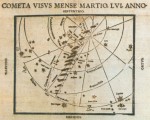
    This day in Tudor history, 7th March 1556, was one of the days on which the Great Comet, or the Comet of Charles V, was seen and recorded by Paul Fabricius, mathematician and physician at the court of Charles V, Holy Roman Emperor.

    Find out all about the Great Comet of 1556, what it looked like and how Emperor Charles V saw it as an ominous portent in today’s talk.

    [Read More...]

  • 4 March – William Bullokar and his 40-letter alphabet

    On this day in history, 4th March 1609, Tudor spelling reformer and grammarian William Bullokar died at Chichester in West Sussex.

    William Bullokar is known for writing the first grammar book of English, the “Pamphlet for Grammar”, and for his work reforming the alphabet to improve literacy. Find out more about him and what he did in today’s talk.

    [Read More...]
  • 2 March – Sir Thomas Bodley and the Bodleian Library

    On this day in Tudor history, 2nd March 1545, scholar, diplomat and founder of the Bodleian Library, Sir Thomas Bodley, was born in Exeter.

    Sir Thomas Bodley served as a diplomat in the reign of Queen Elizabeth I, but he is most known for his re-founding of Oxford University Library and the Bodleian Library, and all the work he did on it. Find out all about him and his library in today’s talk.

    [Read More...]
  • 1 March – George Wishart, a man with close friends and bitter enemies

    On this day in Tudor history, 1st March 1546, Scottish evangelical preacher and martyr George Wishart was hanged and burned at St Andrews, Scotland.

    Wishart had been charged with 18 counts of heresy and although he answered each one he was condemned to death.

    Find out more about this Scottish preacher, what he was accused of and his sad end in today’s talk.

    [Read More...]
  • 26 February – The sad ends of loyal men

    On this day in Tudor history, 26th February 1552, Sir Thomas Arundell, Sir Michael Stanhope, Sir Miles Partridge and Sir Ralph Fane (or Vane) were executed. The men had been condemned as traitors after being accused of conspiring with Edward Seymour, Duke of Somerset and former Lord Protector, against John Dudley, Duke of Northumberland, the new man in control of King Edward VI’s government.

    Find out all about these men and how these loyal royal servants came to these sticky ends in today’s talk.

    [Read More...]

  • March 2020 – Tudor Life – Music and Drama

  • 24 February – Katherine Howard, Elizabeth I’s good friend

    On this day in Tudor history, 24th February 1603, Katherine Howard (née Carey), Countess of Nottingham, died at Arundel House.

    Katherine was a close friend of Queen Elizabeth I and it is thought that grief over her friend’s death had a major impact on the queen’s own health, for she died just a month later.

    Find out who Katherine was, how she rose to be the queen’s good friend, and also hear about a myth associated with her in today’s talk.

    [Read More...]
  • 23 February – Job Throckmorton, a colourful and lucky character

    On this day in Tudor history, 23rd February 1601, religious pamphleteer and Member of Parliament, Job Throckmorton, was buried at Haseley in Warwickshire.

    Job was known for his alleged involvement in the “Marprelate Controversy”, a pamphlet war, and also for his colourful Parliamentary speeches, which nearly got him into trouble. He was lucky to escape imprisonment and worse!

    Find out more about Job Throckmorton in today’s talk.

    [Read More...]

  • 21 February – Ambrose Dudley, Earl of Warwick

    On this day in Tudor history, 21st February 1590, Ambrose Dudley, 3rd Earl of Warwick, Master of the Ordnance and Privy Councillor, died at Bedford House on the Strand.

    Ambrose had been a loyal royal servant and was a member of that famous Tudor family, the Dudleys, with his father being John Dudley, Duke of Northumberland, and his brother being Robert Dudley, Earl of Leicester.

    Find out more about Ambrose Dudley’s life and career in today’s talk.

    [Read More...]