The Tudor Society

YOUR SEARCH UNCOVERED 2372 RESULTS

  • This week in history 19 – 25 March

    19th March:

    1563 – Deaths of Arthur Brooke, translator and poet, and Sir Thomas Finch, knight-marshal, in the shipwreck of the Greyhound, off the coast of Rye in East Sussex.
    1563 – Peace (Edict) of Amboise signed at the Château of Amboise by Catherine de’ Medici, as regent for her son, Charles IX. Catherine initiated this truce after the assassination of Francis, Duke of Guise, at the Siege of Orléans. The Edict ended the first phase of the French Wars of Religion and guaranteed the Huguenots religious privileges and freedoms. Peace did not last long, however.
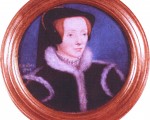
    1568 – Death of Elizabeth Seymour, Lady Cromwell. Click here to read more.
    1577 – Death of Edmund Harman, former barber of Henry VIII, at Burford in Oxfordshire. He had retired there after Henry VIII’s death. Harman was buried at Taynton Church.
    1590 – Baptism of William Bradford, separatist and founder of the Plymouth Colony, Massachusetts, at Austerfield in Yorkshire. Bradford was Governor of the colony for over thirty years.

    [Read More...]
  • Katherine of York, Countess of Devon

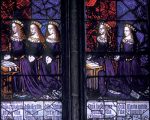
    The daughter of King Edward IV, Stained glass window of the northwest transept of Canterbury Cathedral,

    King Edward IV married the Lancastrian widow Elizabeth Wydeville [Woodville] in the spring or summer of 1464. In nineteen years of marriage, Elizabeth gave birth to ten children, seven of whom were daughters. The eldest daughter Elizabeth, born in 1466, remains the most well known in popular and scholarly circles and Edward IV’s other four daughters are significantly neglected both in factual and fictional accounts of their lives. The emphasis on Elizabeth and the neglect of her sisters are perhaps understandable, in that Elizabeth married Henry Tudor in 1485 and gave birth to Henry VIII in 1491. A queen of England undoubtedly attracts more attention than a countess or viscountess. Yet the lives of Elizabeth of York’s younger sisters are interesting in shedding light on the marriage policies of the houses of York and Tudor in an era of intermittent dynastic and political conflict. They also illuminate the contrasting fortunes of members of a side-lined royal dynasty.

    [Read More...]
  • Eleanor Brandon, Countess of Cumberland

    In my article on Margaret Clifford, Countess of Derby, I noted that Margaret has been neglected by historians and novelists alike. Both Margaret and her mother Eleanor Brandon, Countess of Cumberland, have been marginalised in both fiction and non-fiction, especially when compared with other royal women of the period such as Lady Jane Grey and her sisters, Lady Margaret Douglas and, of course, Henry VIII’s six wives. The academic and popular fascination with the Grey family is explicable in view of their dynastic importance during the reigns of Edward VI and Elizabeth I; during Edward’s reign, Jane Grey was named heiress to the throne and would have reigned as queen of England had it not been for the extraordinary success of Mary Tudor’s coup in the summer of 1553. Jane’s sister Katherine was widely regarded as a viable successor to Elizabeth I, which enraged and unnerved the Tudor queen. After clandestinely marrying Edward Seymour, Katherine was incarcerated in the Tower of London, her marriage declared invalid and her children deemed to be illegitimate. More recently, Lady Margaret Douglas has attracted the interest of historians and novelists; as the mother-in-law of Mary Queen of Scots and the grandmother of James I of Scotland, this interest is perhaps not surprising.

    [Read More...]
  • Sir William Compton (c.1482-1528)

    Sir William Compton was an ambitious royal servant and a close friend of the king, yet he has been rather neglected and there is little information available on him.

    William Compton was born in around 1482 and was the only son of Edward Compton of Compton in Warwickshire and his wife, Joan, daughter of Walter Aylworth. He was around 11 years of age when he became the ward of Henry VII following his father’s death in 1493. Henry VII made him a page of Henry, Duke of York, the future Henry VIII. Compton was around nine years older than the king’s son, but they became close friends, and when Henry VIII came to the throne in 1509, the young king kept Compton close by appointing him a gentleman of the king’s privy chamber. Compton was made the new king’s groom of the stool. This position made Compton one of Henry VIII’s most intimate and trusted servants, and meant that he controlled access to the king.

    [Read More...]
  • A bench belonging to Catherine of Aragon? – by John Roberts

    Discovering new artefacts from Henry VIII’s era, and so far away from England, sounds highly unlikely, but I am an ex-Brit living on the west coast of Canada, and I think I may have found the ‘holy grail’ of pre-Elizabethan furniture.

    I am a retiree, and in December 2016 I was looking for historical items for my daughter, Melanie, who had recently purchased a two-piece upright cupboard with 1703 among the carvings.

    My latest find, a highly ornate wood-panelled bench, or settle (we’ll settle on the bench word from now on!), was at a weekly auction in Victoria, British Columbia, on Vancouver Island. It was described as 19th century, and I was the winning bidder at a hammer price of $725 Canadian (415 GBP).

    [Read More...]
  • Charles Brandon, Duke of Suffolk (c.1484-1545)

    Charles Brandon was one of King Henry VIII’s most trusted advisors and friends. He married the king’s sister, even when he had been trusted not too, and eventually married a lady thirty-five years younger than him.

    Being someone who was so close to Henry VIII, what was Brandon’s real purpose? What did he achieve in his lifetime? And, how did he rise so high?

    Charles Brandon was born around 1484 and was one of two sons born to Sir William Brandon and Elizabeth Bruyn of South Ockendon. His father was Henry VII’s standard-bearer at the Battle of Bosworth in 1485, which is where he is said to have been killed by Richard III himself. King Henry VII saw how loyal William had been to him, so, therefore, chose to repay this debt by having his son, Charles, brought up at his court. Charles was just two years older than Henry VII’s eldest child, Prince Arthur, but when Arthur married the Spanish princess, Catherine of Aragon, in 1502, Charles did not join them at Ludlow Castle. Instead, he stayed in London and got to know Arthur’s younger brother, Henry, Duke of York.

    [Read More...]
  • 1 February – A busy day in Tudor history!

    1 February seems to have been a rather busy day in the Tudor period and here are three events, linked to further reading about them…

    1514 – Henry VIII granted the dukedom of Suffolk to Charles Brandon, his future brother-in-law, and also made Thomas Howard, 2nd Duke of Norfolk, and Howard’s son, also called Thomas, the Earl of Surrey. Charles Somerset was also made Earl of Worcester.

    [Read More...]
  • Expert Talk – Natalie Grueninger – The Early Life of Anne Boleyn

    This month’s expert speaker is Natalie Grueninger, author of “Discovering Tudor London” and “In the Footsteps of the Six Wives of Henry VIII”. This talk is all about Anne Boleyn, her lineage, and the ever-fascinating question of when Anne was actually born.

    [Read More...]
  • This week in history 29 January – 4 February

    29th January:

    1536 – Catherine of Aragon was laid to rest in Peterborough Abbey, now Peterborough Cathedral. She had requested that she should be buried in a Chapel of her beloved order, The Observant Friars, but Henry’s dissolution of the monasteries meant that there were none left. She was buried as Dowager Princess of Wales, not queen.
    1536 – Queen Anne Boleyn suffered a miscarriage.
    1547 – Edward Seymour and Anthony Denny informed the young Edward VI that his father, Henry VIII, had died the day before.
    1559 – Death of Sir Thomas Pope, founder of Trinity College, Oxford, member of Parliament and Privy Councillor in Mary I’s reign, at Clerkenwell. He was buried at St Stephen’s Church, Walbrook. In 1556, Pope acted as a guardian for Princess Elizabeth at Hatfield House, and handled the correspondence when Eric of Sweden was interested in marrying Elizabeth.
    1577 – Death of Richard Harpur, Law Reporter and Judge of the Common Pleas. He was buried at Swarkestone Church in Derbyshire.
    1613 – Death of Sir Thomas Bodley, scholar, diplomat and founder of Oxford’s Bodleian Library at his house next to St Bartholomew’s Hospital in London. He was buried in Merton College chapel on 29th March.

    [Read More...]
  • Anne of Cleves Part 3: 1540 – 1557

    In today’s Claire Chats, I finish our series on Anne of Cleves by looking at her life following the annulment of her marriage to Henry VIII until her death in July 1557.

    [Read More...]
  • Margaret Clifford, Countess of Derby

    A recent BBC Four documentary examined the tragic life of England’s Forgotten Queen, Lady Jane Grey, who was proclaimed queen in July 1553 and beheaded seven months later for unlawfully usurping the throne from Mary I. The circumstances in which Jane succeeded her cousin Edward VI derived in part from Henry VIII’s Acts of Succession (1536 and 1544) and his last will and testament, which was finalised a month before his death. After stipulating that his crown should pass to Edward, Henry intended that his daughters Mary and Elizabeth would successively reign in the event of Edward dying childless. Henry also instructed that the descendants of his younger sister Mary should inherit the throne if all three of his children died without heirs: thus Mary’s daughters Frances and Eleanor and their offspring. Lady Jane Grey was, of course, the eldest daughter of Frances. Her two sisters Katherine and Mary would represent a rival succession in Elizabeth I’s reign, and the Tudor queen imprisoned both women on account of what she perceived as their dynastic pretensions. As a result of his Acts and his will, Henry made it possible for the monarch to appoint their successor based on personal preferences. Edward took this one step further in 1553 by disregarding the claims of his half-sisters Mary and Elizabeth, and instead nominating the Grey line.

    [Read More...]
  • Edward Stafford, 3rd Duke of Buckingham (1478-1521)

    Portrait of Edward Stafford, 3rd Duke of Buckingham, aged 42

    Edward Stafford, 3rd Duke of Buckingham, was one of Henry VII’s and Henry VIII’s main associates in court. He attended the coronation of both kings and played an important part in each of their reigns. But how he ended up in that position of favour is a fascinating story, as is his eventual demise.

    Edward Stafford was born on 3 February 1478 and his parents were Henry Stafford, 2nd Duke of Buckingham, and Catherine Woodville. Catherine was the sister of Elizabeth Woodville, wife of King Edward IV. Following his father’s execution in Richard III’s reign, Edward’s mother went on to marry Jasper Tudor, Duke of Bedford and the uncle of King Henry VII.

    Due to his father’s rebellion against Richard III in 1483, young Edward was hidden and moved around to different properties in and around Hertfordshire to keep him safe and out of harm’s way. His father’s rebellion against the king led to him losing his honours and being executed in November 1483. In 1485, Edward was honoured by the new king, Henry VII, by being made a Knight of the Order of the Bath, and he was made a ward of Margaret Beaufort, Countess of Richmond and the king’s mother. Unfortunately, this meant that Margaret was also granted all of his lands.

    [Read More...]
  • This week in history 22 – 28 January

    22 January:

    1528 – Henry VIII and Francis I declared war on Charles V, Holy Roman Emperor.
    1552 – Former Lord Protector of England, Edward Seymour, Duke of Somerset, was executed by beheading on Tower Hill in London. He was laid to rest in the Chapel of St Peter ad Vincula at the Tower of London, and records show that he was buried next to Anne Boleyn in the chancel area. Click here to read more.
    1554 – Thomas Wyatt the Younger met with fellow conspirators at his home of Allington Castle in Kent to make final plans for their uprising (Wyatt’s Rebellion) against Mary I and her decision to marry Philip of Spain – click here to read more.
    1561 – Birth of Francis Bacon, Viscount St Alban, the Elizabethan Lord Chancellor, politician, philosopher, author and scientist, at York House in the Strand, London. Bacon is known as “the Father of the Scientific method” and developed an investigative method, the Baconian method, which he put forward in his book Novum Organum in 1620. Some people (Baconians) believe that Francis Bacon was the true author of William Shakespeare’s plays.
    1575 – Death of James Hamilton, 2nd Earl of Arran and Duke of Châtelherault, at Kinneil. Arran was appointed Regent for the infant Mary, Queen of Scots after James V’s death in 1542, but surrendered the regency to Mary’s mother, Mary of Guise in 1554.
    1613 – Death of Sir David Williams, Serjeant-at-Law in Elizabeth I’s reign and Puisne Justice of the King’s Bench in James I’s reign, from a fever at Kingston House, Kingston Bagpuize, Berkshire. His body was buried at St John’s Chapel, Brecon, and his entrails were buried at Kingston.

    [Read More...]
  • Quiz: The Events of 1540-42 in Tudor England

    The years 1540 to 1542 were rather busy for King Henry VIII, but how much do you know about the events of those years? Test yourself with this fun quiz. Good luck!

    [Read More...]
  • Elizabeth Seymour, Baroness Cromwell

    Elizabeth Seymour was a younger daughter of Sir John Seymour and his wife, Margery Wentworth. Her date of birth is unknown but is estimated to have been between 1511 and 1518. She married her first husband, Sir Anthony Ughtred, in January 1531; since sixteenth-century women could marry, at the earliest, at the age of twelve, realistically Elizabeth could have been born no later than January 1519. Such an early marriage, however, would have been extraordinary, since the Seymours were a respected gentry family, but they were not nobility. Historians have noted that Tudor noble- and gentlewomen tended to marry by the age of twenty. It is possible that Elizabeth served alongside her sister Jane in the household of Anne Boleyn, Henry VIII’s second wife, who became queen in 1533. Usually, the queen’s maidens were aged in their mid-to-late teens, although Jane herself would have unusually been around twenty-four years old when appointed to Anne’s household. For Elizabeth to have married Ughtred in 1531 and to have served the queen two or three years later would indicate that she was probably born no later than c. 1515.

    [Read More...]
  • Elizabeth I’s coronation – A primary source account

    I have written about Elizabeth I’s coronation, which took place o 15th January 1559, in previous years, but I just wanted to share with you this primary source account of both the coronation and the banquet following written by Il Schifanoya, the Mantuan ambassador, to the Castellan of Mantua:

    “On Sunday, 15th January, mass was sung for the coronation in Westminster Abbey, which was decorated with the handsomest and most precious tapestries that were ever seen, they having been purchased by Henry VIII., representing on one side the whole of Genesis, and on the other the Acts of the Apostles, from a design by Raffael d’Urbino; and the chambers were hung with the history of Cæsar and Pompey. At one of the sides the buffet was prepared with its raised steps, on which were seen 140 gold and silver drinking cups, besides others which were below for the service.

    [Read More...]
  • This week in history 15 – 21 January

    15th January:

    1522 – Death of Richard Fitzjames, Bishop of London, in London. He was buried in the nave of St Paul’s.
    1522 – Death of Sir John Heron, Treasurer of the Chamber to Henry VII and General Receiver to Henry VIII. He was buried at the Whitefriars, London.
    1522 – Death of Richard Fitzjames, Bishop of London, in London. He was buried in the nave of St Paul’s.
    1535 – Henry VIII declared himself head of the Church in England.
    1555 – Death of Jane Dudley, Duchess of Northumberland and wife of John Dudley, Duke of Northumberland. Jane died in Chelsea, London, and was buried there. She outlived her husband, who was executed in 1553 after Mary seized the throne from his daughter-in-law, Lady Jane Grey.
    1559 – Coronation of Elizabeth I at Westminster Abbey. Click here to read more.
    1569 – Death of Catherine Knollys (née Carey), wife of Sir Francis Knollys and daughter of Sir William Carey and Mary Boleyn. Queen Elizabeth I was grief-stricken at the death of her cousin and friend, and gave her a lavish funeral at Westminster Abbey. Some believe Katherine to have been the illegitimate daughter of Henry VIII.

    [Read More...]
  • January’s live chats – 13, 24 and 26 January!

    Yes, you read it correctly! January is a busy month for live chats and I do hope you’ll be able to make at least one of them.

    Saturday 13 January – Henry VIII, tyrant?
    This is January’s informal live chat and it’s on Henry VIII. Was he a tyrant? Was he just misunderstood? Did he get worse as his reign went on? Did his health problems cause his behaviour? Have your say, share your views, share book recommendations, pose questions for other members… Let’s debate this iconic king!

    [Read More...]
  • Katharine of Aragon Festival 2018

    Every year, Peterborough Cathedral hosts the Katharine of Aragon Festival to commemorate the anniversary of Katharine’s burial at the cathedral, then Peterborough Abbey, on 29th January 1536. The Tudor-themed events are a wonderful way to pay tribute to Henry VIII’s first wife.

    Here is the schedule of events:

    [Read More...]
  • This week in history 8 – 14 January

    8th January:

    1499 – Marriage of Louis XII and Anne of Brittany, widow of Charles VIII of France and the Queen Dowager. The couple had two surviving children: Claude, Queen of France, and Renée, Duchess of Ferrara.
    1543 – Burial of King James V of Scotland at Holyrood Abbey, Edinburgh.
    1570 – Death of Henry Clifford, 2nd Earl of Cumberland, at Brougham Castle. He was buried at Holy Trinity Church, Skipton. Clifford’s career included serving Henry Fitzroy, Duke of Richmond, at Pontefract Castle, being made Knight of the Bath at the coronation of Anne Boleyn, serving as Carver to Henry VIII in 1540, and being appointed to the Council of the Borders and the Council of the North. He was married to Henry VIII’s niece, Eleanor Brandon.
    1571 – Burial of Mary Shelton (married names: Heveningham and Appleyard) at Heveningham Church, Suffolk. Mary was the daughter of Sir John Shelton and his wife Anne (née Boleyn), and wife of Sir Anthony Heveningham, then Philip Appleyard. Mary served Queen Anne Boleyn as one of her ladies.
    1586 – Death of Sir George Seton, 5th Lord Seton, politician, Scottish nobleman and loyal supporter of Mary, Queen of Scots. He was a member of Mary’s privy council. Seton was buried in Seton Church, East Lothian.
    1594 – Death of Sir Wolstan Dixie, merchant and Lord Mayor of London, in London. He was buried at the parish church of St Michael Bassishaw. Dixie served as Lord Mayor of London in 1585-1586.

    [Read More...]
  • Anne of Cleves Part 1 – September 1539 to 6 January 1540.

    As tomorrow is the anniversary of Henry VIII’s fourth marriage, his marriage to Anne of Cleves, I thought I’d start a series of Claire Chats video talks on the marriage.

    [Read More...]
  • This week in history 1 – 7 January

    1 January:

    1463 – Probable birthdate of Silvestro Gigli, diplomat and Bishop of Worcester, at Lucca in Italy. Gigli was nominated as Bishop of Worcester in December 1498, and enthroned in April 1499.
    1511 – Queen Catherine of Aragon gave birth to a son, Henry, Duke of Cornwall. His birth was met with celebrations throughout England – bonfires, wine flowing through the streets of London, cannons firing, pageants, banqueting and jousts. He died on 22nd February 1511, just fifty-two days after his birth
    1515 – Death of Louis XII of France, less than three months after his marriage to Mary Tudor, the sister of Henry VIII. He did not have a son, and so was succeeded by Francis I, his cousin’s son and the husband of Louis’ daughter, Claude. Louis was buried in Saint Denis Basilica.
    1537 – Marriage of James V of Scotland and Madeleine de Valois, daughter of Francis I, at Notre Dame in Paris.
    1540 – Henry VIII met his bride-to-be, Anne of Cleves, at Rochester. Following the great chivalric tradition, Henry disguised himself and attempted to kiss her, but a shocked Anne did not recognise him as King. It was a disastrous first meeting, and Henry was sorely disappointed that she could not recognise him as her true love.
    1556 – Nicholas Heath, Archbishop of York, became Mary I’s Lord Chancellor.

    [Read More...]
  • Roger Ascham

    Scholar and royal tutor Roger Ascham is thought to have been born around 1515 and he was educated in the household of Sir Humphrey Wingfield, a lawyer and a man who served as Speaker of the House of Commons in the 1530s. When he was about 15, he was sent to St John’s College, Cambridge, where he chose to devoted himself to the study of Greek. He graduated BA in 1533/4 and was nominated as a fellow before graduating MA in 1537. At Cambridge, he met Sir John Cheke and he taught William Grindal, who would go on to be a tutor to Princess Elizabeth from 1544 to 1548.

    In 1548, Princess Elizabeth, daughter of Henry VIII, insisted that Ascham become her tutor after the death of William Grindal from the plague. According to his biographer Rosemary O’Day, Ascham “contrived a classical and Christian curriculum for the princess that was designed to equip her for a leading role in the state”, and used his pioneering language teaching method on her, double translation. He wrote about this method in “The Scholemaster”, his famous and influential treatise on education. He carried on tutoring Princess Elizabeth during Mary I’s reign, and was impressed by the Princess’ intelligence, her language skills and her “political understanding”.

    [Read More...]
  • This week in history 25 -31 December

    25th December:

    Christmas Day – Happy Christmas!
    1549 – Death of Stephen Vaughan, merchant, merchant adventurer, diplomat and administrator, in London. He was buried at London’s St Mary-le-Bow. Vaughan served Sir Thomas Cromwell as a diplomat between 1524 and 1539, and moved into Henry VIII’s service on Cromwell’s fall. He acted as the King’s Chief Financial Agent in the Netherlands from 1544 to 1546, and became Under-Treasurer of the Tower of London Mint in 1544.
    1553 – Birth of Thomas Thomas, Puritan printer and lexicographer, in London. He became the printer of Cambridge University in 1583, and concentrated on printing Protestant theology and education works. He is known for his Latin dictionary.
    1569 (25th or 26th) – Killing of Sir John Borthwick, soldier, diplomat and Protestant, near Bewcastle in Cumberland. He was killed by the Forster family as he was fighting on the side of James Stewart, 1st Earl of Moray and the Regent, against Mary, Queen of Scots’s forces. Borthwick had served Edward VI as a diplomat, Elizabeth I as a military commander and Mary, Queen of Scots as a diplomat.
    1587 – Death of Brian Darcy, magistrate, Sheriff of Essex, witch-hunter and contributor to the 1582 “A true and just recorde of the information, examination and confession of all the witches, taken at S. Oses”. “A True and Just Recorde” argued for harsher punishments for those found guilty of witchcraft.
    1634 – Death of Lettice Blount (née Knollys, other married names: Devereux and Dudley) at the age of ninety-one. Lettice died at her home at Drayton Bassett and was buried beside her second husband, Sir Robert Dudley, Earl of Leicester, in the Beauchamp Chapel of St Mary’s Church, Warwick.
    1596 – Death of Sir Henry Curwen, member of Parliament, Justice of the Peace and Sheriff. He served Edward VI, Mary I and Elizabeth I loyally.

    [Read More...]
  • Lady Katherine Gordon

    Born around 1474, Katherine Gordon was the daughter of George Gordon, second Earl of Huntly, and Elizabeth Hay. Her father acted as Chancellor of Scotland from 1498 to 1501. Little is known of Katherine’s early life, but she was reputed to be beautiful and charming. The future Henry VIII is said to have ‘marveled at her beauty and amiable countenance, and sent her to London to the Queen’. On 13 January 1496, when she was about twenty-one, Katherine married the Yorkist pretender Perkin Warbeck. Her husband had claimed to be Richard, Duke of York, son of Edward IV, since 1491. The prince had been incarcerated in the Tower of London by his uncle Richard III in 1483, and his fate was still unresolved eight years later. In 1495, Perkin arrived at the court of James IV of Scotland, having previously been supported by Charles VIII of France, Emperor Maximilian and Margaret, Dowager Duchess of Burgundy. Shortly after his marriage to Katherine, Perkin was granted Falkland Palace as a base for his adherents and as the headquarters at which his invasion of England was planned. Henry VII of England, in response to Warbeck’s activities, prepared an army with which to invade Scotland.

    [Read More...]
  • Jane Boleyn, Viscountess Rochford

    Thank you to historian and author Conor Byrne for writing this article for us.

    Jane Parker was the daughter of Henry Parker, Baron Morley, and Alice St John. Her birth date is unknown, but her marriage took place in late 1524 or early 1525 when she would have been at least twelve years of age, the earliest age permitted for females to marry. Since she accompanied Katherine of Aragon as an attendant to the Field of Cloth of Gold in 1520, and appeared at a court masque two years later, it is probable that she was born no later than 1507 and probably by about 1505. Her highly educated father was a gentleman usher to Henry VIII. From her teenage years, Jane resided at court and lived in some luxury; her belongings included sleeves and apparel of rich fabrics, jewellery and plate.

    [Read More...]
  • This week in history 27 November – 3 December

    27th November:

    1531 (some say 4th December) – Burning of Richard Bayfield, Benedictine monk and reformist, at Smithfield for heresy. Sir Thomas More caught Bayfield importing Lutheran books into England, and he was tried by John Stokesley, Bishop of London, at St Paul’s on 10th November 1531, and convicted.
    1544 – Death of Sir Edward Baynton, soldier, courtier and Vice-Chamberlain to five of Henry VIII’s wives, in France. His cause of death is unknown, but he may have been wounded while serving as a soldier in France. Baynton had arranged to be buried at Bromham, but it appears that he was buried in France.
    1556 – Death of Henry Parker, 10th Baron Morley, nobleman, diplomat, translator and father of Jane Boleyn (wife of George Boleyn), at his home, Hallingbury Place, Great Hallingbury, Essex. He was in his late seventies at the time of his death. He was buried at St Giles’s Church, Great Hallingbury. Click here to read more about this interesting Tudor man.

    [Read More...]
  • December 2017 Tudor Life – Christmas

    Here is the full version of our 78-page December edition of Tudor Life Magazine. This month, as you can imagine, we focus on Tudor Christmas, but we also look at martyrs during the period too. As usual, our expert contributors have really enjoyed writing for this magazine and it’s packed with facts, information and even a Henry VIII dot-to-dot this time!

    [Read More...]
  • This week in history 20 – 26 November

    20 November:

    1515 – Birth of Mary of Guise (Marie de Guise), Queen of Scots, consort of James V, regent of Scotland and mother of Mary, Queen of Scots, at the castle of Bar-le-Duc in Lorraine. She was the eldest daughter of Claude of Lorraine, Duke of Guise, and Antoinette de Bourbon, daughter of Francis, Count of Vendome, and Marie de Luxembourg. Mary was Queen Consort of Scotland from 1538-1542, and regent from 1554 until her death in 1560.
    1518 – Death of Sir Marmaduke Constable, soldier and administrator. He served in France with Edward IV and Henry VII, and although he fought on the side of Richard III at the Battle of Bosworth, he managed to gain Henry’s trust. He commanded the left wing of the forces under Thomas Howard, Earl of Surrey, at the 1513 Battle of Flodden, and this service led to him receiving a letter of thanks from King Henry VIII.
    1556 – Death of Sir John Godsalve, member of Parliament, landowner and administrator, at Norwich. He was buried in St Stephen’s Church, Norwich, in the Lady Chapel. Godsalve’s offices included Constable of Norwich Castle, Keeper of the Gaol there, commissioner for chantries in Norfolk and Suffolk, Justice of the Peace for Norfolk and Comptroller of the Tower of London Mint.
    1558 – Death of Maurice Griffin, Bishop of Rochester, probably at the Bishop’s Palace in Southwark. He was buried at the church of St Magnus the Martyr, London Bridge. Griffin was Welsh and he left provision in his will for the setting up of Friars School in Bangor, with the support of William Glyn, Bishop of Bangor, and Jeffrey Glyn.
    1591 – Sir Christopher Hatton, Elizabeth I’s Lord Chancellor and favourite, died aged fifty-one. He died at Ely Palace in London. He had been ill for some time and Elizabeth I had visited him on the 11th November. He was given a state funeral on 16th December at the old St Paul’s Cathedral, and a monument was erected at the high altar. The old St Paul’s Cathedral was destroyed in the Great Fire of London in 1666.
    1600 – Burial of Robert Wilson, actor and playwright, at St Giles Cripplegate in London. Wilson acted in the companies Leicester’s Men and the Queen’s Men, and is known for his plays which include “The Three Ladies of London” (1581), “The Three Lords and Three Ladies of London” (1590), “The Cobbler’s Prophecy” (1594) and “The Pedlar’s Prophecy” (1595). He was also one of Philip Henslowe’s writers, writing plays for the Rose Theatre.
    1612 – Death of Sir John Harington, courtier, author and inventor of the flush toilet. He was buried at the family estate of Kelston, near Bath.

    [Read More...]

  • 13 November 1537 – Queen Jane Seymour is buried

    On this day in history, 13th November 1537, Queen Jane Seymour, third wife of Henry VIII, was laid to rest in St George’s Chapel, Windsor Castle.

    Jane’s remains had been taken by chariot from Hampton Court Palace to Windsor Castle in a special procession the previous day – click here to read more about that. There had then been a special service followed by a solemn watch that night. On 13th November, “there was a solemne masse of requiem sunge by the Archbishopp of Canterburie; and the Bishop of Worcester, called Dr. Latimer, made a notable sermon; and at the offertorie all the estates offered ryche palls of clothe of golde […]”. The mass was followed by a banquet in the castle for all those who had attended the funeral.

    [Read More...]