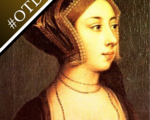
On this day in Tudor history, 1st September, Henry VIII elevated Anne Boleyn to the peerage, making her Marquess of Pembroke; and Elizabethan actor and theatre entrepreneur Edward Alleyn was born…
[Read More...]
On this day in Tudor history, 1st September, Henry VIII elevated Anne Boleyn to the peerage, making her Marquess of Pembroke; and Elizabethan actor and theatre entrepreneur Edward Alleyn was born…
[Read More...]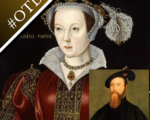
On this day in Tudor history, Henry VIII and Louise of Savoy agreed the Treaty of the More, and Catherine Parr, Queen Dowager and wife of Thomas Seymour, Baron Seymour of Sudeley, gave birth to a daughter, Mary…
[Read More...]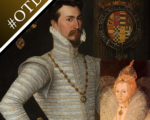
On this day in Tudor history, 28th August, Edward VI’s half-sister, Mary, was ordered to stop celebrating the Catholic mass, and an ailing Robert Dudley, Earl of Leicester, wrote his final letter to his queen and childhood friend, Elizabeth I…
[Read More...]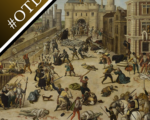
On this day in Tudor history, 24th August, Cecily, Viscountess Welles, or Cecily of York, third daughter of Edward IV, died, and thousands of French Huguenots were brutally murdered in the St Bartholomew’s Day massacre…
[Read More...]
On this day in Tudor history, 21st August, a bishop whose career spanned the reigns of three kings was forced to resign, and Humphrey Llwyd, the man behind the very first printed map of Wales, died…
[Read More...]
On this day in Tudor history, 17th August, Henry VII’s former chief advisors, Sir Edmund Dudley and Sir Richard Empson, were executed for treason by Henry VIII, and Henry VIII’s Latin secretary, humanist scholar Andreas Ammonius, died of sweating sickness…
[Read More...]
On this day in Tudor history, Henry Tudor dropped anchor at Mill Bay in readiness to claim the throne of England; five-year-old Mary, Queen of Scots, set sail for France; and mariner and cartographer Sir Robert Dudley, illegitimate son of Robert Dudley, Earl of Leicester, was born…
[Read More...]
On this day in Tudor history, Edward Stafford, Duke of Buckingham, was granted a licence to found a college at his manor of Thornbury; an English Protestant was burned in Rome; and Spanish forces landed on the Cornish coast…
[Read More...]
On this day in Tudor history, 30th July, both Catholics and Reformers were executed at Smithfield; Henry VIII’s youngest daughter, Elizabeth, left Somerset House to greet her half-sister, Mary I, the new queen; and writer and diarist Robert Parry was born…
[Read More...]
On this day in Tudor history, 29th July, Henry VII’s stepfather, Thomas Stanley, Earl of Derby, died; Mary, Queen of Scots, married Henry Stuart, Lord Darnley; and the English fleet defeated the Spanish Armada at the Battle of Gravelines…
[Read More...]
The Victorians were a lavishly sentimental bunch. They loved the extremity of emotion and they had none of our cultural hang-ups about projecting their standards onto the study of history. Indeed, quite the opposite: in Victoria's Britain, the nation's sense of their country's superiority was as lively as it was unshakeable. James Anthony Froude, in his sober histories of sixteenth-century England, saw Henry VIII as one of the founding fathers of the British Empire, exonerating men like Cromwell, Norfolk and Suffolk from complicity in Anne Boleyn's judicial murder, because they had been like the Nelson and Wellingtons of the sixteenth century and they therefore could not have been party to such a horrid plot. Meanwhile, writers like Jane Austen, Charles Dickens and Agnes Strickland did not hesitate to lambast Henry as 'a regal ruffian', a depraved and horrible creature who had been utterly devoid of the qualities that would have made him the thing which Victorian readers and writers alike held in highest regard - a gentleman.
In their love of the grand moments of historical drama, the Victorians ransacked the pantheon of the past for heroes, villains, ladies and lotharios. Marie-Antoinette, vilified in left-wing histories which sought to lift the French Revolution's historical reputation from the gutter where it had lain ever since it ended in such bloody and ignominious failure in 1794, was placed in a sentimental spotlight by the right-wing and she soon took on a cultural reincarnation that saw magazine sketches of her stuck on the walls of little girls' bedrooms across Western Europe. Her quasi-secular and sentimental cult gathered momentum until the First World War, when the world was inundated with new sorrows and the Romanov princesses rose to replace her in the collective memory of butchered innocents. Before then, the Tsarina Alexandra had a large portrait of her above her desk in Saint Petersburg, two female Oxford professors claimed to have seen her ghost in the gardens at Versailles and anyone who has read Frances Hodgson Burnett's A Little Princess might recall how Sara fortifies herself from her cruel classroom bullies by imagining that they are the uncouth, murderous revolutionaries and she is the beautiful, maligned and dignified Marie-Antoinette.
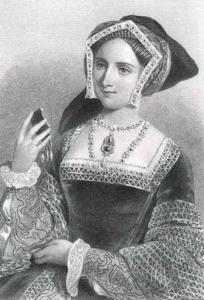
The Tudors offered up even more inspiration for the Victorians. Jane Austen thought Elizabeth I was awful and Queen Victoria was much keener on emphasising her descent from Mary, Queen of Scots, whom she idolised, than her role as Elizabeth I's eventual successor, since she saw Elizabeth as a cold and unfeeling tyrant for failing to embrace married life, a role which Victoria famously took to with near-unhinged vigour. In a similar vein to Marie-Antoinette, Anne Boleyn and Catherine Howard were bathed in the warm light of Victorian sentimentality. This fascination had important outcomes, too. In order to appease the Queen's obsession with her tragic forebears, the Tower of London yeomen fixed upon the Tower Green as the site of the scaffold where Anne Boleyn, Margaret Pole, Catherine Howard and Jane Grey had met their deaths, because the Queen wanted to see where it was and no-one was exactly sure. The modern yeomen repeat that the queens died where the memorial to them now stands. Victoria also paid for the markers on Anne and Catherine's graves during the renovation of the chapel of St. Peter-ad-Vincula. Prior to that, the two queens had no earthly tombstones.
But by far and away, the lion's share of Victorian attention was poured onto Mary, Queen of Scots and Lady Jane Grey. Like Marie-Antoinette, they were often seen as too pure, too passionate, too lovely and too gentle for the ugly and pernicious world of dishonourable politics. Mary's multiple marriages and tragic end were re-written to suggest perfectly natural feminine frailty, with her only fault being that she fell victim to brutes unworthy of the name of men. Jane, whose posthumous fame has no greater memorial than Paul Delaroche's iconic painting of her execution in which she, the virgin-martyr, achieves an apotheosis of vulnerable loveliness, was depicted in literally thousands of popular sketches, magazine articles, novels, serial stories and plays. Her terrible death caught the imagination, while her youth meant that she could easily be divorced from the more contentious political topics raised by Mary I or Elizabeth I. She confirmed Victorian views of women; she did not challenge them.
Jane's role as posthumous celebrity in popular culture had more negative consequences, too. Victorian Britain's obsession with her reached such a commercially profitable stage that a talented writer called Richard Patrick Boyle Davey penned an account of Jane's short reign, claiming he had uncovered documents in the archives of Genoa in Italy that had had been written by a merchant who lived in London throughout 1553, called Spinola. Desperate to make his biography stand out, Davey resorted to forging the evidence and "Spinola's" account of Jane's physical appearance and key moments in her life were repeated in every biography until the 21st century when Leanda de Lisle's research proved them to be utterly false.
Those sketches that we have all seen of the Tudor royals and, in many cases, the stereotypes we and our culture continue to carry about them, in one form or another, were birthed not by sixteenth-century reality but by the nineteenth century's exploding publishing industry, cheaper books, growing literacy, muscular sense of cultural self-confidence in a seemingly unassailable empire, and a public fascinated by stories of virtue, venom and a family that we remain captivated by to this day.
Gareth Russell
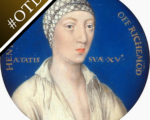
On this day in Tudor history, soldier and royal councillor John Scrope, 5th Baron Scrope, was born; Henry Fitzroy, Duke of Richmond and Somerset, Henry VIII’s illegitimate son, died; and playwright Edward Sharpham was baptised…
[Read More...]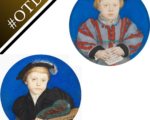
On this day in Tudor history, 14th July, Henry and Charles Brandon, sons of Charles Brandon, Duke of Suffolk, and Catherine Brandon (née Willoughby), Duchess of Suffolk, died from sweating sickness; reformer and translator Richard Taverner died; and Cardinal Christopher Bainbridge died of alleged poisoning…
[Read More...]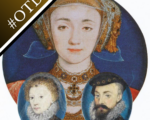
On this day in Tudor history, 9th July, Henry VIII’s marriage to Anne of Cleves was officially annulled; the Lady Mary (Mary I) wrote to the Privy Council stating her claim to the throne and demanding their allegiance; and Elizabeth I began a 19-day visit at Robert Dudley’s home, Kenilworth Castle…
[Read More...]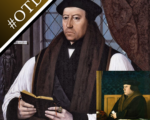
On this day in Tudor history, 2nd July, Thomas Cranmer, Archbishop of Canterbury, was born; Thomas Cromwell was appointed Lord Privy Seal following Thomas Boleyn’s demotion; and a sexton and gravedigger known as Old Scarlett was buried at Peterborough Cathedral…
[Read More...]
On this day in Tudor history, 28th June, King Henry VIII was born at Greenwich Palace: rebel Sir James Tuchet, 7th Baron Audley, was executed; and Philip Howard, 13th Earl of Arundel and a man condemned for treason in Elizabeth I’s reign, was born…
[Read More...]
On this day in Tudor history, Catherine of Aragon became betrothed to Prince Henry, the future Henry VIII, and Mary Tudor, Dowager Queen of France, sister of Henry VIII and wife of Charles Brandon, Duke of Suffolk, died at the age of 37…
[Read More...]
On this day in Tudor history, 23rd June, Henry VIII and his new bride, Catherine of Aragon, had their coronation procession through the streets of London; mathematician and physician Thomas Hood was baptised; and miniaturist Levina Teerlinc died…
[Read More...]
On this day in Tudor history, 22nd June, Henry VIII created 26 Knights of the Bath; Mary Boleyn lost her first husband to sweating sickness; Bishop Fisher was executed; and Henry VIII’s eldest daughter, Mary, submitted to her father…
[Read More...]
On this day in Tudor history, 15th June, Henry VIII’s illegitimate son, Henry Fitzroy, was born; members of the king’s council bullied and threatened Henry VIII’s eldest daughter, Mary; and court fool William Somer died…
[Read More...]
On this day in Tudor history, 12th June, Henry VIII’s first wife, Catherine of Aragon, got cross with him, telling him to abandon his “wicked life”; Richard Rich interviewed an imprisoned Sir Thomas More; and a newly imprisoned Thomas Cromwell pleaded his innocence and begged for mercy…
[Read More...]
On this day in Tudor history, 11th June, England’s new king, Henry VIII, married Catherine of Aragon; humanist and scholar Sir Anthony Cooke died; and the Feast of St Barnabas was celebrated…
[Read More...]
On this day in Tudor history, 3rd June, Sir Thomas More was interrogated in the Tower of London; bishops in England were ordered to preach in support of the royal supremacy; and John Aylmer, Bishop of London, died…
[Read More...]
On this day in Tudor history, 18 men were created Knights of the Bath during Anne Boleyn’s coronation celebrations; Henry VIII married Jane Seymour at Whitehall; and playwright and poet Christopher Marlowe was stabbed to death…
[Read More...]
On this day in Tudor history, Queen Anne Boleyn was executed at the Tower of London; Henry VIII was issued a dispensation to marry wife number 3, the future Elizabeth I was released from the Tower of London into house arrest; and it’s the Feast of St Dunstan…
[Read More...]
On this day in history, 3rd May, Cecily Neville, Duchess of York and mother of Edward IV and Richard III, was born; Archbishop Cranmer wrote of his shock about the investigation into Anne Boleyn; Sir Edward Rogers, a man who served three Tudor monarchs, died; and poet and farmer Thomas Tusser died…
[Read More...]
On this day in Tudor history, 29th April, William Dacre, the only man to be acquitted in Henry VIII’s reign, was born; Queen Anne Boleyn had an altercation with groom of the Stool Sir Henry Norris; Lady Jean Gordon started divorce proceedings against the Earl of Bothwell; and Sir Dru Drury died…
[Read More...]
On this day in Tudor history, 28th April, just a few days before Anne Boleyn’s arrest, the royal council was meeting frequently; a man involved in the falls of two queens died; an 82-year-old priest was executed; and Elizabeth I’s funeral took place…
[Read More...]
On this day in Tudor history, 25th April, Henry VIII wrote of his hopes for his future with Anne Boleyn, the woman he’d soon set aside; Thomas Stafford proclaimed himself “Protector of the Realm”; Catherine Parr’s translation of “Psalms or Prayers” was published anonymously; and St Mark’s Day was celebrated…
[Read More...]
On this day in Tudor history, 9th April, Catherine of Aragon found out that she’d been demoted to Dowager Princess of Wales; Cardinal Pole’s legatine powers were revoked; and Catherine Willoughby’s second husband, Richard Bertie, died…
[Read More...]