The Tudor Society

YOUR SEARCH UNCOVERED 848 RESULTS

  • Anne Line, Margaret Clitherow and Margaret Ward – Three Catholic Martyrs

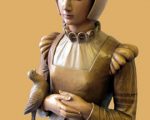
    A statue of Anne Line

    Today, on the anniversary of Anne Line’s execution, on 27th February 1601, I’m honouring her and two other remarkable women, Margaret Clitherow and Margaret Ward, who gave their lives for harbouring Catholic priests in Elizabethan England.

    Their crime? Offering sanctuary to men whose very existence had been outlawed. Their fate? Torture, brutal executions, and posthumous sainthood.
    But why was it so dangerous to harbour a priest in the reign of Elizabeth I?

    In Tudor England, religion wasn’t just a matter of personal belief—it was a matter of life and death.

    Following Henry VIII’s break with Rome, England became a Protestant nation. But when his daughter Mary I took the throne, she restored Catholicism and a couple of hundred Protestants burned at the stake. Then, in 1558, Elizabeth I became queen, and England swung back to Protestantism.
    Catholics who had hoped for tolerance soon realised that Elizabeth’s government viewed them as a threat. When the Pope excommunicated Elizabeth in 1570, it escalated the conflict. Catholics were now seen as potential traitors—loyal to the Pope, not the queen.
    [Read More...]
  • George Carey, 2nd Baron Hunsdon

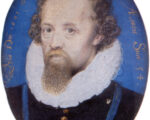
    A miniature of George Carey, 2nd Baron Hunsdon, by Nicholas Hilliard

    He was the grandson of Mary Boleyn, the husband of Elizabeth Spencer, and a trusted courtier of Elizabeth I. But George Carey, 2nd Baron Hunsdon, wasn’t just another nobleman, he was a key figure in the world of Elizabethan theatre, a patron of Shakespeare’s acting company, and a man who rose to one of the most powerful positions at court.

    Today, let’s dive into the fascinating life of George Carey, 2nd Baron Hunsdon; his Boleyn connections, his military career, and his role in shaping the golden age of Elizabethan theatre.

    [Read More...]
  • The Executions of Queen Catherine Howard and Jane Boleyn, Lady Rochford

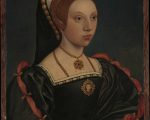
    Catherine Howard

    On this day in Tudor history, 13th February 1542, Catherine Howard, the fifth wife of Henry VIII, and Jane Boleyn, Lady Rochford, were executed at the Tower of London.

    Their crime?

    Treason against the king – but was Catherine guilty of more than youthful indiscretion? And why was Jane condemned alongside her?

    The story of Catherine Howard is one of ambition, betrayal, and a tragic downfall. A young queen who once captured the heart of Henry VIII, she would ultimately face the same fate as her infamous cousin, Anne Boleyn. But Catherine’s downfall wasn’t just about her past—her secret meetings with Thomas Culpeper proved to be her undoing.

    [Read More...]
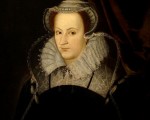
  • Mary, Queen of Scots, prepares to die

    Mary, Queen of Scots

    On this day in Tudor history, 7th February 1587, a fateful message arrived at Fotheringhay Castle – the execution warrant for Mary, Queen of Scots. After years of imprisonment and political intrigue, her fate was sealed. But how did Mary react when she was told she would die the next morning? What did she do in her final hours?

    Today, we’re travelling back in time to Mary’s last evening on earth—her defiant words, her final prayers, and the preparations she made for her death. This is the story of a queen who faced the axe with courage and unwavering faith.

    Mary, Queen of Scots, had been tried for treason in October 1586 after being implicated in the Babington Plot, a plot to depose Queen Elizabeth I and to replace her with Mary. She had been found guilty and sentenced to death, but Elizabeth would not sign the execution warrant, not wanting the responsibility of killing an anointed queen. However, Mary’s gaoler, Sir Amias Paulet, would not agree to quietly doing away with Mary, and after pressure from her council and petitions from Parliament, Elizabeth finally signed the warrant, although she later said she had asked for it not to be sent to Fotheringhay yet.

    [Read More...]
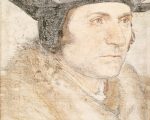
  • Sir Thomas More – The Tudor Court’s Most Loyal – and Doomed – Servant

    Sketch of Sir Thomas More by Hans Holbein the Younger

    Did you know that Sir Thomas More knew the risks of serving King Henry VIII, knew that it could cost him his head, and yet he chose to serve him anyway?

    Thomas More wasn’t just a lawyer or a statesman. He was one of the most brilliant minds of his time—a humanist who believed in reason, faith, and justice. But he also had a sharp insight into human nature, particularly that of the king he served.

    [Read More...]
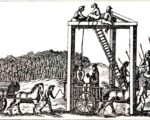
  • Hanged, Drawn, and Quartered for Printing a Book? The Fate of Blessed William Carter

    The Tyburn Tree, the gallows at Tyburn

    On this day in Tudor history, 11th January 1584, Carter paid the ultimate price after being found guilty of treason. His crime? Printing a book that allegedly encouraged the assassination of Queen Elizabeth I.

    William Carter was born in London in around 1548 and was the son of draper John Carter and his wife, Agnes. When he was about fifteen, Carter became apprenticed to John Cawood who had been Queen’s Printer to Mary I and who was joint Queen’s Printer to Elizabeth I. Carter was an apprentice to Cawood for a term of ten years before moving on to become secretary to Nicholas Harpsfield, a man who had been Archdeacon of Canterbury under Cardinal Pole in Mary I’s reign and who had been a zealous promoter of heresy trials of Protestants. He had been imprisoned by Elizabeth I’s government for refusing to swear the oath of supremacy and was still in Fleet prison when Carter became his secretary.

    [Read More...]
  • #OTD in Tudor history – 30 December

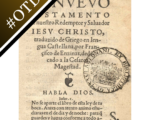
    The New Testament translated by Enzinas

    On this day in Tudor history, 30th December, Spanish humanist scholar and Protestant apologist Francis Dryander (Francisco de Enzinas) died from the plague (1552), and scholar and royal tutor Roger Ascham died (1568)...

    • 1494 – Death of John Russell, Bishop of Lincoln, Keeper of the Privy Seal, Lord Chancellor under Edward IV and Richard III, and Chancellor of Oxford University. He died at his episcopal manor in Nettleham, Lincolnshire, and was buried in Lincoln Cathedral.
    • 1546 – Henry VIII signed his last will and testament, authorising the changes which he had ordered to be made by William Paget on 26th December. Click here to read more.
    • 1552 – Death of Francisco de Enzinas (humanist name Francis Dryander), Spanish humanist scholar, translator, author and Protestant apologist, at Strasbourg from the plague. He was buried there the next day. He had been a member of the household of Katherine Brandon, Duchess of Suffolk, for a time, possibly teaching her son Charles, and Archbishop Cranmer paid him as a Greek Reader. While he was at Cambridge, in the late 1540s, Enzinas translated various ancient texts into Spanish before travelling to the Continent in 1549 to set up a publishing house in Strasbourg. There, he published at least nine classical and Biblical translations. See video below.
    • 1553 – Death of Roger Barlow, Vice-Admiral of the Pembrokeshire coast and brother of William Barlow, Bishop of Chichester, at Slebech.
    • 1568 - Scholar and royal tutor, Roger Ascham, died after being taken ill on 23rd December. He was buried on 4th January 1569 on the north side of St Sepulchre without Newgate, London, in the St Stephen’s chapel. See video below.
    • 1594 – Death of Sir Thomas Scott, member of Parliament and deputy lieutenant of Kent. He was buried at Brabourne Church in Kent, but moved to the chapel of Scot's Hall, the family home in Smeeth, after the Civil War. Scott was also a Justice of the Peace, Commissioner of Piracy, Commissioner of Coastal Defence, Commissioner of Grain and Colonel-General of his county's forces during the Spanish Armada. He was also a keen horse breeder.
    • 1600 – Death of Michael Heneage, member of Parliament, devout Protestant, archivist and antiquary, at Hoxton in Essex. He and his brother Thomas served as Joint Keepers of the Records in the Tower of London from 1576, and he also helped Robert Hare, Compiler of Cambridge University's records. Heneage delivered two papers, “of the Antiquity of Arms in England” and “of Sterling Money”, while he was a member of the Society of Antiquaries, and he also compiled “Collections out of various Charters, &c., relating to the Noble Families in England”.

    [Read More...]

  • #OTD in Tudor history – 20 December

    Photo of the Tower of London with portraits of Catherine Howard, Agnes Tilney and Henry VIII

    On this day in Tudor history, 20th December, Catherine Howard’s step-grandmother begged Henry VIII for forgiveness (1541), and Edward Arden was hanged, drawn and quartered for allegedly plotting with his son-in-law to kill the queen (1583)…

    [Read More...]
  • #OTD in Tudor history – 29 November

    Cardinal Thomas Wolsey

    On this day in Tudor history, 29th November, Anthony Browne, 1st Viscount Montagu, a courtier who served in four monarchs’ reigns, was born (1528), and Cardinal Thomas Wolsey cheated the executioner by dying on his journey to London to answer charges of treason (1530)…

    [Read More...]
  • #OTD in Tudor history – 28 November

    Edward Plantagenet

    On this day in Tudor history, 28th November, claimant Edward Plantagenet, son of the late Duke of Clarence, was executed for treason on Tower Hill (1499), and MP and political agent Francis Yaxley drowned while bringing gold to Mary, Queen of Scots (1565)…

    [Read More...]
  • #OTD in Tudor history – 27 November

    William Shakespeare

    On this day in Tudor history, 27th November, a former Benedictine monk was burnt at Smithfield for heresy for importing Lutheran books (1531); and 18-year-old William Shakespeare got married to 26-year-old Anne Hathaway, who was pregnant at the time (1582)…

    [Read More...]
  • #OTD in Tudor history – 26 November

    Henry Fitzroy and Mary Howard

    On this day in Tudor history, 26th November, Henry VIII’s 14-year-old illegitimate son, Henry Fitzroy, Duke of Richmond and Somerset, married Lady Mary Howard, daughter of the Duke of Norfolk (1533); and the first men to be executed under the new treason laws against Jesuits in Elizabeth I’s reign were hanged at York (1585)…

    [Read More...]
  • #OTD in Tudor History – 23 November

    Perkin Warbeck

    On this day in Tudor history, 23rd November, Pretender Perkin Warbeck was hanged at Tyburn (1499), and scrivener and sailor Edward Squire was hanged, drawn and quartered for plotting to poison Elizabeth I and the Earl of Essex (1598)…

    [Read More...]
  • #OTD in Tudor history – 17 November

    Coronation miniature of Elizabeth I and a portrait of Mary I

    On this day in Tudor history, 17th November, Queen Mary I died at St James’s Palace, London, and her half-sister, Elizabeth, became Queen Elizabeth I. Elizabeth would reign for over forty-four years (1558)…

    [Read More...]
  • #OTD in Tudor history – 14 November

    Portraits of Anne Boleyn and Henry VIII, Arthur Tudor, and Catherine of Aragon

    On this day in Tudor history, 14th November, Catherine of Aragon married Arthur Tudor, Prince of Wales (1501); Henry VIII may have married Anne Boleyn (1532); and an inventory was taken of Thomas Culpeper’s “goods and chattels, lands and fees” (1541)…

    [Read More...]
  • #OTD in Tudor history – 11 November

    Thomas Cranmer and Catherine Howard

    #OTD in Tudor history, 11th November, the Admiral of France landed on English soil, a visit that was going to cause George Boleyn, Lord Rochford, a lot of stress (1534); and Archbishop Cranmer was instructed to move Queen Catherine Howard from Hampton Court Palace to Syon House (1541)…

    [Read More...]
  • #OTD in Tudor history – 10 November

    Sir Henry Wyatt and the cat

    On this day in Tudor history, 10th November, privy councillor Sir Henry Wyatt, father of Sir Thomas Wyatt the Elder, died (1536); and explorer and navigator Richard Chancellor was drowned after saving the Russian ambassador after their ship was wrecked (1556)…

    [Read More...]
  • #OTD in Tudor history – 24 October

    A miniature of Queen Jane Seymour

    On this day in Tudor history, 24th October, Queen Jane Seymour, Henry VIII’s third wife, died at Hampton Court Palace; and John White, governor of the Roanoke Colony, returned to England after failing to find the lost colonists…

    [Read More...]
  • #OTD in Tudor history – 23 October

    Photo of the ruins of the infirmary chapel of Christ Church Priory, Canterbury

    On this day in Tudor history, 23rd October, a prior wrote a rather grovelling letter to Thomas Cromwell regarding the forthcoming dissolution of his monastery; and renowned poet, psalmodist and clergyman John Hopkins was buried at Great Waldingfield…

    [Read More...]
  • #OTD in Tudor history – 21 October

    Portraits of Henry VIII and Francis I

    On this day in Tudor history, 21st October, Henry VIII left Anne Boleyn behind in Calais to spend a few days in Boulogne with Francis I (1532); and during the Pilgrimage of Grace, Lancaster Herald encountered a group of armed peasants near Pontefract Castle…

    [Read More...]
  • #OTD in Tudor history – 15 October

    infant Edward Vi

    On this day in Tudor history, 15th October, the infant Prince Edward (Edward VI) was christened in the Chapel Royal at Hampton Court Palace (1537); and teacher and Welsh language poet Richard Gwyn (White) was hanged, drawn and quartered for his Catholic faith (1584)…

    [Read More...]
  • #OTD in Tudor history – 12 October

    Portraits of Jane Seymour and an infant Edward VI

    On this day in Tudor history, 12th October, Edward VI, son of Henry VIII and Jane Seymour, was born (1537); and MP and administrator Lewis Owen was murdered on a Welsh mountain pass as a result of his campaign against outlaws (1555)…

    [Read More...]
  • #OTD in Tudor history – 5 October

    Edward Seymour, Duke of Somerset, and Edward VI

    On this day in Tudor history, 5th October, Henry VIII’s daughter, two-year-old Princess Mary, became betrothed to the French dauphin; and Lord Protector Somerset ordered a gathering of men at Hampton Court Palace to protect him and the young King Edward VI…

    [Read More...]
  • #OTD in Tudor history – 2 October

    Portraits of Mary Tudor and Louis XII

    On this day in Tudor history, Mary Tudor, sister of Henry VIII, set sail from Dover to travel to France to marry Louis XII of France; and reformer and Bible translator William Tyndale’s book “The Obedience of a Christian Man” was published, a book which Anne Boleyn shared with Henry VIII…

    [Read More...]
  • #OTD in Tudor history – 30 September

    Portraits of Henry VIII and Mary I

    On this day in Tudor history, 30th September, a victorious Henry VIII returned to England after the French surrender of Boulogne; and Mary I’s coronation procession took place in London…

    [Read More...]
  • #OTD in Tudor history – 27 September

    A portrait of a woman thought to be Catherine of Aragon with a map of Spain

    On this day in Tudor history, 27th September, John de la Pole, 2nd Duke of Suffolk and first husband of Margaret Beaufort, was born; and fifteen-year-old Catherine of Aragon set sail for England from Laredo, Spain, for her marriage to Arthur Tudor…

    [Read More...]
  • #OTD in Tudor history – 18 September

    Portraits of Edward Courtenay, Mary I and Elizabeth I

    On this day in Tudor history, Henry VIII rode triumphantly through the streets of Boulogne after the French surrendered it to him; and Edward Courtenay, 1st Earl of Devon, a prospective bridegroom for both of Henry VIII’s daughters, died…

    [Read More...]
  • #OTD in Tudor history – 16 September

    Portraits of Henry VIII and Catherine Howard

    On this day in Tudor history, 16th September, scholar, humanist and theologian John Colet died after catching sweating sickness three times; and Henry VIII and Catherine Howard were given lots of gold on their royal progress…

    [Read More...]
  • #OTD in Tudor history – 7 September

    Portraits of Elizabeth I and Catherine Willoughby

    On this day in Tudor history, 7th September, Queen Anne Boleyn gave birth at Greenwich Palace to a daughter who would become Queen Elizabeth I; and forty-nine-year-old Charles Brandon, Duke of Suffolk, married his fourteen-year-old ward, Catherine Willoughby…

    [Read More...]
  • #OTD in Tudor history – 6 September

    Portrait of Martin Luther

    On this day in Tudor history, 6th September, famous reformer Martin Luther sent his treatise to Pope Leo X; Sir Francis Drake entered the Pacific Ocean; and physician, clergyman and inventor of modern shorthand, Timothy Bright, was buried…

    [Read More...]