The Tudor Society

YOUR SEARCH UNCOVERED 2372 RESULTS

  • 21 July – The arrest of John Dudley

    On this day in Tudor history, 21st July, 1553, just days after he’d left London with an army to apprehend Mary, half-sister of the late king, Edward VI, John Dudley, Duke of Northumberland was arrested near Cambridge.

    But how and why did the man who had ruled England on Edward VI’s behalf, as Lord President of his privy council, come to this?

    I explain his role in the accession of Lady Jane Grey as Queen Jane in July 1553 and what happened when Mary overthrew Queen Jane.

    [Read More...]
  • 20 July – Queen Claude of France

    On this day in history, 20th July 1524, Queen Claude of France, consort of Francis I, died at the age of just twenty-four at the Royal Chateau of Blois. She was temporarily laid to rest there and then later moved to the Cathedral Basilica of Saint Denis just outside Paris.

    Brantôme declared that Claude’s husband, Francis I, gave her “the pox, which shortened her days”, meaning syphilis, but the cause of her death is not known for certain.

    In today’s talk, I give an overview of Queen Claude’s life, as well as sharing the theories regarding her death.

    [Read More...]
  • 18 July – Queen Jane is betrayed and Queen Mary wins

    On this day in Tudor history, 18th July 1553, while her father-in-law and his forces made their way from Cambridge to Bury St Edmunds to stand against the forces of Mary, and Jane was busy writing to men requesting them to muster forces to support her, Jane was being betrayed by members of her council.

    William Herbert, Earl of Pembroke, and Henry Fitzalan, Earl of Arundel, called a council meeting and Pembroke was even said to have threatened council members with a sword! They then proclaimed for Mary.

    Find out more about what happened on 18th and 19th July 1553 in today’s talk.

    [Read More...]
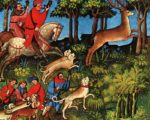
  • Hunting in Medieval and Tudor times

    Following on from last week’s Claire Chats video on falconry or hawking in the medieval and Tudor periods, I thought that I’d take a look at a pastime enjoyed by the upper classes, that of hunting.

    What did the Tudors hunt? How did they hunt? I explain more about it in this talk.

    [Read More...]
  • 14 July – Richard Taverner and his Bible

    On this day in Tudor history, 14th July 1575, evangelical reformer and translator, Richard Taverner, died at Woodeaton in Oxfordshire. He was laid to rest in the parish church at Woodeaton.

    Richard Taverner is mainly known for his Bible translation, “Taverner’s Bible”, but there is far more to him than that, including his time as Thomas Cromwell’s chief propagandist.

    Find out all about Richard Taverner’s life and career in today’s talk.

    [Read More...]
  • 12 July – Men flock to Mary’s cause and Jane makes a mistake

    On this day in Tudor history, 12th July 1553, Mary (future Mary I) moved from Kenninghall to Framlingham and set about rallying support. Sir Thomas Cornwallis was able to intercept her on her journey and pledge his loyalty to her. He wasn’t the only one flocking to her cause.

    Meanwhile, back in London, the new queen, Queen Jane (Lady Jane Grey), made a serious mistake by refusing to send her father to go and apprehend Mary.

    Why was this a mistake?

    Find out what was going on back in 1553 in this talk.

    [Read More...]
  • 11 July – Men change sides from Queen Jane to Mary

    On this day in history, 11th July 1553, in Ipswich, Suffolk, Sir Thomas Cornwallis, sheriff of Norfolk and Suffolk, Lord Thomas Wentworth, and some other prominent Suffolk gentlemen declared for Queen Jane (Lady Jane Grey) and publicly proclaimed her the rightful queen. However, the following day, Cornwallis recanted and proclaimed Mary as queen.

    Why? What happened to make this sheriff change his mind so soon?

    Find out more about the situation in July 1553 in today’s talk.

    [Read More...]
  • Medieval and Tudor Falconry or Hawking

    Falconry was a popular sport among the upper classes in the medieval and Tudor periods, and was also quite a status symbol. Find out more about the sport in this week’s Claire Chats talk.

    [Read More...]
  • 8 July – Thomas Boleyn’s important duty

    On this day in Tudor history, on 8th July 1503, during the reign of King Henry VII, Thomas Boleyn, father of Anne Boleyn, left Collyweston in Northamptonshire to undertake an important job for the king.

    He was to be part of a retinue escorting King Henry VII’s eldest daughter, Margaret Tudor, to Scotland, for her marriage to King James IV.

    Find out more about the retinue and journey in today’s talk.

    [Read More...]
  • 7 July – William Turner, Father of English botany

    On this day in Tudor history, 7th July 1568, naturalist, herbalist, ornithologist, reformer and physician, William Turner, died. Turner is known as “the father of English botany and of ornithology”, but why and who exactly was he?

    In today’s talk, I give an overview of Turner’s life and career, including his attacks on Bishop Gardiner and his time in exile, plus a bit of trivia about the training of his little dog.

    [Read More...]
  • 4 July – Gregory Cromwell – who was he?

    On this day in Tudor history, 4th July 1551, Gregory Cromwell, 1st Baron Cromwell, died of sweating sickness at Launde Abbey in Leicestershire. He was laid to rest at the abbey’s chapel on 7th July.

    Gregory Cromwell was the son of the more famous Thomas Cromwell, but what do we know about him and what happened to him after his father’s fall in 1540?

    Find out about the life and career of Gregory Cromwell in today’s talk.

    [Read More...]
  • 3 July – Pretender Perkin Warbeck lands

    On this day in Tudor history, 3rd July 1495, the pretender Perkin Warbeck landed at Deal in Kent with men and ships. In the ensuing battle, the Battle of Deal, with Kentish men who supported King Henry VII, around 150 of Warbeck’s men were killed and over 160 captured. Warbeck managed to escape, fleeing to Ireland.

    Who was Warbeck claiming to be? Whose support did her have? And what happened next?

    Find out more about claimant Perkin Warbeck in today’s talk.

    [Read More...]
  • 2 July – Thomas Boleyn’s loss is Thomas Cromwell’s gain

    On this day in Tudor history, 2nd July 1536, Thomas Cromwell, the king’s right-hand man, was formally appointed Lord Privy Seal. The previous holder of the office had been Thomas Boleyn, Earl of Wiltshire and Ormond, who’d been stripped of the office following the falls of his children, Queen Anne Boleyn and George Boleyn, Lord Rochford.

    But what is a privy seal and what does the Lord of the Privy Seal do?

    Find out more in today’s talk.

    [Read More...]
  • 30 June – A mortal head wound for a jousting King of France

    On this day in Tudor history, 30th June 1559, keen sportsman, King Henry II of France, suffered a mortal head wound while jousting. He died on 10th July and was succeeded by his son, Francis II.

    Jousting was a dangerous sport and Henry was fatally injured when splinters from his opponent’s lance entered his right eye. Awful!

    Find out more about Henry II’s accident and death, and also his reign, in today’s talk.

    [Read More...]
  • 28 June – A Catholic earl and poisoned roasted teal

    On this day in Tudor history, 28th June 1557, Philip Howard, 13th Earl of Arundel, was born at Arundel House, the Strand, London.

    Philip ended up being condemned to death for treason and dying of alleged poisoning in 1589, when he was just 32, so let me tell you a bit more about him and what led him to that very sticky end.

    [Read More...]
  • 27 June – Two Cornishmen gain fame permanent and immortal

    On this day in Tudor history, 27th June 1497, in the reign of King Henry VII, lawyer and member of Parliament Thomas Flamank and blacksmith Michael Joseph (known as Michael an Gof), two of the chief commanders of the Cornish rebels, were hanged, drawn and quartered at Tyburn in London.

    What had led them to this awful end? What was the Cornish Rebellion about and why do they have “fame permanent and immortal”? Find out more about them and their ends in today’s talk.

    [Read More...]
  • 26 June – Farther than Wingfield, no man dares to go

    On this day in Tudor history, 26th June 1596, soldier Sir John Wingfield was buried in the cathedral at Cadiz in southern Spain. Wingfield had been shot in the head in the attack on Cadiz on 21st June.

    John Stow recorded that at his funeral “the generalls threw their handkerchiefs wet from their eyes into the grave” and poet John Donne wrote “Farther than Wingfield, no man dares to go”, but who was this courageous soldier?

    Find out more about him and how he died in today’s talk.

    [Read More...]
  • 24 June – Robert Dudley, Earl of Leicester, Elizabeth I’s favourite

    On this day in Tudor history, 24th June 1532, the feast of St John the Baptist, Robert Dudley, Earl of Leicester and favourite of Elizabeth I, was born.

    Elizabeth I called Leicester her “eyes” and “sweet Robin” and there was gossip over their relationship, but there was far more to Robert Dudley than his closeness to the queen. Find out all about his life and career in today’s talk:

    [Read More...]
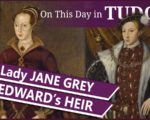
  • 21 June – Lady Jane Grey is Edward’s heir

    On this day in Tudor history, 21st June 1553, letters patent were issued stating that the dying King Edward VI’s heir was Lady Jane Grey, eldest daughter of the king’s cousin, Frances Grey (née Brandon), Duchess of Suffolk.

    Why was Lady Jane Grey his heir when Edward had two half-sisters, Mary and Elizabeth, and who else was listed in his “devise for the succession”. Find out more about Edward VI’s plan for the succession in today’s talk

    [Read More...]
  • 19 June – A bad end for a priest threatening William Cecil with hell

    On this day in Tudor history, 19th June 1573, Jesuit priest and former rector of a Lincolnshire parish, Thomas Woodhouse, was hanged, drawn and quartered at Tyburn.

    Blessed Thomas Woodhouse was the first priest to be executed in Elizabeth I’s reign, and he was beatified in December 1886 by Pope Leo XIII.

    When you hear what he said to William Cecil, Lord Burghley, you can understand just why he was seen as a traitor by Burghley and Elizabeth I’s government. Not wise words in those times, but he stuck to his faith and principles.

    Find out more in today’s video.

    [Read More...]
  • 18 June – Robert Recorde, his urinal and the equals sign

    Yes, you read that title right! On this day in Tudor history, 18th June 1558, the will of Welsh mathematician, physician and mint administrator Robert Recorde was proved.

    Recorde invented the “=” sign and wrote books on mathematics and also a urological treatise “The Urinal of Physick”.

    Let me tell you all about this man and his works, which have such catchy titles!

    [Read More...]
  • 17 June – Mary, Queen of Scots is imprisoned in Scotland

    On this day in Tudor history, 17th June 1567, Mary, Queen of Scots, was imprisoned at Loch Leven Castle following her surrender at the Battle of Carberry Hill on 15th June.

    Sadly, while she was imprisoned there, she miscarried twins and was forced to abdicate. She eventually escaped, but her freedom was only temporary.

    Find out more about this time in Mary, Queen of Scots’ life in today’s talk.

    [Read More...]
  • 16 June – Sir John Cheke, scholar and statesman

    On this day in Tudor history, 16th June 1514, English classical scholar and statesman, Sir John Cheke was born in Cambridge.

    Cheke was the first Regius Professor of Greek at Cambridge University, tutored King Edward VI, served as Secretary of State to Queen Jane (Lady Jane Grey) and was imprisoned by Mary I for his reformed faith. He died a broken man after denying his faith to survive. Find out more about him in today’s talk.

    [Read More...]
  • 13 June – A pregnant Catherine Parr goes to Sudeley

    On this day in Tudor history, 13th June 1548, Thomas Seymour, 1st Baron Seymour of Sudeley, and his wife, Catherine Parr, the dowager queen, set off from Catherine’s manor of Hanworth in London to travel to Seymour’s seat of Sudeley Castle. They were accompanied by Lady Jane Grey and around 100 others.

    Seymour wanted his wife to enjoy the final months of her pregnancy safe in the Cotswolds away from the Plague in London and for his first-born child to be born at Sudeley.

    In today’s talk, I share details on who accompanied the couple, what Sudeley was like and what happened next.

    [Read More...]
  • William Warham (1450-1532)

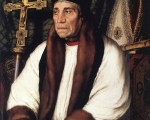
    William Warham was born in Church Oakley in Hampshire to parents Robert and Elizabeth. His origins were humble, evidenced by a commemorative brass in Church Oakley presumably set up by William himself, the brass carrying with it no emblems of social distinction. His uncle was also a carpenter, which further hints at his humble upbringing. William was educated at Winchester College and New College, Oxford, becoming a fellow in 1475 and acquiring a doctorate in canon law.

    In 1448, Warham moved to London to take up a post in the Court of Arches, and two years later, it is believed he went to Rome as a proctor of John Alcock, Bishop of Ely. Soon after, he began to procure sinecures, including the archdeaconry of Huntingdon and the precentorship of Wells. In 1491, Warham performed his first secular duty when he was appointed to the English party sent to Antwerp to discuss disputes with merchants. In 1493, he travelled to Burgundy to meet with Margaret, Duchess of Burgundy, to attempt to halt support for Perkin Warbeck, a pretender to the English throne. In February 1494, he received his long-awaited royal preferment to the mastership of the rolls. This position granted him numerous opportunities as be began to negotiate the marriage of Prince Arthur and Katherine of Aragon with the Spanish ambassador. In 1501, his negotiations with Emperor Maximilian I ensured that he was able to hand over a major threat to the reign of Henry VII – Edmund de la Pole.

    [Read More...]

  • 11 June – St Barnabas Day and garlands

    Happy St Barnabas Day!

    Yes, 11th June is the Feast of St Barnabas, a feast day that was celebrated by the Tudors by decorating churches with garlands of flowers.

    Find out more about St Barnabas and how he was commemorated in medieval and Tudor times in today’s talk.

    [Read More...]
  • 10 June – Elizabeth I’s Frog

    On this day in Tudor history, 10th June 1584, in the reign of Queen Elizabeth I, Francis, Duke of Anjou and Alençon, died in Paris. It is thought that he died of malaria.

    Why am I talking about a French duke? Well, for a time, he was a suitor of Queen Elizabeth I and the queen even affectionately called him her “frog”. It looked like Elizabeth would actually marry him.

    Find out more about what happened between Elizabeth and her dear “frog” in today’s talk.

    [Read More...]
  • 9 June – William Paget, a man who served 4 monarchs

    On this day in Tudor history, 9th or 10th June 1563, William Paget, 1st Baron Paget, diplomat and administrator, died, probably at his estate of West Drayton in Middlesex.

    By his death, he’d served four Tudor monarchs and even though he’d fallen from favour and been imprisoned, he kept his head and climbed back in favour.

    But who was Baron Paget? Well, let me give you a few facts about this Tudor man.

    [Read More...]
  • 8 June – Elizabeth Woodville

    On this day in Tudor history, 8th June 1492, in the reign of King Henry VII, Elizabeth Woodville, died at Bermondsey Abbey.

    Elizabeth Woodville was the wife of King Edward IV and mother of Elizabeth of York and the Princes in the Tower, King Edward V and Richard of Shrewsbury, Duke of York, but there’s far more to her than that.

    Enjoy this overview of Elizabeth Woodville’s life.

    [Read More...]
  • 6 June – Trouble bews in Bodmin

    On this day in Tudor history, 6th June 1549, an army of rebels assembled at Bodmin in Cornwall, and there was a town meeting in which the rebels’ demands were put forward.

    What were these rebels rebelling against?

    The recent religious changes, particularly the new law concerning the Book of Common Prayer.

    Trouble ensued and their grievances became a full-blown rebellion, the Prayer Book Rebellion. You can find out what happened next and how the rebellion ended in today’s talk.

    [Read More...]