The Tudor Society

YOUR SEARCH UNCOVERED 2374 RESULTS

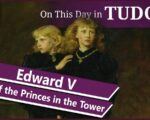
  • 2 November – The birth of King Edward V and the beginning of the end for Catherine Howard

    On this day in history, 2nd November 1470, the feast of All Souls, King Edward V was born at Westminster Abbey, London. Young Edward was King of England for just 2 months in 1483 before he disappeared.

    The events of his short life, his short reign and how it ended, are linked to the Tudors because Henry Tudor returned from exile to challenge King Richard III, who had, of course, taken the throne from Edward V.

    Find out about Edward V’s life and how he came to be one of the famous Princes in the Tower, in this talk…

    [Read More...]
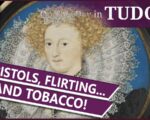
  • 28 October – Ivan the Terrible writes a rude letter to Elizabeth I and the Feast of St Simon and St Jude

    On this day in Tudor history, 28th October 1570, Ivan IV of Russia, known commonly as Ivan the Terrible, wrote a rather rude letter to Queen Elizabeth I.

    Ivan was upset with Elizabeth’s reaction to his idea of a political alliance, an agreement to help each other if their lives were in danger, and wrote the letter while he was still angry. They were words that must have made Elizabeth see red for a while, but she managed to write a calm reply to him.

    Find out exactly what Ivan the Terrible and Elizabeth I wrote to each other, and how they came to be corresponding in the first place, in this talk…

    [Read More...]
  • 27 October – The birth of Mary Herbert and the dramatic entrance of Anne Boleyn

    On this day in Tudor history, 27th October 1561, Mary Herbert (née Sidney), Countess of Pembroke, writer and literary patron, was born at Tickenhall, near Bewdley in Worcestershire. She was the sister of the poets Sir Philip Sidney and Robert Sidney, Earl of Leicester, was a writer herself and an extremely talented lady, and she also lived life to the full.

    After her husband died, she had fun shooting pistols, flirting, taking tobacco and dancing. A fun lady!

    Find out more about this gifted Tudor woman, who was as beautiful as she was talented, and whose work was praised, and used, by men such as Shakespeare.

    [Read More...]
  • November 2021 – Tudor Winters

    What a wonderfully interesting magazine we have for you this cold winter month. Hopefully, you’re able to stay wrapped up warm while you enjoy the latest copy of Tudor Life Magazine

    [Read More...]
  • 25 October – Twin saints and Francis I’s gift to Anne Boleyn

    Today, 25th October, is a feast day which was celebrated in medieval and Tudor times – the feast of Saints Crispin and Crispinian, martyrs of the Early Church and the patron saints of cobblers.

    Find out more about these saints, how their feast day became linked to an important English victory over the French, how it was marked, and why these saints are linked to Faversham in Kent, in this talk…

    [Read More...]
  • 24 October – John White’s return to England and the death of Jane Seymour

    On this day in Tudor history, 24th October 1590, John White, the governor of the Roanoke Colony, returned to England after failing to find the lost colonists, which included his daughter, Ellinor (Elenora), his son-in-law, Ananias Dare, and his granddaughter, Virginia Dare.

    But what happened to these colonists and what did the word CROATOAN carved onto a post mean?

    Find out all about the Roanoke Colony and the theories regarding the disappearance of all 115 people, including the very latest research, in this talk…

    [Read More...]
  • 23 October – The Dissolution of the Monasteries and John Hopkins’ burial

    On this day in Tudor history, 23rd October 1538, Thomas Goldwell, Prior of Christchurch, Canterbury, wrote to Thomas Cromwell, Henry VIII’s chief advisor, regarding the forthcoming dissolution of his monastery and its fate.

    It's quite a sad, grovelling letter, and even more sad when you know the full impact of Henry VIII's dissolution of the monasteries, which was devastating for his country.

    Find out more about Goldwell's priory and what happened to it, as well as what the dissolution entailed, in this talk...

    [Read More...]

  • 19 October – The Catholic Monarchs and the Pilgrimage of Grace

    On this day in history, 19th October 1469, an event took place in Spain that was not only important in Spanish history, but which had an impact on Europe and which has links with the Tudors.

    The event was the marriage of an eighteen-year-old woman called Isabella and a seventeen-year-old man called Ferdinand.

    They’d become the famous Reyes Catolicos, the Catholic monarchs, Isabella I of Castile and Ferdinand II of Aragon, and would bring together two powerful kingdoms, which comprised most of what is modern-day Spain.

    In this talk, I tell you more about this powerful couple, their reigns and their legacy.

    [Read More...]
  • 15 October – A teacher is executed and a prince is christened

    On this day in Tudor history, 15th October 1584, schoolteacher and poet Richard Gwyn (Richard White), was hanged, drawn and quartered for high treason at Wrexham in Wales due to his Catholic faith.

    Find out about Richard Gwyn’s life, how an attack by crows and kites made him steadfast in his faith, his arrest and downfall, his works, and the legends associated with his death…

    [Read More...]
  • 12 October – The birth of a king and an assassination

    On this day in Tudor history, 12th October 1555, Lewis Owen, member of Parliament and administrator in Wales, was assassinated on Dugoed Mawddwy, a mountain pass.

    Owen was murdered by a group of bandits as revenge for his campaign against them, which had led to around 80 hangings.

    Find out more about Lewis Owen, his life and what happened…

    [Read More...]
  • 9 October – Miguel de Cervantes and the wedding of Mary Tudor, Queen of France

    On this day in Tudor history, 9th October 1547, Miguel de Cervantes, author of the famous classic “Don Quixote”, a book known as “the first modern novel”, was baptised in Alcalá de Henares, Spain. His actual birthdate is unknown.

    Now, this event didn’t happen in Tudor England, but it did happen in the Tudor period, and Cervantes is known the world over. Let me share with you some facts about this man, his rather interesting life, which including being held to ransom by pirates, and his works…

    [Read More...]
  • 6 October – A sweating sickness expert and the execution of William Tyndale

    On this day in Tudor history, 6th October 1510, John Caius was born at Norwich.

    Caius was a theological scholar, founder of Gonville and Caius College, Cambridge, royal physician (to Edward VI, Mary I and Elizabeth I) and author of a book on sweating sickness.

    In this video, I give an overview of John Caius’ life and career, as well as sharing some of what he wrote on sweating sickness, that mystery Tudor illness.

    [Read More...]
  • 5 October – Edward Seymour unravels and two-year-old Princess Mary becomes betrothed

    On this day in Tudor history, 5th October 1549, Edward Seymour, Duke of Somerset and Lord Protector, ordered a gathering of men at Hampton Court Palace, where he was lodged with the young King Edward VI, due to tensions mounting between Somerset and John Dudley, Earl of Warwick.

    What was going on and what happened when 4,000 peasants turned up? How did John Dudley react and what did King Edward VI have to say about it all?

    Find out what happened, and how this led to Somerset’s undoing…

    [Read More...]
  • 4 October – A rebel and a rebellion

    The Pilgrimage of Grace banner bearing the Holy Wounds of Jesus Christ

    On this day in Tudor history, 4th October 1507, Sir Francis Bigod, was born at Seaton, in Hinderwell, Yorkshire.

    Bigod led an uprising in Yorkshire in January 1537, Bigod’s Rebellion, after the rebels of the Pilgrimage of Grace had been dispersed. But who was Bigod? Why would an evangelical reformer become involved with the Pilgrimage of Grace? What was his rebellion about and what happened to him?

    Find out more about Sir Francis Bigod and Bigod’s Rebellion…

    [Read More...]
  • 28 September – Robert Devereux sees Elizabeth I without her mask of youth and Mary I travels to the Tower

    On this day in Tudor history, 28th September 1599, Elizabeth I’s favourite, Robert Devereux, 2nd Earl of Essex, strode into the queen’s bedchamber unannounced and saw her without her makeup or wig, without her “mask of youth”.

    Why would he do such a thing?

    Find out why Devereux was troubled and wanted to see the queen urgently and how Elizabeth I reacted to his visit, and what happened next…

    [Read More...]
  • 23 September – A work about two star-crossed lovers and a Tudor bishop

    On this day in history, 23rd September 1605, in the reign of King James I, Tudor pamphleteer William Averell was buried at St Peter upon Cornhill.

    Averell’s first work was about two Welsh star-crossed lovers, Charles and Julia, and he also wrote a Protestant work about it raining wheat in Suffolk and Essex, an event which he saw as presaging the end of the world.

    Averell was an interesting character and you can find out more about him and his work in this video…

    [Read More...]
  • 22 September – Amy Robsart and Anne of Cleves

    On this day in Tudor history, 22nd September 1560, Amy Dudley (née Robsart), wife of Robert Dudley, Earl of Leicester, was buried in the chancel of the University Church of St Mary the Virgin, Oxford.

    Amy had been found dead at the foot of the stairs of her home and the subsequent inquest had ruled her death as caused by “misfortune”. She was buried in a lavish ceremony which cost her widower over £2,000.

    Find out more about her burial, and who attended…

    [Read More...]
  • Did Catherine of Aragon and Arthur Tudor consummate their marriage?

    Catherine of Aragon and Arthur Tudor, Prince of Wales, were married from 14th November 1501 until Arthur’s death on 2nd April 1502, but did they consummate their marriage? They certainly slept in the same bed, but did Catherine of Aragon and Arthur Tudor have sex?

    Find out what people said at the Legatine court hearing in 1529 and the Zaragoza hearing in 1531, and what Catherine claimed, in this talk…

    [Read More...]
  • 14 September – A Constable of the Tower and a destroyed shrine

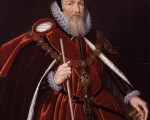
    On this day in Tudor history, 14th September 1540, Sir William Kingston, Constable of the Tower of London, Knight of the Garter and comptroller of the King's household, died at his home in Painswick in Gloucestershire.

    Sir William Kingston was Constable of the Tower of London while Queen Anne Boleyn was imprisoned there in May 1536, and his letters to Thomas Cromwell are an excellent primary source for historians, but there's much more to this royal servant than that. He had a wonderful career in service to the king and benefited as a result.

    Find out more about Kingston...

    [Read More...]

  • 13 September – A Tudor poet and Elizabeth I’s “spirit”

    On this day in Tudor history, 13th September 1503, poet and antiquary John Leland was born. Leland is known for his Latin poems and his antiquarian writings which included a defence of the history of King Arthur, which he presented to Henry VIII and his notes on his travels around England and Wales.

    Leland also wrote verses for Queen Anne Boleyn's coronation procession and was a royal chaplain. He had a very sad end, though, suffering some kind of mental breakdown and going mad.

    Find out more about John Leland, his life and works...

    [Read More...]

  • 10 September – A battle and Elizabeth I’s christening

    n this day in Tudor history, Saturday 10th September 1547, in the reign of King Edward VI, the Battle of Pinkie Cleugh, also known as the Battle of Pinkie, took place near Musselburgh, in Scotland, on the banks of the River Esk. The English forces, led by Edward Seymour, Duke of Somerset, defeated the Scots, killing thousands.

    It was a bloody battle, but started off well for the Scots. In this video, I share an eye-witness account of how the battle changed so dramatically, leading to the loss of between 6,000 and 15,000 Scots.

    [Read More...]
  • 9 September – Mary, Queen of Scots is crowned and the Battle of Flodden

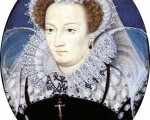
    A miniature of Mary, Queen of Scots in captivity by Nicholas Hilliard

    On this day in Tudor history, 9th September 1543, the 30th anniversary of the Battle of Flodden, Mary, Queen of Scots, was crowned queen at the Chapel Royal of Stirling Castle. Mary was just nine months old.

    Find out more about how Mary came to the throne, her coronation ceremony, in which Mary howled, and how she was already promised in marriage to Henry VIII's son, the future Edward VI...

    [Read More...]

  • 7 September – Charles Brandon marries his young ward, and Elizabeth I is born

    On this day in Tudor history, 7th September 1533, just over two months after the death of his previous wife, Mary Tudor. Queen of France, forty-nine-year-old Charles Brandon, Duke of Suffolk, married his ward, fourteen-year-old Catherine Willoughby.

    Find out more about this Tudor couple, how they came to be married, what their marriage was like, and what happened to them…

    [Read More...]
  • 1 September – Actor Edward Alleyn and Anne Boleyn becomes Marquess of Pembroke

    On this day in Tudor history, 1st September 1566, Edward Alleyn, a major figure in the Elizabethan theatre, was born in the parish of St Botolph without Bishopsgate, London, and baptised the following day.

    In this video, I share some facts about Edward Alleyn, including his personal life, the plays he was involved in, his theatre investments, and his desire to be appointed master of the bears, bulls and mastiff dogs!

    [Read More...]
  • 29 August – St John the Baptist and Geoffrey Pole

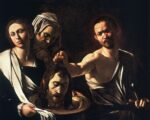
    Today, 29th August, is the Feast of the beheading of St John the Baptist. Lovely!

    In this video, I share the story behind this Tudor holy day, a story which is often depicted in illuminations in manuscripts and psalters.

    [Read More...]
  • 26 August – A devastated Mary I and Anne Boleyn prepares to give birth

    On this day in Tudor history, 26th August 1555, Queen Mary I and her husband, Philip of Spain, departed from Whitehall in preparation for Philip’s return to the Low Countries.

    This was an awful time for Mary I. She had just come out of confinement after months of believing she was pregnant, and now her husband was leaving her. He’d be gone for over 18 months.

    Find out more about Mary’s state of health and mind, the arrangements for Philip’s departure, and Mary’s reaction…

    [Read More...]
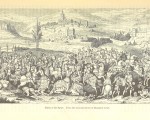
  • Battle of Bosworth Quiz

    Today is the anniversary of the Battle of Bosworth. The battle took place on 22nd August 1485 and was between the forces of King Richard III and Henry Tudor. Henry’s forces defeated those of Richard, and Henry became King Henry VII.

    Test your knowledge of the battle with this fun quiz and scroll down for more resources on the battle.

    [Read More...]
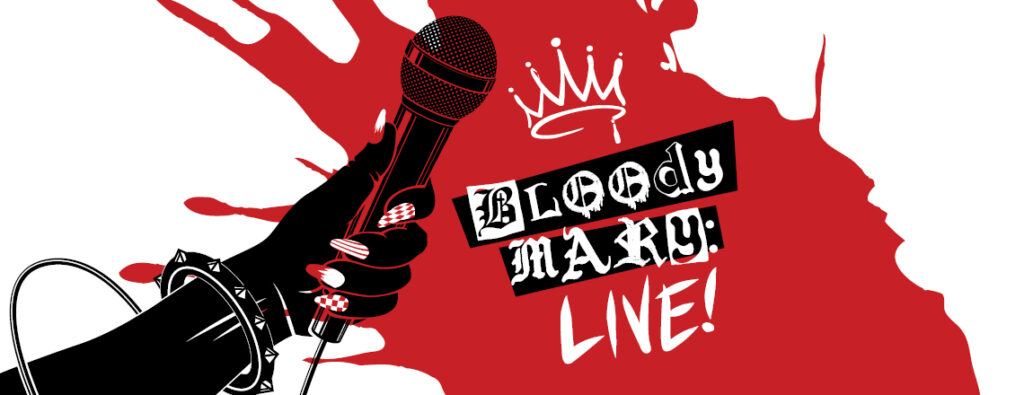
  • Bloody Mary: Live!

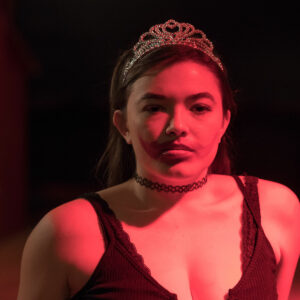
    This play looks like it's going to be a fun one! Bloody Mary: LIVE! will play from August 24-September 5, 2021 in performance and bar space The Treehouse as part of Assembly Festival Garden for the Coventry City of Culture 2021 (UK).

    © Ashley Garrett Photography

    The show features Mary Tudor, as a teenager, performing a stand-up set to explain why she burned all those people at the stake. In her set, she confesses what it was like to be the daughter of Henry VIII, to watch her parents go through the worst divorce and to grow up a little bit jealous of her younger sister Elizabeth I. This biting new play is written and performed by Olivia Miller and was shortlisted for the 2020 Les Enfants Terribles Award.

    Performance Details

    Location: The Treehouse, Assembly Festival Garden, Coventry
    Tickets: https://bit.ly/BloodyMaryCoventry
    Prices: Concessions - £7, Early Bird - £9, Standard - £10
    Dates & Times: August 24-September 5, 20:30 daily
    Running time: 1 hour
    COVID safety: Open air bar

  • 16 August – A family’s sacrifice and the Battle of Spurs

    On this day in Tudor history, 16th August 1599, soldier and Lord President of Munster in Ireland, Sir Thomas Norris, died at his home, Mallow Castle, in Cork, as a result of an injury he’d sustained in a skirmish with Irish troops on 30th May 1599. His brother, Henry, died just five days later. Thomas’s brothers, John, William and Maximilian, who were also soldiers, died in 1597, 1579 and 1593 respectively.

    Queen Elizabeth I recognised the sacrifice of this family and wrote a letter of condolence to her friends, Henry Norris, 1st Baron Norris, and his wife, Margery Williams. Find out what she wrote to the grieving couple…

    [Read More...]
  • 13 August – Irish friars come to a sad end and a proxy wedding for Mary Tudor

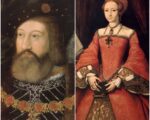
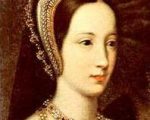
    Mary Tudor, Queen of France, detail from a portrait of her and her second husband, Charles Brandon, Duke of Suffolk.

    On this day in Tudor history, 13th August 1579, Roman Catholics Friar Conn, or Connatius, O’Rourke and Patrick O’Healy, Bishop of Mayo, were hanged just outside Kilmallock, co. Limerick.

    So desperate was Sir William Drury, Lord President of Munster, to get rid of these two Catholics, that he used martial law to find them guilty of treason, rather than giving them a trial.

    Find out why, what Drury did to poor Bishop O’Healey, and what happened to their remains afterwards, in this video…

    [Read More...]