The Tudor Society

YOUR SEARCH UNCOVERED 1673 RESULTS

  • Elizabeth I’s accession – 17 November 1558

    Today is Accession Day, a day that was celebrated throughout the reign of Elizabeth I and the reigns of many of her successors. It commemorated the day that Elizabeth I came to the throne on the death of her half-sister, Queen Mary I, on 17th November 1558. You can click here to read about how Accession Day was celebrated, but in today’s Claire Chats video I’m talking about the 17th November 1558 and the story of Elizabeth receiving the news that she was queen.

    [Read More...]
  • 13 November 1537 – Queen Jane Seymour is buried

    On this day in history, 13th November 1537, Queen Jane Seymour, third wife of Henry VIII, was laid to rest in St George’s Chapel, Windsor Castle.

    Jane’s remains had been taken by chariot from Hampton Court Palace to Windsor Castle in a special procession the previous day – click here to read more about that. There had then been a special service followed by a solemn watch that night. On 13th November, “there was a solemne masse of requiem sunge by the Archbishopp of Canterburie; and the Bishop of Worcester, called Dr. Latimer, made a notable sermon; and at the offertorie all the estates offered ryche palls of clothe of golde […]”. The mass was followed by a banquet in the castle for all those who had attended the funeral.

    [Read More...]
  • This week in history 13 – 19 November

    On this day in history…

    13th November:

    1536 – Murder of Robert Pakington, mercer and member of Parliament, at Cheapside, while making his way to mass at St Thomas of Acre Chapel.
    1537 – Burial of Jane Seymour, Henry VIII’s third wife, at St George’s Chapel, Windsor Castle. Henry VIII’s daughter, Mary, acted as chief mourner.
    1553 – Lady Jane Grey, her husband Guildford Dudley, his brothers Ambrose and Henry, and Archbishop Thomas Cranmer were tried for treason at a public trial at London’s Guildhall. They were all found guilty as charged, with the men being sentenced to being hanged, drawn and quartered, and Jane to be burned alive, or beheaded.
    1601 – Burial of Lady Mary Ramsey (née Dale), famous philanthropist, at Christ Church in London.
    1612 – Death of Sir George Carew, administrator, member of Parliament and diplomat, from typhus at his home in Tothill Street, Westminster, London. He was buried at St Margaret’s Church, Westminster. Carew’s served as secretary to Lord Chancellor Hatton and served Elizabeth I and James I as an ambassador.

    [Read More...]
  • This week in history 6 – 12 November

    On this day in history…

    6th November:

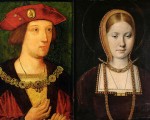
    1501 – Catherine of Aragon met Arthur, Prince of Wales, for the first time at Dogmersfield in Hampshire. They married eight days later at St Paul’s.
    1514 – Mary Tudor, Queen of France, processed into Paris following her coronation the previous day at Saint-Denis.
    1541 – Henry VIII abandoned his Catherine Howard, his fifth wife, at Hampton Court Palace. The investigation into John Lassell’s claims that Catherine had two sexual relationships during her time in the Dowager Duchess of Norfolk’s household had proved them true.
    1558 – Baptism of Thomas Kyd, translator and playwright, at St Mary Woolnoth in London. Kyd is known for his play “The Spanish Tragedy”.
    1612 – Death of Nicholas Fitzherbert, author and former secretary of Cardinal William Allen, near Florence in Italy. Fitzherbert drowned while trying to ford a stream en route to Rome. Fitzherbert left England in the 1570s because of his Catholic faith and to study law at Bologna. In 1580, while he was in Italy, he was attainted of treason back in England due to his Catholic faith. He was buried at Florence, in the Benedictine abbey.

    [Read More...]
  • Remember, remember the fifth of November

    This weekend, people around the UK will have been marking the 5th of November by attending firework displays, letting off fireworks in their backyards, lighting bonfires and burning “the guy”. For many, it’s just a bit of fun, for others it’s time to worry about the pets, and for others, it’s a time to remember the plot that sought to kill a king.

    On the night of 4th/5th November 1605, Guy Fawkes was caught with thirty-six barrels of gunpowder in the cellars beneath Westminster. The idea was to blow up the House of Lords at the opening of Parliament on the 5th November, and to assassinate King James I.

    [Read More...]
  • This week in history 23 – 29 October

    On this day in history…

    23rd October:

    1545 – Death of Sir Humphrey Wingfield, lawyer, Speaker of the House of Commons (1533-36) and patron of humanist education, at Ipswich.
    1556 – Death of Sir John Gresham, brother of Sir Richard Gresham and Lord Mayor of London (1547). He was buried in the church of St Michael Bassishaw.
    1570 – Burial of John Hopkins, poet, psalmodist and Church of England clergyman, at Great Waldingfield. Churchman and historian John Bale described Hopkins as “not the least significant of British poets of our time”. Hopkins’ psalms were included in the 1562 “The whole booke of Psalmes, collected into Englysh metre by T. Starnhold, J. Hopkins & others”

    [Read More...]
  • Thomas Seymour: A sexual predator?

    In today’s Claire Chats, Claire considers the primary source evidence for Thomas Seymour’s behaviour with Elizabeth, the future Elizabeth I, between 1547 and 1549.

    [Read More...]
  • This week in history 16 – 22 October

    On this day in history…

    16th October:

    1532 – While Anne Boleyn and Henry VIII were lodged in Calais, the Duke of Norfolk, Earl of Derby and a group of gentleman met with “the great mayster of Fraunce” Anne, duc de Montmorency, and his men at the English Pale, six miles outside of Calais. This meeting was to plan where Henry VIII would meet Francis I.
    1555 – The burnings of two of the Oxford martyrs: Hugh Latimer, Bishop of Worcester, and Nicholas Ridley, Bishop of London. Click here to read more.
    1573 – Death of Thomas Davies, Bishop of St Asaph, at Abergele in Denbighshire.
    1594 – Death of Cardinal William Allen at his home in the via Monserrato, Rome, while in exile. He was buried in Rome, in the English College’s Church.

    [Read More...]
  • Sir Thomas Wyatt the Elder

    As today is the anniversary of the death of Sir Thomas Wyatt the Elder, poet and diplomat, on 11th October 1542, I thought it would be good to share a mini-biography of him. This article is adapted from an article I wrote for the Anne Boleyn Files a few years ago and an extract from my book On This Day in Tudor History.

    Sir Thomas Wyatt was born in c.1503 at Allington Castle, Kent. He was the eldest son of Yorkshireman Sir Henry Wyatt and Anne Skinner, daughter of John Skinner of Reigate, a woman famed for her hospitality. Henry Wyatt was a skilled soldier and financier. During the Wars of the Roses, he had been a Lancastrian and it is possible that he was involved in the Duke of Buckingham’s rebellion against King Richard III. He was certainly imprisoned in Richard III’s reign and a family story tells of how he was saved from starvation during his imprisonment by a cat who brought him pigeons to eat. He was released on the accession of Henry VII, who rewarded him with many grants and titles. Henry Wyatt became a privy councillor under Henry VII and acted as an executor of the king’s will on his death in 1509. He went on to serve the new king, Henry VIII, and was made a Knight of the Bath at his coronation in June 1509.

    [Read More...]
  • This week in history 2 – 8 October

    On this day in history…

    2nd October:

    1452 – Richard III, the last Plantagenet king, was born at Fotheringhay Castle, Northamptonshire.
    1501 – Catherine of Aragon arrived in England, landing at Plymouth in Devon. She had come to England to marry Prince Arthur, the heir to the throne of England.
    1514 – Mary Tudor, sister of Henry VIII, set off from Dover to sail to France to marry King Louis XII. She was eighteen and he was fifty-two, and not in the best of health. They married on 9th October 1514, but the marriage was short-lived as Louis died in January 1515. Mary went on to marry Charles Brandon, the Duke of Suffolk, on the 3rd March 1515.
    1518 – Treaty of London – Cardinal Wolsey’s treaty of “Universal” peace between France and England was signed.
    1521 – Pope Leo X was given Henry VIII’s Assertio septem sacramentorum or “Defence of the Seven Sacraments” in Rome. This work led to Henry VIII being proclaimed Fidei Defensor or “Defender of the Faith”.
    1528 – Publication of William Tyndale’s “The Obedience of the Christian Man and How Christian Rulers Ought to Govern”.
    1536 – Start of the Lincolnshire Rising, the beginning of the Pilgrimage of Grace. It was sparked off by a sermon at evensong on the 1st October at St James’s Church, Louth, and by a visitation from a registrar on 2nd October.

    [Read More...]
  • This week in history 25 September – 1 October

    On this day in history…

    25th September:

    1513 – Vasco Núñez de Balboa, the Spanish explorer, reached the Pacific Ocean. He was the first European to have discovered the Pacific Ocean from the New World.
    1525 – Explorer, navigator and naval administrator Stephen Borough (Burrough) was born at Borough House, Northam Burrows, Northam in Devon, to Walter Borough and his wife Mary Dough.
    1534 – Death of Pope Clement VII in Rome from eating a death cap mushroom. He was laid to rest in Santa Maria sopra Minerva.
    1554 – Death of Richard Sampson, Bishop of Coventry and Lichfield, and former President of the Council of the Welsh Marches, at Eccleshall in Staffordshire. He was buried in the parish church at Eccleshall. Sampson had acted as the King’s Proctor at the fall of Anne Boleyn in 1536.
    1555 – The Peace of Augsburg, or Augsburg Settlement, was signed by Charles V, Holy Roman Emperor, and the princes of the Schmalkaldic League at Augsburg.
    1558 – Gertrude Courtenay, Marchioness of Exeter, made her will. She died soon after and was buried in Wimborne Minster, Dorset. Gertrude was the mother of Edward Courtenay, 1st Earl of Devon, who was imprisoned for his part in Wyatt’s Rebellion in 1554. Gertrude, herself, was imprisoned in 1538, and her husband was executed for treason.
    1584 – Death of Thomas Copley, Roman Catholic, in exile near Antwerp. He had served Elizabeth I as Commissioner of the Peace for Surrey, and she was godmother to his son, Henry, but he lost royal favour when he converted to Catholicism in 1563. He left England in 1570, being unable to accept royal supremacy and Elizabeth I’s religious measures.
    1586 – Mary, Queen of Scots was moved to Fotheringhay Castle in Northamptonshire, and Elizabeth finally backed down and agreed to the appointing of 36 commissioners to act as judges in her trial.
    1594 – Death of Gregory Fiennes, 10th Baron Dacre, at Chelsea. He was buried in Chelsea Old Church.
    1602 – Death of William Redman, Bishop of Norwich, at the Episcopal Palace. He was buried in the cathedral choir.

    [Read More...]
  • This week in history 18 – 24 September

    A miniature of Henry Brandon, 2nd Duke of Suffolk, by Hans Holbein the Younger.

    On this day…

    18th September:

    1501 – Birth of Henry Stafford, 10th Baron Stafford, at Penshurst in Kent. He was the son of Edward Stafford, 3rd Duke of Buckingham, and his wife Eleanor (née Percy), daughter of Henry Percy, 4th Earl of Northumberland. Henry married Ursula Pole, daughter of Sir Richard Pole and Margaret Pole, Countess of Salisbury, in 1519, and the couple had around fourteen children. Stafford served Mary I as a Chamberlain of the Exchequer and Elizabeth I as a Lord Lieutenant of Staffordshire.
    1535 – Birth of Henry Brandon, son of Charles Brandon, Duke of Suffolk, and his wife Katherine (née Willoughby). Henry Brandon died on 14th July 1551, at the age of fifteen, from sweating sickness. His younger brother, Charles, survived him by just half an hour.
    1544 – Henry VIII rode triumphantly through the streets of Boulogne after the French surrendered, ending the Siege of Boulogne.
    1556 – Death of Edward Courtenay, 1st Earl of Devon, from a fever at Padua in Italy. He was buried there in the church of Sant’Antonio. Courtenay had been sent overseas after he was implicated in Wyatt’s Rebellion as a future husband and consort of Mary I’s half-sister, Elizabeth.
    1559 – The fifteen-year-old Francis II was crowned King of France at Rheims by the Cardinal of Lorraine, following the death of his father Henry II in July 1559 after a jousting accident. Mary, Queen of Scots was Francis’ consort.

    [Read More...]
  • 19 August 1561 – Mary, Queen of Scots lands at Leith

    On this day in history, on 19th August 1561 at six o’clock in the morning, Mary, Queen of Scots landed at Leith harbour, in Scotland, the country of her birth. The reason for her return to her homeland was the death of her husband, Francis II, King of France. He had died in December 1560 and was succeeded by his brother, Charles IX, with his mother, Catherine de’ Medici acting as regent for the ten-year-old boy. Mary knew that there was no sense in her staying in France. There was no place for her there, so she handed her jewels in to Catherine and set about planning her return to Scotland and making a fresh start.

    [Read More...]
  • This week in history 14 – 20 August

    On this day in history…

    14th August:

    1473 – Birth of Margaret Pole, Countess of Salisbury, the daughter of George, Duke of Clarence, brother of Edward IV, and his wife Isabel Neville. Margaret was born at Farley Castle, near Bath.
    1479 – Date given as the birthdate of Katherine of York (Katherine, Countess of Devon), at Eltham Palace. Katherine was the daughter of Edward IV and Elizabeth Woodville, and she married Sir William Courtenay, the future Earl of Devon, in 1495.
    1513 – William Parr, Marquis of Northampton and brother of Queen Catherine Parr, was born.
    1539 – Death of Sir Peter Edgcumbe. Edgcumbe served as Sheriff of Devon and Cornwall at various times between 1494 and 1534, was at the 1513 Battle of the Spurs and was present at the Field of Cloth of Gold in 1520.
    1620 – Burial of Katherine Hastings (née Dudley), Countess of Huntingdon, in Chelsea Old Church. Katherine was the daughter of John Dudley, Duke of Northumberland, and his wife Jane, and was married to Henry Hastings, 3rd Earl of Huntingdon. Katherine was buried in her mother’s tomb.

    [Read More...]
  • This week in history 7 – 13 August

    On this day in Tudor history…

    7th August:

    1485 – Henry Tudor (future Henry VII) dropped anchor at Mill Bay, Milford Haven, Wales. He had returned from exile to claim the crown of England. Click here to read more.
    1514 – Peace treaty signed between England and France, arranging the marriage of the widowed fifty-two-year-old Louis XII of France and the eighteen-year-old Princess Mary Tudor, sister of Henry VIII.
    1541 – Death of Sir Richard Weston, courtier and father of Sir Francis Weston who was executed in 1536 for alleged adultery with Queen Anne Boleyn. Richard served Henry VII as Groom of the Chamber and Henry VIII as an Esquire of the Body, Governor of Guernsey and treasurer of Calais. He was buried in Holy Trinity Church, Guildford.
    1549 – The five-year-old Mary, Queen of Scots set sail from Dumbarton, Scotland, for France. A marriage had been agreed between Mary and Francis, the Dauphin, so Mary was going to be brought up at the French court. Mary arrived at Saint-Pol-de-Léon, near Roscoff in Brittany, just over a week later.
    1574 – Sir Robert Dudley, mariner, cartographer and landowner, was born on this day in 1574 at Sheen House, Richmond. He was the illegitimate son of Robert Dudley, Earl of Leicester and favourite of Elizabeth I, and his lover Lady Douglas Sheffield, daughter of William Howard, 1st Baron Howard of Effingham, and widow of John Sheffield, 2nd Baron Sheffield.
    1600 – Burial of Sir Thomas Lucy in the parish church at Charlecote, Warwickshire. Lucy was a magistrate and member of Parliament, but is best known for his links with William Shakespeare. Tradition has it that Shakespeare wrote a satirical ballad about Lucy, or he made a caricature of him in the character of Judge Shallow, as revenge after he was judged too harshly for poaching on Lucy’s estate, Charlecote Park. There is no evidence to support this story.
    1613 – Death of Sir Thomas Fleming, Solicitor-General to Elizabeth I and James I, at Stoneham Park. He also served James I as Chief Justice of the King’s Bench. He was buried at North Stoneham Church.

    [Read More...]

  • 30 July 1553 – Elizabeth rides to greet Mary

    On this day in history, 30th July 1553, Mary I’s half-sister Elizabeth left her new home, Somerset House, to ride to Wanstead and greet Mary, who had been proclaimed queen on 19th July 1553 in place of Queen Jane.

    Elizabeth had been at her estate at Hatfield when she heard the news that Mary was queen and so had departed for London, entering the city on 29th July through Fleet Street. She had made her way to her new townhouse, or rather palace, Somerset House, a house just off The Strand, on the north bank of the River Thames.

    The contemporary source, “The chronicle of Queen Jane, and of two years of Queen Mary, and especially of the rebellion of Sir Thomas Wyat”, states:

    [Read More...]
  • Members’ book recommendations

    Thank you so much to those of you who completed our recent survey about Tudor books.

    We already have recommended reading lists for Tudor monarchs and various Tudor topics – see the Recommended Reading category, but I thought it would be good to make a list of books that Tudor Society members would recommend, and here it is. Please do leave a comment if you’d like to recommend some books and I can then add them to the list – thank you!

    [Read More...]
  • This week in history 24 – 30 July

    On this day in history…

    24th July:

    1534 – Jacques Cartier, the French explorer, landed in Canada, at Gaspé Bay in Quebec, and claimed it for France by placing a cross there.
    1553 – Birth of Richard Hesketh, merchant and conspirator, in Lancashire. In 1593, Hesketh urged Ferdinando Stanley, 5th Earl of Derby, to lead a rebellion to claim the throne of England, through his descent from Mary Tudor, Queen of France. Stanley turned Hesketh in, and the latter was executed on 29th November 1593.
    1567 – Mary, Queen of Scots was forced to abdicate. Her one-year-old son, James, became King James VI of Scotland with his uncle, Mary’s illegitimate half brother, James Stewart, Earl of Moray, acting as regent.
    1594 – John Boste, Roman Catholic priest and martyr, was hanged, drawn and quartered in Durham after being accused of leaving and re-entering England without permission. He was canonized in 1970 by Pope Paul VI.

    [Read More...]
  • This week in history 17 – 23 July

    On this day in history…
    17th July:

    1497 – Death of Sir James Ormond (Butler), administrator and illegitimate son of John Butler, 6th Earl of Ormond, in a duel with Sir Piers Butler, near Kilkenny. The Butlers of Ormond were related to Thomas Boleyn, Queen Anne Boleyn’s father.
    1537 – Burning of Janet Douglas, Lady Glamis, on the castle hill at Edinburgh after being found guilty of two counts of treason. She had been charged with plotting the King’s death (by poison) and assisting and corresponding with her brothers, Sir George Douglas and Archibald Douglas, 6th Earl of Angus.
    1555 – Protestant martyrs Christopher Wade (Waid) of Dartford, linen-weaver, and Margaret Polley of Tunbridge, were burned for heresy. Click here to read more.
    1555 – Birth of Richard Carew, antiquary, bee-keeper, translator and poet, at Antony House, Torpoint, Cornwall. Carew was the eldest son of Thomas Carew and his wife Elizabeth (née Edgcumbe). Carew was a member of the Elizabethan Society of Antiquaries, and his works included his “Survey of Cornwall”, a county history.
    1565 – Death of Sir Thomas Dacre of Lanercost, illegitimate son of Thomas Dacre, 2nd Baron Dacre. He died while holding the office of Sheriff of Cumberland.
    1601 – Death of Richard Latewar, poet, theologian, Vice-President of St John’s College, Oxford, and chaplain to Charles Blount, 8th Baron Mountjoy. He died from a gunshot wound sustained in a skirmish at Bennurb, in Ireland, while on a campaign there with Mountjoy. Latewar was buried at Armagh Cathedral, and a monument was erected to him in the chapel of St John’s in Oxford.

    [Read More...]
  • Mary Howard, Duchess of Richmond and Somerset

    Born in 1519, Mary Howard was the daughter of Thomas Howard, third Duke of Norfolk. Her mother, Elizabeth, was the daughter of the disgraced Edward Stafford, Duke of Buckingham. Mary was highly educated, and spent the majority of her childhood at the family residences in Norfolk. As she entered her teenage years, Mary participated in ceremonies at court, including that of her kinswoman Anne Boleyn’s elevation to the marquisate of Pembroke in September 1532. It is likely that Mary also attended Anne’s coronation the following summer, and she carried the chrism at Princess Elizabeth’s christening in September. She seems to have shared the queen’s reformist sympathies and was rebuked by her brother for her love of reading the scriptures.

    [Read More...]
  • Are there any online primary sources for Wyatt’s Rebellion?

    Thank you to Georgia for asking this question: “I am unable to find any primary accounts of Wyatt’s Rebellion of 1554 – there are only secondary takes on the causes of the rebellion. I was just wondering if you had any links to a primary source that would be of assistance”.

    I (Claire Ridgway) will answer this question as I have a list of primary source from when I researched the rebellion in the past.

    “The Historie of Wyate’s Rebellion with the Order and Maner of Resisting the same” by John Proctor in “Tudor Tracts 1532-1588″…

    [Read More...]
  • 10 July 1553 – Queen Jane!

    On this day in history, 10th July 1553, the new monarch, Queen Jane, formerly Lady Jane Grey, was received at the Tower of London, accompanied by her husband, Lord Guildford Dudley, and proclaimed queen.

    Merchant-taylor of London and diarist Henry Machyn records this event in his diary:

    [Read More...]
  • This week in history 3 – 9 July

    On this day in history…

    3 July:

    1495 – The pretender Perkin Warbeck landed at Deal in Kent with men and ships. Around 150 of his men were killed and over 160 captured by Henry VII’s troops. Warbeck escaped, fleeing to Ireland. Warbeck claimed to be Richard, Duke of York, the younger of the Princes in the Tower.
    1533 – William Blount, 4th Baron Mountjoy, Catherine of Aragon’s Chamberlain, was ordered to inform Catherine again that she must recognise her new title of ‘Princess Dowager’ and not use the title of ‘Queen’. Catherine refused, and whenever she saw her new title written in letters, she crossed it out with a pen.
    1541 – Death of Girolamo Ghinucci, Italian papal administrator, Bishop of Worcester, papal nuncio and ambassador. He died in Rome and was buried in the church of San Clemente.
    1557 – Mary I bid farewell to her husband, Philip of Spain, at Dover as he set off for war with France.
    1579 – Death of Sir Edward Fitton, administrator and Vice-Treasurer for Elizabeth I in Ireland. His death was recorded as being ‘from the disease of the country’, which he had apparently caught on an expedition to Longford. He was buried in St Patrick’s Cathedral, Dublin, beside his wife, Anne.
    1594 (3rd or 4th July) – Executions of Catholic priest John Cornelius, Thomas Bosgrave (a relation of Sir John Arundell) and two servants of the Arundell family at Dorchester. They had been arrested when Cornelius was found hiding in a priest hole at Chideock Castle on 14th April 1594

    [Read More...]
  • This week in history 26 June – 2 July

    On this day in history…

    26th June:

    1513 – Burial of Sir Edmund Carew, landowner, administrator and soldier, in the church of St Nicholas, Calais, after he was shot dead during the siege of Thérouanne in Artois.
    1535 – A new commission of oyer and terminer was appointed for the county of Middlesex. The commission ordered the Sheriff of Middlesex to gather the Grand Jury on the 28th June at Westminster Hall. This was to try Sir Thomas More who, according to the indictment, had been “traitorously attempting to deprive the King of his title of Supreme Head of the Church”.
    1568 – Death of Thomas Young, Archbishop of York, at Sheffield. He was buried in York Minster.
    1576 – Death of Edward Dering, scholar, Church of England clergyman and controversial evangelical preacher, from tuberculosis at Thobie Priory in Essex. A collection of his works, which included sermons, lectures, prayers and letters, was first published in 1590.
    1596 – Burial of Sir John Wingfield in the cathedral at Cadiz, Spain. He was shot in the head in the attack on Cadiz on 21st June. At Wingfield’s funeral, “the generalls threw their handkerchiefs wet from their eyes into the grave” (Stow, 775) and the poet John Donne, who was a member of the expedition, composed an epigram as a tribute to Wingfield: “Farther then Wingefield, no man dares to go”.

    [Read More...]
  • This week in history 19 – 25 June

    On this day in history…

    19th June:

    1502 – The Treaty of Antwerp was signed between Henry VII and Emperor Maximilian I at Antwerp. Henry VII promised a payment of £10,000 for aid against the Turks in exchange for Maximilian’s promise to banish Yorkist rebels from his territories.
    1535 – Sebastian Newdigate, William Exmew and Humphrey Middlemore, monks of the Carthusian Order of London Charterhouse, were hanged, drawn and quartered at Tyburn. Their crime: refusing to accept King Henry VIII as the Supreme Head of the Church. Click here for more information on the Carthusian Martyrs.
    1566 – Birth of James VI and I, King of Scotland, England and Ireland, at Edinburgh Castle in Scotland. James was the only son of Mary, Queen of Scots, and Henry Stuart (Stewart), Lord Darnley. James became James VI of Scotland when his mother was forced to abdicate 24th July 1567, and he became James I of England on the death of Elizabeth I, 24th March 1603.
    1573 – Execution of Thomas Woodhouse, Jesuit priest and martyr, at Tyburn. He was the first priest to be executed in Elizabeth I’s reign. Woodhouse was beatified in December 1886 by Pope Leo XIII.
    1616 – Death of Henry Robinson, Bishop of Carlisle, at his home, Rose Castle in Carlisle. He died of the plague. Robinson was buried in Carlisle Cathedral.

    [Read More...]
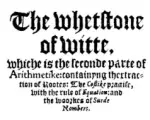
  • Robert Recorde

    On this day in history, 18th June 1558, the will of Robert Recorde, the Welsh mathematician, physician and mint administrator, was proved. His date of death is not known, but is thought to have been mid-June 1558.

    Robert Recorde was born c.1512 and was the second son of Thomas Recorde of Tenby, Pembrokeshire, Wales, and his wife, Rose. Recorde graduated BA from Oxford in 1531 and, in the same year, became a fellow at All Souls College, Oxford. He is thought to have taught Mathematics before studying medicine at Cambridge, where he received his MD in 1545. He wroteThe Urinal of Physick, a urological treatise, and had it published by Reynolde Wolfe in 1547. He also wrote a book on anatomy.

    [Read More...]
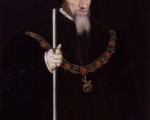
  • William Paulet, Marquess of Winchester

    Portrait of William Paulet, 1st Marquess of Winchester, holding the white staff of the office of Lord High Treasurer

    William Paulet was born in 1474/5 at Fisherton-Delamare in Wiltshire. He was the eldest son of Sir John Paulet and his wife, Alice. William’s date of birth is based on the testimony of William Camden and Sir Richard Baker confirming that he was ninety-seven at his death in 1572, an exceptionally advanced age even for modern times. He attended school at Thavies Inn and subsequently studied at the Inner Temple, becoming an utter barrister. By 1509, he had married Elizabeth Capel, daughter of the lord mayor of London, by whom he had several children including John, future second Marquess of Winchester, Chidiock and Giles.

    [Read More...]
  • This week in history 5 – 11 June

    On this day in history…

    5th June:
    1516 – Maria de Salinas married William, 10th Lord Willoughby of Eresby. Maria was a good friend of Catherine of Aragon, and she and William were the parents of Katherine Willoughby, who went on to marry Charles Brandon, Duke of Suffolk.
    1536 – Edward Seymour was created Viscount Beauchamp of Hache, Somerset, following the wedding of his sister, Jane Seymour, and Henry VIII.
    1539 – Death of Brian Hygdon, Dean of York. Hygdon was close to Wolsey and Cromwell, and served on the King’s Council in the North. He was buried in York Minster.
    1577 – Death of John Rastell, author, Jesuit and Vice-Rector at Ingolstadt. He died in Ingolstadt.
    1588 – Death of Anne de Vere (née Cecil), Countess of Oxford, at Greenwich. She was buried at Westminster Abbey. Anne was the daughter of William Cecil, 1st Baron Burghley, and his second wife, Mildred. She had been contracted to marry Philip Sidney, but married Edward de Vere, 17th Earl of Oxford in 1571. It was not a successful marriage, and the couple separated after Oxford refused to recognise their daughter, Elizabeth, as his.

    [Read More...]
  • This week in history 29 May – 4 June

    On this day in history…

    29th May:

    1500 – Death of Thomas Rotherham, Archbishop of York, at Cawood Castle, Yorkshire. He was buried in York Minster.
    1533 – Anne Boleyn’s coronation pageantry began with a river procession.
    1542 – Death of Sir Thomas Neville, lawyer and Speaker of the House of Commons, county commissioner in Kent, Surrey, Sussex, and Middlesex, and Knight of St John. He was the fifth son of George Neville, 2nd Baron Bergavenny. Neville was buried in Mereworth church in Kent.
    1546 – Murder of David Beaton, Cardinal and Archbishop of St Andrews, at the castle in St Andrews. He was killed by a small group of Fife lairds. One motive was their outrage at the recent trial and execution of Protestant preacher George Wishart at St Andrews.
    1555 – Birth of George Carew, Earl of Totnes, soldier, administrator and Lord President of Munster. He was a member of James I’s Privy Council and his council of war. He was also a friend of Sir Walter Ralegh, and pleaded unsuccessfully for his life.
    1593 – Hanging of religious controversialist John Penry at St Thomas-a-Watering in Surrey. Penry had been found guilty of “publishing scandalous writings against the church” after having been linked to the “Marprelate religious tracts.”
    1623 – Burial of Francis Anthony, alchemist and physician, in the church of St Bartholomew-the-Great.

    [Read More...]
  • Bishop John Jewel

    John Jewel, Bishop of Salisbury and Apologist of the Church of England, was born on the 24th May 1522 in Berrynarbor, North Devon, one of ten children. He was educated by his maternal uncle, John Bellamy, Rector of Hampton, because he showed signs of intelligence. Jewel was a hardworking, conscientious and studious boy, and went on to study at Merton College, Oxford, where he studied under John Pankhurst (later the Bishop of Norwich), the man credited with introducing Jewel to reformist doctrines. In August 1539, Jewel transferred to Oxford’s Corpus Christi College, from which he graduated with a Bachelor of Arts in 1540, followed by a Masters in 1545 after being elected as a fellow in 1542. John and Angela Magee1 tell of how Jewel was “considered as a decided and open friend to the Protestant cause” (citing Charles Webb Le Bas, M.A.) and that proof of this is the fact that he received an annual payment of six pounds from a special fund collected by the nobility for the purpose of supporting scholars who professed Reformist doctrines.

    [Read More...]