Following on from this week’s Claire Chats talk on Tudor society, its hierarchy, the different classes, and the nobility in Tudor times, I thought I’d get your little grey cells working with a fun quiz on the topic. Good luck!
[Read More...]
Following on from this week’s Claire Chats talk on Tudor society, its hierarchy, the different classes, and the nobility in Tudor times, I thought I’d get your little grey cells working with a fun quiz on the topic. Good luck!
[Read More...]
On this day in Tudor history, 14th March 1555, courtier, envoy and landowner, Sir John Russell, 1st Earl of Bedford, died at his London residence on the Strand aged around 70.
Russell was an important Tudor man who served four Tudor monarchs – Henry VII, Henry VIII, Edward VI and Mary I – AND he managed to keep his head, dying a natural death at a good age.
Find out more about this Earl of Bedford, his life, his rise and his career at the royal court, in today’s talk.
[Read More...]
On this day in Tudor history, 13th March 1540, sixty-eight-year-old Henry Bourchier, 2nd Earl of Essex, died after suffering a broken neck in a horse-riding accident. Chronicler Charles Wriothesley recorded: “the Earl of Essex, riding a young horse, by misfortune cast him and brake his neck at his place in Essex, which was great pity.”
Henry Bourchier, 2nd Earl of Essex, was related to the royal family and served both Henry VII and Henry VIII. Find out more about this Tudor man in today’s talk.
[Read More...]
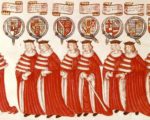
I’ve received a few questions recently about the structure of society and how the nobility worked in Tudor times, so I thought I’d do this Claire Chats talk on the topic.
[Read More...]
On this day in Tudor history, 12th March 1537, Cistercian monk William Haydock of Whalley Abbey, Lancashire, was hanged for treason at Whalley.
Haydock’s abbey had been implicated in the 1536 Pilgrimage of Grace Rebellion, so Henry VIII wanted the abbey punished. Find out more about Whalley Abbey’s part in the rebellion, how Haydock and several other monks were punished, and what exactly happened to William Haydock’s remains, in today’s talk.
[Read More...]
On this day in history, 11th March 1609, Tudor poet and lawyer William Warner was buried at the Church of St John the Baptist at Great Amwell in Hertfordshire.
Not many people today have heard of William Warner, but he was a well-respected and well-known poet in the Tudor era and even described as “our English Homer”. He is known for his huge poem, “Albion’s England, or, Historicall Map of the same Island”.
Find out more about this poet in today’s talk.
[Read More...]
On this day in Tudor history, 10th March 1513, magnate John de Vere, 13th Earl of Oxford, died at his home at Castle Hedingham in Essex.
Oxford was a key figure in the Wars of the Roses and played an important role in the Battle of Bosworth Field. As I talk about his life and career, you’ll see just how complicated this civil war was.
[Read More...]
On this day in Tudor history, 9th March 1589, Lady Frances Radcliffe, Countess of Sussex, and wife of Sir Thomas Radcliffe, Lord Fitzwalter and 3rd Earl of Sussex, died at her home in Bermondsey.
Frances is known for being the benefactor of Cambridge University’s Sidney Sussex College, but there is much more to her than that. Her enemies even turned her husband and Queen Elizabeth I against her at one point!
Find out all about Frances Radcliffe (née Sidney) in today’s talk.
[Read More...]
How much do you know about King Henry VIII’s Dissolution of the Monasteries, something that had a major impact on the country’s landscape and the lives of the people?
Find out with this fun crossword puzzle. Good luck!
[Read More...]
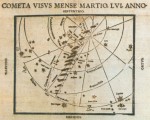
This day in Tudor history, 7th March 1556, was one of the days on which the Great Comet, or the Comet of Charles V, was seen and recorded by Paul Fabricius, mathematician and physician at the court of Charles V, Holy Roman Emperor.
Find out all about the Great Comet of 1556, what it looked like and how Emperor Charles V saw it as an ominous portent in today’s talk.
[Read More...]
On this day in Tudor history, 6th March 1536, King Henry VIII’s Dissolution of the Monasteries began when the “Act for the Suppression (or Dissolution) of the Lesser Monasteries” was introduced into the Reformation Parliament.
The Dissolution of the Monasteries had a major impact on England and her people, but was of great benefit to the king, his nobles and the gentry. Find out what happened, why and its impact in this talk.
[Read More...]
Philippa Brewell, our roving reporter, has been to Hampton Court Palace. This palace belonged to Thomas Wolsey, who then gave it to Henry VIII.
[Read More...]
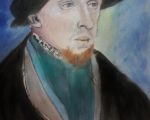
We’re thrilled to be able to share this collection of paintings by Clinton Inman, a very talented artist who loves to paint in the style of Hans Holbein the Younger.
[Read More...]
On this day in Tudor history, 5th March 1558, Spanish physician Francisco Fernandes brought back live tobacco plants and seeds from Mexico to Europe.
In today’s “On This Day in Tudor History”, I talk about the introduction of tobacco in Europe and how it was viewed as a cure-all, and how tobacco smoking became fashionable at Elizabeth I’s court.
[Read More...]
On this day in history, 4th March 1609, Tudor spelling reformer and grammarian William Bullokar died at Chichester in West Sussex.
William Bullokar is known for writing the first grammar book of English, the “Pamphlet for Grammar”, and for his work reforming the alphabet to improve literacy. Find out more about him and what he did in today’s talk.
[Read More...]
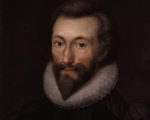
John Donne was born in 1572. His exact birth date is not known but is estimated to be between 24th January and 19th of June. He is remembered for his emotive poetry, religious writings and his skill as an orator.
John Donne was born a Roman Catholic and was a direct descendent of Sir Thomas More’s sister. His mother was the niece of Thomas More and the youngest daughter of John Heywood, a playwright. His father was a prosperous merchant with Welsh ancestry who died when Donne was four years old. His mother remarried Dr John Syminges, who became stepfather to Donne and his siblings. Donne was an exceptionally well educated young man, attending Oxford University at the age of eleven in 1583, where he resided and studied for three years. He later attended Cambridge University where he continued further study. However, due to his Catholicism, he could not obtain a degree, as the religion was illegal under Elizabeth I. Donne also refused to swear the oath of allegiance to Elizabeth, which was also needed to graduate. Following his time at Cambridge, Donne was accepted into the Thavie’s Inn Legal School where he began the study of law. During this time, his brother Henry was arrested for harbouring a Catholic priest, and he died of the Bubonic Plague while in prison. It is thought that this event resulted in Donne questioning his faith.
[Read More...]
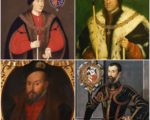
On this day in Tudor history, 3rd March 1542, Arthur Plantagenet, Lord Lisle, courtier, soldier, diplomat, administrator and illegitimate son of Edward IV, died of a heart attack after being informed of his release from the Tower of London. How very sad!
Find out all about Lord Lisle’s background, his career in Henry VII and Henry VIII’s reign, and how he came to imprisoned in the Tower of London, when he was probably innocent, in today’s talk.
[Read More...]
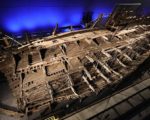
It’s the 475th anniversary of the sinking of the Mary Rose on July 19th, and so we’ve been offered an exclusive entry and visit for a Tudor Society member – is it you?
[Read More...]
On this day in Tudor history, 2nd March 1545, scholar, diplomat and founder of the Bodleian Library, Sir Thomas Bodley, was born in Exeter.
Sir Thomas Bodley served as a diplomat in the reign of Queen Elizabeth I, but he is most known for his re-founding of Oxford University Library and the Bodleian Library, and all the work he did on it. Find out all about him and his library in today’s talk.
[Read More...]

On this day in Tudor history, 1st March 1546, Scottish evangelical preacher and martyr George Wishart was hanged and burned at St Andrews, Scotland.
Wishart had been charged with 18 counts of heresy and although he answered each one he was condemned to death.
Find out more about this Scottish preacher, what he was accused of and his sad end in today’s talk.
[Read More...]
Between 1539 and his death in 1547, Henry VIII had over 30 coastal castles and blockhouses, known as device forts, built to protect England’s southern and eastern coasts from invasion from France and the Empire. 24 of them hiding in this wordsearch – can you find them? Be warned, the words can go in any direction.
Simply click on the link or the image below to open the wordsearch and print out.
[Read More...]This month we have a wonderful expert talk from historian Tracy Borman. Tracy is the curator of Hampton Court Palace and a well-known author of Tudor history books. In this talk, she takes us through the life of Henry VIII and the men who surrounded him at each stage of his life. It’s a fascinating perspective on such a key member of the Tudor Dynasty.
[Read More...]
On this day in Tudor history, 29th February 1604, John Whitgift, Archbishop of Canterbury, died at at Lambeth Palace, the archbishop’s palace in London. He was the last Archbishop of Canterbury in Queen Elizabeth I’s reign, and the queen called him her “white gift” and her “little black husband”.
He is known for his religious disagreement, but also had a real heart for the poor. Find out more about Archbishop John Whitgift in today’s talk.
[Read More...]
On this day in Tudor history, 28th February 1540, Protestant Thomas Forret was burned at the stake in Castle Hill, Edinburgh, in the presence of King James V.
Forret was a former Augustinian monk and had spent his career teaching the common people and helping those in need. How did he come to this awful end in Edinburgh? Find out all about Thomas Forret, and why he was accused of heresy, in today’s talk.
[Read More...]
My work for the Tudor Society, book research and research for my “on this day” videos often has me researching the legal cases of Tudor people, from looking at indictments ro records of their actual trials. It is fascinating and it’s wonderful that we have so many resources freely available.
[Read More...]
On this day in Tudor history, 27th February 1601, Benedictine monk Mark Barkworth (also known by the alias Lambert), Jesuit Roger Filcock, and widow Anne Line were executed at Tyburn.
Barkworth and Filcock had been found guilty of treason for being priests and were given the full traitor’s death, i.e. they were hanged, drawn and quartered. Anne Line was sentenced to death for harbouring a priest and was hanged.
Find out more about these Catholics, who were victims of Queen Elizabeth I’s legislation against Jesuits, in today’s talk.
[Read More...]
Thank you to Sean and all those who joined us for the wonderful Q&A session on Richard III and Henry VII. It was a fun and interesting chat. Here is the transcript for those of you who weren’t able to attend.
[Read More...]

Today is Ash Wednesday, the first day of Lent, which in Tudor times was a time of fasting and prayer.
But how did Tudor people mark Ash Wednesday and Lent? What else did they do? Find out all about Ash Wednesday and Lent in Tudor times from Teasel and Claire.
[Read More...]
On this day in Tudor history, 26th February 1552, Sir Thomas Arundell, Sir Michael Stanhope, Sir Miles Partridge and Sir Ralph Fane (or Vane) were executed. The men had been condemned as traitors after being accused of conspiring with Edward Seymour, Duke of Somerset and former Lord Protector, against John Dudley, Duke of Northumberland, the new man in control of King Edward VI’s government.
Find out all about these men and how these loyal royal servants came to these sticky ends in today’s talk.
[Read More...]