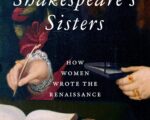
Author Ramie Targoff is in the UK doing a series of talks…
[Read More...]
On this day in Tudor history, 11th March, Giovanni di Lorenzo de’ Medici was proclaimed Pope Leo X, poet William Warner, “Our English Homer”, was buried, and poet, diplomat and MP Giles Fletcher the Elder died in London…
[Read More...]
On this day in Tudor history, 10th March, John de Vere, 13th Earl of Oxford and a man who commanded Henry Tudor’s archers at the Battle of Bosworth, died; Henry VIII suffered a jousting accident jousting against his friend, Charles Brandon; and William Paulet, 1st Marquess of Winchester and a man who served Henry VIII, Edward VI, Mary I and Elizabeth I, died…
[Read More...]
On this day in Tudor history, 9th March, Mary, Queen of Scots’ private secretary was assassinated in front of the pregnant queen, Mary’s mother-in-law, Margaret Douglas, Countess of Lennox, died, and Lady Frances Radcliffe, one of Elizabeth I’s ladies of the bedchamber, died…
[Read More...]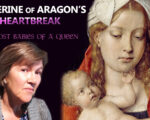
In my latest video, I unravel the heartbreaking saga of Catherine of Aragon’s relentless quest to provide Henry VIII with a male heir, which saw her experiencing six pregnancies between 1509 and 1518, and losing five children.
[Read More...]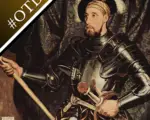
On this day in Tudor history, 8th March, Henry VIII was sent a leopard as a gift, Sir Nicholas Carew was executed for treason for allegedly plotting with Cardinal Pole, and outspoken reformer Richard Tracy died…
[Read More...]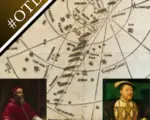
On this day in Tudor history, 7th March, the Pope threatened Henry VIII with excommunication of her married again, Germaine Gardiner and John Larke were executed for denying the royal supremacy, and the Great Comet was seen…
[Read More...]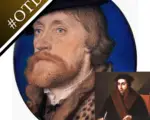
On this day in Tudor history, 6th March, scholar and humanist Juan Luis Vives, a man who advised Catherine of Aragon on Mary I’s education, was born in Valencia, Spain; the Act for the Suppression of the Lesser Monasteries was introduced into Parliament; and Thomas Wriothesley got into trouble for allegedly abusing his authority…
[Read More...]
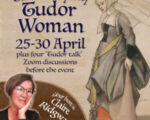
In my latest six-day event, I will be joined by two other Tudor historians, Brigitte Webster and Bess Chilver, in delving into the life of the 16th century common woman and unveiling what it was really like to be a woman during the Tudor period.
I’m so excited by this event because as interesting as it is to look at the lives of the Tudor queens and Henry VIII’s six wives, it’s wonderful to spend time looking at how the average woman lived.
The event will run from 25th-30th April and will comprise video talks and live video Q&A sessions with the experts via zoom. The zooms are always brilliant, my favourite part! So much so, that we also have four zoom discussion calls leading up to the event, and the first one is this Sunday, 10th March!
[Read More...]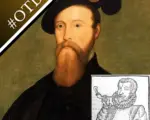
On this day in Tudor history, 5th March, Henry VII issued letters patent to explorer John Cabot (Giovanni Caboto), a bill of attainder listing 33 counts of treason was passed against Edward VI’s uncle, Thomas Seymour, and a Spanish physician introduced tobacco into Europe…
[Read More...]
On this day in Tudor history, 4th March, Anne Boleyn made her court debut at the Château Vert pageant, Mary Boleyn gave birth to a son, and spelling reformer and grammarian William Bullokar was born…
[Read More...]
On this day in Tudor history, 3rd March, Charles Brandon and Mary Tudor may have got married in France, Margaret Tudor, former Queen of Scotland, married for the third time, and Edward IV’s illegitimate son, Arthur Plantagenet, Lord Lisle, died in the Tower of London…
[Read More...]
On this day in Tudor history, 2nd March, Henry VIII used the motto “she has wounded my heart” at the Shrovetide joust, founder of the Bodleian Library Sir Thomas Bodley was born, and Anne of Denmark, wife of King James VI and I, died…
[Read More...]
On this day in Tudor history, 1st March, Scottish evangelical preacher George Wishart was hanged and burnt, conspirator William Stafford was born, Grand Prior Sir Thomas Tresham died, and physician, poet and musician Thomas Campion died…
[Read More...]
Here at the Tudor Society, we are so very saddened to hear of the death of historian and author Derek Wilson on 5th February 2024 at the age of 88.
[Read More...]
On this day in Tudor history, 29th February, Pope Paul III was born, Protestant Patrick Hamilton was burnt at the stake in St Andrews, and John Whitgift, Archbishop of Canterbury and Elizabeth I’s “White gift”, died…
[Read More...]
On this day in Tudor history, 28th February, Gerald Fitzgerald, 11th Earl of Kildare and the fugitive “Wizard Earl” was born, Protestant Thomas Forret was burnt at the stake, and Protestant reformer Martin Bucer died…
[Read More...]
On this day in Tudor history, 27th February, English forces were defeated by the Scots at the Battle of Ancrum Moor, diarist and clergyman Richard Madox died at sea, and two priests and the woman who harboured them were executed…
[Read More...]
On this day in Tudor history, 26th February, George Carey, 2nd Baron Hunsdon and grandson of Mary Boleyn was born, four men were executed after being accused of conspiring with the Duke of Somerset against the Duke of Northumberland, and poet and playwright Christopher Marlowe was baptised…
[Read More...]
On this day in Tudor history, 23rd February, Elizabeth of York, wife of Henry VII and mother of Henry VIII, was buried at Westminster Abbey, Henry Grey, Duke of Suffolk, was executed on Tower Hill following the failed Wyatt’s Rebellion, and religious pamphleteer Job Throckmorton was buried…
[Read More...]
On this day in Tudor history, 22nd February, little Henry Duke of Cornwall, son of Henry VIII and Catherine of Aragon, died suddenly, and Marie de Guise was crowned Queen of Scotland, rather than England, which had apparently been an option for her…
[Read More...]
A big thank you to Amanda Glover for sharing with us her brand new, ground-breaking research into the “From the Lady in the Tower” letter said to have been written by Anne Boleyn in May 1536 when she was imprisoned in the Tower of London. Please do read through Amanda’s findings and share your thoughts.
[Read More...]
On this day in Tudor history, 21st February, Pope Julius II died; Katherine Seymour (née Grey), Countess of Hertford, was buried; Ambrose Dudley, 3rd Earl of Warwick, died, and Jesuit priest Robert Southwell was hanged, drawn and quartered…
[Read More...]
On this day in Tudor history, 20th February, Mary I was baptised, Lady Agnes Hungerford was hanged for murder, Edward VI was crowned king at Westminster Abbey, and Anne Herbert (née Parr), Countess of Pembroke, died…
[Read More...]
On this day in Tudor history, 19th February, Edward VI rode through the streets of London on his coronation procession, Margaret Douglas was informed of the murder of her son, Lord Darnley, and the Elizabethan playhouse, The Rose Theatre, opened on Bankside…
[Read More...]
On this day in Tudor history, 18th February, The future Henry VIII was made Prince of Wales, Catherine of Aragon gave birth to a healthy daughter who’d become Mary I, the Duke of Guise was fatally wounded by a Huguenot assassin, and Ridolfi Plot creator Roberto di Ridolfi died a natural death in Florence…
[Read More...]
On this day in Tudor history, 17th February, Edward Seymour, King Edward VI’s uncle, was made Duke of Somerset, Mary, Queen of Scots, met and fell in love with Henry Stuart, Lord Darnley, and Henry Radcliffe, 2nd Earl of Essex, died…
[Read More...]
On this day in Tudor history, 16th February, Sir William Stanley, was executed for treason, the German humanist reformer and scholar, Philipp Melancthon was born, and Henry VIII was buried in St George’s Chapel, Windsor…
[Read More...]
On this day in Tudor history, 15th February, Henry Deane, the last monk to become Archbishop of Canterbury died, Galileo, “The Father of Modern Science”, was born, and Thomas Arden, whose tragic end inspired a play, was murdered by his wife and her lover…
[Read More...]