YOUR SEARCH UNCOVERED 2372 RESULTS
-
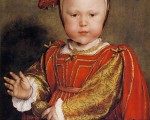
The Christening of Edward VI
-
This week in history 12 – 18 October
-
11 October 1549 – The Arrest of Edward Seymour, Duke of Somerset and Lord Protector
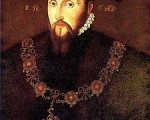
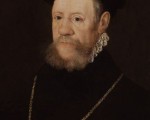
On this day in history, 11th October 1549, Edward Seymour, the Duke of Somerset, Lord Protector of the Realm and Governor of the King’s Person, was arrested and brought in front of Edward VI who summarised his charges as “ambition, vainglory, entering into rash wars in mine youth, negligent looking on Newhaven, enriching himself of my treasure, following his own opinion, and doing all by his own authority, etc.”
[Read More...] -
Education in Tudor Times video Part 2
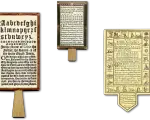
In today’s Claire Chats, I talk about how children were taught to read in the medieval and Tudor periods.
[Read More...] -
William Tyndale
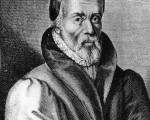
As today is the anniversary of the execution of reformer, scholar and Bible translator, William Tyndale, Sarah Bryson has written an article on this fascinating man.
William Tyndale was born in Gloucestershire in 1494 to parents who worked in the cloth trade. Tyndale was born into a Catholic dominated England under the rule of Henry VII. He was brought up a strict and devout Catholic being taught the importance of mass and good works which would help him gain access to heaven. He would have participated in regular confession and penance and his daily life would have been dominated by Saints’ days and following the Catholic faith. The Bible that Tyndale would have known growing up would have been written in Latin, the holy language. Meanwhile the common people would have spoken English, a rough language which was not considered suitable for the holiness of the Church.
[Read More...] -
This week in history 5 – 11 October
-
Mary I’s Coronation Part 2 – Knights of the Bath
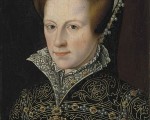
On 29th September 1553, Michaelmas or the Feast of St. Michael and All Angels, Mary I created fifteen1 Knights of the Bath as part of her coronation celebrations.
[Read More...] -
This week in history 28 September – 4 October
-
This week in history 21 – 27 September
-
Arthur, Prince of Wales
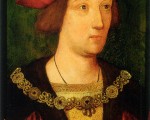
Elizabeth of York, daughter of Edward IV, got pregnant straight after her marriage to Henry VII in January 1486 and the news of her pregnancy was celebrated throughout England. Henry VII, was ecstatic at the news and decided that the birth of his first-born would take place at Winchester, the place believed to have been the capital of the legendary Camelot and the site of King Arthur’s castle, and that the child would be called Arthur. Henry was convinced that Arthur’s birth would bring about a new golden age.
[Read More...] -
Katherine Willoughby, Duchess of Suffolk by Sarah Bryson
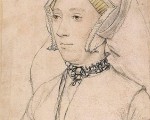
Born on the 22nd March 1519, Katherine Willoughby was the daughter of William, 11th Baron Willoughby, and his wife Maria De Salinis, one of Queen Katherine of Aragon’s ladies. When Katherine was just seven years old. her father died and with no male son surviving Katherine was his heir. In March 1528 Charles Brandon bought the wardship of Katherine from the King for a staggering £2,266 13s 4d with the intention of marrying Katherine to his son Henry. Katherine then came to live with the Brandons to be raised.
Charles Brandon’s third wife, Mary Tudor, Queen of France, died between seven and eight o’clock in the morning on the 25th June 1533. Her funeral was held on the 20th July 1533 at Bury St Edmunds. Katherine attended the funeral and she and her mother brought forward palls of cloth of gold to the altar.
[Read More...] -
This week in history 14 – 20 September
-
Gloriana and the Green Ruby by Heather R. Darsie
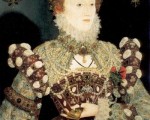
Gloriana, Elizabeth I, is the famous Virgin Queen of England. She never took a husband. Much speculation has swirled around Elizabeth’s decision to remain single. Several tragic, if not traumatic, events are cited as reasons why Elizabeth chose not to marry.
Elizabeth was born on 7 September 1533. On 19 May 1536, when Elizabeth was not quite three years of age, her mother, Anne Boleyn, was beheaded by order of her father. Elizabeth, a precocious child, asked following the fall of her mother, “how haps it governor, yesterday my Lady Princess, today but my Lady Elizabeth?”. Elizabeth’s first step-mother, Jane Seymour, died of puerperal fever in 1537 only days after giving birth to Elizabeth’s little half-brother. Elizabeth was four years old. Katherine Howard, a cousin of Elizabeth’s on her mother’s side and Elizabeth’s third step-mother, was beheaded for high treason for her “dissolute life previous to her marriage” in February 1542. Elizabeth was eight years old.
[Read More...] -
This week in history 7 – 13 September
-
This week in history 31 August – 6 September
-
Childbirth in Medieval and Tudor Times by Sarah Bryson
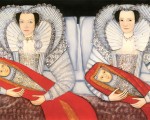
Childbirth is openly discussed in today’s society. Images of pregnant women appear in magazines and women giving birth can be seen on television and in movies. Yet during the medieval period, childbirth was deemed a private affair. Giving birth in the middle ages was a dangerous time for women and childbirth did not discriminate. Young mothers, older mothers, poor or rich mothers, all could die not only in childbirth but also due to complications afterwards. Sadly, more than one in three women died during their child-bearing years.
[Read More...] -
Coming up on the Tudor Society

Historian Gareth Russell is the editor of our monthly Tudor Life magazine and he’s been working hard on scheduling expert articles and also expert talks for the next few months. We are thrilled to bits that so many historians and authors want to be involved in the Tudor Society by offering their knowledge and expertise to our members – a big thank you to them and to all our members too for your continued support.
Contributors to Tudor Life magazine in the coming months include:
[Read More...] -
This week in history 24 – 30 August
-
Sexual Intercourse in Tudor Times by Sarah Bryson
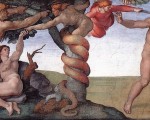
While in today’s modern times many people are more open with their knowledge and acceptance of sexual intercourse, during the Tudor period things were very different.
The church played a major role in sex and the duties of the female body. The Virgin Mary and Eve, the mother of mankind, helped to develop people’s views of sexual intercourse, birth and the formation and function of the female body. Messages were conveyed not only through sermons but also through images and paintings. The act of intercourse, was tainted by the fall of Eve. Women were seen as inferior versions of men and were thought to be greatly susceptible to the devil and the dark forces. The Church taught that women’s bodies ran hot and thus they always desired sex and acts of fornication. Thus marriage and sex within marriage was the only way to control a woman’s desires. Sex was strictly confined to marriage and only for the purpose of reproduction.
[Read More...] -
This week in history 17 – 23 August
-
The Battle of the Spurs – 16 August 1513
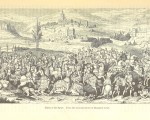
On 16th August 1513, a battle which became known as “the Battle of Spurs” or the Battle of Guinegate, took place at Guinegate (Enguinegatte) in France. It was a battle between the English, backed by Imperial troops, and the French and is called “the Battle of the Spurs” because the French knights, taken by surprise and realising that they were outnumbered and outmanoeuvred, fled on horseback, their spurs glinting in the sunlight.
[Read More...] -
John Dudley by Susan Higginbotham
In our second expert video of the month, we have Susan Higginbotham. Susan discusses John Dudley and analyses whether all that was said about him is true.
[Read More...] -
William Parr, Marquis of Northampton

William Parr, Marquis of Northampton and brother of Queen Catherine Parr, was born on 14th August 1513. He was the son of Sir Thomas Parr of Kendal and his wife, Maud (née Green).
[Read More...] -
Margaret Pole, Countess of Salisbury
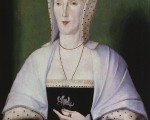
Margaret Pole, or Margaret Plantagenet, was the daughter of George, Duke of Clarence – brother of two Plantagenet kings: Edward IV and Richard III – and his wife Lady Isabella Neville, daughter of Richard Neville, 16th Earl of Warwick and a man known as ‘the Kingmaker’. Margaret was born on 14th August 1473 and she married Sir Richard Pole in 1491, having five children before she was widowed in 1505. One of her children was Reginald Pole who became a cardinal and then Archbishop of Canterbury during the reign of Mary I.
[Read More...] -
Marriage in Tudor Times by Sarah Bryson
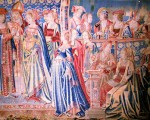
Marriage during the Tudor period was very different to how it is today. First and foremost marriage was considered to be between a man and a woman, and there was no room for anything else. There was also no need for a marriage certificate or legal process as there is today. Instead the Church’s law dictated that all that made a legal marriage was the consent of two people.
[Read More...] -
This week in history 10 – 16 August
-
The Battle of Saint-Mathieu – 10 August 1512
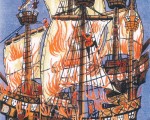
On the 10th August 1512, the Battle of Saint-Mathieu, a battle in the War of the League of Cambrai, took place between the English and Franco-Breton fleets off the coast of Brest. England at this time were allied with Spain and the Holy Roman Empire against France.
[Read More...] -
William Cecil, 1st Baron Burghley
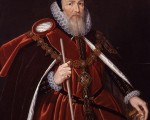
Today is the anniversary of the death of William Cecil, 1st Baron Burghley, at his home in London in 1598. Here is a bio of this extraordinary Tudor man:
[Read More...] -
Menstruation in the Tudor period by Sarah Bryson
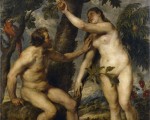
It has been happening to women since the dawn of time and yet during the Tudor age it was rarely spoken about. The monthly curse, flowering, coming of age, a period, a woman’s menstruation goes by many names yet how did women during the Tudor age handle their cycles without the modern day use of sanitary napkins or in some cases pain killers? (And lots of chocolate!)
[Read More...] -
This week in history 3 – 9 August