On this day in history events for 1-7 February.
[Read More...]
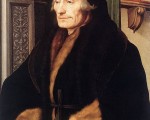
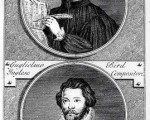
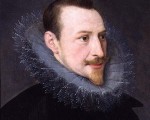
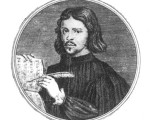
It is thought that Thomas Tallis, alternatively spelled “Tallys,” could have been born on 30 January 1505, though it is not known for certain. What is known is that Tallis did not die until 1585, and that he contributed greatly to the development and composition of English choral music. Not much is known about Tallis’s early life. There are no records of his education or really of his whereabouts until Tallis is well into his 20s. There is also no contemporary portrait of him, with the only existing portrait having been executed sometime after his death.
[Read More...]
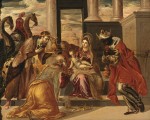
I’ve noticed lots of comments from people on social media saying how they’ve taken down their Christmas trees and decorations and got back to normal. For many people around the world today, the Christmas period was over with New Year, but Christmas in the Tudor period ran for twelve days, Christmas Day to Epiphany on 6th January, the feast day which was a commemoration and celebration of the visit of the Magi to the Christ child.
Twelfth Night and Epiphany were marked with feasting and entertainment. But when exactly is “Twelfth Night”? Is it 5th or 6th January? There isn’t really any agreement over this and an article in The Guardian newspaper examined this question:
[Read More...]
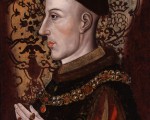
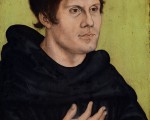
On 3rd January 1521, Pope Leo X issued the papal bull Decet Romanum Pontificem which excommunicated Martin Luther from the Catholic Church. Martin Luther was a German priest, professor of theology and most famously a reformer. His life and his beliefs changed the face of religion throughout Europe and saw many people break with the Catholic Church in the 16th century.
Martin Luther was born on 10th November 1483 in Eisleben, Saxony (part of the Holy Roman Empire at the time), to Hans and Margarethe Luther. The following year Hans moved his family to Mansfeld where he owned a series of mines and smelters. At the age of seven, Luther started at Mansfeld School. At the age of fourteen, Luther went to Magdeburg before returning to Eisleben to complete his studies in grammar, rhetoric and logic. It is reported that Luther hated his time studying at Eisleben. At the age of nineteen Luther attended the University of Erfurt where he received his master’s degree in 1505.
[Read More...]
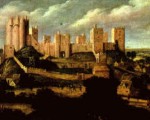
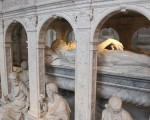
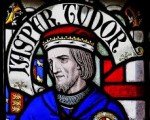
On 21st December 1495, Jasper Tudor, 1st Duke of Bedford and 1st Earl of Pembroke, died at his manor at Thornbury at the age of around sixty-four. His entrails were buried at the parish church at Thornbury and the rest of his remains were laid to rest at Keynsham Abbey, according to the instructions he left in his will of 15th December.
[Read More...]

During the Tudor period the four weeks leading up to Christmas was known as Advent and consisted of fasting and a limited range of foods which were allowed to be eaten; a tradition that is still practised by some today. Christmas Eve was particularly strict and people were not allowed to eat eggs, cheese or meat. However when Christmas day came around the Tudors were allowed to cast off the food restrictions and enjoy a lavish feast!
[Read More...]
Happy Christmas Tudor Society Members!
Unless you’re one of our many Australian or South American members, December can be a very cold month indeed. What better way to keep out the damp and the wind than snuggling up with our December Tudor Life Magazine. It’s full of Christmas and festive themed articles, and this month we also have some food related sections too … all to help you survive the weather, where’er you are.
[Read More...]
Today is the anniversary of the death of Thomas Tallis, musician and composer, on 23rd November 1585 at his home in Greenwich. Greenwich. He was buried in St Alfege’s Church, Greenwich, in the chancel and the text on the brass memorial which once marked his tomb read:
[Read More...]
On 23rd November 1499, Perkin Warbeck faced his death at Tyburn. He was sentenced to be hanged until he was dead. His crime was attempting to escape the Tower of London where he was held a prisoner, but his story goes back several years and involves a tale of deception, treason and rumours of a young Prince come back to life!
[Read More...]
On 12th November 15371, Jane Seymour’s body was taken by chariot from Hampton Court Palace to Windsor Castle. The chariot was followed by a procession led by the Duke of Suffolk and the Marquis of Dorset. Jane’s stepdaughter, the Lady Mary, acted as chief mourner in the procession and the service, which was held at St George’s Chapel on arrival at Windsor. A solemn watch was kept that night, and then Jane was buried on the morning of the 13th November. Queen Jane had died on 24th October, probably from puerperal (childbed) fever, just twelve days after the birth of her son, the future Edward VI.
[Read More...]
On this day in 1514, Mary Tudor, Queen of France, processed into Paris following her coronation the day before at St Denis.
It was a lavish occasion and must have been an incredible sight. According to Pierre Grigore, the pageants of Mary’s triumphant entry into the city included:
[Read More...]
Today marks the anniversary of the death of Edmund Tudor, 1st Earl of Richmond, on 1st November 1456. He died from the plague at Carmarthen Castle.
Thank you to Sarah Bryson for writing this article on Edmund for us.
Henry Tudor, King Henry VII, was the founder of the Tudor Dynasty. His mother was the imposing Margaret Beaufort who risked everything to see her son on the throne and in turn the houses of Lancaster and York united through the marriage of her son to Elizabeth of York, daughter of Edward IV. But who was Henry Tudor’s father? While so much is known about Henry’s mother, his father is a much more elusive figure and sadly he did not live to see his only son and heir claim the English throne.
[Read More...]
Erasmus: his name is synonymous with humanism, education and intelligence. Across Northern Europe several Erasmus programs exist at universities, so students may pursue their studies at multiple universities and in multiple languages. During his lifetime, Erasmus corresponded with such notable people as Sir Thomas More and John Colet. Erasmus assisted Hans Holbein in his quest to move to England, and advised Anne of Cleves’s father when he was writing religious tolerance laws.
Desiderius Erasmus was born on 27 or 28 October 1466 or 1467* in Rotterdam, Netherlands. His exact date of birth is not known. The second son and an illegitimate child of his father, a priest, and mother, a physician’s daughter, Erasmus was sent to school at the age of five. In about 1484, when Erasmus was approximately eighteen years of age, his parents both died of plague. Erasmus’s three guardians sent Erasmus and his brother to a new, more conservative school run by the Brethren of the Common Life. There, Erasmus studied Latin and Christian theology.
[Read More...]
As you may have read in this month’s Tudor Life magazine, 25th October marked the feast day of Saints Crispin and Crispinian, and following the victory of England over France on 25 October 1415 at the Battle of Agincourt, the day became a celebration of that event too. Celebrations included bonfires, revelry and the crowning of a King Crispin.
Today, Heather Darsie shares an article with us on the Battle of Agincourt back in 1415.
[Read More...]
he burnings of two of the Oxford martyrs: Hugh Latimer, Bishop of Worcester, and Nicholas Ridley, Bishop of London took place on this day in 1555, in the reign of the Catholic Mary I. The two men, along with Thomas Cranmer, who was burnt at the stake on the 21st March 1556, are known as the Oxford Martyrs and their lives and deaths are commemorated in Oxford by Martyrs’ Memorial, a stone monument just outside Balliol College and near to the execution site, which was completed in 1843. A cross of stones set into the road in Broad Street marks the site of their burnings.
[Read More...]