In today’s Claire Chats video, Claire talks about how you can access primary sources on Anne Boleyn’s fall in 1536 wherever you are in the world.
[Read More...]
In today’s Claire Chats video, Claire talks about how you can access primary sources on Anne Boleyn’s fall in 1536 wherever you are in the world.
[Read More...]
Continuing our series of looking into what the historians who write for the Tudor Society are researching at the moment, we have Dominic Pearce, the author of “Henrietta Maria”.
[Read More...]
On this day in history…
15th May:
1464 – Execution of Henry Beaufort, 2nd Duke of Somerset, immediately after the Battle of Hexham. He was buried in Hexham Abbey.
1536 – Trials of Anne Boleyn and George Boleyn in the King’s Hall at the Tower of London. They were both found guilty and sentenced to death.
1537 – Thomas Darcy, 1st Baron Darcy de Darcy, and his cousin, John Hussey, 1st Baron Hussey of Sleaford, were tried for treason at Westminster after being implicated in the Pilgrimage of Grace. “Letters and Papers” recorded the verdict as guilty and the sentence was “Judgment as usual in cases of high treason. Execution to be at Tyburn.” They were actually beheaded.

This week’s Claire Chats video has been inspired by a debate that’s been happening online over an image from The Black Book of the Garter which Roland Hui believes to be of Anne Boleyn.
[Read More...]
On this day in history…
1st May:
1461 – Execution of James Butler, 1st Earl of Wiltshire and 5th Earl of Ormond, at Newcastle after being captured by the Yorkists.
1508 – Birth of Sir William Cavendish, administrator. Cavendish was one of Cromwell’s main agents in the dissolution of the monasteries and was appointed Treasurer of the Chamber in February 1546.
1517 – The Evil May Day Riot. A mob of young apprentices and labourers gathered at St Paul’s and then went on a rampage through the streets of London, causing damage to property and hurting those who stood in their way.
1st May is May Day, a day to celebrate the start of summer and you can read more about how it was celebrated and see a video of Maypole dancing in my article “May Day”.
However, it wasn’t always a day of fun and dancing, in 1517 there was a riot.
[Read More...]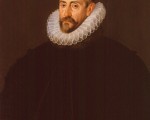
On this day in history, 6th April 1590, Elizabeth I’s principal secretary, Sir Francis Walsingham, died at around the age of fifty-eight. Although he had served the queen for many years, he died in debt, as he had underwritten the debts of Sir Philip Sidney, his son-in-law.
Walsingham was an incredibly important man during Elizabeth I’s reign, being a statesman, private secretary, adviser, diplomat and spymaster, and he probably saved the queen’s life many times by uncovering various plots against her. Elizabeth called him her “Moor”.
[Read More...]On this day in history…
3rd April:
1538 – Death of Elizabeth Boleyn, Countess of Wiltshire and Ormond, wife of Thomas Boleyn and mother of Anne Boleyn. Click here to read more.
1559 – The second session of Parliament, in Elizabeth I’s reign, met after the Easter break. Its purpose was to obtain parliamentary sanction for royal supremacy and Protestant settlement.
1559 – The Peace of Cateau-Cambrésis, ending the Italian Wars, was signed between Henry II and Philip II of Spain. Click here to read more.
1578 – Burial of Lady Margaret Douglas, Countess of Lennox and daughter of Margaret Tudor and Archibald Douglas, 6th Earl of Angus. She was buried in Henry VII’s Chapel of Westminster Abbey.
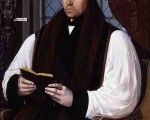
Thomas Cranmer, Archbishop of Canterbury, was born on 2nd July 1489 in Aslockton, Nottinghamshire, England. He was the son of Thomas Cranmer and his wife Agnes (nee Hatfield). He had an older brother, John, a younger brother, Edmund, and a sister called Alice.
Cranmer’s father died in 1501. His mother sent Cranmer to grammar school and then in 1503, when he was fourteen years old, he was sent to Jesus College, Cambridge, where he studied for a Bachelor of Arts degree. His degree, which comprised logic, philosophy and classical literature, took him eight years to complete and he followed it with a Masters degree, studying the humanists. After obtaining his Masters degree in 1515, Cranmer he was elected to a Fellowship of Jesus College. Following his marriage to his first wife, Joan, he was forced to relinquish his fellowship and became a reader at Buckingham College. Sadly, Joan died in childbirth and the child also died.
[Read More...]
On this day in history…
20th March
1469 – Birth of Cecily, Viscountess Welles and princess, also known as Cecily of York, third daughter of Edward IV and Elizabeth Woodville. She was born at Westminster Palace. A marriage alliance with Scotland was made in 1473 promising Cecily to James, the infant son of James III, but Cecily was still unmarried at her father’s death in 1483. Her uncle, Richard III, arranged Cecily’s marriage to Ralph Scrope of Upsall, but Henry VII dissolved the marriage in 1486 and she married John Welles, Viscount Welles, the King’s half-uncle. After Welles’ death in 1499, Cecily went on to marry Thomas Kyme of Friskney. Cecily died in 1507.
1544 – Baptism of Cuthbert Mayne, Roman Catholic priest and martyr. He was hanged, drawn and quartered at Launceston on 30th November 1577 after being charged with traitorously getting hold of a papal bull and publishing it at Golden Manor, defending the authority of the Pope, purchasing a number of Agnus Dei and giving them to people, and celebrating the Catholic mass.
1549 – Thomas Seymour, 1st Baron of Sudeley and Lord High Admiral, husband of the late Dowager Queen Catherine Parr and brother of Queen Jane Seymour and Protector Somerset, was executed after being charged with thirty-three counts of treason.
1555 – Burial of John Russell, Earl of Bedford, courtier and magnate, at Chenies, following his death 14th March. It was a lavish funeral with three hundred horses, all in black trappings.
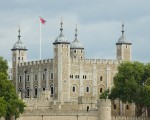
On this day in history, 18th March 1554, Palm Sunday, the twenty-year-old Lady Elizabeth (future Elizabeth I) was taken to the Tower of London, the place where her mother had been imprisoned and where her mother and one of her stepmothers had been executed.
We can only imagine the sheer terror she felt when Mary I’s council turned up at her doorstep on the 16th March 1554 to formally charge her with being involved in Wyatt’s Rebellion, the revolt which had taken place in January and February 1554 and which had been led by Sir Thomas Wyatt the Younger. Elizabeth was told that Mary wanted her sister taken to the Tower for questioning and that she would be escorted there the next day.
[Read More...]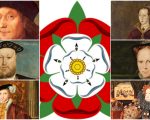
Who is the greatest Tudor monarch? Whose achievements outweighed their failures?
In today’s Claire Chats video, I examine the achievements and failures of each of the Tudor monarchs and ask you to vote on which one you think was the greatest.
On this day in history…
13th March:
1540 – Death of Henry Bourchier, 2nd Earl of Essex. He died after falling off a horse, and his title was given to Thomas Cromwell. His daughter, Anne, married Sir William Parr, brother of Queen Catherine Parr.
1543 – Death of Sebastian Giustinian, the Venetian diplomat. He died in Venice at the age of eighty-three. Giustinian served as the Venetian ambassador to England from 1514 to 1519, and wrote 226 letters during his embassy there. He became ambassador to France in 1526 and procurator of St Mark in 1540.
1594 – Death of John Woolton, Bishop of Exeter, from asthma at the bishop’s palace in Exeter. He was buried in the cathedral choir.
On this day in history…
27th February:
1531 – Birth of Roger North, 2nd Baron North, politician, diplomat and administrator at the court of Elizabeth I. North served as a Member of Parliament, Privy Councillor and Treasurer of the Household.
1545 – The English forces were defeated by the Scots at the Battle of Ancrum Moor, near Jedburgh in Scotland.
1555 – Death of Sir William Babthorpe, Member of Parliament and a man who was created Knight of the Bath at the coronation of Edward VI in 1547. Babthorpe had originally been on the rebel side in the Pilgrimage of Grace in 1536, but fortunately swapped sides.
Not that any of you Tudor Society members need this, but I’ve just filmed my first “60 Second History” video. The aim of this new video series is to educate people about Tudor history is easy-to-digest 60-second videos. Everyone’s got a minute to spare and now people can learn a bit about the Tudors in their spare minute.
[Read More...]
This list includes the English royal family and nobility of the Tudor period, along with how they would be addressed. Do let me know if I have missed any by commenting below.
Rank
Here they are are order of importance:
Monarch and royal family
Duke
Marquis
Earl
Viscount
Baron
Knight
On this day in history…
20th February
1516 – Baptism of Princess Mary, the future Mary I, in the Church of the Observant Friars at Greenwich. The princess was carried to the font by the Countess of Surrey, and her godparents were Catherine Courtenay, Countess of Devon and daughter of Edward IV; Margaret Pole, Countess of Salisbury and daughter of George, Duke of Clarence; the Duchess of Norfolk and Cardinal Thomas Wolsey. Click here to read more.
1523 – Hanging of Agnes Hungerford, Lady Hungerford, at Tyburn. Agnes was hanged, with her servant William Mathewe, after they were found guilty of murdering Agnes’s first husband, John Cotell. It was said that Agnes arranged for her servants, William Mathewe and William Ignes, to strangle Cotell in 1518. Mathewe and Ignes were found guilty of murder ‘by the procurement and abetting of Agnes Hungerford’, and Agnes was found guilty of inciting and abetting the murder. Ignes was hanged at a later date. Agnes was buried at Grey Friars, London.
1547 – Edward VI was crowned King at Westminster Abbey by Archbishop Thomas Cranmer. Edward VI was the first monarch to be anointed as Supreme Head of the English Church. Click here to read more about his coronation.
Today we are hosting Conor Byrne, “Tudor Life” magazine regular contributor, historian and author, as part of his book tour for his latest book Queenship in England 1308-1485: Gender and Power in the Late Middle Ages. MadeGlobal Publishing is offering a paperback copy of Conor’s book to one lucky commenter. All you have to do is leave a comment below saying which 14th or 15th-century queen you’d like to know more about and why. Leave your comment before midnight Tuesday 21st February 2017. One commenter will be picked at random and contacted for his/her address.
On 3 January 1437, Katherine of Valois, widow of Henry V, died at the age of thirty-five. The former queen was buried at Westminster Abbey. Five months later, the life of another former queen of England ended. Joan of Navarre, Katherine’s immediate predecessor, died at the age of sixty-six or sixty-seven and was buried at Canterbury Cathedral. The queenships of Joan and Katherine reveal the opportunities for triumph and tribulation that the office brought, as well as showcasing the variety of roles that were associated with it, including mother, intercessor, patron and lord. Their queenships also reveal the strikingly different political and diplomatic contexts, depending on circumstances, in which the occupant could attempt to fulfil her roles, and how these contexts affected her ability to succeed in the role of queen.
[Read More...]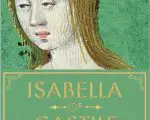
I’ve just received an email from Giles Tremlett about his latest book Isabella of Castile: Europe’s First Great Queen, which I know many of you will be interested in. His book on Catherine of Aragon was excellent.
Here’s what Giles says about his book:
“This week my latest book, a 625-page biography of Isabella of Castile, is published by Bloomsbury in the United Kingdom. It will be out in the United States on March 7 and will be available in Spanish and Chinese before year’s end. Early reviews from the US specialist book trade magazines are promising: “Magisterial… sublime presentation of facts and interpretation,” (Booklist); “highly readable, engrossing biography” (Library Journal) etc… Reviews will begin to appear in major UK papers next week.
[Read More...]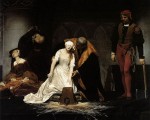
On this day in history, 6th February…
1557 – The remains of reformers Martin Bucer and Paul Fagius were exhumed and publicly burned, after being posthumously found guilty of heresy. They were burned, along with their books, on Market Hill in Cambridge.
1561 – Baptism of Tailboys Dymoke (pseudonym Thomas Cutwode) at Kyme in Lincolnshire. He was the son of Sir Robert Dymoke, and his wife, Bridget (née Clinton). Dymoke is known for his allegorical poem, Caltha poetarum, or, “The Bumble Bee”, which he published under the name of Thomas Cutwode.
1585 – Death of Edmund Plowden, lawyer, legal scholar and law reporter, in London. He was laid to rest in the Middle Temple Church. Cambridge University libraries and the British Library contain manuscripts of his commentaries and opinions, and he is known for his 1571 “ Les comentaries ou les reportes de Edmunde Plowden” volume of law reports covering cases during the reigns of Edward VI, Mary I and Elizabeth I.
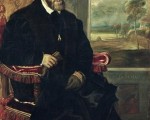
This is Part III of a four-part series, which seeks to look at what were considered the attributes of a Renaissance prince, and who of our four princes embodied the ideals of the Renaissance best. What were some of those themes? The idea of a Renaissance man stood for a person who strove to embrace knowledge and develop himself. This included concepts such as the arts, knowledge, physical achievements, and social ideals. More plainly and for a prince, this could include cultivating a court known for patronising artists, musicians, and the like; establishing educational institutions, a good degree of physical fortitude, and things such as chivalric love or engaging in acts of charity.
[Read More...]
Here’s the full edition of our full-colour 74-page February edition of Tudor Life Magazine. The theme this month is “16th Century Europe”.
[Read More...]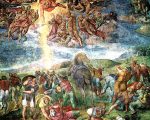
This feast day celebrates the conversion of St Paul (formerly Saul) on the road to Damascus. The story of the conversion of Saul, a man known for his persecution of Christians, is found in the Bible in Acts 9:
“And Saul, yet breathing out threatenings and slaughter against the disciples of the Lord, went unto the high priest, And desired of him letters to Damascus to the synagogues, that if he found any of this way, whether they were men or women, he might bring them bound unto Jerusalem. And as he journeyed, he came near Damascus: and suddenly there shined round about him a light from heaven: And he fell to the earth, and heard a voice saying unto him, Saul, Saul, why persecutest thou me? And he said, Who art thou, Lord? And the Lord said, I am Jesus whom thou persecutest: it is hard for thee to kick against the pricks. And he trembling and astonished said, Lord, what wilt thou have me to do? And the Lord said unto him, Arise, and go into the city, and it shall be told thee what thou must do. And the men which journeyed with him stood speechless, hearing a voice, but seeing no man.
[Read More...]
On this day in history, 9th January…
1514 – Anne of Brittany, wife of Louis XII of France, died at the Chateau of Blois. She was buried in the Cathedral Basilica of Saint Denis.
1522 – Adriaan Florenszoon Boeyens was elected as Pope, becoming Pope Adrian VI.
1554 – Birth of Pope Gregory XV, born as Alessandro Ludovisi, in Bologna, Italy.
1539 – Executions of Henry Pole, 1st Baron Montagu, and Henry Courtenay, Marquis of Exeter, on Tower Hill. They were found guilty of high treason in December 1538 for denying the King’s supremacy, desiring the King’s death and favouring and promoting Cardinal Reginald Pole, Montagu’s brother, “in his traitorous proceedings”.

On this day in history…
2 January:
1492 – King Boabdil surrendered Granada to the forces of King Ferdinand II of Aragon and Queen Isabella I of Castile – click here to read more.
1525 – Death of Sir William Uvedale. Uvedale had been created a Knight of the Bath and Knight of the Royal Body by Henry VII, and served Arthur, Prince of Wales, as his counsellor.
1536 – Eustace Chapuys, the Imperial Ambassador, arrived at the dying Catherine of Aragon’s bedside in Kimbolton Castle.
1539 – Geoffrey Pole, son of Sir Richard Pole and Margaret Pole, Countess of Salisbury, was pardoned after attempting suicide for the third time.