The Tudor Society
  • Darkness and a sweltering London gripped by plague – Claire Interviews Author Toni Mount

    The Colour of Darkness book cover

    In my latest YouTube video, I’ve interviewed bestselling author and historian Toni Mount to celebrate the release of The Colour of Darkness — book 13 in the gripping Sebastian Foxley Medieval Mystery series.

    Toni takes us behind the scenes of her writing process, research into 15th-century London, and the creation of her beloved protagonist, artist and reluctant sleuth Seb Foxley.

    [Read More...]
  • The Deadly Oxford Black Assizes of 1577

    gaol fever video thumbnail

    In July 1577, a courtroom in the city of Oxford turned deadly.

    Within days of the trial of a Catholic recusant and bookseller, hundreds, including Nicholas Barham, Queen Elizabeth I’s top lawyer, were dead.

    No violence. No uprising. Just a hidden killer…gaol fever!

    [Read More...]
  • The Priest They Tried to Silence – Martyr John Boste

    Thumbnail for my John Boste video

    On this day in Tudor history, 24th July 1594, John Boste was hanged, drawn, and quartered for in Durham.

    His crime?

    Treason. Simply doing his job… as a priest.

    Let me tell you Boste’s story – from gifted Oxford scholar to hunted man of God, betrayed, tortured by Richard Topcliffe himself, and executed for his faith…

    [Read More...]
  • The Tudor Lord with 9 Lives – John Scrope, 5th Baron Scrope of Bolton

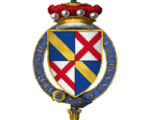
    The arms of John Scrope, 5th Baron Scrope of Bolton, by Rs-nourse.

    On this day in history, 22nd July 1437 (or 1438), John Scrope, 5th Baron Scrope of Bolton, was born at Bolton Castle in Yorkshire. He was a man who’d back the losing side multiple times, but with his head intact.

    He fought at Towton with Edward IV, rebelled against him, supported Richard III, then Henry VII, then backed a royal pretender… yet he survived! He reall was like a cat with nine lives.

    [Read More...]
  • Philip of Spain’s Magnificent Journey to England

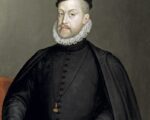
    Portrait of Philip II of Spain by Sofonisba Anguissola

    On this day in Tudor history, 20th July 1554, Prince Philip of Spain landed on English soil to marry Queen Mary I, having left Valladolid on 14th May.

    He did not travel light. 1000s of soldiers and men sailed with him, including a dancing master – yes, he had his priorities right – and his journey had been marked by processions, fireworks and artillery salutes.

    Let me take you behind the scenes of one of the most politically charged royal arrivals in English history.

    [Read More...]
  • Toni Mount Book Launch – Sandwich, Kent

    The Colour of Darkness book cover

    Set in medieval London, written by Toni Mount from Gravesend Kent, and featuring fascinating characters, including a cross-dressing male prostitute based on a real 14th century sex-worker; this new murder mystery will be launched at Sandwich Medieval Centre on 26th July.

    The Colour of Darkness is the thirteenth instalment in the atmospheric Sebastian Foxley series of medieval murder mysteries. These well-researched and well-loved books are based on thorough historic research of London in the 14th and 15th centuries, and readers comment on the detailed historic basis of the stories, many of which actually happened, (but maybe at different times or to different people).

    The book launch will be at 12 midday on Saturday 26th July and will be hosted by The Sandwich Medieval Centre, The Quay, Sandwich Kent CT13 9EN.

    [Read More...]
  • Tudor True Crime – The Shocking Murder of Thomas Arden

    Thumbnail for my Thomas Arden video

    I’ve decided to do a series of called “Tudor True Crime” on my YouTube channel, where I’m going to delve into 16th century crimes and look at what exactly happened, and the consequences.

    My very first Tudor trie crime is the murder of Thomas Arden of Faversham in 1551, a story which featured, poisoned milk, a pressing iron, a knife, and a group of people determined to finish him off. It really is darker than fiction!

    And one of the killers was his own wife, Alice Arden.

    [Read More...]
  • Frances Grey, Duchess of Suffolk, the Maligned Mother of Lady Jane Grey

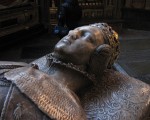
    Tomb effigy of Frances Grey (Brandon), Duchess of Suffolk

    On this day in Tudor history, 16th July 1517, Mary Tudor, Queen of France, and her husband, Charles Brandon, Duke of Suffolk, welcomed a daughter into the world, Frances.

    This little girl grew up to be Frances Grey, Duchess of Suffolk, and she is often reduced to a footnote in history — simply the mother of the tragic Lady Jane Grey. But who was she really?

    In my latest video, I dive into Frances’ life and look at how she’s been maligned by centuries of misrepresentation.

    [Read More...]
  • William Neville – The Tudor Courtier Who Tried to Make Himself Invisible

    Thumbnail for my video on William Neville

    On this day in Tudor history, 15th July 1497, William Neville was born.

    He was a respected courtier and poet, who later found himself accused of something that sounds like it’s straight out of a fantasy novel: trying to make himself invisible!

    In my latest “on this day” video, I’m uncovering the rather strange tale of William Neville — from his allegorical poetry and service in Cardinal Wolsey’s household to accusations of treason, sorcery, and near financial ruin…

    [Read More...]
  • Margaret of Denmark – The Queen Who Quietly Changed Scotland Forever

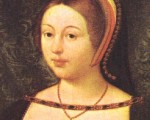
    Margaret of Denmark

    In my latest “On This Day” video on YouTube, I’ve headed slightly beyond the Tudor world — north to Scotland — to uncover the story of a young queen who deserves far more recognition than she gets.

    On this day in history, 14th July 1486, Queen Margaret of Denmark, consort of James III of Scotland, died at just 30 years old. But her brief life left a permanent mark on British history.

    Because of Margaret, Orkney and Shetland became — and remained — part of Scotland. A forgotten dowry, a pledged territory, and a queen who quietly changed the map of the British Isles.

    But there’s so much more to her than diplomacy…

    [Read More...]
  • Lego and History – The Perfect Combination

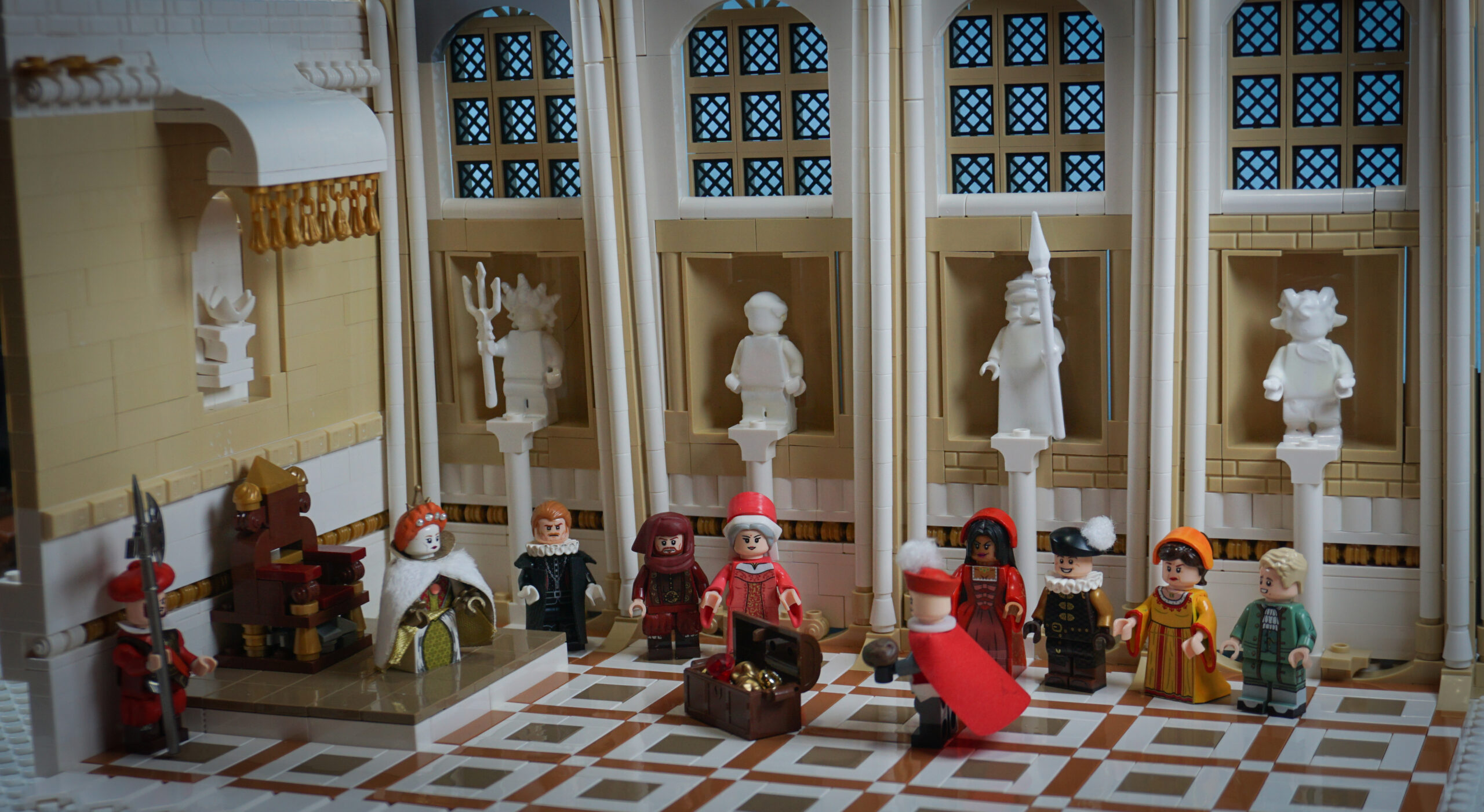
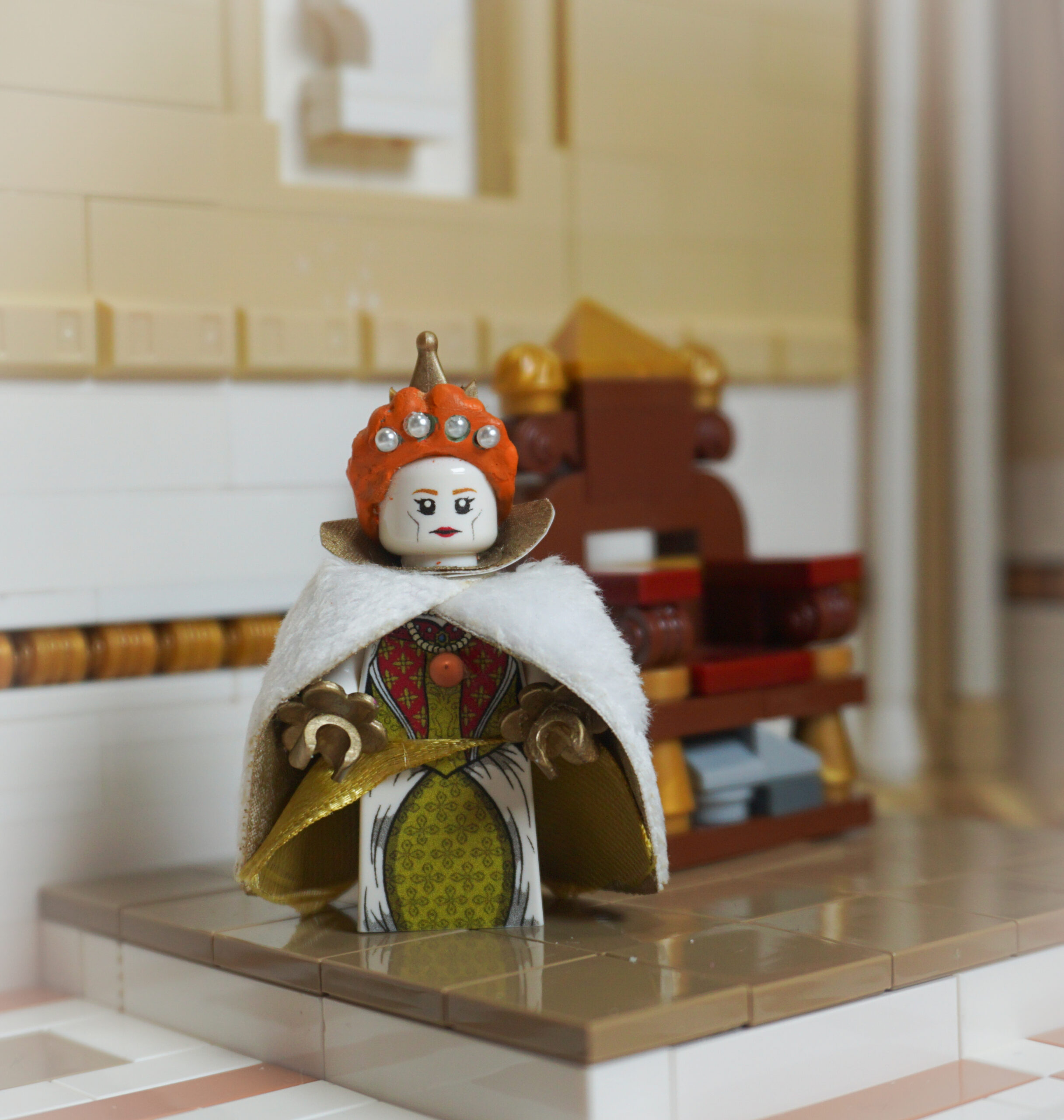
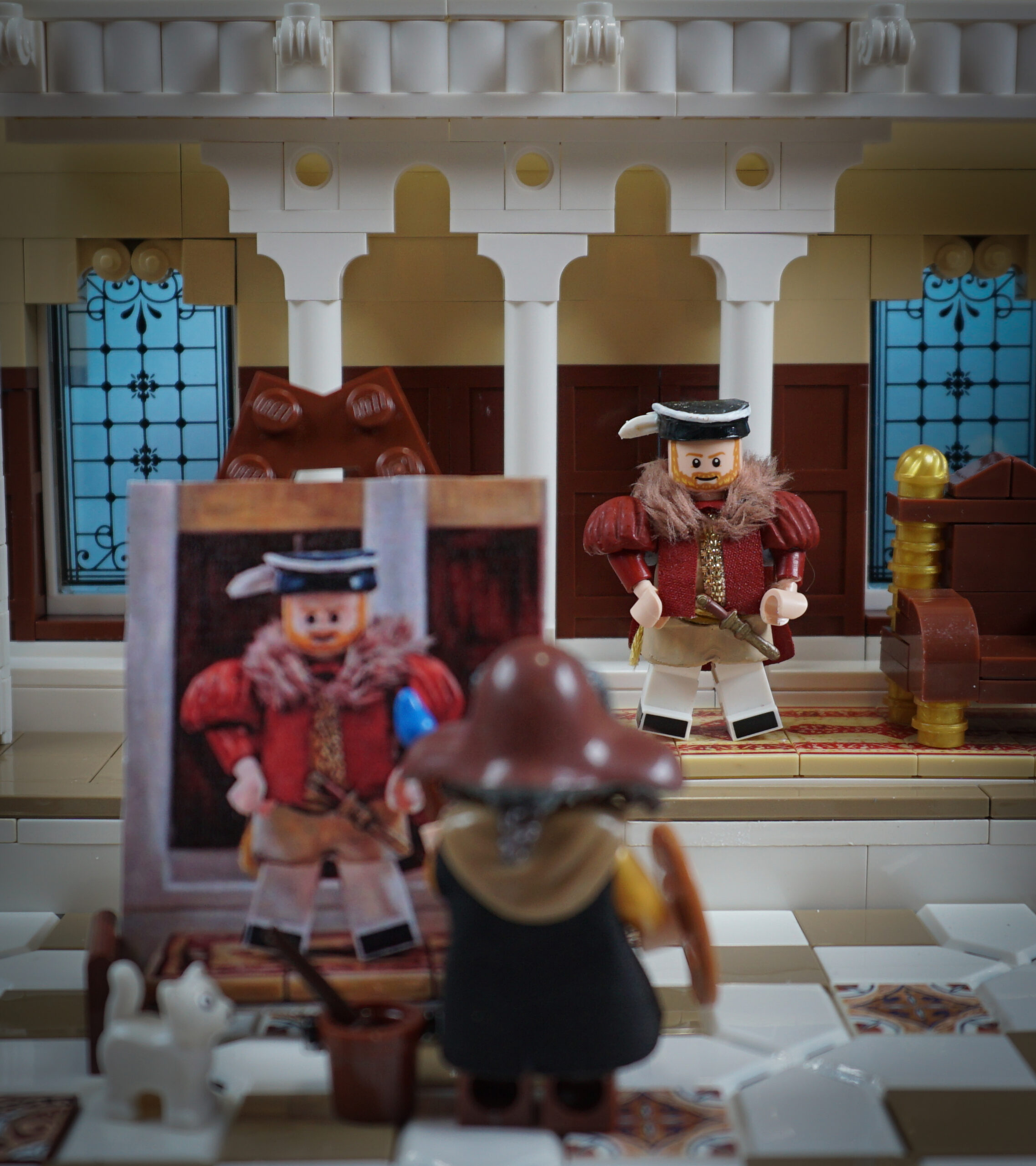
    Minifigure monarchs - Elizabeth I

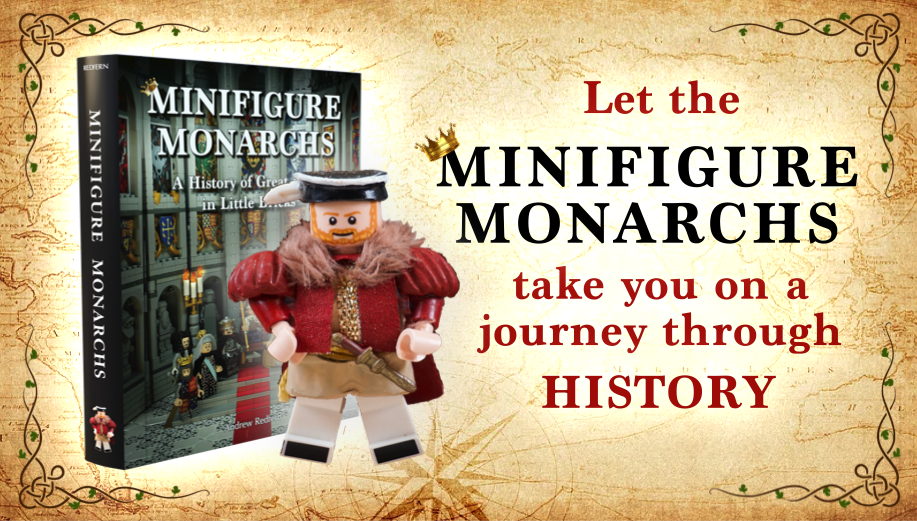
    I interviewed author Andrew Redfern about his forthcoming book, Minifigure Monarchs: A History of Great Brits in Little Bricks, which Andy describes as "the retelling of over 1200 years of history using thousands of Lego bricks".

    Andy answered the questions both by email and also on a zoom call with me - we go into more detail in the video call, so do watch that below.

    1. Where does your interest in history come from? What are some of the periods you're really fascinated by and why? - I have always loved History, but during lockdown I started reading into periods I am less familiar with and listening to history podcasts. Growing up I loved anything with knights and castles, so naturally the period I am most fascinated by is medieval history such as The Wars of the Roses. You’ll probably have guessed that my favourite Lego theme is Castle.
    2. How did the concept of the book come about? What was the starting idea, then how did the project evolve? -
      I’ve always found ways to involve Lego into my work. I’m a teacher and in the past I’ve used Lego to produce revision guides for my students. I wrote a series of books called ‘Business in Bricks’ a revision guide for Business Studies. I’ve also authored a few books in my field. I really enjoyed the publishing process so wanted to do something else that would allow me to play around with Lego whilst creating something unique.
      The project has evolved considerably, Some of my builds for the early kings are quite basic, but as time passed the I’ve tried more ambitious builds, spent more time customising the minifigures and added more content to the book. My hobby has allowed me to connect with some great people who share my passion for Lego and history. Some have even agreed to let me use their wonderful creations in the book, for which I am hugely grateful.
    3. What is it about marrying history together with LEGO models that is so appealing? How will the two things will complement each other? - The combination of History and Lego is very popular. That is evident through the MOCs people share on social media or exhibit at Lego conventions. History is a story and Lego is a fantastic medium for storytelling. In the book I’m trying to capture moments in time and modern minifigures with their expressions can really capture the emotions of a moment.
      I’ve not shied away from difficult concepts in the book such as slavery, the Holocaust and the British Empire. Lego can make these topics accessible without trivialising them. Lego draws in people of all ages. I’ve not written the book for children, but as a teacher I do hope it will help make history more accessible to a younger audience.
    4. When did you start working on the project? - I think I built the first few scenes for the project in January 2021. I launched the Instagram account in April 2021. To be honest, there was a year in there when I did very little, when our daughter was born!
    5. What was your research process like for the book? - I take a monarch at a time. The process really involves two things. Firstly, working out what the most important and interesting things are to include within a handful of pages. Secondly, deciding on the builds that will work for the situation and time periods, but more importantly, what will be fun to make and will capture peoples imagination. I’m normally reading books and listening to podcasts months in advance to research and plan each king or queen. This is so I have time to plan the builds, gather the pieces, and where necessary, customise the minifigures. Some monarchs obviously take longer than others. Henry VIII took a long time to complete with seven separate builds and George III alone covers 20 pages in the book. George III reign covers so much, including the American Revolutionary War and the Napoleonic Wars.
    6. What is your favourite build in the book? - That’s a tough question. There are some really talented builders who are contributing to different sections of the book, but If I had to go for one of my own then I would say The 1st Battle of St. Albans. I choose this because there are so many custom items within the shot. Each suit of armour, shield and flag is custom to the noble family that fought in the battle. I’m also pleased with the lighting of this shot. The scene represent the fighting in the narrow streets of St. Albans during this 15th Century battle.
    7. How can people support/order the book? - The book is being funded as a Kickstarter campaign and is live available throughout July 2025. People can make a pledge to order their copy of the book by going to https://www.kickstarter.com/projects/minifiguremonarchs/minifigure-monarchs
      I’m also on instagram and can be found at https://www.instagram.com/lego_minifigure_monarchs/.

    Minifigure Monarchs book

  • VILE: The Radical Redemption of Tudor History’s Most Maligned Woman

    “Give us voice; we who blot the margins, the fallen and forgotten, the minimised and maligned.”
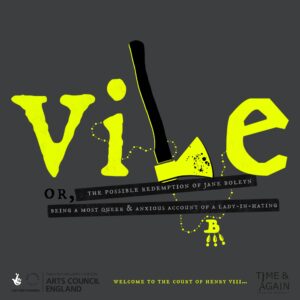
    Time & Again Theatre Company are launching VILE, a brand new theatre production anarchically reimagining the Tudor court and centring the voices history tried to forget, developed with support from theatres Cast and The Lowry, as well as the charity OCD UK.

    Set amidst the chaotic reign of Henry VIII, VILE is a rude and radical re-evaluation of Lady Rochford - Anne Boleyn’s infamous sister-in-law - and celebrates LGBTQ+ and disabled identities in an era where neither were recognised. Written by award-winning playwright Laura Crow, it challenges the mainstream narrative that Jane was nothing more than a bitter betrayer who hated her husband, George, and rushed to bring down the Boleyns.

    VILE is a furious and funny subversion of traditional period drama that re-examines the Rochford’s marriage and its representation in popular media. Rejecting years of ableist and homophobic stereotyping. VILE instead offers a deeply human - and deeply researched - exploration of Jane and George, and their turbulent lives, all through an irreverent contemporary lens.
    Vile's writer, Laura Crow

    Vile's writer, Laura Crow

    “History and popular culture have branded Jane a villain, stemming from misogynistic and ableist readings of her life and denied her agency over her own thoughts, body and legacy.” says writer Laura Crow. “There’s a suggestion that Jane suffered a mental breakdown towards the end of her life and theories around George’s sexuality have become increasingly persistent. Unfortunately, this is often harnessed by the media to scandalise their story or offer proof that their marriage was deeply unhappy - when in fact, there’s no solid evidence. In writing VILE, I wanted to embrace these aspects of their lives but reframe them into something positive and empowering and show that there have always been other ways of living, other ways of loving.”

    VILE is centred in the court of Henry VIII. The parties are bigger, the cockfights are wilder and there’s more scandal than you can shake a jousting lance at. Frankly, it’s a bloody nightmare. Enter Jane Parker. Minor noble, major worrier. The flash, young brother of Anne Boleyn is being thrust upon her, but Jane would rather retreat to the countryside away from the crowds, pestilence and power-hungry politics of courtly life. Newly entangled with the Boleyns, Jane begins to battle intrusive thoughts that warn of constant danger. It's difficult not to lose your head when you're fighting your own mind. Will Jane crumble in a world of backstabbing and betrayal? Or will she play the game and do whatever it takes to survive?

    Vile's Mission

    VILE continues Time & Again’s mission to use historical settings to illuminate the present. Following their award-winning 2022 production EARWIG, which explored the experience of being deaf in the 1920s, this new play draws on lived experience of OCD and health anxiety to tell a story that resonates far beyond the Tudor court.

    VILE also integrates creative access throughout the production. With creative captions, integrated audio description, and animated projection design, the show invites everyone into the chaos, danger, and intrigue of Tudor life - with inclusion built into the heart of its storytelling.

    Praise for EARWIG:

    WINNER Offie Award for Best Show of Edinburgh Fringe 2022
    WINNER Birds of Paradise Emerging Talent Award 2022
    ★★★★★ Fringe Biscuit
    ★★★★★ Neurodiverse Review
    ★★★★★ Theatre & Arts Reviews
    ★★★★★ North West End
    ★★★★★ Theatre Weekly
    ★★★★★ Get Your Coats On
    ★★★★★ Broadway Baby
    ★★★★ Feminist Fringe
    ★★★★ Edfringereview
    ★★★★ Sinners Review

    The project launches with a sharing at Manchester’s independent theatre, 53Two on Saturday 28th June. The sharing will feature a polished preview of the first act of VILE, which will go onto become a full-length, two-act touring production in 2026.

    Tickets for the preview are available here: https://www.ticketsource.co.uk/53two/t-nopxgad

  • Acton Court opens its doors

    Acton Court opens its doors with some special events you’ll love.

    [Read More...]
  • The Darker Side of Elizabeth I’s Reign: Was it Really a Golden Age?

    Thumbnail for my video on the darker side of Elizabeth I's reign

    Queen Elizabeth I’s reign has gone down in history as the Golden Age, and the queen as Gloriana and Good Queen Bess, and her reign was certainly a time of exploration, cultural flourishing, and military victories. But was it truly “golden” for everyone.

    No, it had a darker side.

    This is what I explore in this video…

    [Read More...]
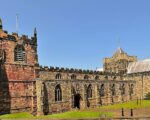
  • Arthur Bulkeley, Bishop of Bangor

    Bangor Cathedral

    On this day in Tudor history, 14th March 1553, during the reign of King Edward VI, Arthur Bulkeley, Bishop of Bangor, died at his home in Bangor.
    His final resting place? The quire of Bangor Cathedral.

    But who was Bishop Bulkeley, and why does his legacy matter?

    Arthur Bulkeley was a Welshman, born around 1495 in Beaumaris, Anglesey. He was a scholar, studying both canon and civil law at Oxford. But his path wasn’t just academic; he found himself serving some of the most powerful figures in Tudor England.

    [Read More...]
  • Richard Burbage, the Elizabethan actor

    Portrait of Richard Burbage from Dulwich Picture Gallery, London.

    On this day in history, 13th March 1619, the stage lost one of its greatest stars. Richard Burbage, Shakespeare’s leading man, the original Hamlet, Othello, and King Lear, breathed his last at the age of fifty.

    But Burbage wasn’t just an actor. He was a theatre pioneer, a close friend of Shakespeare, and a man whose talent defined the golden age of English drama.
    So, who was he?

    Richard Burbage was born in 1568, baptised in London’s St. Stephen’s Church on 7th July. His father, James Burbage, was an actor and entrepreneur, and young Richard grew up surrounded by the world of performance.

    [Read More...]
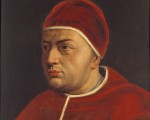
  • Pope Leo X – The Medici Pope

    Raphael's Portrait of Leo X

    On 11th March 1513, Giovanni di Lorenzo de’ Medici was proclaimed Pope Leo X—a man who would leave a lasting mark on the Catholic Church and European history.

    Born into the powerful Medici family, Leo was the son of Lorenzo the Magnificent, ruler of Florence and a patron of the arts. From an early age, Giovanni was destined for the Church—he was made a cardinal at just 13 years old! By the time he was elected pope in 1513, he held not just religious power but also political dominance as head of the Papal States and his influential family in Florence.

    But what kind of pope was Leo X? Well, let’s just say he wasn’t your typical, pious, reform-driven leader.

    Leo X was a true Renaissance pope. He transformed Rome into a thriving cultural hub, attracting artists, poets, and scholars to his court. One of his most famous protégés was Raphael, the great painter and architect. Under Leo’s patronage, Raphael worked on St. Peter’s Basilica and painted some of his most stunning works.

    [Read More...]
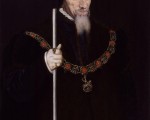
  • William Paulet, 1st Marquess of Winchester, a Tudor Survivor

    Portrait of William Paulet, 1st Marquess of Winchester, holding the white staff of the office of Lord High Treasurer

    William Paulet wasn’t born into the powerful aristocracy. He came from Basing in Hampshire, born sometime between 1474 and 1488—even his birth date is a mystery!

    His family had connections, but nothing close to the powerhouses of the Tudor court. Unlike men like Thomas More or Thomas Cromwell, Paulet didn’t make his name by standing on principle or radical reform. Instead, he mastered something far more valuable in the Tudor world: survival.

    He trained in law at the Inner Temple, which set him up for a career in administration, and he made a very smart marriage—Elizabeth Capell, the daughter of a wealthy Lord Mayor of London. It wasn’t the grandest match, but it gave him financial backing and key city connections.

    [Read More...]
  • The Downfall of Germain Gardiner, John Larke & the Prebendaries’ Plot

    A portrait of Thomas Cranmer by Gerlach Flicke.

    By the early 1540s, England’s religious landscape was a minefield. The dissolution of the monasteries had shaken traditional Catholic structures, and Protestant reformers like Archbishop Thomas Cranmer were pushing Henry VIII’s Church further from Rome.

    Not everyone was on board.

    A faction of conservative clergy and laymen began working covertly to stop these changes. This movement, known as the Prebendaries’ Plot, was centred around five prebendary canons of Canterbury Cathedral, including William Hadleigh, a former monk of Christchurch Canterbury.

    [Read More...]
  • Thomas Wriothesley’s Fall

    Thomas Wriothesley, 1st Earl of Southampton, by Hans Holbein the Younger

    6th March 1547 was a day of humiliation for Thomas Wriothesley, 1st Earl of Southampton. Once one of the most powerful men in England, he found himself stripped of the Great Seal of office and confined to his home. But how did a man who had been Henry VIII’s trusted Lord Chancellor fall so fast?

    Wriothesley was a rising star of the Tudor court. Born in 1505, he was the son of a herald, educated at Cambridge, and started his career working for none other than Thomas Cromwell. He was ambitious, intelligent, and, according to his friend John Leland, quite good-looking!

    His big break came in the 1530s when he became a key figure in Henry VIII’s government. He played a role in the annulment of Henry’s marriage to Anne of Cleves, helped investigate Catherine Howard, and eventually became Lord Chancellor in 1544. He was trusted, powerful, and wealthy—owning vast estates, including the former Titchfield Abbey, which he transformed into his grand home.

    [Read More...]
  • Innovation and Panic at the Siege of Antwerp 1584-5 by Loretta Goldberg

    Le pont Farnese

    Thank you to Loretta Goldberg, author of The Reversible Mask: An Elizabethan Spy Novel for joining us today and sharing this excellent guest article on the Siege of Antwerp.

    During World War II, Sir Winston Churchill said, “In wartime, truth is so precious that she should always be attended by a bodyguard of lies.” Illusion was a tactic used in 1944 to deceive the Nazis about where the allies would land; many historians believe that the Normandy beachhead held because of the deception. 336 years earlier, in 1588, England faced invasion by Spain with its Armada of 120 ships and 20,000 troops that were meant to be supplemented by comparable forces from Spain’s soldiers and barges in the Netherlands (known as the Army of Flanders.) Illusion then also saved England.

    [Read More...]
  • Mathematician and Inventor William Oughtred

    Engraving of mathematician William Oughtred

    William Oughtred was baptised on 5th March 1575, at Eton College, where his father worked as a writing master. From a young age, he was immersed in learning, and it wasn’t long before he was off to King’s College, Cambridge, where he earned his BA in 1596 and his MA in 1600.

    But Oughtred wasn’t just a numbers man—he was also a man of faith. In 1603, he became an ordained priest, and by 1610, he was the Rector of Albury in Surrey, a position he would hold for 50 years!

    Now, here’s where things get really interesting. Oughtred wasn’t content just preaching—his real passion was mathematics.

    Ever used the × symbol? Thank Oughtred. He also introduced the abbreviations “sin” and “cos” for sine and cosine, which are still used in trigonometry today!

    [Read More...]
  • Christopher Bales, a Catholic Martyr

    Gibbet at Caxton

    On this day in Tudor history, the 4th of March 1590, a man named Christopher Bales met a brutal and unjust end on the streets of London. His crime? Simply being a Catholic priest. His fate was sealed by laws that saw his faith and vocation as treason… and his punishment was death.

    But who was Christopher Bales? And why was England so determined to silence men like him?

    Christopher Bales was born in County Durham, the son of John and Catherine Bales. He actually came from a Protestant background, so it’s unclear what led him to convert and enter the English College in Reims, France, in 1581—a Catholic seminary where young men trained to become priests in defiance of English law.

    [Read More...]
  • Margaret Tudor marries for the third time

    Detail of Margaret Tudor's face from a portrait of her by Daniel Mystens

    On this day in Tudor history, 3rd March 1528, Margaret Tudor, sister of King Henry VIII and widow of King James IV of Scotland, married for the third time.

    Margaret, 38 years old, had already been twice married. Her first husband, King James IV of Scotland, had died at the Battle of Flodden in 1513, leaving her as regent for their young son, James V. However, her controversial second marriage to Archibald Douglas, 6th Earl of Angus, led to political turmoil. The Scottish nobility opposed the match, and she lost her position as regent. When she returned to Scotland after a brief stay in England, she discovered that Angus had been living openly with a former lover, Lady Jane Stewart. Determined not to remain in an unhappy marriage, Margaret fought for an annulment, despite opposition from none other than her own brother, Henry VIII, who at the time did not believe in divorce.

    [Read More...]
  • Martin Bucer, a Reformer who wanted Peace

    A German portrait of Martin Bucer

    On the night of 28th February 1551, a man who had spent his life fighting for religious reform took his last breath in Cambridge. His name was Martin Bucer—a theologian, a reformer, and a man whose influence stretched across Europe.
    But even in death, his struggles weren’t over. Six years after his burial, his body was dug up, put on trial for heresy, and publicly burned in Cambridge along with his works.

    So, who was Martin Bucer? Why was he considered such a threat that even his bones had to be destroyed? And why is he remembered today as a key figure in the Protestant Reformation?

    [Read More...]
  • Anne Line, Margaret Clitherow and Margaret Ward – Three Catholic Martyrs

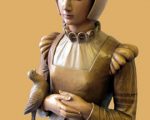
    A statue of Anne Line

    Today, on the anniversary of Anne Line’s execution, on 27th February 1601, I’m honouring her and two other remarkable women, Margaret Clitherow and Margaret Ward, who gave their lives for harbouring Catholic priests in Elizabethan England.

    Their crime? Offering sanctuary to men whose very existence had been outlawed. Their fate? Torture, brutal executions, and posthumous sainthood.
    But why was it so dangerous to harbour a priest in the reign of Elizabeth I?

    In Tudor England, religion wasn’t just a matter of personal belief—it was a matter of life and death.

    Following Henry VIII’s break with Rome, England became a Protestant nation. But when his daughter Mary I took the throne, she restored Catholicism and a couple of hundred Protestants burned at the stake. Then, in 1558, Elizabeth I became queen, and England swung back to Protestantism.
    Catholics who had hoped for tolerance soon realised that Elizabeth’s government viewed them as a threat. When the Pope excommunicated Elizabeth in 1570, it escalated the conflict. Catholics were now seen as potential traitors—loyal to the Pope, not the queen.

    [Read More...]
  • George Carey, 2nd Baron Hunsdon

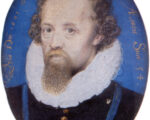
    A miniature of George Carey, 2nd Baron Hunsdon, by Nicholas Hilliard

    He was the grandson of Mary Boleyn, the husband of Elizabeth Spencer, and a trusted courtier of Elizabeth I. But George Carey, 2nd Baron Hunsdon, wasn’t just another nobleman, he was a key figure in the world of Elizabethan theatre, a patron of Shakespeare’s acting company, and a man who rose to one of the most powerful positions at court.

    Today, let’s dive into the fascinating life of George Carey, 2nd Baron Hunsdon; his Boleyn connections, his military career, and his role in shaping the golden age of Elizabethan theatre.

    [Read More...]
  • Elizabeth Carey, Lady Hunsdon

    A black and white photo of a miniature of Elizabeth Carey (née Spencer), Baroness Hunsdon, by Nicholas Hilliard.

    he was the wife of a Boleyn descendant, the patron of some of Elizabeth I’s greatest minds, and a member of the powerful Spencer dynasty, the same family as Princess Diana. Yet, history has largely forgotten Elizabeth Carey, Lady Hunsdon.

    Meet Elizabeth Carey (née Spencer), Lady Hunsdon, a Tudor noblewoman who lived a life of influence, power, and cultural significance.

    Born on 29th June 1552 at Althorp (yes, the same family estate later associated with Princess Diana!), Elizabeth was part of the powerful Spencer dynasty, being the sixth child of Sir John Spencer and his wife, Katherine Kitson.

    Through marriage to Sir George Carey, later 2nd Baron Hunsdon, grandson of Mary Boleyn, in 1574, Elizabeth became linked to the legacy of Anne Boleyn and Queen Elizabeth I. The couple had one daughter, and their marriage was reportedly happy—Carey even described Elizabeth as “the sweetest Companion that ever Man hathe found in this lief.” After Carey’s death in 1603, Elizabeth married Ralph Eure, 3rd Baron Eure. But it was in the world of literature and music that she made her mark.

    [Read More...]
  • The Scandalous Life of Henry Howard, Earl of Northampton – Murder, Intrigue and Royal Favour

    Portrait of Henry Howard, Earl of Northampton, by an unknown artist

    Murder, political betrayal, royal intrigue… The life of Henry Howard, Earl of Northampton, had it all. He was a survivor in a dangerous world, navigating the courts of Elizabeth I and James I, escaping imprisonment five times, and playing a shadowy role in one of the most scandalous murder cases of the 17th century.

    But who was he? And how did he go from being a suspected traitor to one of the most powerful men in England? Stick around as we uncover the secrets of this Tudor earl—his rise, his rivalries, and his connection to a deadly conspiracy…

    Birthday boy Henry Howard was born into one of England’s most prestigious families on 24th February 1540. But that didn’t mean his life was destined to be easy… because his family was already marked by treason.

    His father? None other than Henry Howard, Earl of Surrey—the poet and courtier executed by Henry VIII in 1547 for alleged treason. His brother? Thomas Howard, 4th Duke of Norfolk—executed by Elizabeth I for plotting to marry Mary, Queen of Scots. With this kind of family history, you’d think Henry would learn to stay away from treasonous schemes… but you’d be wrong.

    [Read More...]
  • The Tragic Tale of Lady Katherine Grey

    A miniature of Edward Seymour, Viscount Beauchamp, as a child with his mother Lady Katherine Grey

    On this day in Tudor history, 21st February 1568, Lady Katherine Grey, Countess of Hertford, was laid to rest at Yoxford. But her story doesn’t end there. Years later, her grandson reinterred her remains in the Seymour family tomb at Salisbury Cathedral.

    Katherine Grey’s life may have been short—she was only around twenty-seven when she died—but it was filled with political intrigue, imprisonment, and heartbreak. She was a granddaughter of Mary Tudor, Queen of France, and Charles Brandon, Duke of Suffolk, making her a first cousin once removed to Queen Elizabeth I. More significantly, she was the younger sister of Lady Jane Grey, the so-called ‘Nine Days’ Queen.’ And like Jane, Katherine’s royal blood made her both a pawn and a threat in Tudor politics.

    [Read More...]