The Tudor Society

YOUR SEARCH UNCOVERED 1673 RESULTS

  • The Tudors’ Journey to Bosworth: Part 2 – Exiled at Château de l’Hermine, Brittany, by Tony Riches

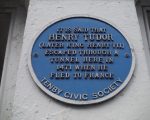
    In the first part of this series, I followed Jasper Tudor and his young nephew Henry’s escape from Tenby in West Wales. There are tales of storms and of them being forced to shelter in the lee of the island of Jersey before they were able to make landfall at the Breton fishing port of Le Conquet in September 1471.

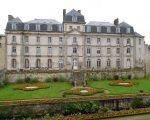
    Jasper and Henry sought sanctuary from Duke Francis of Brittany and became his guests at the ducal palace, the Château de l’Hermine in Vannes. Duke Francis was a skilled politician, so would have appreciated the political value of the exiled Tudors to King Edward IV of England, as well as to his rival King Louis of France, to whom they were related through the Valois family of Jasper’s mother, Henry’s grandmother, Queen Catherine.

    [Read More...]
  • The Tudors’ Journey to Bosworth: Part 1 by Tony Riches

    Henry Tudor’s return from exile to victory at Bosworth has to be one of the greatest moments in the history of the Tudor dynasty. So why is the Bosworth story so often told from the perspective of Richard III, with Henry depicted as lucky to have won?

    I was born within sight of Pembroke Castle and have always been intrigued by the small room where the thirteen-year-old Lady Margaret Beaufort gave birth to the future king, Henry Tudor. I’ve also stood on the remote beach at Mill Bay near Milford Haven imagining how Henry would have felt as he approached with his uncle Jasper and his mercenary army.

    All I knew about Jasper’s father, Henry’s grandfather, Owen Tudor, was that he’d been a Welsh servant who somehow married the young widow of King Henry V, Queen Catherine of Valois. Inspired to write a historical fiction trilogy about them, I wanted to research their stories in as much detail as possible and to sort out the many myths from the facts.

    [Read More...]
  • This week in history 1 – 7 August

    Archbishop Matthew Parker by an unknown artist
  • This week in history 11 – 17 July

    On this day in history events for 11 – 17th July.

    [Read More...]
  • October Feast Days

    In the medieval period, wakes were held to mark the end of summer and to dedicate the local church. The feasting and partying could go on for days, so, in 1532, Henry VIII stamped down on this practice and ordered that the first Sunday in October was the day for local parish churches to hold their dedication service.

    [Read More...]
  • May Feast Days

    1 May, or May Day, was seen as the first day of summer and had its roots in ancient celebrations of fertility. It was celebrated with special processions, plays and pantomimes, pageants, Morris dancing and the crowning of a May Queen. There would also be a Maypole, a tall wooden pole decorated with greenery and flowers and hung with ribbons. People would hold the ribbons and dance around the Maypole weaving the ribbons together in patterns.

    [Read More...]
  • March Feast Days

    1st March is the feast day of St David (Dewi Sant), patron saint of Wales. According to Rhigyfarch’s Life of Saint David, David lived in the 6th century and founded religious centres including Glastonbury and Croyland. He then travelled to the Holy Land and was made archbishop at Jerusalem before travelling back to Wales and settling at Glyn Rhosyn (Rose Vale), or St David’s, in Pembrokeshire, Wales. There, he founded a monastery whose site is now marked by St David’s Cathedral.

    [Read More...]
  • January Feast Days

    In medieval and Tudor times, the calendar year actually began on 25th March, Lady Day, but confusingly (for us anyway!) the Roman tradition of New Year was celebrated on 1st January. This was a time for the nobility and monarch to exchange gifts. The king would get dressed in his chamber and then wait for one of his consort’s servants to bring in the gift from the queen. He would then accept gifts from other courtiers and the queen would do the same in her chamber. This gift giving was an ideal opportunity for a courtier to try and win favour from the monarch or to impress the monarch with a lavish gift.

    [Read More...]
  • 7 June 1520 – The Field of the Cloth of Gold meeting begins

    This day in history, 7th June 1520, was the first day of the historic meeting between Henry VIII and Francis I of France. It took place between the English stronghold of Guînes and the French town of Ardres, on a piece of land referred to as the Field of Cloth of Gold.

    [Read More...]
  • 1 June 1533 – Queen Anne Boleyn’s coronation

    Today is the 483rd anniversary of the coronation of Queen Anne Boleyn, second wife of Henry VIII. What was interesting about her coronation is that she was crowned with the crown of St Edward, a crown usually reserved for crowning the reigning monarch, so her coronation was quite a statement. Whether the use of the crown was to do with Anne’s status or to do with her unborn child, who was, of course, expected to be a prince, it is still an interesting fact.

    [Read More...]
  • Who was Jane Seymour? by Sarah Bryson

    On 30th May 1536, King Henry VIII married his third wife, Jane Seymour, in the Queen’s Closet at Whitehall; a mere eleven days after the execution of his second wife Anne Boleyn.

    Jane Seymour first arrived at court in the late 1520s/early 1530s and attended both of Henry VIII’s previous wives, Katherine of Aragon and Anne Boleyn, as a lady-in-waiting. However, it does not appear that the King’s eye turned to Jane until early 1536.

    [Read More...]
  • This week in history 16 – 22 May

  • The Death of Arthur Tudor by Sarah Bryson

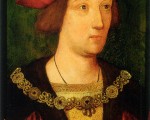
    On 2nd April 1502, Arthur Tudor, eldest son of King Henry VII, died at Ludlow Castle. He was just fifteen years old and had been married for less than five months.

    Arthur Tudor had married Katherine of Aragon, daughter of King Ferdinand II of Aragon and Queen Isabella I of Castile. King Henry VII had worked hard for several years to secure a marriage between his son and Princess Katherine to see a strong alliance created between England and Spain. The marriage would also help to put England on the international stage and secure the succession of the Tudors.

    [Read More...]
  • Maundy Thursday

    Maundy Thursday commemorates the Last Supper, that final meal that Jesus Christ had with his disciples before his arrest.
    In Tudor times, on Maundy Thursday, the church was prepared for Easter with water and wine being used to wash the altars and it was traditional for people to go to confession. The three holy oils – the chrism oil, the oil of catechumens and the oil of the sick – were also blessed on this day.

    At the Last Supper, which was the Passover meal, Luke’s Gospel says that Christ took bread, gave thanks to God for it, broke it and then shared it with his disciples, saying “This is my body given for you; do this in remembrance of me.” He then took the cup of wine, saying, “This cup is the new covenant in my blood, which is poured out for you.” Christians all over the world remember this gesture by celebrating the Eucharist, also known as “communion”. According to John’s Gospel, it was at this meal that Jesus washed his disciples’ feet, and both Luke and John record Jesus saying that there was one among them who would betray him.

    [Read More...]
  • Elizabeth of York by Sarah Bryson

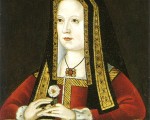
    On 11th of February 1466, Elizabeth of York was born at the Palace of Westminster. Exactly thirty seven years later, at the Tower of London, Elizabeth died shortly after giving birth to her last child.

    Elizabeth of York was the eldest child of King Edward IV and his wife Queen Elizabeth Woodville. Elizabeth was christened in St Stephen’s Chapel in Westminster Abbey. Jacquetta of Luxembourg, Duchess of Bedford, and Cecily Neville, Duchess of York, stood as her godmothers and Richard Neville, Earl of Warwick, stood as her godfather.

    [Read More...]
  • Candlemas

    Candlemas, or the the Feast of the Presentation of Christ in the Temple and the Purification of the Blessed Virgin, is celebrated on 2nd February. It commemorates the purification (or churching, as medieval people would have seen it) of the Virgin Mary forty days after the birth of Jesus Christ, when it was traditional for the mother to make an offering or sacrifice according to Jewish law, and the presentation of the baby Jesus at the temple in Bethlehem.

    [Read More...]
  • 1 February 1514 – The Making of Two Dukes by Sarah Bryson

    On Candlemas Eve,* 1st February 1514, Henry VIII formally elevated two men to the title of Duke. Charles Brandon, formerly Viscount Lisle, was created Duke of Suffolk, and Thomas Howard, Earl of Surrey, was created 2nd Duke of Norfolk. The ceremony took place at Lambeth and was conducted by the King.

    Along with the nearly created Dukes of Suffolk and Norfolk, the only other duke in the Kingdom was Edward Stafford, Duke of Buckingham. Buckingham was a descendent of Thomas Woodstock, youngest son of Edward III. In addition to this, his mother was Katherine Woodville, sister of the late Queen Elizabeth Woodville, wife of King Edward IV. At the time, Buckingham was also the richest peer in England, with an annual income of around £6000 per year (£2,902,620.00) as well as being High Steward of England and a Privy Councillor. These positions gave Stafford a great deal of power. With royal blood running through his veins and an arrogant attitude, Buckingham was a regular member at court but it was reported that he often made those around him feel uncomfortable.

    [Read More...]
  • 1 February 1554 – Mary I rallies London against Wyatt’s Rebellion

    On this day in 1554, Queen Mary I gave a rousing speech at the Guildhall to rally Londoners to her cause and to oppose Wyatt’s rebellion. Contemporary John Proctor recorded that Mary “did wonderfullye inamour the heartes of the hearers as it was a world to heare with what shoutes they exalted the honour and magnanimitie of Quene Mary”.

    Mary denounced Thomas Wyatt the Youngerand his rebels, but said that she had sent two of her privy council to “the traitour Wyat, desirous rather to quiete thys tumulte by mercie, then by iustice [justice] of the sworde to vanquishe.” She defended her plan to marry Philip of Spain as being beneficial to England, and affirmed:

    [Read More...]
  • 26 January 1554 – Mary I warns Elizabeth of the danger of Wyatt’s Rebellion

    ary I became queen in 1553 and although the English people had been happy for her to become queen, some noblemen became worried about her plans to marry Philip II of Spain and the religious changes her reign was bringing. A group of men including Thomas Wyatt the Younger, Henry Grey (Duke of Suffolk and father of Lady Jane Grey), Sir Peter Carew, Sir Edward Rogers, Sir Edward Warner, Sir William Pickering, Sir Nicholas Throckmorton, Sir James Croft, Sir George Harper, Nicholas Arnold, William Thomas and William Winter decided that a military coup might be the only way to prevent Mary’s marriage and planned a series of uprisings with the aim of deposing Mary I and replacing her with her half-sister Elizabeth, who would marry Edward Courtenay, Earl of Devon.

    [Read More...]
  • 22 January – Execution and Rebellion

    On 22nd January 1552, between 8 and 9 o’clock in the morning, Edward Seymour, Duke of Somerset, former Lord Protector and brother of the late Queen Jane Seymour, was executed on Tower Hill. He was laid to rest in the Chapel of St Peter ad Vincula at the Tower of London and records show that he was buried next to Queen Anne Boleyn in the chancel area.

    [Read More...]
  • This week in history 18 – 24 January

    On this day in history events for 18 – 24 January.

    [Read More...]
  • Twelfth Night and Epiphany

    I’ve noticed lots of comments from people on social media saying how they’ve taken down their Christmas trees and decorations and got back to normal. For many people around the world today, the Christmas period was over with New Year, but Christmas in the Tudor period ran for twelve days, Christmas Day to Epiphany on 6th January, the feast day which was a commemoration and celebration of the visit of the Magi to the Christ child.

    Twelfth Night and Epiphany were marked with feasting and entertainment. But when exactly is “Twelfth Night”? Is it 5th or 6th January? There isn’t really any agreement over this and an article in The Guardian newspaper examined this question:

    [Read More...]
  • A Black Christmas: The Battle of Kinsale by Heather R. Darsie

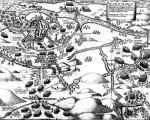
    Christmas Eve, 1601. The setting: a sleepy, south-eastern port town in Ireland. The Nine Years War of Ireland had been raging since 1594, with the English fighting to have control of Ireland under Elizabeth I of England. The unorganized Irish had won several battles and skirmishes against the English, frequently through the use of ambush. But in 1601, trained Spanish troops arrived, giving great hope to the Irish.

    Ireland was a Catholic country and Catholic Spain had recently suffered the humiliating defeat of their Armada by Elizabeth I in 1588. The Spanish, led by Don Juan del Áquila, arrived at Kinsale in September of 1601, with Kinsale being the poorest choice to undergo a siege, as it was situated in a hollow and did not have strong walls. The Spanish were forced to land at Kinsale due to poor weather. The English experienced some relief when they learned that the Spanish fleet was headed for Ireland and not England.

    [Read More...]
  • 15 December 1558 – The burial of Cardinal Reginald Pole

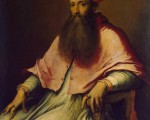
    A portrait of Cardinal Reginald Pole by Sebastiano del Piombo
  • Elizabeth (Bessie) Blount by Sarah Bryson

    I’ve been talking about Henry VIII’s illegitimate and alleged illegitimate children in my Claire Chats videos recently so it seems appropriate to look at a woman who was the mother of the king’s only acknowledged illegitimate child, his son Henry Fitzroy, Duke of Richmond and Somerset. Over to Sarah…

    Elizabeth “Bessie” Blount was the daughter of John Blount and his wife Katherine Pershall. She was born around 1498 at Kinlet Hall. Bessie’s grandmother, through her mother, had been Isabel Stanley, daughter of Sir John Stanley, a distant relative of Lord Thomas Stanley whom had married Margaret Beaufort, Henry VII’s mother. It had been Isabel’s brother Sir Humphrey Stanley whom had arranged the marriage between John Blount and his niece Katherine Pershall when the couple were only young. Sir Humphrey, while quite a rouge was also a Knight of the Body to King Henry VII.

    [Read More...]
  • This week in history 7 – 13 December

    Henry Stuart, Lord Darnley

    On this day in history events for week 7th – 13th December.

    [Read More...]
  • Coronation of Elizabeth of York – 25 November 1487

    On 25th November 1487, St Catherine’s Day, Elizabeth of York, consort of Henry VII and mother of one-year-old Arthur Tudor, was crowned queen at Westminster Abbey. As Elizabeth’s biographer Amy Licence explains, her coronation had been postponed due to her pregnancy and then unrest in England.

    [Read More...]
  • This week in history 23 – 29 November

    On this day in history events for week 23 – 29 November.

    [Read More...]
  • Perkin Warbeck by Sarah Bryson

    On 23rd November 1499, Perkin Warbeck faced his death at Tyburn. He was sentenced to be hanged until he was dead. His crime was attempting to escape the Tower of London where he was held a prisoner, but his story goes back several years and involves a tale of deception, treason and rumours of a young Prince come back to life!

    [Read More...]
  • This week in history 9 – 15 November

    On this day in history events for 9 – 15 November.

    [Read More...]