The Tudor Society

YOUR SEARCH UNCOVERED 1673 RESULTS

  • 17 February – Love at first sight for Mary, Queen of Scots?

    Well, ok, perhaps love at second or third sight!

    On this day in Tudor history, Saturday 17th February 1565, Mary, Queen of Scots, met and fell in love with Henry Stuart, Lord Darnley, at Wemyss Castle in Scotland. Just over 7 months later, the couple got married.

    Find out more about the background of this meeting between Mary, Queen of Scots and Lord Darnley, Mary’s thoughts on Darnley, and what happened next, in today’s talk.

    [Read More...]
  • 16 February – Sir William Stanley is executed

    On this day in Tudor history, 16th February 1495, Sir William Stanley, administrator and landowner, was executed for treason on Tower Hill.

    Stanley is, of course, remembered for his key role at the Battle of Bosworth Field in August 1485, when he and his brother chose to support Henry Tudor and brought their troops onto the battlefield at a critical stage. So how did Sir William Stanley go from being a loyal supporter of Henry VII to being executed for treason? Find out in today’s talk.

    [Read More...]
  • 13 February – Bess of Hardwick

    On this day in history, 13th February 1608, prominent Tudor noblewoman and one of the richest people in England, Elizabeth Talbot, Countess of Shrewsbury, more commonly known as Bess of Hardwick, died at her home at Hardwick.

    Bess of Hardwick is known for her building projects, which included Chatsworth and Hardwick Hall, her beautiful needlework and the fact that she and Shrewsbury were guardians of the captive Mary, Queen of Scots.

    Find out more about this fascinating Tudor lady in today’s talk.

    [Read More...]
  • 4 February – Mary Boleyn gets married

    On this day in Tudor history, Saturday 4th February 1520, Mary Boleyn, sister of Anne Boleyn, got married to William Carey in the Chapel Royal at Greenwich Palace, in a service attended by King Henry VIII.

    Find out more about Mary Boleyn and William Carey in today’s talk.

    [Read More...]
  • 3 February – Silken Thomas

    Silken

    [Read More...]
  • 1 February – Elizabeth I and Mary, Queen of Scots’ death warrant

    On this day in Tudor history, 1st February 1587, Queen Elizabeth I called her secretary, William Davison, to her and asked him to bring her the death warrant of Mary, Queen of Scots. She then signed it. However, she didn’t want it to be sent to Fotheringhay, where Mary was held, until she said so. But it was sent.

    Elizabeth wanted someone else to take responsibility for Mary’s death, she even wanted her gaoler to assassinate her!

    Find out all about this, and how Mary DID end up being executed in February 1587, in today’s talk.

    [Read More...]
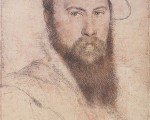
  • Sir Thomas Wyatt the Elder – my historical crush!

    I do have to admit to Sir Thomas Wyatt being my historical crush (along with Robery Dudley and George Boleyn), so I was very excited when my daughter Verity told me that she is studying his work this term as part of her English Literature unit. She’s now being bombarded with resources and Wyatt trivia from me! Anyway, it inspired me to talk a little about him in this week’s Claire Chats talk and to share some Wyatt resources with you…

    [Read More...]
  • Eustace Chapuys (d.1556)

    Eustace Chapuys

    Eustace Chapuys was born in Annecy; his exact birth date is unknown but is believed to be between 1490 and 1492. He was the second son of Louis Chapuys, notary of Annecy in the Duchy of Savoy.

    Eustace Chapuys was a very well-educated man, attending the University of Turin in 1507, where it is believed he stayed for five years, leaving in around 1512. Chapuys became a doctor of civil and canon laws and had an interest in humanist scholarship. His degree paved the way for his appointment in 1517 when he was employed as an official to the Bishop of Geneva and represented the bishop in the government of the city. In the years following this appointment, Chapuys delicately handled strained political alliances, representing his bishop and the Duke of Savoy. In 1525, Chapuys entered the services of the Duke of Bourbon, acting as his ambassador to Charles V’s court in Granada. Following the death of the Duke of Bourbon, Eustace entered into the service of Charles V the Holy Roman Emperor, and by the 25th June 1529, he was appointed as Charles V’s ambassador to England. It is this appointment which guarantees Chapuys’ place in history as an important historical figure.

    [Read More...]
  • 28 January – Elizabeth I, friend of the Ottoman Empire

    On this day in Tudor history, 28th January 1598, diplomat Edward Barton died of dysentery on the island of Heybeli Ada, in the Sea of Marmara, off the coast of Istanbul. Barton and his predecessor, William Harborne, had played key roles in Elizabeth I’s alliance with the Ottoman Empire.

    Elizabeth I had a good relationship with the Islamic World and it was something that was very important to her. Find out why Elizabeth reached out to the Ottomans in the 1580s, and just how the relationship worked, in today’s talk.

    Recommended reading: “This Orient Isle: Elizabethan England and the Islamic World” – Jerry Brotton

    [Read More...]
  • Katherine Ashley (Astley, née Champernowne)

    Portrait of Kat Ashley

    Katherine or ‘Kat’ Ashley (Astley, née Champernowne) is the purported daughter of Sir Phillip Champernowne, a wealthy landowner in Devon, and his wife, Katherine, daughter of Sir Edmund Carew. Although we do not know much regarding her early years, we do know that Kat received an education unlike that of her contemporary aristocratic women. For aristocratic women, their education centred on what would render them desirable for marriage and as such, learned dancing, sewing, embroidery and music in the place of reading and writing. As such, may aristocratic women were barely literate at all. Kat, however, received an education that was equal to that of a man, learning classical scholarship and developing an interest in humanism, her father being unusually committed to the education of his daughters. Kat’s humanist leanings and interests caught the eye of Thomas Cromwell, who suggested that she be appointed to the household of Princess Elizabeth. It is this appointment which would shape her life, and mark her as a historical figure worthy of note.

    [Read More...]
  • 22 January – Wyatt’s Rebellion is planned

    On this day in Tudor history, 22nd January 1554, Thomas Wyatt the Younger met with fellow conspirators at his home of Allington Castle in Kent. The purpose of their meeting was to make final plans for their uprising against Queen Mary I and her decision to marry Philip of Spain.

    This rebellion would come to be known as Wyatt’s Rebellion, although the leader at the start appears to have been Sir James Croft.

    Find out all about Wyatt’s Rebellion and what happened in this talk.

    [Read More...]
  • January 19 – Henry Herbert, 2nd Earl of Pembroke

    On this day in Tudor history, 19th January 1601, Henry Herbert, 2nd Earl of Pembroke, died at Wilton, the family home near Salisbury.

    Who was Henry Herbert?

    Let me tell you about this interesting Tudor man in today’s talk.

    [Read More...]
  • 13 January – The Prince of Poets

    On this day in Tudor history, 13th January 1599, Elizabethan poet and administrator in Ireland, Edmund Spenser, died in Westminster. He was described as “the prince of poets in his time” and is best known for his allegorical poem in praise of Elizabeth I, “The Faerie Queene”.

    But, did you know that he also upset William Cecil twice and that his most famous work is actually unfinished?

    Find out more about Edmund Spenser in today’s talk.

    [Read More...]

  • 12 January – Elizabeth I goes to the Tower

    On this day in Tudor history, Thursday 12th January 1559, Queen Elizabeth I travelled by barge from Whitehall to the Tower of London to prepare for her coronation, which was due to take place on the 15th January.

    Of course, her journey wasn’t a low key one in a normal river barge, it was a lavish one with decorated barges, music and the usual artillery fire. Find out all about this river procession in today’s talk.

    [Read More...]
  • 9 January – A queen twice over!

    On this day in Tudor history, 9th January 1514, Anne of Brittany, Queen Consort of King Louis XII of France, died at Château Blois in France. Her corpse was buried in the Cathedral Basilica of Saint-Denis and her heart was buried at Nantes.

    Anne of Brittany was the mother of Queen Claude of France, the wife of a Holy Roman Emperor AND two Kings of France, and had been betrothed to one of the Princes in the Tower. A very interesting lady!

    And then there’s the story of her stolen heart!

    Find out more in today’s talk.

    [Read More...]
  • 7 January – “You shall find Calais lying in my heart”

    On this day in Tudor history, 7th January 1558, in the reign of Queen Mary I, England lost Calais to the French.

    It was a devastating blow as Calais had been held by England for over 200 years and was an important port for English wool exports. Mary I was said to have exclaimed ““When I am dead and opened, you shall find ‘Philip’ and ‘Calais’ lying in my heart”.

    Find out exactly what happened in today’s talk.

    [Read More...]
  • 30 December – Roger Ascham, Elizabeth I’s tutor

    On this day in Tudor history, 30th December 1568, in the reign of Queen Elizabeth I, Roger Ascham, scholar and royal tutor, died. He was laid to rest in the St Stephen’s chapel of St Sepulchre without Newgate, London.

    Ascham served as tutor to Princess Elizabeth, the future Elizabeth I, and is also responsible for the idea that Lady Jane Grey had abusive parents.

    Find out more about Roger Ascham, his life and career, in today’s talk.

    [Read More...]
  • 29 December – Japanese pirates

    On this day in history, 29th (or 30th) December 1605, in the reign of King James I, Elizabethan navigator and explorer, John Davis (also spelled Davys) died near Bintang, off the coast of Borneo.

    Davis died after being attacked by Japanese pirates. He was about 55 when he died.

    He is known for his voyages, for being the first Englishman to document a sighting of the Falkland Islands, for his 1594 “The Seaman’s Secrets” and 1595 “The World’s Hydrographical Description”, and for his invention, the Davis Quadrant, or the backstaff.

    Find out more about him, his final voyage and death, in today’s talk.

    [Read More...]
  • 22 December – Bishop Fisher begs for a shirt

    On this day in Tudor history, 22nd December 1534, John Fisher, Bishop of Rochester, who was a prisoner in the Tower of London, wrote to Thomas Cromwell.

    In his letter to Cromwell, the poor bishop begged him for a shirt, sheet, food and books, as well as asking him to intercede with King Henry VIII on his behalf.

    It is so sad that a man who had served the king so loyally in the past had come to this, and, of course, the king’s mercy would only stretch to commuting his method of execution to beheading.

    [Read More...]
  • December 20 – Catherine Howard’s stepgrandmother begs forgiveness from the king

    On this day in Tudor history, 20th December 1541, a “very sickly” Agnes Tilney, Dowager Duchess of Norfolk, begged King Henry VIII for forgiveness.

    The dowager duchess had been arrested and taken to the Tower accused of misprision of treason for hiding her stepgranddaughter Catherine Howard’s past relationship with Francis Dereham.

    In today’s talk, I share what the dowager duchess wrote to the king and also what happened to this sickly woman.

    [Read More...]
  • 15 December – Cardinal Pole is laid to rest

    On this day in Tudor history, 15th December 1558, Cardinal Reginald Pole, Mary I’s Archbishop of Canterbury and her chief advisor, was buried at Canterbury Cathedral. Coincidentally, Cardinal Pole had died the same day as his queen, on 17th November 1558.

    Find out a bit more about Cardinal Pole, his background, death and burial, in today’s talk.

    [Read More...]
  • 11 December – Robert Dudley’s lover and mother of his son

    On this day in history, 11th December 1608, one of Queen Elizabeth I’s former ladies and a lover of Robert Dudley, Earl of Leicester, was buried at St Margaret’s Church, Westminster. Her name was Douglas Sheffield (née Howard), Lady Sheffield, and she was the mother of Leicester’s illegitimate son, Sir Robert Dudley.

    Find out more about Douglas Sheffield, who claimed to be Leicester’s legal wife, in today’s talk.

    [Read More...]

  • 9 December -The King is a beast and worse than a beast!

    On this day in Tudor history, 9th December 1538, Sir Edward Neville, courtier, Gentleman of the Privy Chamber and son of George Neville, 2nd Baron Bergavenny, was beheaded on Tower Hill.

    He had been condemned to death for treason, accused of conspiring against the king in the Exeter Conspiracy of 1538, along with members of the Pole family. He was also accused of saying “The King is a beast and worse than a beast”, which is not a wise thing to be overheard saying in Tudor England.

    Find out more about Neville’s life and downfall in today’s talk.

    [Read More...]
  • 5 December – Anne Cecil and her unhappy marriage

    On this day in Tudor history, 5th December 1556, Anne de Vere (née Cecil) was born, She was the daughter of William Cecil, 1st Baron Burghley, and his second wife, Mildred Cooke.

    Anne only lived until she was 31 years old, but in her short life she managed to impress scholars, have five children, and have a rather eventful and unhappy marriage with Edward de Vere, Earl of Oxford, who didn’t treat her at all well and even refused to recognise their first daughter as his own, at one point. If only she had married Philip Sidney instead!

    Find out more about the life of William Cecil’s daughter, Anne de Vere, Countess of Oxford, in today’s talk.

    [Read More...]
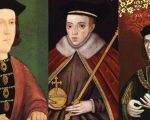
  • 1483: The Year of Three Kings – Matthew Lewis – Expert Talk

    This month we have the wonderful Matthew Lewis telling us about a very eventful year – Edward IV, Edward V and Richard III. This is an exceptional talk and we know you’ll enjoy it.

    [Read More...]
  • 27 November – William Shakespeare gets married

    On this day in Tudor history, 27th November 1582, eighteen year-old William Shakespeare, the famous playwright and a man known as the Bard, married twenty-six year-old Anne (also known as Agnes) Hathaway, at Temple Grafton, near Stratford-upon-Avon, in Warwickshire.

    Anne Hathaway was pregnant at the time of their marriage and went on to give birth to a daughter, Susannah, the following May. The couple went on to have twins, Hamnet and Judith, in 1585.

    Find out more about William Shakespeare and Anne Hathaway, and their marriage, and also what happened to them, in today’s talk:

    [Read More...]
  • 26 November – Henry Fitzroy gets married

    On this day in Tudor history, 26th November 1533, in the reign of King Henry VIII, Henry Fitzroy, Duke of Richmond and Somerset, illegitimate son of King Henry VIII, married Mary Howard, daughter of Thomas Howard, 3rd Duke of Norfolk, at Hampton Court Palace. They were both fourteen years old.

    It appears that the marriage, which was a political match rather than a love match, was the idea of Henry VIII’s second wife, Anne Boleyn.

    Find out more about Henry Fitzroy and Mary Howard’s marriage and its context in today’s talk.

    [Read More...]
  • 25 November – The coronation of Elizabeth of York

    On this day in Tudor history, 25th November 1487, the Feast of St Catherine, Elizabeth of York, queen consort of Henry VII and mother of one-year-old Arthur Tudor, was crowned queen at Westminster Abbey.

    In today’s talk, I share details of Elizabeth of York’s coronation, including Elizabeth’s apparel, and who attended, plus a list of some of the interesting dishes served at Elizabeth of York’s coronation banquet which included swan and seal!

    [Read More...]
  • 24 November – Elizabeth of York’s coronation procession

    On this day in Tudor history, Saturday 24th November 1487, the coronation procession of Elizabeth of York, queen consort of King Henry VII, the first Tudor monarch, took place in London.

    Elizabeth of York’s coronation was scheduled for the next day. She had become queen in January 1486, but her coronation had been postponed due to pregnancy and trouble with the Cornish rebels and Perkin Warbeck. Finally, Henry VII’s wife and the mother of little Prince Arthur could be crowned queen.

    Find out all about her coronation procession, what Elizabeth wore, who was involved and what happened, in today’s talk.

    [Read More...]
  • 23 November – The pretender Perkin Warbeck

    Note: I say that Margaret of York was the Princes’ sister, when actually she was their aunt. Sorry!

    On this day in Tudor history, 23rd November 1499, in the reign of King Henry VII, pretender Perkin Warbeck was hanged at Tyburn after allegedly plotting to help another claimant, Edward, Earl of Warwick, escape from the Tower of London.

    Perkin Warbeck had claimed to be Richard of Shrewsbury, Duke of York, the younger of the Princes in the Tower, and had even been proclaimed King Richard IV, but his rebellion and claim failed.

    In today’s talk, I give Perkin Warbeck’s background, and explain how he ended up trying to claim the throne of England, and what happened.

    [Read More...]