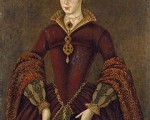
John Dee, astrologer, mathematician, alchemist, antiquary, spy, philosopher, geographer and adviser to Elizabeth I and various influential statesmen during her reign, was born in London on 13th July 1527.
[Read More...]
John Dee, astrologer, mathematician, alchemist, antiquary, spy, philosopher, geographer and adviser to Elizabeth I and various influential statesmen during her reign, was born in London on 13th July 1527.
[Read More...]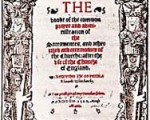
Thank you to Beth von Staats for joining us here on the Tudor Society today as part of her book tour for Thomas Cranmer: In a Nutshell. She is here to share an excellent article on Thomas Cranmer and the Book of Common Prayer – thanks Beth!
MadeGlobal Publishing is offering one copy of the paperback version of Thomas Cranmer: In a Nutshell as a prize for one lucky commenter. All you have to do to enter the giveaway is to comment below saying what you find so fascinating about Thomas Cranmer. You need to leave your comment by midnight (UK time) on Wednesday 15th July. The winner will be picked at random and contacted for his/her postal address. The giveaway is open internationally.
[Read More...]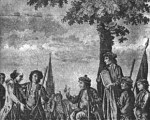
8th July 1549 was the beginning of Kett’s Rebellion. Robert Kett, a Norfolk farmer, agreed to lead a group of protesters who were angry with the enclosure of common land. The protesters marched on Norwich, and by the time they reached the city walls, it is said that they numbered around 16,000.
[Read More...]

The Battle of Stoke field, which was fought on 16th June 1487, is known as the last battle between the Houses of York and Lancaster in the civil war we call the Wars of the Roses.
[Read More...]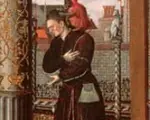
William Somer (Sommers) served as Henry VIII’s fool from June 1535 and just a month later got into trouble with the King. In July 1535, Eustace Chapuys, the Imperial ambassador, recorded that Henry VIII was so angry with Somer that he nearly killed him:
[Read More...]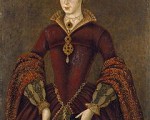
Queen Jane, commonly known as Lady Jane Grey, was born in 1537 (May or October) at Bradgate Park in Leicestershire. She was the eldest daughter of Henry Grey, Duke of Suffolk and Frances Brandon, daughter of Charles Brandon, Duke of Suffolk, and Mary Tudor, Queen of France. She was an intelligent girl and received a top-class education. Her main tutor was John Aylmer but she also met the top scholars of the day during her time living with Thomas Seymour, as his ward, and his wife Dowager Queen Catherine Parr. She also met famous reformists and humanists. She loved Greek and was a linguist with a knowledge of Latin and Hebrew, on top of the usual modern languages.
[Read More...]
Thank you to Tudor Life magazine contributor Kyra Kramer for this excellent article on Sir Henry Norris, Henry VIII’s Groom of the Stool, and the fall of Anne Boleyn. Over to Kyra…
Of all the men who were falsely accused of being Anne Boleyn’s companions in adultery, to point a finger at Henry Norris makes the most sense in terms of proximity and politics but the least sense in terms of his close relationship with Henry VIII.
If historian Greg Walker is correct in his 2002 proposal that Anne’s downfall was not due to her miscarriage of a male foetus in January of 1536 but instead to some hasty words she said in spring, then Norris was a ready-made target. One day in late April, the queen asked Henry Norris, who was the king’s groom of the stool and engaged to her cousin Madge Shelton, when he planned to wed. Norris hedged that he would wait just a bit longer, which vexed Anne. In her anger she told him he was looking for “dead men’s shoes, for if ought came to the king but good, you would look to have me”. This was a major blunder. It was treason to even think about the death of the king, let alone to talk about whom his queen might marry after his demise. Norris was appalled and Anne knew almost immediately that she had said something dangerous. She sent Norris to her chaplain, John Skyp, to swear that she was a good woman and faithful to the king.
[Read More...]
Hans Holbein the Younger is one of history’s most famous painters and it is thanks to his great skill and talent that we have so many paintings of the people of Henry VIII’s reign, including the great King himself. But who exactly was Hans Holbein the Younger and how did he come to the English court and catch the eye of Henry VIII?
[Read More...]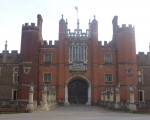
Hampton Court has origins far older than Henry VIII. Originally Hampton Court was a settlement belonging to the Saxon period; its original name was ‘Hammton’ meaning ‘a settlement by the river’. In the early 12th century the land was owned by Reginald de St Valery, a crusader in Jerusalem. He allowed the Knights Hospitallers of St John to rent the land. The Knights built the House of Hampton and the land was primarily used to manage the Knights agricultural estates.
[Read More...]