The Tudor Society

YOUR SEARCH UNCOVERED 2372 RESULTS

  • The Royal Family’s connection to the Boleyns and Tudors, and beyond

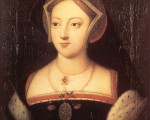
    A portrait of a woman thought to be Mary Boleyn from the collection at Hever Castle

    Today marks the anniversary of the accession of the late Queen Elizabeth II on 6th February 1952. She was the longest reigning monarch in British history, ruling from this day in 1952 until her death in September 2022. As we reflect on her remarkable reign, I thought it would be fitting to explore an intriguing piece of history—the present royal family’s descent from both the Tudors and the Boleyns.

    Yes, you heard that right! King Charles III has Tudor blood AND Boleyn blood.

    But wait—how is that possible? The last Tudor monarch, Elizabeth I, died childless, and as we all know, she was Anne Boleyn’s only surviving child. So where does the royal family’s Tudor-Boleyn connection come from?

    Let’s unravel this fascinating royal lineage…

    [Read More...]
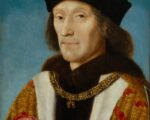
  • A Royal Wedding – Anne of York and Thomas Howard

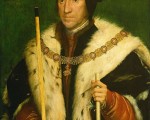
    Thomas Howard 3rd Duke of Norfolk

    On 4th February 1495, Anne of York, daughter of Edward IV and sister of Queen Elizabeth of York, married Thomas Howard, the future 3rd Duke of Norfolk, at Westminster Abbey. But this was far more than just a romantic union—it was a strategic marriage with deep political significance.

    It was an unlikely match. Anne was the sister-in-law of King Henry VII, and Thomas Howard’s father and grandfather had fought against Henry at the Battle of Bosworth Field just ten years earlier.

    So why did Henry VII allow this marriage? And what did it mean for the future of the Howard family?

    [Read More...]
  • The Treaty of Perpetual Peace

    Henry VII

    On this day in Tudor history, 24th January 1502, King Henry VII, the first Tudor monarch, ratified a peace treaty, the Treaty of Perpetual Peace, with King James IV of Scotland, at Richmond Palace in the presence of James’s representatives, Robert Blackadder, Archbishop of Glasgow, Patrick Hepburn, Earl of Bothwell, and Andrew Forman, who all signed it.

    This treaty was a landmark agreement between England and Scotland aimed at ending two centuries of conflict between the two nations. It was a diplomatic triumph for both monarchs, King Henry VII of England and King James IV of Scotland, and it marked a rare moment of peaceful relations in what was often a turbulent and violent history.

    [Read More...]
  • Jane Dudley, Duchess of Northumberland

    A collage of the Dudley family

    Jane Dudley, Duchess of Northumberland, is one of my favourite figures from Tudor history—and for good reason. Her story is one of resilience, faith, and immense tragedy. She lived through one of the most tumultuous periods in English history, lost her husband and children to the axe, and yet, she carried on. Today, on the anniversary of her death, I’m exploring her life and legacy.

    [Read More...]
  • Hanged, Drawn, and Quartered for Printing a Book? The Fate of Blessed William Carter

    The Tyburn Tree, the gallows at Tyburn

    On this day in Tudor history, 11th January 1584, Carter paid the ultimate price after being found guilty of treason. His crime? Printing a book that allegedly encouraged the assassination of Queen Elizabeth I.

    William Carter was born in London in around 1548 and was the son of draper John Carter and his wife, Agnes. When he was about fifteen, Carter became apprenticed to John Cawood who had been Queen’s Printer to Mary I and who was joint Queen’s Printer to Elizabeth I. Carter was an apprentice to Cawood for a term of ten years before moving on to become secretary to Nicholas Harpsfield, a man who had been Archdeacon of Canterbury under Cardinal Pole in Mary I’s reign and who had been a zealous promoter of heresy trials of Protestants. He had been imprisoned by Elizabeth I’s government for refusing to swear the oath of supremacy and was still in Fleet prison when Carter became his secretary.

    [Read More...]
  • A Queen Cast Aside for Another – And it’s not Catherine of Aragon!

    Joan of France

    In 1499, King Louis XII of France had his 22-year marriage annulled to marry Anne of Brittany, one of the most sought-after women in Europe. But why did Louis go to such lengths? And what happened to his first wife, who had been loyal for two decades?

    This is a story of royal marriages, political scheming, and a forgotten queen who became a saint.

    On this day in Tudor history, 8th January 1499, French king Louis XII married the queen dowager, Anne of Brittany, in Nantes.
    Louis had had his twenty-two-year marriage annulled so that he could marry Anne, but why and on what grounds?

    [Read More...]
  • #OTD in Tudor history – 31 December

    Queen Elizabeth I 1558-1560

    On this day in Tudor history, 31st December, “the Gunner” Sir William Skeffington, Lord Deputy of Ireland, died at Kilmainham (1535), and Owen Oglethorpe, Bishop of Carlisle, died while under house arrest (1559)…

    [Read More...]
  • #OTD in Tudor history – 30 December

    The New Testament translated by Enzinas
  • #OTD in Tudor history – 25 December

    Lettice Knollys

    On this day in Tudor history, magistrate, sheriff and witch-hunter Brian Darcy died (1587), and Lettice Knollys (married names: Devereux, Dudley and Blount) died at the age of ninety one (1634)…

    [Read More...]
  • #OTD in Tudor history – 21 December

    Stained glass window depicting Jasper Tudor and his wife, Catherine Woodville

    On this day in Tudor history, Henry VII’s uncle and mentor, Jasper Tudor, Duke of Bedford and Earl of Pembroke, died (1495), and the Feast of St Thomas the Apostle (or Didymus or Doubting Thomas) was celebrated…

    [Read More...]
  • #OTD in Tudor history – 13 December

    Sir Francis Drake and a map of his circumnavigation

    On this day in Tudor history, 13th December, civil lawyer and dean of Chester William Clyffe died (1558), and pirate, sea captain, and explorer Sir Francis Drake finally left Plymouth on his circumnavigation of the Globe (1577)…

    [Read More...]

  • #OTD in Tudor history – 8 December

    Portraits of Mary, Queen of Scots, and her parents, James V and Marie de Guise

    On this day in Tudor history, 8th December, Sir William Coffin, Master of the Horse to Queens Anne Boleyn and Jane Seymour, died (1538), and Mary, Queen of Scots, was born at Linlithgow Palace (1542)…

    [Read More...]
  • #OTD in Tudor history – 6 December

    19th-century depiction of a medieval boy bishop

    On this day in Tudor history, 6th December, soldier and administrator Sir Hugh Paulet, a man who served four monarchs, died (1573), and the Feast of St Nicholas was celebrated with the election of a Boy Bishop…

    [Read More...]
  • #OTD in Tudor history – 5 December

    Francis II and Mary, Queen of Scots

    On this day in Tudor history, 5th December, Anne de Vere (née Cecil), wife of Edward de Vere, 17th Earl of Oxford, and daughter of William Cecil, 1st Baron Burghley, was born (1556), and King Francis II of France, husband of Mary, Queen of Scots, died of an ear infection (1560)…

    [Read More...]
  • #OTD in Tudor history – 2 December

    Henry Howard, Earl of Surrey

    On this in Tudor history, 2nd December, Henry Howard, Earl of Surrey, was arrested after being accused of improper heraldry (1546), and Elizabeth I finally agreed to a public proclamation of sentence against Mary, Queen of Scots: death (1586)…

    [Read More...]
  • #OTD in Tudor history – 1 December

    Martyr Edmund Campion

    On this day in Tudor history, 1st December, Thomas Culpeper and Francis Dereham were found guilty of high treason and sentenced to death (1541), and Catholic priests Alexander Briant, Ralph Sherwin and Edmund Campion were hanged, drawn and quartered at Tyburn (1581)…

    [Read More...]
  • #OTD in Tudor history – 29 November

    Cardinal Thomas Wolsey

    On this day in Tudor history, 29th November, Anthony Browne, 1st Viscount Montagu, a courtier who served in four monarchs’ reigns, was born (1528), and Cardinal Thomas Wolsey cheated the executioner by dying on his journey to London to answer charges of treason (1530)…

    [Read More...]
  • #OTD in Tudor history – 27 November

    William Shakespeare

    On this day in Tudor history, 27th November, a former Benedictine monk was burnt at Smithfield for heresy for importing Lutheran books (1531); and 18-year-old William Shakespeare got married to 26-year-old Anne Hathaway, who was pregnant at the time (1582)…

    [Read More...]
  • #OTD in Tudor history – 25 November

    Elizabeth of York

    On this day in Tudor history, 25th November, Elizabeth of York, Henry VII’s queen consort, was crowned queen at Westminster Abbey (1487), and lawyer, MP, diplomat and ecclesiastical administrator Sir Thomas Legh died (1545)…

    [Read More...]
  • #OTD in Tudor history – 21 November

    Frances Grey, Duchess of Suffolk's tomb

    On this day in Tudor history, 21st November, John Bale, Protestant playwright, historian and bishop, was born (1495); and Frances Grey (née Brandon), Duchess of Suffolk and mother of Lady Jane Grey, died (1559)…

    [Read More...]
  • #OTD in Tudor history – 20 November

    Sir Christopher Hatton

    On this day in Tudor history, 20th November, Elizabeth I’s Lord Chancellor and favourite, Sir Christopher Hatton, a man she called her “mouton”, died (1591); and her godson, author, courtier and a man who invented a flush toilet, Sir John Harington, died (1612)…

    [Read More...]
  • #OTD in Tudor history – 18 November

    Cuthbert Tunstall

    On this day in Tudor history, 18th November, Ralph Baynes, Bishop of Coventry and Lichfield, died while imprisoned in the Bishop of London’s home, and his fellow clergyman, Cuthbert Tunstall, Bishop of London, died in prison at Lambeth Palace (1559)…

    [Read More...]
  • #OTD in Tudor history – 17 November

    Coronation miniature of Elizabeth I and a portrait of Mary I

    On this day in Tudor history, 17th November, Queen Mary I died at St James’s Palace, London, and her half-sister, Elizabeth, became Queen Elizabeth I. Elizabeth would reign for over forty-four years (1558)…

    [Read More...]
  • #OTD in Tudor history – 13 November

    Lady Jane Grey and Archbishop Thomas Cranmer

    On this day in Tudor history, 13th November, mercer and member of Parliament Robert Packington was shot to death by an unknown assailant (1536); and Lady Jane Grey and her husband, Lord Guildford Dudley, two of his brothers, and Archbishop Cranmer were tried for treason…

    [Read More...]
  • #OTD in Tudor history – 12 November

    Stephen Gardiner, Bishop of Winchester

    On this day in Tudor history, 12th November, Queen Jane Seymour’s remains were taken from Hampton Court Palace to Windsor Castle for burial (1537); and Stephen Gardiner, Bishop of Winchester, “Wily Winchester”, died (1555)…

    [Read More...]
  • #OTD in Tudor history – 11 November

    Thomas Cranmer and Catherine Howard

    #OTD in Tudor history, 11th November, the Admiral of France landed on English soil, a visit that was going to cause George Boleyn, Lord Rochford, a lot of stress (1534); and Archbishop Cranmer was instructed to move Queen Catherine Howard from Hampton Court Palace to Syon House (1541)…

    [Read More...]
  • #OTD in Tudor history – 10 November

    Sir Henry Wyatt and the cat

    On this day in Tudor history, 10th November, privy councillor Sir Henry Wyatt, father of Sir Thomas Wyatt the Elder, died (1536); and explorer and navigator Richard Chancellor was drowned after saving the Russian ambassador after their ship was wrecked (1556)…

    [Read More...]
  • #OTD in Tudor history – 7 November

    Portraits of Richard III and Henry VII

    On this day in Tudor history, 7th November, Henry VII’s first Parliament attainted Richard III and his supporters (1485); and Archbishop Thomas Cranmer visited a confined Queen Catherine Howard, seeking a confession (1541)…

    [Read More...]
  • #OTD in Tudor history – 23 October

    Photo of the ruins of the infirmary chapel of Christ Church Priory, Canterbury

    On this day in Tudor history, 23rd October, a prior wrote a rather grovelling letter to Thomas Cromwell regarding the forthcoming dissolution of his monastery; and renowned poet, psalmodist and clergyman John Hopkins was buried at Great Waldingfield…

    [Read More...]
  • #OTD in Tudor history – 20 October

    A painting of Pontefract Castle and the Pilgrimage of Grace banner

    On this day in Tudor history, 20th October, Lord Darcy yielded Pontefract Castle to the rebels of the Pilgrimage of Grace, but all was not how it seemed (1536), and courtier Mary Arundell, a countess twice over, died at Bath Place in London (1557)…

    [Read More...]