The Tudor Society

YOUR SEARCH UNCOVERED 2372 RESULTS

  • Walter Raleigh’s colonisation, war over vestments, an earl who saved the day, and some burnings

    In part two of this week in Tudor history, I talk about Walter Raleigh (Ralegh) being given permission to colonise foreign lands in 1584; a disagreement over the wearing of vestments in 1566 which led to a pamphlet war, protests and ministers losing their parishes; a Tudor earl who saved the day for Henry VIII during the 1536 Pilgrimage of Grace rebellion, and the burnings of three Protestant martyrs in Essex in 1555.

    [Read More...]
  • A monk who embraced reform, a translator and soldier, and Black Will Herbert

    In this first part of This Week in Tudor History for the week beginning 15th March, I look at the life and career of a bishop who started out as a monk but whose conversion to the reformed faith saw him dying an awful death in the reign of Queen Mary I, before moving on to the death of a soldier, translator and diplomat in Henry VIII’s reign, and the death of a Tudor earl and brother-in-law of a queen who was once known as Black Will Herbert.

    [Read More...]
  • An outspoken reformer, Lady Margaret Douglas dies, and a man of “plyable” willow

    In the first part of this week in Tudor history, I introduce an outspoken reformer whose works were burnt, I talk about the death of Henry VIII’s niece, Lady Margaret Douglas, and how it was surrounded by rumour, and I give an overview of the life and career of a Tudor administrator who claimed he survived in politics in such turbulent times because he “was made of the plyable willow, not of the stubborn oak”

    8th March 1569 – Death of evangelical reformer and Member of Parliament Richard Tracy at Stanway in Gloucestershire. Henry VIII and his council ordered the burning of his works in 1546….

    [Read More...]
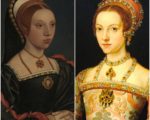
  • A murdered French duke, Margaret Douglas’s bad news, a Tudor countess, and Lady Katherine Grey

    In this second part of “This week in Tudor history” for the week beginning 15th February, I talk about how the death of a French duke led to an awful massacre, and how the imprisoned Margaret Douglas heard of her son’s murder, as well as introducing a countess who served all six of Henry VIII’s wives and who was close to his daughter Mary, and a noblewoman who managed to give birth twice while imprisoned in the Tower of London.

    18th February 1563 – Francis, Duke of Guise, was wounded by a Huguenot assassin at the Siege of Orléans. He died a few days later and his death was a factor in the 1572 St Bartholomew’s Day Massacre.

    [Read More...]
  • Mad people can be executed, a miscarriage of justice, problematic prophecies and William Waste All

    In this second part of This Week in Tudor History for week beginning 8th February, I talk about two parliamentary acts that allowed a king to execute his wife and to execute people showing signs of madness; a miscarriage of justice which led to a priest being executed in Elizabeth I’s reign; an Elizabethan astrologer who was ridiculed after his prophecies didn’t come true, and a man known as William Waste-all.

    11th February 1542 – King Henry VIII gave his assent “in absentia” to an act of attainder against his fifth wife, Catherine Howard, and her lady-in-waiting, Jane Boleyn, Lady Rochford. A bill allowing people showing signs of lunacy was also passed, an awful thing, but the king was determined to take revenge.

    [Read More...]
  • Elizabeth Howard (née Stafford), Duchess of Norfolk (1497-1558)

    Elizabeth Stafford was born in 1497 and was the eldest daughter of Edward Stafford, 3rd Duke of Buckingham, and his wife, Eleanor, eldest daughter of Henry Percy, 4th Earl of Northumberland. Through her parents, Elizabeth was a descendant of King Edward III, and her paternal grandparents were Henry Stafford, 2nd Duke of Buckingham, and Lady Katherine Woodville, sister of Elizabeth Woodville. Her paternal grandfather was beheaded for treason against Richard III in 1483, which is a fate her father would suffer in 1521, beheaded for treason against Henry VIII.

    [Read More...]
  • This week in Tudor history Part 1 – A man who refused a title, Lady Jane Grey’s reprieve, and a naughty earl with a magic ring

    In this first part of “This Week in Tudor History”, I introduce a chap named John, one of the many johns in his family, who turned down a title; explain why Lady Jane Grey’s execution was postponed and what happened, and introduce an earl who appears to have been a bit of a Tudor bad boy.

    8th February 1545, in the reign of King Henry VIII – Death of courtier and soldier Sir John Arundell of Lanherne, or John Arundell III, a man who turned down a barony from King Henry VIII. Find out why.

    9th February 1554 – Queen Mary I postpones Lady Jane Grey’s scheduled execution and gives her a three-day reprieve…

    [Read More...]
  • Lucy Somerset, Baroness Neville (1524-1583)

    Lucy Somerset was born in around 1524 to Henry Somerset, 2nd Earl of Worcester, and his second wife, Elizabeth Browne, who is perhaps best known for her alleged role in Anne Boleyn’s downfall. Little is known of Lucy’s early life; however, as a noblewoman, it is assumed that she would have been accomplished in courtly manners. She was also involved with prominent courtiers, particularly the Brandon family through her aunt’s marriage to Sir Charles Brandon, Duke of Suffolk. This made Lady Anne Brandon and her sister Lady Mary Brandon her first cousins and important connections, both with prominent royal relations and friendships.

    It is believed that Lucy was sent to the court of Henry VIII around 1540 aged 16, where she served his fifth consort, Katherine Howard, as a Maid of Honour during her marriage to Henry VIII. In 1542, when Katherine Howard was awaiting execution for treason, Lucy was supposedly mentioned in a letter by the imperial ambassador, Eustace Chapuys.

    [Read More...]
  • The Royal Supremacy and the Break with Rome

    On this day in history, 15th January 1535, in his privy chamber, in the presence of men including Thomas Boleyn, Thomas Cromwell, the Duke of Norfolk, and Thomas Audley, Henry VIII proclaimed that he was now the supreme head of the Church in England.

    But why had he taken this title and what events had led to this proclamation?

    [Read More...]
  • This week in Tudor History – 11 – 17 January – Part 1

    This week, I thought I’d split the week into two, so this video covers Tudor history events that took place on 11th, 12th and 13th January – the execution of a printer, the death of a baron, soldier and naval commander, the death of a godson of Henry VIII…

    Below, you’ll also find videos from previous years that cover these dates.

    [Read More...]
  • Happy New Year and the death of a king

    Happy New Year!

    In this video that I did for the YouTube channel, I talk about King Louis XII of France, first husband of Mary Tudor, sister of Henry VIII, and his death on this day in history, 1st January 1515.

    [Read More...]
  • 31 December – “The Gunner”, Sir William Skeffington

    On this day in Tudor history, 31st December 1535, in the reign of Henry VIII, Sir William Skeffington, Lord Deputy of Ireland, died at Kilmainham in Dublin.

    Skeffington had become known as “the Gunner” following his use of heavy artillery while taking Maynooth Castle in County Kildare, where he killed, or had executed, the whole garrison.

    Find out more about the life and career of Sir William Skeffington in today’s talk.

    [Read More...]

  • Richard Neville, 2nd Baron Latimer (1467-1530)

    Richard Neville was the son of Sir Henry Neville who died at Edgcote in July of 1469 and his wife Joan, daughter of John Bourchier, 1st Baron Berners. He is an interesting Tudor figure because he saw the beginning of the reign of Henry VII, being part of the War of the Roses and lived up until Henry VIII’s ‘Great Matter.’

    Richard Neville inherited his title and lands when just a baby in 1469, the principal seat being Snape Castle in Richmondshire, following his grandfather George Neville’s death. However, his great uncle, Thomas Bourchier, who was a cardinal and later Archbishop of Canterbury, purchased the wardship of Richard and his marriage in May 1470 for £1000. Still, Richard’s lands remained the property of the crown. Not much is known about the early life of Richard Neville, but we do know that he was knighted in January 1478.

    [Read More...]

  • 23 December – Elizabeth I moves to a property her mother knew well

    On this day in Tudor history, 23rd December 1558, just over a month after her accession, England’s new queen, Elizabeth I, daughter of King Henry VIII and his second wife, Anne Boleyn, moved from Somerset House to Whitehall Palace, which became her principal residence.

    Whitehall, formerly York Place, had once been home to her mother, Anne Boleyn, and had been the setting of Anne’s marriage to Henry VIII. I wonder if Elizabeth felt close to her mother there.

    Find out more about Whitehall Palace, and also Somerset Place, the property Elizabeth left, in today’s talk.

    [Read More...]

  • 13 December – A lawyer thrown into prison for refusing to do a favour

    On this day in Tudor history, 13th December 1558, civil lawyer and dean of Chester William Clyffe died.

    Clyffe was one of the authors of the 1537 “Bishops’ Book”, and he was consulted by convocation during Henry VIII’s Great Matter. He was thrown into prison for a time for refusing to do a favour for one of the king’s servants – oh dear!

    Find out more about William Clyffe’s life and career in today’s “on this day” talk.

    [Read More...]

  • 11 December – A lavish reception for Anne of Cleves

    On this day in Tudor history, 11th December 1539, Anne of Cleves and her retinue were received at Gravelines, just a few miles outside of Calais, by Lord Lisle, Deputy of Calais.

    Anne of Cleves was on her way to England to marry King Henry VIII, but her journey had been rather slow and she was about to be delayed even more.

    The reception was rather lavish, with everyone dressed up to the nines. Enjoy a contemporary description from a Tudor chronicler in today’s talk.

    [Read More...]
  • 6 December – An important man who managed to die a natural death

    On this day in Tudor history, 6th December 1573, soldier and administrator, Sir Hugh Paulet, died at his home in Hinton St George in Somerset.

    He distinguished himself as a soldier in Henry VIII’s reign, served as Governor of Jersey in Edward VI’s reign, was a Protestant but survived Mary I’s reign and served as Vice-President of the Welsh marches, and had a successful career in Elizabeth I’s reign. He was an important man and a servant of the Crown, but still managed to die a natural death at his home.

    Find out more about Sir Hugh Paulet, his life and career, in today’s talk.

    [Read More...]
  • 29 November – A courtier who served in four monarchs’ reigns and died a natural death!

    On this day in Tudor history, 29th November 1528, nobleman and courtier, Anthony Browne, 1st Viscount Montagu, was born.

    Montagu began his court career with the help of his father in Henry VIII’s reign. served as a privy councillor in Mary I’s reign, and died a natural death as a wealthy man in Elizabeth I’s reign. He even survived being implicated in a rebellion!

    Who was Anthony Browne, 1st Viscount Montagu, and just how did he manage to not only have an excellent court career, but leave a fortune to his grandson, when he was a Catholic in Elizabeth I’s reign?

    [Read More...]
  • 25 November – A vicious man who saved an archbishop

    On this day in Tudor history, 25th November 1545, lawyer, member of Parliament, diplomat and ecclesiastical administrator, Sir Thomas Legh (Leigh), died.

    Legh was a faithful servant to King Henry VIII, but his work during the dissolution of the monasteries led to complaints against him and even rebellion.

    He was a vicious man, known for his harsh treatment of monks, but he also played a key role in protecting Thomas Cranmer, Archbishop of Canterbury, in 1543 when his enemies tried to bring him down.

    Let me give you a few facts about this Tudor man, Sir Thomas Legh…

    [Read More...]
  • 17 November – Elizabeth I’s accession

    On this day in Tudor history, 17th November 1558, twenty-five-year-old Elizabeth, daughter of King Henry VIII and Anne Boleyn, became Queen Elizabeth I following the death of her half-sister, Queen Mary I.

    In today’s talk, I look at an alternative account of Elizabeth I’s words on her accession, one recorded by her godson, Sir John Harington. Hear Elizabeth I’s wonderful speech, which she used to motivate her supporters and to reassure those who’d served Mary I.

    I also look at Elizabeth’s words “This is the Lord’s doing…”, and note the importance of the previous line in the Psalm.

    [Read More...]
  • 15 November – A Princess of York

    On this day in Tudor history, 15th November 1527, a woman who called herself ““the excellent Princess Katherine, Countess of Devon, daughter, sister and aunt of kings”, died at Tiverton Castle in Devon.

    Katherine of York, Countess of Devon, daughter of King Edward IV and Elizabeth Woodville, was just forty-nine when she died and had taken a vow of chastity after her husband’s death.

    In today’s talk, I give an overview of Henry VIII’s aunt’s life and explain why she took her vow of chastity. Find out all about her.

    [Read More...]
  • 14 November – Bad Signs for Culpeper and Lady Rochford

    On this day in Tudor history, 14th November 1541, an inventory was taken of “the goods and chattels, lands and fees of” Thomas Culpeper, a groom of King Henry VIII’s privy chamber and a man who had been having secret meetings with Catherine Howard, Henry VIII’s fifth wife.

    An inventory had also been taken of the possessions of Jane Boleyn, Lady Rochford, wife of the late George Boleyn, a woman who had allegedly helped the queen meet with Culpeper.

    But what was going on in November 1541 and what was listed in these inventories?

    [Read More...]
  • 8 November – A true friend of scholars who had to give Catherine of Aragon bad news

    On this day in Tudor history, 8th November 1534, courtier, scholar and literary patron, William Blount, 4th Baron Mountjoy, died at Sutton on the Hill in Derbyshire.

    He’d had a wonderful court career, helping organise the young Henry VIII’s education, serving as Master of the Mint and chamberlain to Queen Catherine of Aragon, and he’d been close friends with the renowned humanist scholar, Erasmus. He’d wanted to be relieved of his position as chamberlain to the queen, though, after she’d been put aside and he’d had to break bad news to her.

    Find out all about Lord Mountjoy, his career and life, in today’s talk.

    [Read More...]
  • Who’s your favourite Anne Boleyn actress?

    There have been some wonderful portrayals of Anne Boleyn, second wife of Henry VIII, but which one is your favourite?

    [Read More...]
  • 4 November – A cardinal’s actions lead to his family’s undoing

    On this day in Tudor history, 4th November 1538, Henry Pole, 1st Baron Montagu, his brother-in-law, Sir Edward Neville; Henry Courtenay, Marquis of Exeter; Courtenay’s wife, Gertrude Blount, and the couple’s son, Edward Courtenay, were all arrested for treason and imprisoned in the Tower of London.

    Montagu, Neville and Exeter, along with Montagu’s brother, Geoffrey Pole, were accused of plotting with Cardinal Reginald Pole against the king. Margaret Pole, Countess of Salisbury, was also arrested, accused of the same.

    But how had it come to this, when Henry VIII had sought Cardinal Pole’s opinion on his marriage and the papacy?

    Find out what Cardinal Pole had done to upset the king, and what happened to his family and friends as a result, in today’s talk.

    [Read More...]
  • Medieval Tournaments – Dr Emma Levitt – Expert Talk

    Dr Emma Levitt shows us some amazing primary sources to unravel the spectacle of the tournament that Henry VIII would have enjoyed.

    [Read More...]
  • 31 October – Falling in love with the wrong woman was a dangerous thing!

    On this day in Tudor history, 31st October 1537, Lord Thomas Howard, second son of Thomas Howard, 2nd Duke of Norfolk, died while imprisoned in the Tower of London. He was about twenty-five years of age at his death.

    How did this son of the 2nd Duke of Norfolk and brother of the 3rd Duke of Norfolk end up dying in the Tower?

    Well, he fell in love with the wrong woman? He had become secretly betrothed to King Henry VIII’s niece, Lady Margaret Douglas.

    Find out more about Lord Thomas Howard, his relationship with Lady Margaret Douglas, and what happened to them both, in today’s talk. Oh, and Margaret really didn’t learn her lesson!

    [Read More...]
  • 26 October – Rain stops rebels going to battle

    On this day in Tudor history, 26th October 1536, the rebels of the Pilgrimage of Grace halted at Scawsby Leys near Doncaster, where they met crown troops. The rebels were said to number around 30,000 and the crown’s army was only a fifth of the size, but the rebel leader, lawyer Robert Aske, chose to negotiate rather than fight.

    Why, when they could well have won?

    Well one Tudor chronicler puts it down to rain. You can find out more about this meeting, how rain put a stop to the rebels’ plans, and what happened next between the Pilgrimage of Grace rebels and Henry VIII, in today’s talk.

    [Read More...]
  • 23 October – The Dissolution of the Monasteries and its sad impact

    On this day in Tudor history, 23rd October 1538, Thomas Goldwell, Prior of Christchurch, Canterbury, wrote to Thomas Cromwell, Henry VIII’s chief advisor, regarding the forthcoming dissolution of his monastery and its fate.

    It’s quite a sad, grovelling letter, and even more sad when you know the full impact of Henry VIII’s dissolution of the monasteries, which was devastating for his country.

    Find out more about Goldwell’s priory and what happened to it, as well as what the dissolution entailed, in today’s talk.

    [Read More...]
  • 22 October – Treason or a malicious woman making things up?

    On this day in Tudor history, 22nd October 1537, an examination, or rather interrogation, was carried out regarding an accusation of treasonous words spoken against King Henry VIII.

    Further investigations into the matter found that there was no evidence that these words were spoken, and that someone was trying to get another person into trouble.

    What was going on? In a time when the punishment for high treason was death, this was very serious.

    Find out more about what happened in this talk

    [Read More...]