The Tudor Society

YOUR SEARCH UNCOVERED 1673 RESULTS

  • Edmund Tudor, 1st Earl of Richmond

    Today marks the anniversary of the death of Edmund Tudor, 1st Earl of Richmond, on 1st November 1456. He died from the plague at Carmarthen Castle.

    Thank you to Sarah Bryson for writing this article on Edmund for us.

    Henry Tudor, King Henry VII, was the founder of the Tudor Dynasty. His mother was the imposing Margaret Beaufort who risked everything to see her son on the throne and in turn the houses of Lancaster and York united through the marriage of her son to Elizabeth of York, daughter of Edward IV. But who was Henry Tudor’s father? While so much is known about Henry’s mother, his father is a much more elusive figure and sadly he did not live to see his only son and heir claim the English throne.

    [Read More...]
  • November 2015 Tudor Life Magazine

    The Tudors thought about death around the start of November, and so for this month’s magazine we’re doing the same. You’ll be fascinated by the detailed articles we’ve put together for you to enjoy… though some are a little bit gruesome – be warned!

    [Read More...]
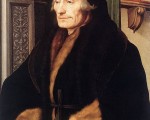
  • Desiderius Erasmus: An Exceptional Mind by Heather R. Darsie

    Erasmus: his name is synonymous with humanism, education and intelligence. Across Northern Europe several Erasmus programs exist at universities, so students may pursue their studies at multiple universities and in multiple languages. During his lifetime, Erasmus corresponded with such notable people as Sir Thomas More and John Colet. Erasmus assisted Hans Holbein in his quest to move to England, and advised Anne of Cleves’s father when he was writing religious tolerance laws.

    Desiderius Erasmus was born on 27 or 28 October 1466 or 1467* in Rotterdam, Netherlands. His exact date of birth is not known. The second son and an illegitimate child of his father, a priest, and mother, a physician’s daughter, Erasmus was sent to school at the age of five. In about 1484, when Erasmus was approximately eighteen years of age, his parents both died of plague. Erasmus’s three guardians sent Erasmus and his brother to a new, more conservative school run by the Brethren of the Common Life. There, Erasmus studied Latin and Christian theology.

    [Read More...]
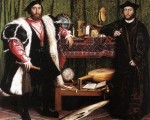
  • Holbein at the Tudor Court Radio Programme

    Thank you to our resident art expert Melanie Taylor for letting me know about this radio programme which aired today on the BBC Radio 4 programme “In our Time”.

    Blurb: Melvyn Bragg and guests discuss the life and work of Hans Holbein the Younger (1497-1543) during his two extended stays in England, when he worked at the Tudor Court and became the King’s painter.

    [Read More...]
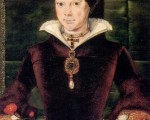
  • Mary I’s Coronation Part 3 – The Coronation Procession of Mary I

    On the afternoon of Saturday 30th September 1553, Queen Mary I left the Tower of London to process to Westminster, where she would spend the night at Whitehall preparing for her coronation at Westminster Abbey the following day.

    [Read More...]
  • Mary I’s Coronation Part 2 – Knights of the Bath

    On 29th September 1553, Michaelmas or the Feast of St. Michael and All Angels, Mary I created fifteen1 Knights of the Bath as part of her coronation celebrations.

    [Read More...]
  • Bringing Up Children in the Medieval and Tudor Periods

    In today’s Claire Chats video I discuss bringing up children in the Medieval and Tudor periods – the advice given to parents and the parental/educational treatises of the day.

    [Read More...]
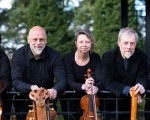
  • Renaissance music group Piva Concert Dates

    Those of you who live in the UK, or who are visiting the UK this autumn, may be interested in seeing Renaissance music group Piva perform their popular “Measure for Measure” programme. The five members of Piva have a huge knowledge of renaissance music and instruments, and are all multi-instrumentalists – playing up to 40 different instruments at a gig! They really are worth seeing if you can get to any of their performances.

    [Read More...]
  • Arthur, Prince of Wales

    Elizabeth of York, daughter of Edward IV, got pregnant straight after her marriage to Henry VII in January 1486 and the news of her pregnancy was celebrated throughout England. Henry VII, was ecstatic at the news and decided that the birth of his first-born would take place at Winchester, the place believed to have been the capital of the legendary Camelot and the site of King Arthur’s castle, and that the child would be called Arthur. Henry was convinced that Arthur’s birth would bring about a new golden age.

    [Read More...]
  • Childbirth in Medieval and Tudor Times by Sarah Bryson

    Childbirth is openly discussed in today’s society. Images of pregnant women appear in magazines and women giving birth can be seen on television and in movies. Yet during the medieval period, childbirth was deemed a private affair. Giving birth in the middle ages was a dangerous time for women and childbirth did not discriminate. Young mothers, older mothers, poor or rich mothers, all could die not only in childbirth but also due to complications afterwards. Sadly, more than one in three women died during their child-bearing years.

    [Read More...]
  • A History of the English Monarchy Book Tour

    Just to let you know that author and Tudor Life magazine editor Gareth Russell has embarked on a week long book/blog tour for his non-fiction history book A History of the English Monarchy: From Boadicea to Elizabeth I. He will be stopping here at the Tudor Society on 30th August but do catch him at his other stops too to enter the giveaways for a copy of his book.

    [Read More...]
  • Margaret of Anjou, the Queen of the Wars by Heather R. Darsie

    Marguerite d’Anjou, more commonly known as Margaret of Anjou and wife to Henry VI of England, was born to René, Duke of Anjou, and Isabella, daughter of the Duke of Lorraine, in Pont-à-Mousson, France on 23 March 1429. Pont-à-Mousson lies in modern north-eastern France, close to the countries of Luxembourg and Lichtenstein. The Moselle river flows through Pont-à-Mousson and the skyline boasts the impressive Norbertine abbey, which was built in 1121. Young Marguerite spent her early years in the castle of Capua in Naples, Italy, where her father was titular king, and in the castle of Tarascon on the Rhône River. Marguerite was tutored by her well-educated mother and may have received some lessons from Antoine de la Salle, who tutored Marguerite’s brothers.

    [Read More...]
  • Siege of Haddington

    On 23rd August 1548, Francis Talbot, 5th Earl of Shrewsbury, arrived at the Siege of Haddington, in East Lothian, Scotland, with a large army.

    The siege was actually part of a series of sieges at Haddington, which were all part of the Anglo-Scottish war known as the War of the Rough Wooing, so named because it was had been started in 1543 by Henry VIII in a bid to secure a marriage agreement between England and Scotland, between Prince Edward and Mary, Queen of Scots.

    [Read More...]
  • William Parr, Marquis of Northampton

    William Parr, Marquis of Northampton and brother of Queen Catherine Parr, was born on 14th August 1513. He was the son of Sir Thomas Parr of Kendal and his wife, Maud (née Green).

    [Read More...]
  • Margaret Pole, Countess of Salisbury

    Margaret Pole, or Margaret Plantagenet, was the daughter of George, Duke of Clarence – brother of two Plantagenet kings: Edward IV and Richard III – and his wife Lady Isabella Neville, daughter of Richard Neville, 16th Earl of Warwick and a man known as ‘the Kingmaker’. Margaret was born on 14th August 1473 and she married Sir Richard Pole in 1491, having five children before she was widowed in 1505. One of her children was Reginald Pole who became a cardinal and then Archbishop of Canterbury during the reign of Mary I.

    [Read More...]
  • The Battle of Saint-Mathieu – 10 August 1512

    On the 10th August 1512, the Battle of Saint-Mathieu, a battle in the War of the League of Cambrai, took place between the English and Franco-Breton fleets off the coast of Brest. England at this time were allied with Spain and the Holy Roman Empire against France.

    [Read More...]
  • 30 July 1540 – Executions of Reformers and Catholics

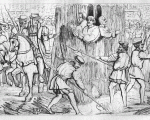
    On this day in history, Catholics Thomas Abell, Edward Powell and Richard Fetherston were hanged, drawn and quartered at Smithfield for refusing to acknowledge the royal supremacy. Also, at Smithfield that day, religious reformers Robert Barnes, William Jerome and Thomas Garrard were burned at the stake for heresy. Reformers and Catholics being executed on the same day – I wonder what the common people made of that!

    [Read More...]
  • This week in history 20 – 26 July

    On this day in history events for week 20-26 July.

    [Read More...]
  • 3 July 1495 – Perkin Warbeck lands at Deal

    On 3rd July 1495, the pretender Perkin Warbeck landed at Deal in Kent with men and ships. Around 150 of his men were killed and over 160 captured by Henry VII’s troops. Warbeck escaped, fleeing to Ireland. Warbeck claimed to be Richard, Duke of York, the younger of the Princes in the Tower.

    [Read More...]
  • The English Court Masque – Part 1

    In today’s Claire Chats video I talk about the English court masque and how it developed from a merging of old English traditions and a new Italian fashion.

    [Read More...]
  • Elizabeth I’s Challenge to the Masculinity of the Royal Body by Susan Bordo

    Lacey Baldwin Smith has written that “Tudor portraits bear about as much resemblance to their subjects as elephants to prunes.” A slight exaggeration, maybe. But it is true that the historical accuracy of the depictions in Tudor portraits, particularly of royalty, was often at war with “symbolic iconizing”—the use of imagery to represent the person’s character, position or role.

    The symbolism could include inscriptions, emblems, mottos, relationships with other people, animals, or objects, and it could also be written into the body itself. A famous example is Hans Holbein’s sketch of Henry VIII—the painting itself was destroyed in a fire—with the king posed to emphasize his power, authority, and resoluteness: legs spread and firmly planted, broad shoulders, one hand on his dagger, and a very visible codpiece (larger, art historians have noted, than portraits of other men at the time.) His stance, as Suzanne Lipscomb points out, “mimics the stance of a man standing in full armour…sparking associations with martial glory.” Lipscomb also points out an interesting detail: in the draft sketch, Henry’s face is turned to a ¾ angle. But in the final painting, as we know from 16th century copies done within Henry’s lifetime, Holbein has Henry looking straight ahead, confronting the spectator with an unblinking stare that is still symbolic of masculinity today.

    [Read More...]
  • Field of Cloth of Gold Primary Sources

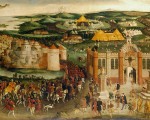
    The Field of Cloth of Gold was an historic meeting between Henry VIII and Francis I of France to solidify the Treaty of London. It ran from 7th June 1520 until 24th June 1520 and was held on a field between the English stronghold of Guînes and the French town of Ardres, to solidify the Treaty of London.

    [Read More...]
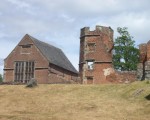
  • News – Archaeologists prepare to reveal the secrets of Bradgate Park

    Archaeologists are starting a five-year project to reveal the secrets of Bradgate Park, the estate which was home to Lady Jane Grey and her family.

    [Read More...]
  • Primary sources for Anne Boleyn’s coronation – 1 June 1533

    Here are some links for primary source accounts of Anne Boleyn’s coronation, and the pageants and processions that went with it, on 1st June 1533:

    [Read More...]
  • Lady Margaret Beaufort

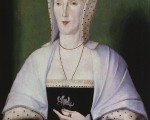
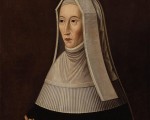
    A portrait of Lady Margaret Beaufort

    Margaret Beaufort, Countess of Richmond and Derby, and matriarch of the Tudor dynasty, was born at Bletsoe Castle in Bedfordshire on 31st May 1443. She was the daughter of Margaret Beauchamp of Bletsoe and John Beaufort, 1st Duke of Somerset, grandson of John of Gaunt, 1st Duke of Lancaster, and his mistress (and eventual wife) Katherine Swynford. Margaret was their only child. Although a 1397 act of Parliament legitimized the children of John of Gaunt and Katherine Swynford, Henry IV declared that they could never inherit the throne.

    [Read More...]
  • 1511 Celebrations for the birth of Prince Henry, Duke of Cornwall

    I’m busy researching Tudor entertainment, revels and pageantry at the moment and so wanted to share with you some information on the 1511 celebrations for the birth of Prince Henry, Duke of Cornwall. I hope you enjoy these vivid descriptions which might just transport you back to early 1511.

    [Read More...]
  • This week in history 18 – 24 May

    On this day in history events for 18-24 May.

    [Read More...]
  • This week in history 11 – 17 May

    On this day in history events for 11-17 May.

    [Read More...]
  • The Offspring of Thomas and Elizabeth Boleyn by Conor Byrne

    The birth dates of the children born to Sir Thomas Boleyn and his wife Elizabeth Howard have caused considerable controversy among historians over the centuries. It is a fact that Elizabeth was delivered of two surviving daughters (Mary and Anne) and three sons (Thomas, Henry and George), only one of whom (George) survived to adulthood. Everything else is uncertain. Even the date of Thomas’s marriage to Elizabeth is not known. Only in 1538 were parish registers systematically introduced in which all weddings, baptisms and funerals were recorded.

    [Read More...]
  • The death of Elizabeth I and possible causes of death by Alexander Taylor

    Elizabeth I is one of England’s most well-known monarchs. She was the daughter of the infamous King Henry VIII and his second wife the illustrious Queen Anne Boleyn, who was executed when Elizabeth was just two years old.

    Elizabeth reigned for almost forty-five years and was the last monarch of the Tudor Dynasty, having died childless. Her reign is famous as ‘The Golden Age’, for its blooming of the arts with the origins of Renaissance drama and for producing the most famous playwrights of the era, such as William Shakespeare and Christopher Marlowe.

    [Read More...]