The Tudor Society

YOUR SEARCH UNCOVERED 1673 RESULTS

  • 30 May – Knights of the Bath for Anne Boleyn’s coronation

    On this day in Tudor history, on the night of 30th/31st May 1533, as part of the celebrations for Queen Anne Boleyn’s coronation, which was scheduled for 1st June, eighteen men were created Knights of the Bath.

    What did this mean? What happened in this night-long ceremony?

    Find out in today’s talk.

    [Read More...]
  • May 28 – The Spanish Armada sets sail

    On this day in Tudor history, 28th May 1588, the Spanish Armada set sail from Lisbon in Portugal bound for the Spanish Netherlands.

    With the Pope’s blessing, King Philip II was going to invade England and depose the heretic, Queen Elizabeth I. The stop at the Netherlands was simply to pick up the Spanish forces there.

    What happened next and why did the Spanish Armada fail?

    Find out all about the Spanish Armada and how England was victorious in today’s talk.

    [Read More...]
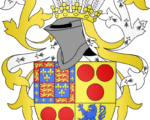
  • Gertrude Courtenay, Marchioness of Exeter (d.1558)

    Gertrude Courtenay was the daughter of William Blount, 4th Baron Mountjoy, and his wife Elizabeth, daughter of Sir William Say. Little is known about the early life of Gertrude, but we do know that she married Henry Courtenay, Earl of Devon, in 1519.

    As Henry Courtenay was the first cousin of Henry VIII, Gertrude had married well and as such had a high place in court, attending the queen at the Field of Cloth of Gold in 1520. In 1525, her husband was created the Marquess of Exeter, making Gertrude a marchioness. Gertrude gave birth to a son named Edward in 1526, but her other son, Henry, died in infancy. When Henry VIII decided to divorce Katherine of Aragon, Gertrude’s husband signed the petition to the Pope asking him to grant an annulment. However, although supportive of the divorce, Exeter and Gertrude felt sympathy for Katherine and opposed the new evangelical ideas of Cromwell and Cranmer. As such, Gertrude became embroiled with Elizabeth Barton, the Holy Maid of Kent. Barton predicted the death of the king should he marry Anne, and such ideas were treasonous. Gertrude involved herself with Elizabeth Barton and travelled in secret to meet her and brought her to the Courtenay house in Surrey. When Barton was arrested for treason, Gertrude was cited in the investigation and wrote to Henry VIII to assure him of her loyalty, feigning ignorance of Barton’s treason.

    [Read More...]
  • 25 May – A great shaking of the ground – a Tudor earthquake

    On this day in Tudor history, 25th May 1551, at around noon, Croydon and several Surrey villages, in the south of England, experienced a “great shaking of the ground”, in other words, an earthquake.

    In today’s talk, I share descriptions of this earthquake, as well as other Tudor earthquakes, such as the famous 1580 Dover Straits Earthquake, which caused fatalities and damage.

    [Read More...]
  • 24 May – The Life of Anne Askew

    On this day in Tudor history, 24th May 1546, letters were sent from the Privy Council to the future Protestant martyr Anne Askew and her estranged husband Thomas Kyme.

    The couple were ordered to appear in front of the council within fourteen days. But why? What was going on? And what happened next.

    In today’s talk, I give an overview of the life of Anne Askew, who was famously racked illegally at the Tower of London prior to being burnt as a heretic.

    [Read More...]
  • 21 May – 81-year-old Thomas Howard, 2nd Duke of Norfolk

    On this day in Tudor history, 21st May 1524, in the reign of King Henry VIII, courtier, magnate and soldier, Thomas Howard, 2nd Duke of Norfolk, died at Framlingham Castle in Suffolk. He was about 81 years of age when he died.

    Norfolk was the grandfather of Queens Anne Boleyn and Catherine Howard, but there was far more to him than that. In today’s talk,I introduce a man who was still leading troops into battle in his seventies.

    [Read More...]
  • 17 May – Anthony Bacon, a Tudor spy

    On this day in Tudor history, 17th May 1601, Anthony Bacon was buried in St Olave’s, London.

    You might have heard of Francis Bacon, but his brother, Anthony Bacon, was rather interesting too!

    Who was Anthony Bacon?

    Well, he was a spy, providing intelligence for the likes of William Cecil, Sir Francis Walsingham, Elizabeth I and Robert Devereux, Earl of Essex. Find out more in today’s talk

    [Read More...]
  • 12 May – A very obstinate friar

    On this day in Tudor history, 12th May 1538, a Franciscan friar obstinately refused to make a public recantation of his allegiance to Rome.

    Friar John Forest had been condemned for heresy and was meant to abjure his faith at St Paul’s Cross, but he decided not to. Find out more about what happened:

    [Read More...]
  • 8 May – Charles Wriothesley and his chronicle

    On this day in Tudor history, 8th May 1508, herald and chronicler Charles Wriothesley was born in London.

    Wriothesley’s chronicle is one of the major primary sources for King Henry VIII’s reign, so let me tell you more about its writer, Charles Wriothesley, Windsor Herald, and what heralds actually are.

    [Read More...]
  • 6 May – Sir James Tyrell, alleged killer of the Princes in the Tower

    On this day in Tudor history, 6th May 1502, in the reign of King Henry VII, Sir James Tyrell, former royal councillor, was executed for treason due to his links to a known traitor.

    But it’s not for his time as a trusted councillor, or for his links to a claimant to the throne that he is known, but for his alleged involvement in the murders of the Princes in the Tower.

    Find out more in today’s talk.

    [Read More...]
  • 4 May – A pitiful and strange spectacle

    On this day in Tudor history, 4th May 1535, in the reign of King Henry VIII, three Carthusian monks, a Bridgettine monk and a parish priest were executed at Tyburn.

    They were executed for refusing to accept the King as the Supreme Head of the Church and “for writing and giving counsel against the King”, and had to suffer a full traitor’s death, one after the other.

    Find out more about them and also London Charterhouse, home to the Carthusian order, in today’s talk.

    [Read More...]
  • 30 April – Thomas Audley, Lord Chancellor

    On this day in Tudor history, 30th April 1544, in the reign of King Henry VIII, Thomas Audley, Baron Audley of Walden and Lord Chancellor, died at his home in London.

    Audley was Thomas Cromwell’s right-hand man in 1536, during the fall of Anne Boleyn, and became even more important after Cromwell’s fall.

    Find out more about Thomas Audley, an important Tudor statesman, and how he served King Henry VIII, in today’s talk.

    [Read More...]
  • 27 April – A Tudor and Stuart adventurer

    On this day in history, actually in the Stuart period, 27th April 1609, Sir Edward Michelborne, member of Parliament, soldier and adventurer, died.

    He’d survived an unsuccessful naval campaign against the Spanish, being implicated in a rebellion, and an attack by pirates, to die a natural death at his home in Hackney.

    Find out more about Sir Edward Michelborne in today’s talk.

    [Read More...]
  • 25 April – Catherine Parr publishes a book

    On this day in Tudor history, 25th April 1544, an English translation of John Fisher’s Latin work, “Psalms or Prayers”, was published. It had been translated by none other than Catherine Parr, Henry VIII’s sixth and final wife.

    It was published anonymously, but there’s rather a lot of circumstantial evidence pointing towards Queen Catherine as the translator. Find out more in today’s talk.

    [Read More...]
  • 20 April – Lady Mary Grey, sister of Lady Jane Grey

    On this day in Tudor history, 20th April 1578, Lady Mary Keys (née Grey), sister of Lady Jane Grey and wife of Thomas Keys, died at her home in the parish of St Botolph without Aldgate, London.

    Like her sisters, Mary had a sad life. Her secret marriage led to Elizabeth I imprisoning her and her husband, and they never saw each other again.

    Find out more about the tiny Mary who was described as “crook-backed”, her marriage to a man who was said to be 6’8, and what happened to Mary and Thomas, in today’s talk.

    [Read More...]
  • Tudor History Challenge 7

    It’s Friday and I think we’re due some fun, aren’t we? Let’s have it at Tim’s expense, he doesn’t mind.

    Here’s our latest Tudor History Challenge! Do play a long. Give yourself a point for each correct answer and there’s a bonus point if you get both parts of question 7 correct. The answers are at the bottom of this post so don’t scroll down and cheat!

    [Read More...]
  • 14 April – A Tudor magician who helped a countess get out of her marriage

    On this day in Tudor history, 14th April 1565, in the reign of Queen Elizabeth I, astrologer, astronomer, mathematician and magician, Edward Gresham, was born in Stainsford, Yorkshire.

    Gresham is known for his treatise “Astrostereon” and his almanacs, but what’s really interesting is his connection to a countess’s annulment and a poisoning.

    Find out more about Edward Gresham in today’s talk.

    [Read More...]
  • 9 April – Catherine Willoughby’s second husband

    On this day in Tudor history, 9th April 1582, Richard Bertie, member of Parliament, evangelical, and second husband of Catherine Willoughby (other married name Brandon), Duchess of Suffolk, died at Bourne in Lincolnshire. He was laid to rest in St James’s Church, Spilsby, with Catherine, who had died in 1580.

    Bertie was Catherine’s gentleman usher and the two became close following the death of her sons from sweating sickness.

    Find out more about the man Catherine Willoughby chose to marry for love in today’s talk from Claire Ridgway.

    [Read More...]
  • 4 April – William Strachey and Shakespeare’s The Tempest

    On this day in Tudor history, 4th April 1572, William Strachey (and who knows if Claire pronounces his name right!), writer and historian of Virginia, was born in Saffron Walden in Essex, England.

    Strachey’s account of the 1609 shipwreck of the Sea Venture in a hurricane was used as a source for William Shakespeare’s “The Tempest”.

    Find out more about Strachey, how he was marooned for a year, and why he died in poverty, in today’s talk.

    [Read More...]
  • 3 April – Peace between Elizabeth I, France and the Empire

    On this day in Tudor history, 3rd April 1559, the Peace of Cateau-Cambrésis was signed between King Henry II of France and King Philip II of Spain. The previous day, 2nd April 1559, it had been signed between Elizabeth I and Henry II.

    The treaty, or rather treaties, brought the Italian Wars to an end. But what were these wars? How was England involved? And what were the terms of the Peace of Cateau-Cambrésis? Find out more in today’s talk.

    [Read More...]
  • Owen Tudor (1400-1461)

    The grandfather of Henry VII, Owen Tudor, or Owain ap Maredudd ap Tudur, was born in 1400. He was the son of Maredudd ap Tudur ap Goronwy and Margaret, daughter of Dafydd Fychan. He is believed to be descended from a prominent Welsh family, and it is thought that Owen’s family took part in the Glyndwr Rising, one of the last major attempts for Welsh independence. Little is known about the early life of Owen Tudor, and, in fact, a large proportion of his life is highly mythologised.

    There are theories that Owen fought at Agincourt and became an esquire of King Henry V. In 16th century France, it was said that he was the illegitimate son of an alehouse keeper, and in 18th century Wales, it was purported that his father was a fugitive murderer. These rumours are largely unfounded and show just how much speculation there is regarding the early life of Owen Tudor. We know that in May 1421, an ‘Owen Meredith’ joined the service of Sir Walter Hungerford, who was the steward of the king’s household where he served in France. Following this appointment, his life once again becomes shrouded in mystery. It is within these years, however, that we know Owen Tudor met Queen Catherine, and this meeting has inspired romantics and writers of historical fiction and poetry for years. It is rumoured that the relationship between Owen Tudor and Catherine began when Owen met Catherine by falling into her lap while dancing, while another story claims that Owen Tudor caught Catherine’s eye while he was swimming! Regardless of how they met, however, their subsequent relationship would change the English monarchy, removing the Plantagenet dynasty and replacing it with their very own Tudor one.

    [Read More...]

  • 27 March – Arrangements are made for Prince Arthur to marry Catherine of Aragon

    On this day in Tudor history, 27th March 1489, the Treaty of Medina del Campo was signed between England and Spain. One part of it was the arrangement of the marriage between Arthur, Prince of Wales, and Catherine (or Catalina) of Aragon. It was signed by Spain on this day and ratified in 1490 by Henry VII.

    Find out more about this treaty and the betrothal and marriages (yes, plural!) of Arthur Tudor, Prince of Wales, and Catherine of Aragon in today’s talk.

    [Read More...]

  • 22 March – William Bourne, his life and his submarine

    On this day in Tudor history, 22nd March 1582, gunner, mathematician and writer, William Bourne was buried at Gravesend in Kent.

    This popular author, who was able to explain technical matters for the common man in his books, was also a gunner, mathematician and inventor, yet he received no university education. He also drew plans for a submarine, although he never built it.

    Find out more about the fascinating William Bourne and his works in today’s talk.

    [Read More...]
  • 20 March – St Cuthbert Mayne, an Elizabethan priest and martyr

    On this day in Tudor history, 20th March 1544, Cuthbert Mayne (Main/Maine) or St Cuthbert Mayne, Roman Catholic priest and martyr, was baptised in Youlston in North Devon.

    Cuthbert Mayne has gone down in history as the first seminary priest to be martyred. He was hanged, drawn and quartered at Launceston on 30th November 1577, in the reign of Queen Elizabeth I.

    Let me tell you a bit more about this Elizabethan martyr.

    [Read More...]
  • 19 March – Elizabeth Seymour, Lady Cromwell

    On this day in Tudor history, 19th March 1568, Elizabeth Seymour, Lady Cromwell, died. She was around fifty years old at her death.

    Elizabeth was the sister of a queen, and a lord protector, and two of her brothers were executed as traitors, but what else do we know about Elizabeth Seymour and how is she linked to the Cromwell family and a portrait once thought to be of Queen Catherine Howard?

    Find out more in today’s talk.

    [Read More...]
  • 18 March – Elizabeth I is arrested

  • 16 March – Richard Burbage, actor and friend of Shakespeare

    On this day in history, 16th March 1619, actor Richard Burbage was buried at St Leonard’s Church, Shoreditch.

    Burbage was a famous actor in the reigns of Queen Elizabeth I and King James I, peforming for royalty and even being in King James’ company of players. Burbage was also a good friend of William Shakespeare, and the two men were involved in the building of the famous Globe Theatre.

    Find out more about Richard Burbage, his life and career, in today’s talk.

    [Read More...]
  • 13 March – A young horse causes the death of an old earl

    On this day in Tudor history, 13th March 1540, sixty-eight-year-old Henry Bourchier, 2nd Earl of Essex, died after suffering a broken neck in a horse-riding accident. Chronicler Charles Wriothesley recorded: “the Earl of Essex, riding a young horse, by misfortune cast him and brake his neck at his place in Essex, which was great pity.”

    Henry Bourchier, 2nd Earl of Essex, was related to the royal family and served both Henry VII and Henry VIII. Find out more about this Tudor man in today’s talk.

    [Read More...]
  • 6 March – The Dissolution of the Monasteries

    On this day in Tudor history, 6th March 1536, King Henry VIII’s Dissolution of the Monasteries began when the “Act for the Suppression (or Dissolution) of the Lesser Monasteries” was introduced into the Reformation Parliament.

    The Dissolution of the Monasteries had a major impact on England and her people, but was of great benefit to the king, his nobles and the gentry. Find out what happened, why and its impact in this talk.

    [Read More...]
  • 4 March – William Bullokar and his 40-letter alphabet

    On this day in history, 4th March 1609, Tudor spelling reformer and grammarian William Bullokar died at Chichester in West Sussex.

    William Bullokar is known for writing the first grammar book of English, the “Pamphlet for Grammar”, and for his work reforming the alphabet to improve literacy. Find out more about him and what he did in today’s talk.

    [Read More...]