The Tudor Society

YOUR SEARCH UNCOVERED 1673 RESULTS

  • September 10 – The 1547 Battle of Pinkie Cleugh

    On this day in Tudor history, Saturday 10th September 1547, the Battle of Pinkie Cleugh took place in Edward VI’s reign.

    The battle, also known as the Battle of Pinkie, took place near Musselburgh, in Scotland, on the banks of the River Esk. Edward Seymour, Duke of Somerset, led the English forces and defeated the Scots, killing between 6,000 and 15,000 of them.

    It was a bloody battle, but it had started off well for the Scots.

    What happened?

    Let me share an eye-witness account of how the battle changed so dramatically…

    [Read More...]
  • September 9 – Mary, Queen of Scots is crowned

    On this day in Tudor history, 9th September 1543, nine-month-old Mary, Queen of Scots, was crowned queen at the Chapel Royal of Stirling Castle.

    It was the 30th anniversary of the Battle of Flodden and the death of Mary’s grandfather, King James IV of Scotland.

    Find out more about how Mary came to the throne, her coronation ceremony, in which Mary howled, and how she was already promised in marriage to Henry VIII’s son, the future Edward VI…

    [Read More...]
  • August 25 – Norwich is attacked by rebels

    On this day in Tudor history, 25th August 1549, in the reign of King Edward VI, the rebels of Kett’s Rebellion launched an attack on the south side of Norwich and burned a number of buildings.

    Kett’s Rebellion lasted from July 1549 until the 27th August 1549, when they were defeated by Crown forces at the Battle of Dussindale.

    But what was it all about? What were the rebels’ grievances?

    Find out more about this rebellion…

    [Read More...]
  • August 23 – The 1548 Siege of Haddington

    On this day in Tudor history, 23rd August 1548, in the reign of King Edward VI, Francis Talbot, 5th Earl of Shrewsbury, arrived at the Siege of Haddington, in East Lothian, Scotland, with a large army.

    The Siege of Haddington was part of the Anglo-Scottish war known as the War of the Rough Wooing between England and Scotland, which had started when Scotland backed out of the treaties which arranged the marriage of Edward VI and Mary, Queen of Scots.

    What happened at this siege and to Haddington after it?

    [Read More...]
  • August 11 – Sir Maurice Berkeley dies

    On this day in Tudor history, 11th August 1581, in the reign of Queen Elizabeth I, Sir Maurice Berkeley died.

    You may not have heard of Sir Maurice Berkeley, but he had a wonderful court career. He served Henry as a gentleman usher of Henry VIII’s Privy Chamber, and also served Edward VI and Elizabeth I. He proved his loyalty to Mary I by arresting rebel leader, Thomas Wyatt the Younger.

    Find out more about this lesser-known Tudor man…

    [Read More...]
  • August 3 – Lord Russell marches his troops to face rebels, and a notorious Tudor rake

    On this day in Tudor history, 3rd August 1549, in the reign of King Edward VI, Lord Russell marched his troops from Honiton to Woodbury.

    They were off to put down the Prayer Book Rebellion.

    Find out more in this edition of #TudorHistoryShorts…

    [Read More...]
  • July 21 – John Dudley is arrested

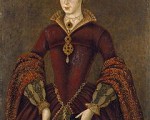
    On this day in Tudor history, 21st July, 1553, two days after Mary I had been proclaimed queen, John Dudley, Duke of Northumberland was arrested near Cambridge.

    This was just days after Northumberland had left London with an army to apprehend Mary, on behalf of his daughter-in-law, Queen Jane (Lady Jane Grey).

    But how and why did the man who had ruled England on Edward VI’s behalf, as Lord President of his privy council, come to this?

    I explain his role in the accession of Lady Jane Grey in July 1553 and what happened when Mary overthrew Queen Jane…

    [Read More...]
  • July 12 – Mary rallies support while Queen Jane makes a mistake that will cost her dearly

    On this day in Tudor history, 12th July 1553, Mary (future Mary I), the half-sister of the late King Edward VI, moved from Kenninghall to Framlingham Castle. There, she set about rallying support for her claim to the throne.

    Lady Jane Grey, Mary’s cousin’s daughter, had been proclaimed queen on 10th July but Mary believed the crown was hers.

    Sir Thomas Cornwallis was able to intercept Mary on her journey to Framlingham and pledge his loyalty to her. He wasn’t the only one flocking to her cause.

    Meanwhile, back in London, the new queen, Queen Jane, made a serious mistake by refusing to send her father to go and apprehend Mary.

    Why was this a mistake?

    Find out what was going on back in 1553 in this video…

    [Read More...]
  • July 8 – A rebellion begins, and Mary declares herself queen

    On this day in Tudor history, 8th July 1549, in the reign of King Edward VI, a rebellion began in East Anglia. It was Kett’s Rebellion.

    Find out more about Kett’s Rebellion, why it began, what happened next and what happened to the rebels leaders, in this short video:

    [Read More...]
  • July 1553 – The month of three monarchs

    July 1553 was a month of three Tudor monarchs – Edward VI, Queen Jane and Mary I – but how did this come about?

    In this talk, historian and author Claire Ridgway looks at what led to the events of July 1553 and particularly the actions that Mary took to stage her successful coup d’etat.

    [Read More...]
  • June 16 – The Battle of Stoke Field and Lambert Simnel

    On this day in Tudor history, 16th June 1487, the final battle of the Wars of the Roses took place, and I’m not talking about the Battle of Bosworth!

    The Battle of Stoke Field was between the forces of Henry VII and the Yorkist forces of Lord Lovell and John de la Pole, Earl of Lincoln, who had recently crowned Lambert Simnel as King Edward VI.

    Who won that day? What happened? And what happened to the boy, Lambert Simnel?

    [Read More...]
  • June 15 – The death of Will Somer, court fool

    On this day in Tudor history, 15th June 1559, in the reign of Queen Elizabeth I, court fool William Somer (Sommers) died in Shoreditch, London.

    He’d served as court fool to Henry VIII, Edward VI and Mary I.

    Somer managed to survive the wrath of King Henry VIII to die a natural death in Elizabeth’s reign.

    He wasn’t the only court fool at the time, and you can find out more about him and Jane the Fool in this video:

    [Read More...]
  • June 6 – Trouble brewing in Bodmin, and a lucky musician

    On this day in Tudor history, 6th June 1549, in the reign of King Edward VI, an army of rebels assembled at Bodmin in Cornwall. A town meeting was held, in which the rebels’ demands were put forward.

    These men were rebelling against the recent religious changes, particularly the new law concerning the Book of Common Prayer.

    Trouble ensued and their grievances became a full-blown rebellion, the Prayer Book Rebellion. You can find out what happened next and how the rebellion ended in this video:

    [Read More...]
  • June 4 – Robert Dudley gets married, and lightning strikes St Paul’s

    On this day in Tudor history, 4th June 1550, sweethearts Robert Dudley and Amy Robsart tied the knot at the royal palace of Sheen at Richmond in a service attended by King Edward VI.

    This marriage was a love-match, but it lasted just ten years, ending with Amy’s death in 1560, a death which is surrounded by controversy.

    Find out more…

    [Read More...]
  • April 12 – The not-so-nice Earl of Oxford and Anne Boleyn causes tongues to wag!

    On this day in Tudor history, 12th April 1550, in King Edward VI’s reign, courtier and poet, Edward de Vere, 17th Earl of Oxford, was born.

    In this video, I talk about Oxford, his not-so-nice personality, the idea that he was Elizabeth I’s son by Thomas Seymour. and the Oxfordian theory regarding the works of William Shakespeare…

    [Read More...]
  • March 14 – A man who served 4 monarchs and kept his head, and A mumbling judge causes problems

    On this day in Tudor history, 14th March 1555, courtier, envoy and landowner, Sir John Russell, 1st Earl of Bedford, died at his London residence on the Strand aged around 70.

    Russell was an important Tudor man who served four Tudor monarchs – Henry VII, Henry VIII, Edward VI and Mary I – AND he managed to keep his head, dying a natural death at a good age.

    Find out more about this Earl of Bedford, his life, his rise and his career at the royal court, in this talk…

    [Read More...]
  • 26 February – The sad ends of loyal men and Christopher Marlowe, a rather colourful character

    On this day in Tudor history, 26th February 1552, Sir Thomas Arundell, Sir Michael Stanhope, Sir Miles Partridge and Sir Ralph Fane (or Vane) were executed.

    The men had been condemned as traitors after being accused of conspiring with Edward Seymour, Duke of Somerset and former Lord Protector, against John Dudley, Duke of Northumberland, the new man in control of King Edward VI’s government.

    Find out all about these men and how these loyal royal servants came to these sticky ends in this talk…

    [Read More...]
  • 5 February – Elizabeth was under investigation and the birth of Sir Henry Brooke

    On this day in Tudor history, 5th February 1549, in the reign of King Edward VI, fifteen-year-old Elizabeth, the future Queen Elizabeth I, was summoned to appear before Sir Robert Tyrwhitt, who was keeping her under house arrest at Hatfield while the Crown investigated Thomas Seymour.

    Edward VI’s privy council were investigating whether Elizabeth was secretly plotting to marry Thomas Seymour, Edward VI’s uncle, helped by her servants, Katherine Ashley and Thomas Parry.

    Parry and Ashley had made confessions, but what had they said? And what would happen to them all?

    [Read More...]
  • 30 December – An outlaw scholar from Spain who died of the plague and Roger Ascham, Elizabeth I’s tutor

    On this day in Tudor history, 30th December 1552, in the reign of King Edward VI, Spanish humanist scholar, translator, author and Protestant apologist, Francisco de Enzinas died at Strasbourg from the plague. He was buried there the next day. Humanist Francisco had changed his name to Francis Dryander after leaving Spain to study at Louvain.

    Dryander fit a lot into his thirty-four years of life. He escaped from prison and was an outlaw, he translated the Bible, he taught Greek in England, he was supported by Archbishop Cranmer and the Duchess of Suffolk, and published several works.

    Find out more about the accomplished Francis Dryander in this talk…

    [Read More...]
  • 6 December – Sir Hugh Paulet died a natural death and the Feast of St Nicholas

    On this day in Tudor history, 6th December 1573, soldier and administrator, Sir Hugh Paulet, died at his home in Hinton St George in Somerset.

    He distinguished himself as a soldier in Henry VIII’s reign, served as Governor of Jersey in Edward VI’s reign, was a Protestant but survived Mary I’s reign and served as Vice-President of the Welsh marches, and had a successful career in Elizabeth I’s reign. He was an important man and a servant of the Crown, but still managed to die a natural death at his home.

    Find out more about Sir Hugh Paulet, his life and career, in this talk…

    [Read More...]
  • 24 November – The death of John Knox and the coronation procession of Elizabeth of York

    On this day in Tudor history, 24th November 1572, John Knox, the Scottish clergyman, famous Reformer , royal chaplain, and founder of Presbyterianism, died at his home in Edinburgh as his second wife, Margaret, read aloud from Paul’s First Letter to the Corinthians.

    John Knox is known for bringing the Protestant reformation to the church in Scotland and his controversial views about women rulers, but he was also chaplain to King Edward VI and had a very eventful life, being taken prisoner by the French and being forced into service on the galleys of their fleet at one point.

    Find out more about John Knox’s life and career in this talk…

    [Read More...]
  • 6 October – A sweating sickness expert and the execution of William Tyndale

    On this day in Tudor history, 6th October 1510, John Caius was born at Norwich.

    Caius was a theological scholar, founder of Gonville and Caius College, Cambridge, royal physician (to Edward VI, Mary I and Elizabeth I) and author of a book on sweating sickness.

    In this video, I give an overview of John Caius’ life and career, as well as sharing some of what he wrote on sweating sickness, that mystery Tudor illness.

    [Read More...]
  • 17 September – Walter Devereux and Henry Manners

    On this day in Tudor history, 17th September 1558, Walter Devereux, 1st Viscount Hereford and grandfather of Robert Devereux, 2nd Earl of Essex and a favourite of Elizabeth I, died at the Devereux family seat at Chartley in Staffordshire.

    Devereux had a long and distinguished court career, serving Henry VIII, Princess Mary in Ludlow, and Edward VI. He also married at around the age of 11 and was imprisoned at one point. An interesting Tudor man.

    Find out more about this soldier and royal servant…

    [Read More...]
  • 10 September – A battle and Elizabeth I’s christening

    n this day in Tudor history, Saturday 10th September 1547, in the reign of King Edward VI, the Battle of Pinkie Cleugh, also known as the Battle of Pinkie, took place near Musselburgh, in Scotland, on the banks of the River Esk. The English forces, led by Edward Seymour, Duke of Somerset, defeated the Scots, killing thousands.

    It was a bloody battle, but started off well for the Scots. In this video, I share an eye-witness account of how the battle changed so dramatically, leading to the loss of between 6,000 and 15,000 Scots.

    [Read More...]
  • 19 August – A defiant Mary I and the return of Mary, Queen of Scots

    On this day in Tudor history, 19th August 1551, Princess Mary, the future Mary I, wrote to her half-brother King Edward VI regarding orders that he had sent, orders that she was not going to obey.

    As historian Henry Ellis noted, this letter is evidence of Mary’s talent at writing and her intellect, and it also shows just how stubborn she could be. But then Edward was stubborn too! He wasn’t going to let his sister defy him but she wasn’t going to obey him and compromise her faith – oh dear!

    Find out more about the situation, and hear Mary’s words to Edward…

    [Read More...]
  • 10 August – Drownings at London Bride and a battle for the Mary Rose

    The Mary Rose as depicted in the Anthony Roll.

    On this day in Tudor history, 10th August 1553, the same day that Queen Mary I held requiem mass for the soul of her late half-brother, Edward VI, seven men died at London Bridge. They were drowned.

    Find out more about what happened to these men – one of whom was Thomas Brydges, the son of Sir Thomas Brydges, Deputy Lieutenant of the Tower of London – how the Thames was the preferred way of travelling around London, and how and why it could be dangerous around London Bridge, in this video…

    [Read More...]
  • 3 August – Lord Russell marches towards the rebels

    On this day in Tudor history, 3rd August 1549, in the reign of King Edward VI, Lord Russell marched his troops from Honiton to Woodbury.

    They were off to put down the Prayer Book Rebellion.

    Find out more in this edition of #TudorHistoryShorts…

    [Read More...]
  • 8 July – Kett’s Rebellion begins

    On this day in Tudor history, 8th July 1549, in the reign of King Edward VI, a rebellion began in East Anglia. It was Kett’s Rebellion.

    Find out more about Kett’s Rebellion, why it began, what happened next and what happened to the rebels leaders, in this latest edition of #TudorHistoryShorts…

    [Read More...]
  • 17 June – Condemned to death but thankfully pardoned

    On this day in Tudor history, 17th June 1551, Sir George Blage died a natural death in Edward VI’s reign.

    Blage was fortunate to die such a death as he’d been condemned to death in Henry VIII’s reign.

    Find out more about him in this TudorHistoryShorts talk…

    [Read More...]
  • 25 May – Lady Jane Grey gets married

    On this day in Tudor history, 25th May 1553, in the reign of King Edward VI, Lady Jane Grey married Lord Guildford Dudley.

    The bride and groom were from prominent families, but there is the prevailing idea that this marriage was part of a plot by John Dudley, Duke of Northumberland.

    Find out more…

    [Read More...]