On this day in Tudor history, 11th September, Mary, Queen of Scots, began a rather eventful first royal progress in Scotland; and Barnaby Fitzpatrick, 2nd Baron of Upper Ossory, a good friend of Edward VI, died in Dublin…
[Read More...]
On this day in Tudor history, 11th September, Mary, Queen of Scots, began a rather eventful first royal progress in Scotland; and Barnaby Fitzpatrick, 2nd Baron of Upper Ossory, a good friend of Edward VI, died in Dublin…
[Read More...]
On this day in Tudor history, 28th August, Edward VI’s half-sister, Mary, was ordered to stop celebrating the Catholic mass, and an ailing Robert Dudley, Earl of Leicester, wrote his final letter to his queen and childhood friend, Elizabeth I…
[Read More...]
On this day in Tudor history, 19th August, Edward VI’s half-sister, Mary, wrote to him regarding him forbidding her to celebrate the Mass, and Mary, Queen of Scots, returned to Scotland from France to rule as its queen…
[Read More...]
On this day in Tudor history, 10th August, the English fleet’s flagship, the Mary Rose, saw battle for the first time in the Battle of Saint-Mathieu; the friars observant were expelled from their houses; Mary I held a requiem mass for Edward VI; and seven men died of drowning at London Bridge…
[Read More...]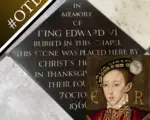
On this day in Tudor history, Margaret Tudor married James IV of Scotland at Holyroodhouse; Edward VI was buried at Westminster Abbey in a Protestant service; and Elizabeth I accepted the Earl of Leicester’s invitation to visit the troops at Tilbury Fort…
[Read More...]
On this day in Tudor history, 7th July, Henry VIII’s eldest daughter, Mary, heard of her half-brother Edward VI’s death; Henry Peckham and John Danyell were hanged, drawn and quartered for their involvement in the Dudley Conspiracy; and William Turner, “father of English botany and of ornithology”, died…
[Read More...]
On this day in Tudor history, 6th July, Henry III’s former Lord Chancellor, Sir Thomas More, was executed for high treason; King Edward VI died, leaving the throne to Lady Jane Grey; and Margaret Clement, adopted daughter of Sir Thomas More, died in Mechelen…
[Read More...]
On this day in Tudor history, 1st July, Sir Thomas More was tried and found guilty of treason; Parliament declared both of Henry VIII’s daughters illegitimate; and the Treaties of Greenwich between England and Scotland were signed, and a marriage agreed between Prince Edward (Edward VI) and Mary, Queen of Scots…
[Read More...]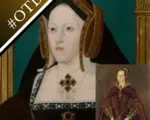
On this day in Tudor history, 21st June, Henry VIII travelled from Greenwich to the Tower of London; Catherine of Aragon gave an impassioned speech at the Legatine Court; letters patent were issued stating that Edward VI’s heir was Lady Jane Grey…
[Read More...]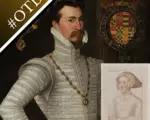
On this day in Tudor history, 4th June, Jane Seymour was proclaimed queen at Greenwich; Robert Dudley married Amy Robsart at Sheen with Edward VI in attendance; and the spire of St Paul’s Cathedral was struck by lightning…
[Read More...]
I’ve just opened registration for my forthcoming online event “The Men Behind the Throne: Tudor Statesmen”! There’s an early bird discount until 31 May and our very first zoom call discussion, which is on Thomas Cromwell, is this Friday, 17th May!
In my interactive and completely online 11-day event, which starts properly on 30th June, I’ll be joined by historians Dr Joanne Paul, Caroline Angus, Melita Thomas, Phil Roberts and Dr Hannah Coates. We’ll be delving into the captivating lives of the Tudor statesmen who shaped England’s history alongside iconic rulers like Henry VII, Henry VIII, Edward VI, Mary I, and Elizabeth I.
Through video talks and zoom Q&A sessions with speakers – where you’ll be video chatting with the historian! – you’ll gain a fresh understanding of the roles and contributions of prominent Tudor statesmen, and insights into the political landscape of Tudor England, including court intrigues, power struggles, and the dynamics between monarchs and their advisors.
[Read More...]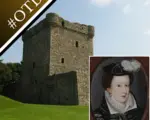
On this day in Tudor history, 2nd May, Queen Anne Boleyn and her brother, Lord Rochford, were arrested; Anabaptist Joan Bocher was burnt in Edward VI’s reign; and Mary, Queen of Scots escaped from Lochleven Castle…
[Read More...]
On this day in Tudor history, 2nd April, Henry VII’s eldest son, Arthur Tudor, Prince of Wales, died at Ludlow Castle; Anne Boleyn’s almoner, John Skip, preached a controversial sermon; and fourteen-year-old Edward VI fell ill with measles and smallpox…
[Read More...]
On this day in Tudor history, 20th March, Catholic priest and martyr Cuthbert Mayne was baptised; Thomas Seymour, 1st Baron Seymour of Sudeley and Edward VI’s uncle, was executed for treason; and Mary Bassett, translator and granddaughter of Sir Thomas More, died…
[Read More...]
On this day in Tudor history, 15th March, Archbishop William Warham criticised Henry VIII in Parliament and was rewarded with foul language from the king; the Lady Mary (Mary I) publicly defied her half-brother Edward VI; and the imprisoned John Hooper was deprived of his bishopric…
[Read More...]
On this day in Tudor history, 10th March, John de Vere, 13th Earl of Oxford and a man who commanded Henry Tudor’s archers at the Battle of Bosworth, died; Henry VIII suffered a jousting accident jousting against his friend, Charles Brandon; and William Paulet, 1st Marquess of Winchester and a man who served Henry VIII, Edward VI, Mary I and Elizabeth I, died…
[Read More...]
On this day in Tudor history, 5th March, Henry VII issued letters patent to explorer John Cabot (Giovanni Caboto), a bill of attainder listing 33 counts of treason was passed against Edward VI’s uncle, Thomas Seymour, and a Spanish physician introduced tobacco into Europe…
[Read More...]
On this day in Tudor history, 20th February, Mary I was baptised, Lady Agnes Hungerford was hanged for murder, Edward VI was crowned king at Westminster Abbey, and Anne Herbert (née Parr), Countess of Pembroke, died…
[Read More...]
On this day in Tudor history, 19th February, Edward VI rode through the streets of London on his coronation procession, Margaret Douglas was informed of the murder of her son, Lord Darnley, and the Elizabethan playhouse, The Rose Theatre, opened on Bankside…
[Read More...]
On this day in Tudor history, 17th February, Edward Seymour, King Edward VI’s uncle, was made Duke of Somerset, Mary, Queen of Scots, met and fell in love with Henry Stuart, Lord Darnley, and Henry Radcliffe, 2nd Earl of Essex, died…
[Read More...]
On this day in Tudor history, Queen Catherine of Aragon suffered a stillbirth, Henry VIII’s death was announced and Edward VI proclaimed king, and some more Gunpowder Plotters were executed…
[Read More...]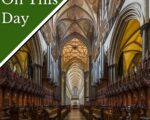
On this day in Tudor history, 6th October 1557, John Capon (also known as John Salcot), former Benedictine monk and Bishop of Salisbury, died, probably from influenza. He was buried in the choir at Salisbury Cathedral.
Capon appeared to have reformist leanings in the reigns of Henry VIII and Edward VI, but became a conservative Catholic again in Mary I’s reign, and was involved in the examination of those deemed to be heretics.
[Read More...]
On this day in Tudor history, 5th October 1553, the first Parliament of Mary I’s reign met.
This Parliament repealed the “treason act” of Mary’s half brother Edward VI’s reign, passed an act declaring Mary’s legitimacy, repealed the religious legislation of Edward’s reign, and reinstated the Mass in Latin, celibacy of the clergy and ritual worship. It was as if the reformation of Edward VI’s reign had never happened.
[Read More...]
On this day in Tudor history, 4th October 1556, following five months of imprisonment, humanist, former royal tutor and former secretary of state Sir John Cheke made a public recantation of his Protestant faith in front of Queen Mary I and the royal court.
Cheke, who had tutored King Edward VI and served Queen Jane (Lady Jane Grey) as secretary of state, had been imprisoned in late July 1553 following Mary I’s accession for his part in putting Lady Jane Grey on the throne, but released in spring 1554. Mary I granted him a licence to go into exile abroad, which he did, travelling to Strasbourg, Basel, Padua and then back to Strasbourg.
[Read More...]
On this day in Tudor history, 3rd October 1559, Sir William Fitzwilliam, gentleman of King Edward VI’s privy chamber, died.
Fitzwilliam was a member of Parliament, a favourite of both the Duke of Somerset and Duke of Northumberland, and served Mary I as deputy chancellor in Ireland.
Here are a few facts about Sir William Fitzwilliam…
[Read More...]
On this day in Tudor history, 4th September 1550, Sir Thomas Paston, gentleman of the privy chamber in the reigns of Henry VIII and Edward VI, died.
Paston was a member of the famous Paston family of Norfolk.
Paston had named his wife Agnes as executrix, and their four-year-old son, Henry, was his heir.
[Read More...]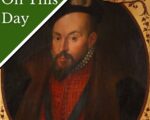
On this day in Tudor history, 26th August 1549, in the reign of King Edward VI, John Dudley, Earl of Warwick, received 1,000 mercenaries as reinforcements to fight the rebels of Kett’s Rebellion.
Kett’s Rebellion had begun in East Anglia in early July 1549. The rebels were unhappy with the enclosure of common land.
They attacked and took Norwich on 22nd July 1549 and William Parr, Marquess of Northampton, was sent with crown forces to win back the city. However, he was defeated. The Earl of Warwick was then sent to the area with a large army, which was bolstered with the arrival of the mercenaries on this day in 1549. The next day, Warwick’s forces met the rebels at the Battle of Dussindale. There were heavy losses on both sides, but Warwick was victorious. The rebellion had been brought to an end.
[Read More...]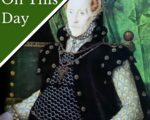
On this day in Tudor history, 25th August 1526, in the reign of King Henry VIII, Mildred Cecil (née Cooke), Lady Burghley, was born.
Mildred was the daughter of Sir Anthony Cooke, a scholar and the man who became Edward VI’s tutor, and his wife, Anne Fitzwilliam. Cooke educated his daughter himself, at home, providing her with the classical education usually reserved for boys.
Mildred is known not only for being the second wife of William Cecil, 1st Baron Burghley and Elizabeth I’s trusted minister, but for her humanist education, intelligence and fluency in Greek and Latin. Mildred also translated several works, including a Greek sermon by Basil the Great.
[Read More...]
On this day in Tudor history, 21st August 1553, in the reign of Queen Mary I, courtier Sir Thomas Heneage died. He was buried in the chancel of the parish church at Hainton, Lincolnshire.
Heneage had served Henry VIII as groom of the stool and chief gentleman of the privy chamber, and went on to serve Edward VI as a gentleman of the privy chamber.
[Read More...]On this day in Tudor history, 16th August 1549, in the reign of King Edward VI, landowner and administrator Sir Christopher More died. He was buried in St Nicholas’s Church, Guildford, in the Loseley Chapel.
More was a Justice of the Peace and sheriff during the reign of Henry VIII and was appointed to the guard of honour prepared for Anne of Cleves in late 1539.
Here are some facts about Sir Christopher More:
Sir Christopher More was born in around 1483 and was the son of fishmonger John More and his wife, Elizabeth.
By 1504, More was married to Margaret Mugge, who came from Guildford, and the couple had 12 children together. By 1535, Margaret had died and More had married Constance Sackville, widow of William Heneage.
In 1505, in the reign of King Henry VII, More was made a clerk of the exchequer, and More also purchased the office of alnager, i.e. an inspector of the quality and measurement of woollen cloth, in Surrey and Sussex.