The Tudor Society

YOUR SEARCH UNCOVERED 1673 RESULTS

  • 20 November – Sir Christopher Hatton Elizabeth I’s mouton and lids

    On this day in Tudor history, 20th November 1591, Sir Christopher Hatton, Elizabeth I’s Lord Chancellor and favourite, died aged fifty-one. He was such a favourite of Queen Elizabeth I that he had a dazzling career and was constantly at her side.

    Find out more about Sir Christopher Hatton, his career and accomplishments, his patronage of learned men and explorers, and his special relationship with Elizabeth I, in today’s talk.

    [Read More...]
  • 14 November – Anne Boleyn and Catherine of Aragon get married (but not to each other!)

    On this day in Tudor history, 14th November and the Feast of St Erkenwald, there may have been two royal Tudor weddings. We know that Catherine of Aragon married Arthur, Prince of Wales, on 14th November 1501, but chronicler Edward Hall gives 14th November 1532 as the date of a secret wedding for King Henry VIII and Anne Boleyn, Marquess of Pembroke, in Dover.

    Let me tell you all about the weddings of Catherine of Aragon and Arthur Tudor, and Henry VIII and Anne Boleyn.

    [Read More...]
  • 12 November – Queen Jane Seymour’s remains are moved to Windsor

    On this day in Tudor history, 12th November 1537, the corpse of Queen Jane Seymour, Henry VIII’s third wife, was transported by chariot in a procession from Hampton Court Palace to Windsor Castle, in preparation for burial. Jane Seymour’s heart and entrails had been buried in the chapel at Hampton Court Palace following her death on 24th October 1537.

    Queen Jane’s stepdaughter, the Lady Mary, acted as chief mourner for the proceedings.

    There was also a commemoration for Queen Jane in the city of London.

    [Read More...]
  • 11 November – Queen Catherine Howard is moved to Syon House

    On this day in Tudor history, 11th November 1541, the feast of Martinmas, King Henry VIII’s council sent Archbishop Thomas Cranmer a letter containing instructions to move Queen Catherine Howard from Hampton Court Palace to Syon House, formerly Syon Abbey.

    In today’s talk, Claire Ridgway, founder of the Tudor Society, shares the instructions that Cranmer was given and what the queen was sent for her time at Syon. Claire also shares what else happened on this day in 1541, along with some trivia about the people in charge of Catherine’s household at Syon.

    [Read More...]
  • 10 November – Cats, pigeons and lions

    On this day in Tudor history, 10th November 1536 (some sources say 1537), Sir Henry Wyatt of Allington Castle, politician, courtier, Privy Councillor and father of poet Sir Thomas Wyatt the Elder, died.

    Sir Heny Wyatt was an important man, but rather than tell you about his career, Claire Ridgway, author of “On This Day in Tudor History”, thought she’d share with you two interesting stories concerning this Tudor man and cats, pigeons and a lion.

    [Read More...]
  • 9 November – A stillborn daughter for Queen Catherine of Aragon

    On this day in Tudor history, 9th November 1518, Queen Catherine of Aragon, Henry VIII’s wife of nine years, gave birth prematurely to a stillborn daughter at Greenwich Palace.

    This was to be Catherine’s sixth and final pregnancy. She had tried her very best to give King Henry VIII what he wanted, a surviving son and heir, a Prince of Wales.

    In today’s talk, I explain what happened on this day in 1518 and what we know about Queen Catherine of Aragon’s pregnancies.

    [Read More...]
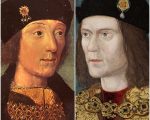
  • Richard III and his supporters are attainted – 7 November 1485

    On this day in 1485, just over two months after King Henry VII’s forces had defeated those of King Richard III at the Battle of Bosworth Field, Henry VII’s first parliament attainted Richard and his supporters.

    Here is an account from Rapahel Holinshed’s chronicle. I have altered the spelling to make it easier to read:

    “For the establishing of all things, as well touching the preservation of his own estate, as the commendable administration of justice and preferment of the common wealth of his realme, he called his high court of parliament at Westminster the seventh day of November, wherein was attainted Richard late duke of Gloucester, calling and naming himself by usurpation, king Richard the third.

    [Read More...]
  • 4 November – The arrest of Cardinal Wolsey

    On this day in Tudor history, 4th November 1530, Cardinal Thomas Wolsey, Henry VIII’s former Lord Chancellor, was arrested at his home of Cawood Castle in Yorkshire.

    Wolsey was accused of high treason, but why? And what happened when his former servant, Henry Percy, Earl of Northumberland, arrived with orders to arrest him?

    I explain all in today’s talk, including how Wolsey ‘cheated’ the axeman.

    [Read More...]
  • 2 November – The beginning of the end for Catherine Howard

    On this day in Tudor history, 2nd November 1541, All Souls’ Day, Archbishop Thomas Cranmer gave King Henry VIII a letter that would spark off the beginning of the end for Queen Catherine Howard, Henry VIII’s fifth wife.

    Catherine Howard’s past, her romances with Henry Manox and Francis Dereham, were about to come back to haunt her, and her present relationship with Thomas Culpeper would soon be uncovered.

    In today’s talk, I explain exactly what was in Archbishop Cranmer’s letter and what happened next.

    [Read More...]
  • 22 October – A Catholic baron who fled abroad

    On this day in Tudor history, 22nd October 1577, Henry Parker, 11th Baron Morley and Roman Catholic exile, died in Paris. Morley had fled abroad in 1570 after refusing to subscribe to Elizabeth I’s “Act of Uniformity” and after being implicated in the 1569 Rising of the North.

    Find out more about this Tudor man, who was the nephew of Jane Boleyn, Lady Rochford, and his rather interesting family, with their connections to the trial of Mary, Queen of Scots and the Gunpowder Plot, in today’s video.

    [Read More...]
  • Reminder – October’s Live Chats

    Just in case you missed the dates on the schedule, here’s a reminder about the dates and times of this month’s live chats. They will take place on 19th and 27th October.

    October’s informal live chat, which is on the topic of the Yorkists, is taking place on Saturday 19th October.

    Here are the times for the chat in different time zones:

    [Read More...]
  • 8 October – Lady Margaret Douglas

    On this day in Tudor history, 8th October 1515, Lady Margaret Douglas, Countess of Lennox and niece of King Henry VIII, was born at Harbottle Castle in Northumberland.

    Margaret Douglas was the daughter of Margaret Tudor, Queen Dowager of Scotland, and Archibald Douglas, 6th Earl of Angus. She was born while her mother was travelling to Henry VIII’s court in London after feeling Scotland.

    Margaret was a fascinating lady, and in today’s talk, I share an extract from my book, giving an overview of this Tudor lady’s life.

    [Read More...]
  • 4 October – The Pilgrimage of Grace Rebellion is underway!

    On this day in Tudor history, Wednesday 4th October 1536, trouble erupted in Horncastle, Lincolnshire. This was part of what we know as the Lincolnshire Rising which, in turn, was part of the famous Pilgrimage of Grace rebellion.

    In today’s talk, I share exactly what happened in Horncastle, which included two murders, what the rebellion was all about, and how King Henry VIII responded to the rebel’s grievances. I read King Henry VIII’s own words to the rebels of the Pilgrimage of Grace.

    [Read More...]
  • 1 October – Mary I’s coronation and a sumptuous feast

    On this day in Tudor history, Sunday 1st October 1553, Mary I was crowned queen at Westminster Abbey by Stephen Gardiner, Bishop of Winchester.

    It was a moment of real triumph for Mary and she was England’s first official queen regnant.

    In today’s talk, I share details from primary sources about Mary’s I’s coronation ceremony, and also the sumptuous banquet afterwards, which saw the Duke of Norfolk and the Earl of Arundel on horseback in the hall, and a challenge being made. What a spectacle it must have been!

    [Read More...]
  • 27 September – Catherine of Aragon leaves Spain

    On this day in Tudor history, 27th September 1501, Catherine of Aragon, daughter of Ferdinand II of Aragon and Isabella I of Castile, set sail for England from Laredo, Spain.

    Catherine was leaving her homeland to marry Arthur Tudor, son and heir of King Henry VII, a marriage arranged by her parents and the English king in the Treaty of Medina del Campo.

    This was Catherine’s second attempt at sailing to England, but this time she was successful.

    I explain the background to Catherine’s journey, along with what happened when she first set sail in August 1501.

    [Read More...]
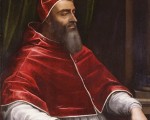
  • 25 September – A pope, death cap mushrooms and poisoned candles

    On this day in Tudor history, 25th September 1534, Pope Clement VII (Giulio di Giuliano de’ Medici) died in Rome. It was rumoured that he died from eating death cap mushrooms or from fumes from poisoned candles placed in his room, but it was more likely to have been from natural causes.

    In today’s video, I introduce this pope, who was the leader of the Catholic Church at rather an interesting time, and also look at the rumours surrounding his death and what eating a death cap mushroom does. Lovely stuff!

    [Read More...]
  • September 24 – Prince Arthur’s christening

    On this day in Tudor history, 24th September 1486, Arthur Tudor, Prince of Wales and son of Henry VII and Elizabeth of York, was christened at a lavish ceremony at Winchester Cathedral.

    His mother’s confinement, his birth, his christening and early upbringing had all been carefully ‘choreographed’ by his paternal grandmother, Lady Margaret Beaufort, and in today’s talk, Claire Ridgway, author of “On This Day in Tudor History”, shares details from Margaret Beaufort’s “Ordinances” regarding the christening of a royal prince or princess, as well as sharing specific details of Prince Arthur Tudor’s christening.

    [Read More...]
  • 10 September – Elizabeth I’s christening

    On this day in Tudor history, 10 September 1533, King Henry VIII and Queen Anne Boleyn’s daughter, Elizabeth (the future Queen Elizabeth I), was christened at the Church of Observant Friars in Greenwich.

    Elizabeth I’s christening service was a lavish ceremony presided over by Archbishop Thomas Cranmer, who also stood as the little girl’s godfather.

    In today’s talk, I share a contemporary source of Elizabeth’s christening service and also of the celebrations that followed.

    [Read More...]
  • 8 September – The mysterious death of Amy Robsart, wife of Robert Dudley

    On this day in Tudor history, 8th September 1560, the body of Amy Dudley (née Robsart), wife of Robert Dudley, Earl of Leicester, was found at the bottom of some stairs in her rented home, Cumnor Place in Oxfordshire.

    What had happened to Amy? Was her death a result of “misfortune”, as decided by the coroner, or was it suicide or murder? Did Robert Dudley kill his wife? Did William Cecil kill Amy?

    In today’s talk, Claire Ridgway, founder of the Tudor Society, examines what happened that day and the theories regarding Amy Robsart’s mysterious death, an event that definitely put an end to the idea that Elizabeth I could ever marry Robert Dudley.

    [Read More...]
  • 3 September – Robert Greene and the Upstart Crow, William Shakespeare

    On this day in Tudor history, 3rd September 1592, in the reign of Queen Elizabeth I, Elizabethan writer and playwright Robert Greene died in London.

    Greene was a prolific writer, but he is best known for a pamphlet “Greene’s Groats-worth of Wit bought with a Million of Repentance” which it was claimed he wrote on his deathbed. It is an important work because it is the first known contemporary reference to William Shakespeare as a playwright, although the reference to Shakespeare is actually an attack on the actor/playwright, who Greene saw as an “upstart crow”.

    Find out more about the pamphlet and why Greene, or whoever wrote it, launched an attack of the Bard, in today’s talk.

    [Read More...]
  • 1 September – Anne Boleyn becomes Marquess of Pembroke

    On this day in Tudor history, 1st September 1532, in a special ceremony at Windsor Castle, King Henry VIII elevated his sweetheart Anne Boleyn to the peerage by making her Marquess of Pembroke.

    This was a hugely significant act because Henry VIII made Anne a marquess in her own right, granted the title to her and her heirs male (legitimate or not) and gave her a title associated with his father, Henry VII, and uncle, Jasper Tudor. It also made her a rather wealthy woman, and a fitting consort for their trip to Calais to meet with King Francis I of France.

    Find out more about what happened on this day in 1532, who was there, and just what Anne Boleyn was given by King Henry VIII, in today’s talk.

    [Read More...]
  • 29 August – The sad story of Geoffrey Pole

    On this day in Tudor history, 29th August 1538, Geoffrey Pole, son of Sir Richard Pole and Margaret Pole, Countess of Salisbury, was arrested. He was already on thin ice, having been a staunch supporter of Queen Catherine of Aragon and Princess Mary, but he now was suspected, like other members of his family, of being in communication with his brother, Cardinal Reginald Pole, a man who had upset King Henry VIII by writing a treatise against him and his policies.

    Unlike other members of his family, including Margaret Pole, Geoffrey managed to survive this trouble – how? Why? What happened?

    I explain all in today’s talk.

    [Read More...]
  • 24 August – The St Bartholomew’s Day Massacre

    On this day in Tudor history, 24th August 1572, on the Feast of St Bartholomew, an awful massacre too place in Paris, and it was followed by further atrocities in other towns and cities.

    Those who suffered were Huguenot men, women and children, French Protestants. But what happened and why?

    I explain all in today’s video…

    [Read More...]
  • 20 August – Elizabeth I gives thanks for the Protestant Wind!

    On this day in Tudor history, 20th August 1588, there was a thanksgiving service at St Paul’s to thank God for his divine intervention when England defeated the Spanish Armada. It was thought that God had sent his Protestant Wind to save England from Catholic Spain.

    Find out more about this in today’s talk.

    [Read More...]

  • 14 August – Margaret Pole, Countess of Salisbury

    On this day in Tudor history, 14th August 1473, Margaret Pole, Countess of Salisbury, was born.

    Margaret Pole is an interesting lady – the niece of Edward IV, Countess of Salisbury in her own right, governess to Mary I… and she came to a rather awful and sticky end.

    Let me tell you a bit more about this fascinating Tudor lady and what happened to her.

    [Read More...]
  • 2 August – A Protestant burned in Rome

    On this day in Tudor history, 2nd August 1581, an English Protestant named Richard Atkins was burned for heresy in Rome.

    What had led this Englishman to his end in Rome? What had he done? And why was he tortured on his way to his execution?

    I explain all in today’s talk, sharing an account of his actions and his courageous end.

    [Read More...]
  • 30 July – Reformers and Catholics executed on the same day!

    What a confusing day it must have been for the citizens of London on 30th July 1540! For it was on this day in history, in the reign of King Henry VIII, that both Catholics and men of the reformed faith were executed in London. Crazy times indeed!

    Find out more about why Thomas Abell, Edward Powell and Richard Fetherston, and Robert Barnes, William Jerome and Thomas Garrard, were executed in today’s talk.

    [Read More...]
  • 13 July – The overshadowed Robert Sidney

    On this day in Tudor history, 13th July 1626, Tudor poet and courtier, Robert Sidney, 1st Earl of Leicester, brother of Sir Philip Sidney, died at Penshurst Place, the family seat in Kent.

    Sir Philip Sidney is known as one of the great poet and scholars of the Tudor age, but his brother, Robert, was also a talented poet.

    In today’s talk, I talk about how historians discovered Robert’s work, as well as sharing one of his sonnets.

    [Read More...]
  • 3 July – Catherine of Aragon, you’re not queen!

    Oh dear! Catherine of Aragon, first wife of King Henry VIII, had a bit of a bad day on this day in Tudor history, 3rd July 1533. Not only had she trodden on a pin and was suffering with a bad cough, but she was also told that she had to stop calling herself queen – not likely!

    In today’s “on this day” video,I share Thomas Cromwell’s letter to Catherine’s chamberlain on this matter, and also give Catherine’s reaction to it. She was a spirited and strong lady!

    [Read More...]
  • 29 June – Lady Margaret Beaufort

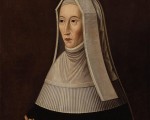
    A portrait of Lady Margaret Beaufort

    Today is the anniversary of the death of sixty-six-year-old Lady Margaret Beaufort on 29th June 1509, just four days after she enjoyed the coronation celebrations of her grandson King Henry VIII and his queen consort. Catherine of Aragon.

    Margaret Beaufort was the matriarch of the Tudor dynasty and was an amazing woman, in many ways, yet she is surrounded by myth and it seems fashionable to see her as a religious zealot. But who was this influential Tudor lady? What did she do?

    In today’s video, I flesh out Margaret Beaufort with a few facts about her and her life.

    [Read More...]