The Tudor Society

YOUR SEARCH UNCOVERED 1673 RESULTS

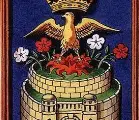
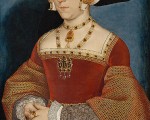
  • Phoenix Birth: A Look at Jane Seymour and the Importance of Death and Birth in Tudor England by Heather R. Darsie

    Jane Seymour’s phoenix badge[/caption]Jane Seymour, third wife of Henry VIII and mother of Edward VI, died days after giving birth. An inscription above her grave read:

    Here lieth a Phoenix, by whose death
    Another Phoenix life gave breath:
    It is to be lamented much
    The world at once ne’er knew two such.

    [Read More...]
  • 12 November 1537 – Jane Seymour’s remains moved to Windsor

    On 12th November 15371, Jane Seymour’s body was taken by chariot from Hampton Court Palace to Windsor Castle. The chariot was followed by a procession led by the Duke of Suffolk and the Marquis of Dorset. Jane’s stepdaughter, the Lady Mary, acted as chief mourner in the procession and the service, which was held at St George’s Chapel on arrival at Windsor. A solemn watch was kept that night, and then Jane was buried on the morning of the 13th November. Queen Jane had died on 24th October, probably from puerperal (childbed) fever, just twelve days after the birth of her son, the future Edward VI.

    [Read More...]
  • The Diary of Henry Machyn

    Today is the anniversary of the burial of chronicler and merchant-taylor Henry Machyn in London in 1563. He died after contracting the plague. Machyn is best known for his chronicle The Diary of Henry Machyn, Citizen and Merchant-Taylor of London, from A.D. 1550 to A.D. 1563 which is a wonderful primary source for the reigns of Edward VI, Lady Jane Grey, Mary I and the beginning of Elizabeth I’s reign.

    [Read More...]
  • Battle of Clyst Heath – 6 August 1549

    The Battle of Clyst Heath was another battle fought between the rebels of the Prayer Book Rebellion and Edward VI’s forces.

    Upon hearing of the news of the massacre the previous day, two thousand rebels made their way to Clyst Heath where the Lords Russell and Grey were camped, and opened fire. The battle lasted all day, but the rebels were defeated in the end. The 18th century historian, John Hooker, wrote of the battle:

    [Read More...]
  • Mary I proclaimed Queen – 19 July 1553

    On 19th July 1553, thirteen days after the death of her half-brother Edward VI, Mary, eldest daughter of Henry VIII, was proclaimed queen in London in place of Queen Jane, who had been proclaimed queen on 10th July.

    The Chronicle of the Grey Friars of London records:

    [Read More...]
  • 9 July 1553 – Mary Tudor writes to the Privy Council

    After declaring herself queen the previous day, in front of her household at Kenninghall, Mary Tudor, daughter of Henry VIII and half-sister of the late King Edward VI, wrote the following letter to the privy council:

    “My lords, we greet you well and have received sure advertisement that our dearest brother the King and late sovereign lord is departed to God. Marry, which news, how they be woeful unto our hearts, He wholly knoweth to whose will and pleasure we must and do humbly submit us and our will.

    [Read More...]
  • 4 June 1550 – The marriage of Robert Dudley and Amy Robsart

    On 4th June 1550 (some sources say the 5th), Robert Dudley married Amy Robsart at the royal palace of Sheen at Richmond, near London. The marriage was attended by the then king, Edward VI.

    Both Amy and Dudley were a few days short of their 18th birthdays when they got married, and the marriage was a love-match, or a “carnal marriage” as William Cecil described it, rather than an arranged union. The couple were sweethearts and very much in love, but it was not to be a happy marriage and events conspired against them.

    [Read More...]
  • Elizabeth I

    Elizabeth I was born on 7 September 1533 at Greenwich Palace. She was the daughter of Henry VIII and his second wife Anne Boleyn. Her mother was executed for alleged adultery and treason in May 1536 and within two months of her mother’s death Parliament had confirmed that Elizabeth’s parents’ marriage was invalid and that Elizabeth was illegitimate.

    In 1547, following her father’s death, Elizabeth moved in with her stepmother the Dowager Queen Catherine Parr, and her husband Thomas Seymour. There, she became involved in a scandal with Seymour, who would visit Elizabeth’s chamber, dressed only in his night-gown, and proceed to tickle and stroke the teenaged girl. Eventually, Catherine arranged for Elizabeth to go and live with her good friends, Sir Anthony Denny and his wife at Cheshunt. Catherine died in September 1548, following the birth of her daughter, and Seymour was executed in March 1549 for allegedly plotting to control his nephew Edward VI and to remove his brother, Edward Seymour, Lord Protector, from power.

    [Read More...]
  • Mary I

    Mary was born on 18 February 1516 at Greenwich Palace and was the daughter of Henry VIII and his first wife Catherine of Aragon. She was an intelligent girl, was known as a linguist and loved music and dancing. Mary was made illegitimate and removed from the succession after the annulment of her father’s marriage to Catherine of Aragon in 1533 and the subsequent birth of her half-sister Elizabeth, daughter of Henry VIII and Anne Boleyn. She and Elizabeth (who had been removed from the succession in 1536 after the fall of her mother) were restored to the line of succession, after their half-brother Edward, by Parliament in 1543 but Edward VI chose to remove his half-sisters from the succession as he lay dying in 1553 and chose Lady Jane Grey as his heir. Mary was forced to fight for the throne and was proclaimed queen on 19 July 1553.

    [Read More...]
  • James Bassett – The Tudor courtier you’ve never heard of

    Thumbnail for my video on courtier James Bassett

    On this day in Tudor history, 21st November 1558, just days after Elizabeth I’s accession, courtier James Bassett died at Blackfriars, London, aged just about thirty-two.

    Bassett had been a devoted servant of both Queen Mary I and her husband, Philip of Spain, and he was a scholar, exile, courtier, and diplomat, as well as being the stepson of Arthur Plantagenet, Viscount Lisle, an illegitimate son of Edward IV.

    [Read More...]
  • The Downfall of Germain Gardiner, John Larke & the Prebendaries’ Plot

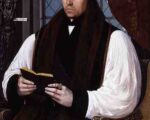
    A portrait of Thomas Cranmer by Gerlach Flicke.

    By the early 1540s, England’s religious landscape was a minefield. The dissolution of the monasteries had shaken traditional Catholic structures, and Protestant reformers like Archbishop Thomas Cranmer were pushing Henry VIII’s Church further from Rome.

    Not everyone was on board.

    A faction of conservative clergy and laymen began working covertly to stop these changes. This movement, known as the Prebendaries’ Plot, was centred around five prebendary canons of Canterbury Cathedral, including William Hadleigh, a former monk of Christchurch Canterbury.

    [Read More...]
  • Thomas Wriothesley’s Fall

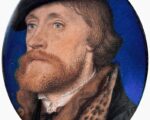
    Thomas Wriothesley, 1st Earl of Southampton, by Hans Holbein the Younger

    6th March 1547 was a day of humiliation for Thomas Wriothesley, 1st Earl of Southampton. Once one of the most powerful men in England, he found himself stripped of the Great Seal of office and confined to his home. But how did a man who had been Henry VIII’s trusted Lord Chancellor fall so fast?

    Wriothesley was a rising star of the Tudor court. Born in 1505, he was the son of a herald, educated at Cambridge, and started his career working for none other than Thomas Cromwell. He was ambitious, intelligent, and, according to his friend John Leland, quite good-looking!

    His big break came in the 1530s when he became a key figure in Henry VIII’s government. He played a role in the annulment of Henry’s marriage to Anne of Cleves, helped investigate Catherine Howard, and eventually became Lord Chancellor in 1544. He was trusted, powerful, and wealthy—owning vast estates, including the former Titchfield Abbey, which he transformed into his grand home.

    [Read More...]
  • Martin Bucer, a Reformer who wanted Peace

    A German portrait of Martin Bucer

    On the night of 28th February 1551, a man who had spent his life fighting for religious reform took his last breath in Cambridge. His name was Martin Bucer—a theologian, a reformer, and a man whose influence stretched across Europe.
    But even in death, his struggles weren’t over. Six years after his burial, his body was dug up, put on trial for heresy, and publicly burned in Cambridge along with his works.

    So, who was Martin Bucer? Why was he considered such a threat that even his bones had to be destroyed? And why is he remembered today as a key figure in the Protestant Reformation?

    [Read More...]
  • George Carey, 2nd Baron Hunsdon

    A miniature of George Carey, 2nd Baron Hunsdon, by Nicholas Hilliard

    He was the grandson of Mary Boleyn, the husband of Elizabeth Spencer, and a trusted courtier of Elizabeth I. But George Carey, 2nd Baron Hunsdon, wasn’t just another nobleman, he was a key figure in the world of Elizabethan theatre, a patron of Shakespeare’s acting company, and a man who rose to one of the most powerful positions at court.

    Today, let’s dive into the fascinating life of George Carey, 2nd Baron Hunsdon; his Boleyn connections, his military career, and his role in shaping the golden age of Elizabethan theatre.

    [Read More...]
  • The Royal Family’s connection to the Boleyns and Tudors, and beyond

    A portrait of a woman thought to be Mary Boleyn from the collection at Hever Castle

    Today marks the anniversary of the accession of the late Queen Elizabeth II on 6th February 1952. She was the longest reigning monarch in British history, ruling from this day in 1952 until her death in September 2022. As we reflect on her remarkable reign, I thought it would be fitting to explore an intriguing piece of history—the present royal family’s descent from both the Tudors and the Boleyns.

    Yes, you heard that right! King Charles III has Tudor blood AND Boleyn blood.

    But wait—how is that possible? The last Tudor monarch, Elizabeth I, died childless, and as we all know, she was Anne Boleyn’s only surviving child. So where does the royal family’s Tudor-Boleyn connection come from?

    Let’s unravel this fascinating royal lineage…

    [Read More...]
  • A Royal Wedding – Anne of York and Thomas Howard

    Thomas Howard 3rd Duke of Norfolk

    On 4th February 1495, Anne of York, daughter of Edward IV and sister of Queen Elizabeth of York, married Thomas Howard, the future 3rd Duke of Norfolk, at Westminster Abbey. But this was far more than just a romantic union—it was a strategic marriage with deep political significance.

    It was an unlikely match. Anne was the sister-in-law of King Henry VII, and Thomas Howard’s father and grandfather had fought against Henry at the Battle of Bosworth Field just ten years earlier.

    So why did Henry VII allow this marriage? And what did it mean for the future of the Howard family?

    [Read More...]
  • Did Archbishop Thomas Cranmer keep a secret wife in a box?

    Still from the Tudors series showing Cranmer's wife in a box

    Did Thomas Cranmer, Archbishop of Canterbury, keep his secret wife in a ventilated chest?

    Well, yes, according to his Catholic detractors!

    But was there any truth in their claims, and where does the story come from?

    In 1532, Thomas Cranmer, who wasn’t yet Archbishop of Canterbury, was serving King Henry VIII as the resident ambassador at the court of Charles V, Holy Roman Emperor. While he was with the emperor in Nuremberg, Cranmer met the city’s leading Lutheran preacher, Andreas Osiander, and the two became firm friends. Cranmer visited Osiander’s house often and at some point he met Osiander’s wife’s niece, Margarete, and that summer, despite the fact that he was an ordained priest, and was, therefore, supposed to remain celibate, Cranmer married her.

    [Read More...]

  • Sir Anthony Denny

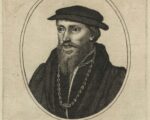
    Sir Anthony Denny

    Sir Anthony Denny was born on this day in Tudor history, the 16th January 1501, in the reign of King Henry VII, at Cheshunt in Hertfordshire. He was the second son of Sir Edmund Denny, Baron of the Exchequer to Henry VIII, and his wife, Mary Troutbeck.

    Denny was educated at St Paul’s School, London, before moving on to St John’s College, Cambridge.

    Following employment in the service of Sir Francis Bryan, a man known as the “Vicar of Hell”, By 1533, he’d secured a place in Henry VIII’s inner sanctum—the privy chamber—a realm reserved for the king’s most trusted men, and he was made a yeoman of the wardrobe in 1536. He rose to become keeper of the privy purse in 1542 and then in 1546, first chief gentleman of the privy chamber and groom of the stool. Groom of the Stool may sound like a disgusting job to us, as it involved helping the king with his toilet habits, but it also meant intimate access to the king and influence over royal decisions. In 1540, following the king’s doomed marriage to Anne of Cleves, Denny was one of those in whom the king confided his unhappiness in the marriage.

    [Read More...]
  • Jane Dudley, Duchess of Northumberland

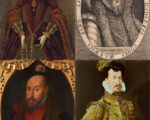
    A collage of the Dudley family

    Jane Dudley, Duchess of Northumberland, is one of my favourite figures from Tudor history—and for good reason. Her story is one of resilience, faith, and immense tragedy. She lived through one of the most tumultuous periods in English history, lost her husband and children to the axe, and yet, she carried on. Today, on the anniversary of her death, I’m exploring her life and legacy.

    [Read More...]
  • #OTD in Tudor history – 31 December

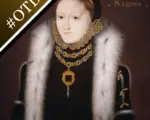
    Queen Elizabeth I 1558-1560

    On this day in Tudor history, 31st December, “the Gunner” Sir William Skeffington, Lord Deputy of Ireland, died at Kilmainham (1535), and Owen Oglethorpe, Bishop of Carlisle, died while under house arrest (1559)…

    [Read More...]
  • #OTD in Tudor history – 26 December

    Henry VIII

    On this day in Tudor history, Protestant exile and businesswoman Rose Lok was born in London (1526), Henry VIII made some changes to his will (1546), and the Feast of St Stephen was celebrated…

    [Read More...]
  • #OTD in Tudor history – 25 December

    Lettice Knollys

    On this day in Tudor history, magistrate, sheriff and witch-hunter Brian Darcy died (1587), and Lettice Knollys (married names: Devereux, Dudley and Blount) died at the age of ninety one (1634)…

    [Read More...]
  • #OTD in Tudor history – 23 December

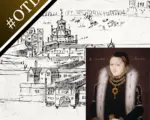
    Elizabeth I with a sketch of Whitehall Palace behind

    On this day in Tudor history, 23rd December, schoolmaster, cleric and playwright Nicholas Udall was buried (1556), and Queen Elizabeth I moved from Somerset House to Whitehall, which became her principal residence (1558)…

    [Read More...]
  • #OTD in Tudor history – 21 December

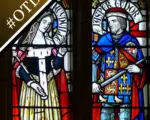
    Stained glass window depicting Jasper Tudor and his wife, Catherine Woodville

    On this day in Tudor history, Henry VII’s uncle and mentor, Jasper Tudor, Duke of Bedford and Earl of Pembroke, died (1495), and the Feast of St Thomas the Apostle (or Didymus or Doubting Thomas) was celebrated…

    [Read More...]
  • #OTD in Tudor history – 16 December

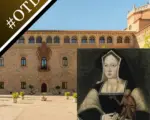
    Portrait of Catherine of Aragon and a photo of the Archbishop's Palace at Alcala de Henares

    On this day in Tudor history, Catherine of Aragon, Henry VIII’s first queen consort, was born at Alcalá de Henares (1485), and soldier and courtier George Grey, 2nd Earl of Kent, died (1503)…

    [Read More...]
  • #OTD in Tudor history – 14 December

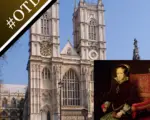
    A photo of Westminster Abbey and a portrait if Mary I

    On this day in Tudor history, 14th December, the six-day-old daughter of James V of Scotland became Mary, Queen of Scots, on her father’s death (1542), and Queen Mary I was buried at Westminster Abbey (1558)…

    [Read More...]
  • #OTD in Tudor history – 6 December

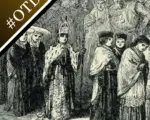
    19th-century depiction of a medieval boy bishop

    On this day in Tudor history, 6th December, soldier and administrator Sir Hugh Paulet, a man who served four monarchs, died (1573), and the Feast of St Nicholas was celebrated with the election of a Boy Bishop…

    [Read More...]
  • #OTD in Tudor history – 4 December

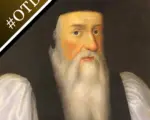
    Thomas Cranmer

    On this day in Tudor history, 4th December, merchant tailor and prominent Lollard Richard Hunne was found hanging in his prison cell in suspicious circumstances (1514) and the pope deprived Thomas Cranmer of his archbishopric and permission was granted for his fate to be decided by the secular authorities (1555)…

    [Read More...]
  • #OTD in Tudor history – 22 November

    Dr William Butts

    On this day in Tudor history, 22nd November, Henry VIII’s trusted physician and confidant Sir William Butts died at Fulham Manor (1545); and naval commander, privateer and explorer Sir Martin Frobisher died of gangrene (1594) after suffering an injury in hand-to-hand combat…

    [Read More...]
  • #OTD in Tudor history – 18 November

    Cuthbert Tunstall

    On this day in Tudor history, 18th November, Ralph Baynes, Bishop of Coventry and Lichfield, died while imprisoned in the Bishop of London’s home, and his fellow clergyman, Cuthbert Tunstall, Bishop of London, died in prison at Lambeth Palace (1559)…

    [Read More...]